
Application modernization ROI measures the business value created by modernizing legacy applications, infrastructure, and enterprise systems. Beyond cost reduction, organizations should evaluate operational efficiency, developer productivity, AI readiness, customer experience, security, and business agility to understand the true return on modernization investments.
Application modernization is no longer simply about migrating legacy workloads to the cloud. Modern enterprises are redesigning applications to become more scalable, resilient, secure, and AI-ready. As organizations adopt cloud-native architectures, microservices, APIs, and Generative AI, leadership teams increasingly ask one critical question:
“How do we measure the ROI of modernization?”
The answer goes beyond infrastructure savings.
True application modernization ROI includes measurable improvements in operational efficiency, developer velocity, customer experience, business agility, security, and the ability to rapidly adopt emerging technologies such as AI, automation, and intelligent analytics.
Understanding what to measure—and when—is essential for ensuring modernization investments continue delivering business value long after implementation.
TL;DR
- Application modernization ROI extends beyond infrastructure cost savings.
- Measure modernization using financial, operational, customer, technology, and innovation KPIs.
- AI-ready applications deliver greater long-term business value than lift-and-shift migrations.
- Choosing the right modernization strategy significantly impacts ROI.
- Continuous measurement ensures modernization investments remain aligned with business objectives.
Executive Summary
Application modernization has evolved from an IT initiative into a strategic business transformation program. While organizations traditionally measured modernization success through infrastructure savings and reduced maintenance costs, today’s enterprises expect far more. Modernization investments must improve operational efficiency, increase developer productivity, strengthen security, accelerate innovation, and prepare applications for AI-driven business models.
However, measuring application modernization ROI remains challenging because many benefits are realized gradually rather than immediately. Organizations that focus only on short-term cost reductions often overlook the long-term value created through cloud-native architectures, AI readiness, automation, and faster innovation cycles.
This guide introduces a practical framework for measuring modernization ROI, explains the metrics that matter most, and explores how AI migration patterns are reshaping enterprise modernization strategies.
Related Reading: Legacy Modernization AI – Techment
What Is Application Modernization ROI?
Application modernization ROI measures the financial, operational, and strategic value generated by upgrading legacy applications and enterprise systems. It includes both direct savings—such as lower infrastructure and maintenance costs—and long-term benefits like improved agility, faster innovation, AI readiness, enhanced security, and better customer experiences.
Application modernization ROI evaluates whether modernization initiatives create measurable business value compared to the investment required.
Historically, organizations measured modernization using metrics such as:
- Infrastructure cost reduction
- Server consolidation
- Lower licensing expenses
- Reduced maintenance effort
While these metrics remain important, they no longer reflect the full business impact of modernization.
Today’s enterprise modernization initiatives also aim to:
- Accelerate digital transformation
- Improve application scalability
- Enable AI adoption
- Reduce technical debt
- Increase deployment frequency
- Improve developer productivity
- Strengthen cybersecurity
- Enhance customer experiences
In other words, modernization should be evaluated as a business investment—not merely an IT expense.
Why Traditional ROI Metrics Are No Longer Enough
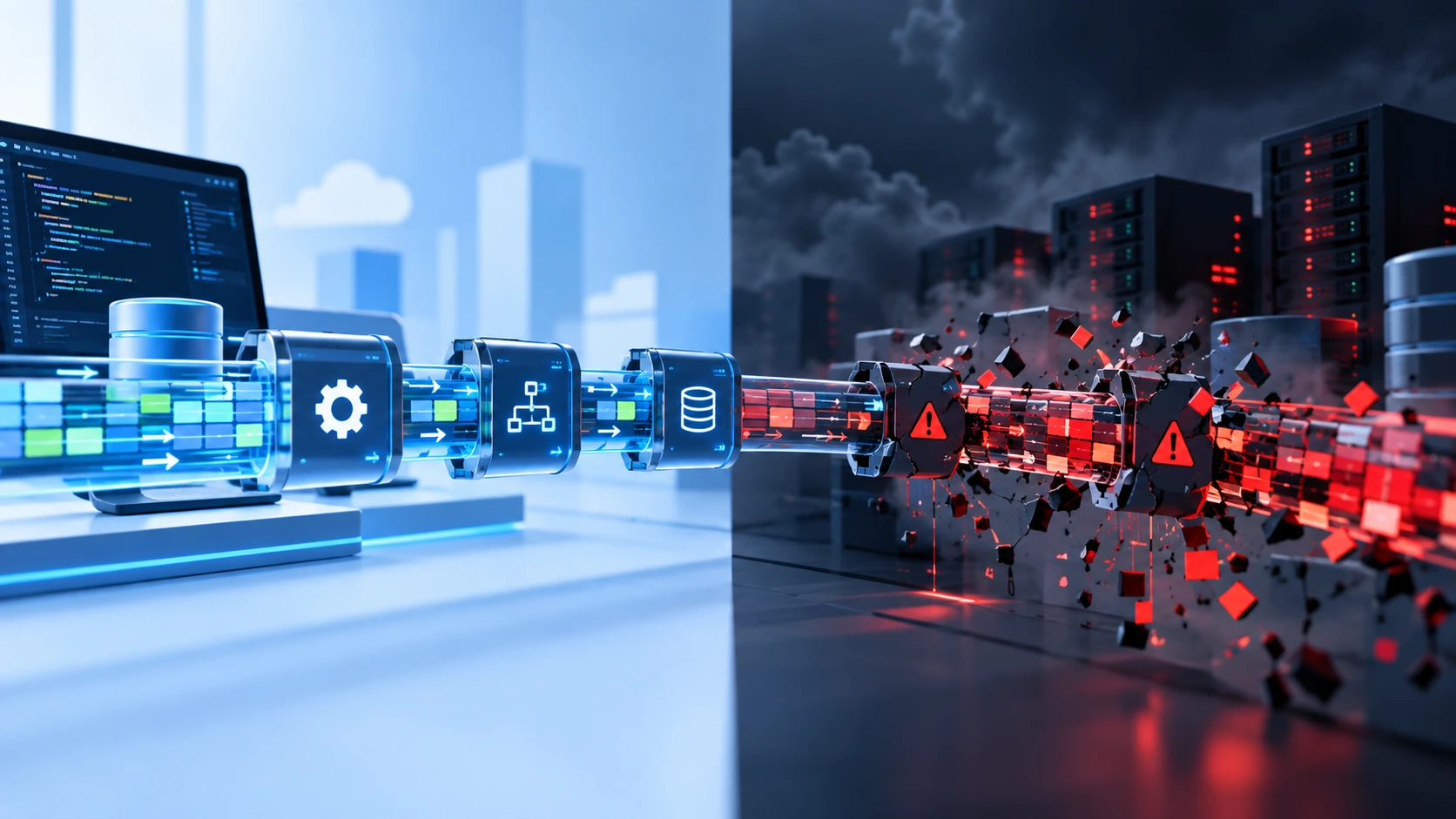
Traditional modernization metrics such as infrastructure savings and server utilization provide only a partial view of ROI. Modern enterprises should also evaluate agility, developer productivity, AI readiness, customer experience, and innovation velocity to understand the complete business impact of modernization.
Many modernization projects appear successful because infrastructure costs decrease after migration.
However, organizations frequently discover that reduced cloud spend alone does not improve competitiveness.
Consider two enterprises:
Company A
- Reduced infrastructure costs by 25%
- Applications still require months to release updates
- Legacy architecture prevents AI adoption
Company B
- Reduced infrastructure costs by 15%
- Deploys software weekly
- Integrated Generative AI capabilities
- Automated business workflows
- Reduced customer onboarding time by 40%
Although Company A achieved greater immediate savings, Company B generated significantly higher long-term business value.
This illustrates why modernization should be measured across multiple business dimensions rather than focusing exclusively on cost optimization.
Related Reading: Legacy Modernization Services in 2026
The Enterprise Application Modernization ROI Framework
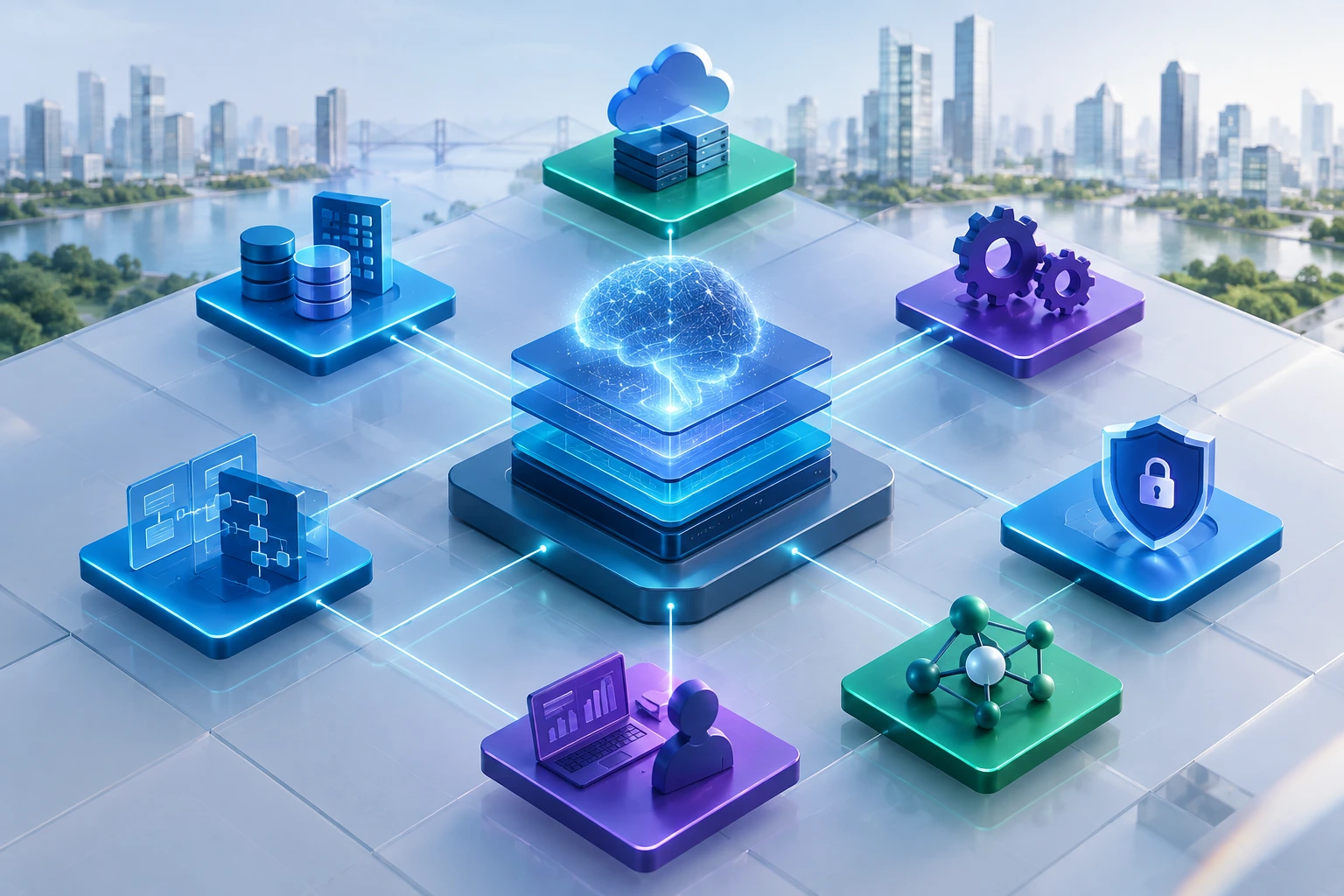
A comprehensive application modernization framework measures ROI across five dimensions: Financial Value, Operational Excellence, Customer Impact, Technology Modernization, and Innovation Readiness. Evaluating all five pillars provides a more accurate picture of modernization success than relying on cost savings alone.
Microsoft recommends aligning modernization initiatives with business outcomes rather than focusing solely on technical upgrades. Its Cloud Adoption Framework emphasizes selecting the right modernization strategy based on workload complexity, business priorities, and long-term value.
A more effective approach is evaluating modernization through five interconnected business dimensions.
Techment Enterprise Modernization ROI Framework
| Pillar | What to Measure | Business Outcome |
|---|---|---|
| Financial Value | Infrastructure costs, cloud optimization, licensing, TCO | Reduced operating expenses |
| Operational Excellence | Deployment frequency, automation, MTTR, productivity | Improved efficiency |
| Customer Impact | Customer satisfaction, response times, digital experience | Better customer retention |
| Technology Modernization | Technical debt, scalability, API adoption, cloud-native architecture | Future-ready technology |
| Innovation Readiness | AI readiness, data maturity, developer velocity, automation | Faster innovation |
Unlike traditional ROI models, this framework measures modernization as a continuous business capability rather than a one-time migration project.
Why AI Readiness Has Become a Modernization KPI
AI readiness is emerging as one of the most important modernization metrics because legacy applications often lack the scalability, data accessibility, and integration capabilities required for AI and Generative AI initiatives. Modernized applications provide the foundation for future AI adoption.
The rise of Generative AI has fundamentally changed enterprise modernization priorities.
Organizations are no longer modernizing applications solely to reduce costs—they are modernizing to enable AI.
Legacy applications typically struggle with:
- Siloed data
- Limited API connectivity
- Monolithic architectures
- Poor scalability
- Inconsistent governance
These limitations make AI implementation expensive and slow.
Modernized applications, by contrast, support:
- API-first integration
- Real-time data access
- Cloud-native scalability
- AI agents
- Retrieval-Augmented Generation (RAG)
- Intelligent automation
- Predictive analytics
As a result, AI readiness has become a measurable indicator of modernization ROI rather than a future consideration.
Related Reading: How to Build AI-Ready Data Foundations: A Strategic Enterprise Guide.
Cost Reduction: The Most Visible—But Not the Only—ROI Metric
Cost reduction remains an important modernization metric, but it should be evaluated alongside operational improvements and business outcomes. Sustainable application modernization ROI comes from lowering total cost of ownership while simultaneously increasing agility, productivity, and innovation capacity.
Reducing operational costs remains one of the fastest ways to demonstrate modernization value.
Common cost savings include:
- Lower infrastructure costs
- Reduced licensing expenses
- Decreased maintenance effort
- Smaller data center footprint
- Lower energy consumption
- Automated operational tasks
- Reduced downtime
However, organizations should evaluate Total Cost of Ownership (TCO) instead of focusing solely on infrastructure savings.
Modernization often introduces new investments in cloud platforms, observability, DevSecOps, AI tooling, and automation. While these increase short-term expenditure, they frequently reduce long-term operational costs and improve business agility.
The most successful enterprises measure modernization through a balanced combination of financial, operational, and strategic outcomes rather than using cost reduction as the sole success metric.
Beyond Cost Savings: The KPIs That Actually Matter
Application modernization ROI should be measured using a balanced set of financial, operational, technical, and business KPIs. Metrics such as deployment frequency, developer productivity, customer satisfaction, security posture, and AI readiness provide a more complete view of modernization success than infrastructure savings alone.
Many organizations stop measuring ROI once cloud migration is complete. However, modernization is a continuous journey, and its true value becomes evident through sustained improvements in business performance.
The table below compares traditional modernization metrics with modern enterprise KPIs.
Related Reading: Explore 7 critical warning signs that indicate your enterprise data foundation may not yet support scalable, trustworthy AI—and what strategic leaders can do about it.
Traditional vs Modern Modernization Metrics
| Traditional Metrics | Modern Enterprise KPIs | Business Impact |
|---|---|---|
| Infrastructure Cost | Business Agility | Faster response to market changes |
| Server Utilization | Deployment Frequency | Accelerated software delivery |
| Maintenance Cost | Developer Productivity | Faster feature development |
| Downtime | Customer Experience (CSAT/NPS) | Higher customer retention |
| Capital Expenditure | Innovation Velocity | Faster digital transformation |
| Cloud Spend | AI Readiness | Future-proof enterprise architecture |
| Number of Servers | Automation Rate | Lower operational effort |
| Incident Count | Mean Time to Recovery (MTTR) | Improved service reliability |
Recommended Enterprise KPIs
Measure modernization success across five dimensions:
Financial
- Total Cost of Ownership (TCO)
- Infrastructure Cost Savings
- Cloud Cost Optimization
- Licensing Reduction
- Payback Period
Operational
- Deployment Frequency
- Application Availability
- Mean Time to Recovery (MTTR)
- Automation Rate
- Operational Efficiency
Customer
- Customer Satisfaction (CSAT)
- Net Promoter Score (NPS)
- Digital Adoption
- Response Time
- User Experience
Technology
- Technical Debt Reduction
- API Adoption
- Cloud-Native Workloads
- Security Improvements
- Scalability
Innovation
- AI Readiness
- Time-to-Market
- Developer Productivity
- Automation Coverage
- New Digital Services

Enterprise Insight: Executive dashboards should combine financial and operational KPIs. While CFOs focus on cost optimization, CIOs and CTOs increasingly prioritize agility, innovation, and AI readiness as indicators of modernization success.
AI Migration Patterns: Choosing the Right Modernization Strategy
The right AI migration strategy depends on business goals, application complexity, and desired outcomes. Enterprises typically choose between rehosting, replatforming, refactoring, replacing, or rebuilding applications based on cost, scalability, cloud readiness, and AI adoption objectives.
Not every legacy application requires complete redevelopment. Choosing the right migration approach significantly impacts modernization ROI.
Enterprise AI Migration Patterns
| Strategy | Description | Best For | ROI Potential |
|---|---|---|---|
| Rehost (Lift & Shift) | Move applications with minimal changes | Quick cloud migration | Medium |
| Replatform | Optimize applications for cloud services | Performance improvements | High |
| Refactor | Redesign application architecture | Cloud-native transformation | Very High |
| Replace | Adopt SaaS solutions | Standard business processes | Medium to High |
| Rebuild | Develop AI-first applications | Strategic digital products | Highest (Long Term) |
How to Choose the Right Strategy
Choose Rehost if:
- Migration timelines are short.
- Infrastructure refresh is the priority.
- Minimal application changes are required.
Choose Replatform if:
- You want cloud optimization without major redevelopment.
- Performance and scalability need improvement.
Choose Refactor if:
- Applications are business-critical.
- Long-term innovation is a priority.
- AI integration is planned.
Choose Replace if:
- Mature SaaS alternatives exist.
- Maintaining custom software no longer provides competitive advantage.
Choose Rebuild if:
- Legacy systems limit innovation.
- AI-driven business capabilities are strategic priorities.
- Existing architecture cannot support future growth.
Measuring AI Readiness After Modernization
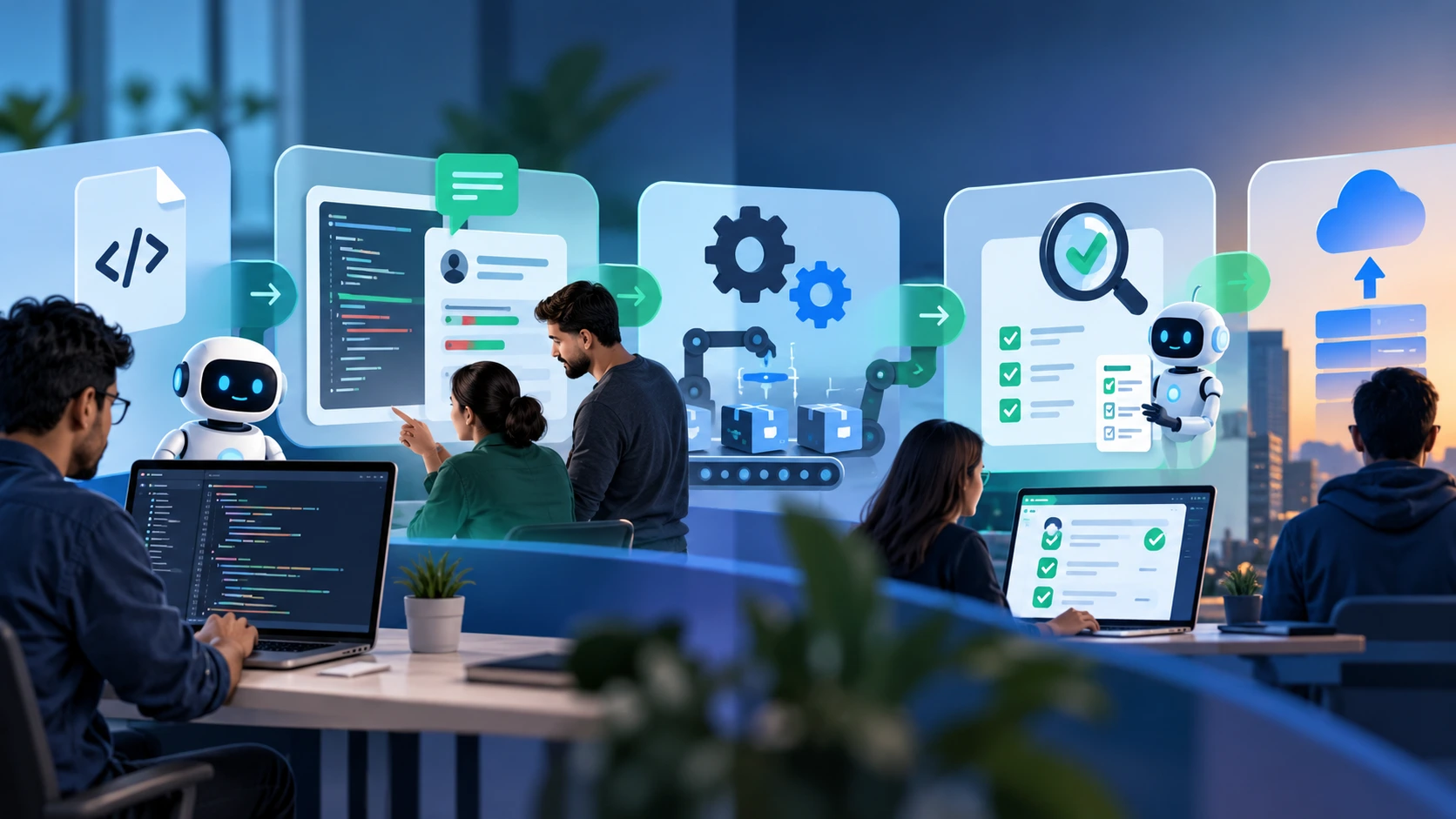
AI-ready applications are designed with APIs, scalable cloud infrastructure, governed data, and modular architectures that enable rapid adoption of machine learning, Generative AI, intelligent automation, and AI agents.
Application modernization should prepare organizations for future AI initiatives—not just today’s operational needs.
Related Reading: Enterprise AI agent adoption challenges,
AI Readiness Checklist
✔ API-first architecture
✔ Unified enterprise data
✔ Cloud-native infrastructure
✔ Secure data governance
✔ Modular application design
✔ Real-time data access
✔ AI-ready security controls
✔ Integration with enterprise platforms
Applications that satisfy these requirements can adopt AI significantly faster than legacy systems with tightly coupled architectures.
Common Mistakes That Reduce Modernization ROI
Many modernization initiatives underperform because organizations focus exclusively on technology while overlooking business outcomes, governance, user adoption, and continuous optimization. Avoiding these mistakes significantly improves long-term modernization ROI.
Common pitfalls include:
1. Measuring only infrastructure savings- Cloud migration alone does not guarantee business value.
2. Ignoring technical debt- Migrating outdated applications without redesign simply transfers existing problems to the cloud.
3. Choosing the wrong migration strategy- Every application should be assessed individually.
4. Modernizing without AI readiness- Applications developed today should support future AI initiatives.
5. Lack of governance- Without architecture standards, security, and monitoring, modernization initiatives become difficult to scale.
6. Treating modernization as a one-time project- Modernization is an ongoing capability requiring continuous improvement.
Related Reading: RAG Models enterprise guide
Future Trends in Application Modernization
Application modernization is evolving beyond cloud migration toward AI-enabled, cloud-native, and autonomous architectures. Emerging technologies such as Generative AI, AI agents, intelligent automation, and platform engineering are redefining how enterprises modernize applications and measure ROI.
Key trends shaping enterprise modernization include:
AI-Assisted Modernization- Generative AI accelerates code analysis, documentation, testing, and migration.
AI Agents- Autonomous AI agents increasingly automate IT operations and business workflows.
Platform Engineering- Internal developer platforms simplify modernization while improving developer productivity.
Cloud-Native Architectures- Containers, Kubernetes, serverless computing, and microservices continue replacing monolithic systems.
Intelligent Automation- AI-powered automation reduces operational costs while improving service quality.
Data Modernization – Modern data platforms enable analytics, AI, and real-time business intelligence.
Enterprise Modernization Scorecard
One way to assess modernization success is to evaluate progress across multiple dimensions instead of relying on a single financial metric.
| Business Area | KPI | Target |
|---|---|---|
| Financial | Reduce Total Cost of Ownership | 20–30% |
| Operations | Increase Deployment Frequency | Weekly or Daily Releases |
| Customer Experience | Improve Customer Satisfaction | Higher CSAT/NPS |
| Technology | Reduce Technical Debt | Continuous Reduction |
| AI Readiness | API-Enabled Applications | 90%+ |
| Security | Critical Vulnerabilities | Continuous Reduction |
| Productivity | Developer Velocity | Faster Feature Delivery |
Organizations that consistently improve across these dimensions are more likely to realize sustainable modernization ROI.
Key Takeaways
- Application modernization ROI extends beyond infrastructure cost savings.
- Enterprises should measure financial, operational, customer, technology, and innovation outcomes.
- AI readiness has become a critical indicator of modernization success.
- Selecting the right migration strategy significantly impacts ROI.
- Continuous monitoring ensures modernization investments continue delivering business value.
Conclusion
Application modernization is no longer simply about replacing legacy systems or reducing infrastructure costs. It is about creating a technology foundation that enables innovation, strengthens resilience, improves customer experiences, and prepares the enterprise for an AI-driven future.
Organizations that evaluate modernization solely through cost reduction risk overlooking the strategic value of agility, developer productivity, AI readiness, and business innovation. By adopting a balanced ROI framework and selecting the right migration strategy, enterprises can maximize the long-term value of modernization investments while accelerating digital transformation.
At Techment, we help organizations modernize legacy applications with cloud-native architectures, data engineering, AI strategy, Generative AI, Microsoft Fabric, and enterprise software engineering. Our modernization approach focuses on measurable business outcomes—helping enterprises reduce technical debt, improve operational efficiency, and build AI-ready platforms for sustainable growth.
FAQs
1. What is application modernization ROI?
Application modernization ROI measures the business value generated by upgrading legacy applications and IT infrastructure. It includes financial benefits such as reduced infrastructure costs as well as long-term outcomes like improved agility, faster software delivery, enhanced security, better customer experiences, and AI readiness.
2. How do you measure application modernization ROI?
Organizations should measure application modernization ROI using a combination of financial, operational, customer, technology, and innovation KPIs. Important metrics include Total Cost of Ownership (TCO), deployment frequency, developer productivity, application availability, customer satisfaction, and AI readiness.
3. Why is cost reduction alone not enough to measure modernization success?
While infrastructure and maintenance cost savings provide immediate financial benefits, they do not capture the full value of modernization. Long-term ROI also comes from increased business agility, faster innovation, improved developer productivity, stronger security, and the ability to adopt AI and cloud-native technologies.
4.What is an application modernization framework?
An application modernization framework provides a structured approach to evaluating, planning, and executing modernization initiatives. It helps organizations prioritize applications, select the right modernization strategy, define success metrics, and measure business outcomes throughout the modernization lifecycle.
5.What are the most common application modernization strategies?
The most common modernization strategies include:
Rehost (Lift and Shift)
Replatform
Refactor
Replace
Rebuild
The right strategy depends on business goals, application complexity, technical debt, and long-term innovation objectives.
6. How does application modernization support AI adoption?
Modernized applications are designed with API-first architectures, cloud-native infrastructure, and governed data, making them easier to integrate with Generative AI, AI agents, machine learning models, and intelligent automation. This improves AI readiness and accelerates digital innovation.
7.What KPIs should CIOs track after application modernization?
CIOs should monitor KPIs such as Total Cost of Ownership (TCO), deployment frequency, Mean Time to Recovery (MTTR), developer productivity, customer satisfaction, cloud cost optimization, technical debt reduction, AI readiness, and application availability to evaluate modernization success.
Related Reads
- Legacy Modernization AI – Techment
- 7 Strategic Reasons Enterprise AI Adoption and Readiness Is No Longer Optional in 2026
- 7 Critical Differences Between AI Readiness vs AI Adoption That Most Enterprises Ignore in 2026
- Enterprise AI Strategy in 2026
- AI-Ready Enterprise Checklist for Microsoft Fabric
- Data Quality for AI in 2026: The Ultimate Blueprint
- Why Modern Data Platforms Are Critical for RAG Success in Enterprises