Techment — Site Header

Turn Fragmented Data Into Real-Time AI Intelligence

Retail moves in real time — your data shouldn’t lag behind it. Techment unifies data across merchandising, supply chain, store operations, and customer touchpoints, then layers generative and predictive AI on top, so retail teams stop reacting to last week’s numbers and start deciding in the moment.
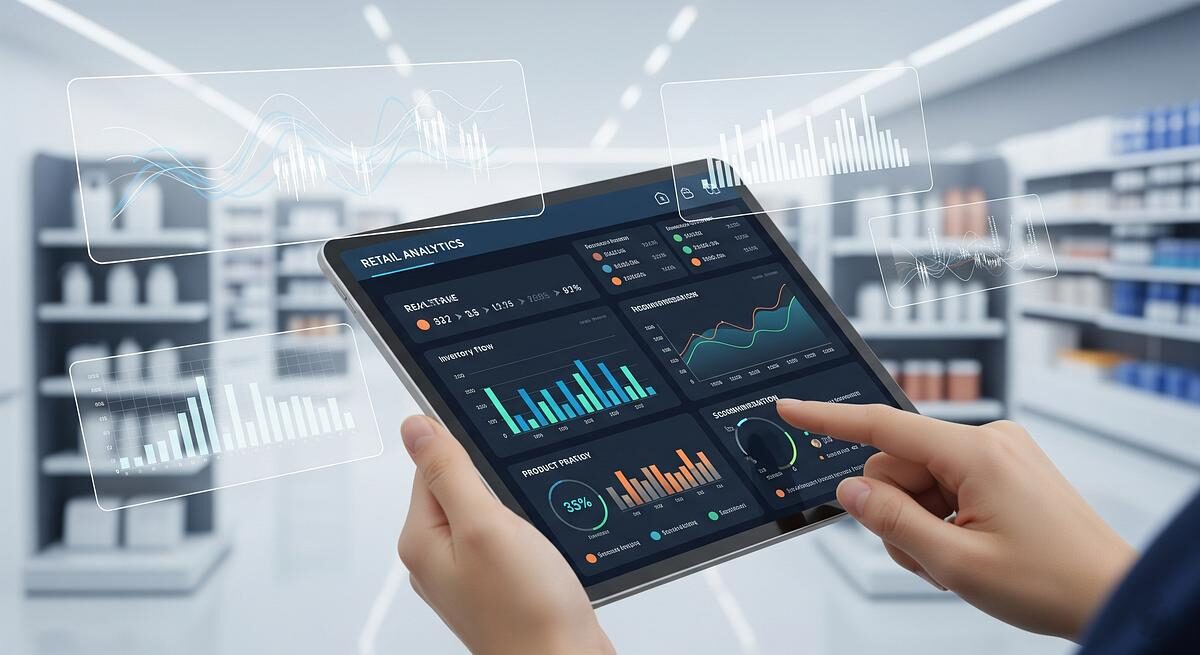
Retail analytics dashboard on a tablet held in a store aisle, showing real-time inventory and product-performance charts
Live retail signal

Works with the retail systems you already run

POS Platforms ERP Systems E-Commerce Platforms Warehouse Management Supplier EDI Feeds Microsoft Fabric Power BI Reporting CRM Systems

Retail Runs on Data. Most Retailers Still Can’t Access It Fast Enough.

Retail businesses generate more data than almost any other industry — POS transactions, e-commerce clickstreams, loyalty programs, warehouse feeds, supplier EDI — yet most of it sits siloed across systems that don’t talk to each other. The result isn’t a data shortage. It’s a decision shortage.

93% of retail executives plan to scale AI and generative AI investment over the next 3–5 years — but most are held back by fragmented, ungoverned data.
Disconnected systems Sales, inventory, and customer data trapped in disconnected POS, ERP, CRM, and e-commerce systems
Reporting in days Manual, spreadsheet-driven reporting that takes days instead of minutes
KPIs that disagree Inconsistent KPI definitions across merchandising, finance, and store operations
Every question is a ticket Limited self-service analytics — every question becomes a ticket to the data team
Forecasts on stale data Demand forecasts and promotions planned on outdated or incomplete data
No foundation for AI Growing pressure to adopt generative and agentic AI without a governed data foundation to build it on

A unified data foundation, built for AI from day one

Techment’s approach to data and AI for retail starts with one principle: AI is only as good as the data underneath it. We unify retail data into a single governed foundation on Microsoft Fabric, then apply generative and predictive AI on top, so every insight, forecast, and recommendation is trustworthy, explainable, and fast.

Unify
Consolidate POS, e-commerce, ERP, CRM, and warehouse data into one governed source of truth (OneLake on Microsoft Fabric). Ingest every channel One semantic model No rip-and-replace

Data & AI Services Built for Retail

Unified Retail Data Platform Consolidate data from every channel — POS, e-commerce, warehouse, CRM, supplier feeds — into one governed platform built on Microsoft Fabric.
Retail Reporting Automation Replace manual, spreadsheet-built reports with automated pipelines and dashboards refreshed in near real time.
AI-Powered Demand Forecasting Predictive models for demand planning, replenishment, and markdown optimization that adapt to seasonality and promotions.
Conversational Analytics for Retail Natural-language, chat-based access to retail data — ask a question, get an answer, no dashboard required.
Generative & Agentic AI for Retail From AI-assisted merchandising copy to autonomous agents that flag stockouts or pricing anomalies before a human has to look.
Customer 360 & Loyalty Analytics A single view of the customer across channels to power segmentation, personalization, and loyalty program performance.
Retail Supply Chain & Inventory AI Real-time visibility into stock levels, supplier performance, and replenishment risk across the network.
Consistent Retail KPI Governance One shared definition of every metric — sell-through, margin, shrink — so merchandising, finance, and stores stop reconciling numbers.
Enterprise-Grade Security & Governance Role-based access, data lineage, and compliance controls that meet enterprise retail security requirements.

Ask a question the way you’d ask a colleague

No dashboard, no ticket, no SQL. Pick a question to see the kind of answer a governed retail data foundation makes possible.

Retail Copilot · live on unified data
What were our top 10 SKUs by margin last week?
Copilot answer
Margin leaders are concentrated in Home & Kitchen — 6 of the top 10, led by SKU 40218 at 41.3% margin on 2,180 units. Two promo SKUs dropped out of the top 10 versus the prior week.

The Business Impact of Getting Retail Data and AI Right

The same four systems, the same team — measured before the unification and ninety days after.

Reporting cycle time Month-end close, all channels Before — spreadsheet reporting 9 days After — governed Fabric platform < 4 hours 80% Faster retail reporting cycles
60% Reduction in manual reporting effort Hours per week reclaimed from report building
100% Improved KPI consistency across teams Every team reading the same definition
360° Visibility across channels, stores, and supply chain Every store, channel, and supplier in one view
5×Faster decision-making from data to action From question asked to action taken

The view a unified foundation gives you

One week of retail signal, read from a single governed source instead of seven reconciled exports.

Demand vs. forecast Units sold, all channels
94% accuracy
Mon Tue Wed Thu Fri Sat Sun ActualAI forecast
Stockout risk by store 35 locations, next 7 days Low High
14 stores flagged — transfer beats reorder
Channel mix Revenue share, this week 100% one source Stores46%E-commerce32%Marketplace15%Wholesale7%

A Structured Path to Conversational Retail Intelligence

Schedule a Discovery Call
1 Discovery Call
30 min
Understand current data landscape, pain points, and priority use case
2 Data & AI Readiness Assessment
1–2 weeks
Audit systems, data quality, and governance gaps
3 4–6 Week Proof of Concept
4–6 weeks
Stand up a working slice — such as one forecasting model or one conversational analytics use case — on real data
4 Scale & Govern
Ongoing
Roll out platform-wide with governance, training, and ongoing optimization

Why Retail Teams Choose Techment

Retailers don’t need another mega-consultancy engagement measured in quarters, or a point solution that only solves one problem. Techment combines Microsoft Fabric-native engineering depth with the speed and attention of a dedicated delivery team — so you get a working proof of concept in weeks, not a slide deck in months.

Fast to value working POC in 4–6 weeks, not a multi-quarter transformation program
Fabric-native depth purpose-built expertise on Microsoft’s unified data and AI platform
Right-sized delivery enterprise-grade rigor without enterprise-consultancy overhead or pricing
End-to-end data engineering, governance, and AI/agentic use cases from one partner

Data & AI Expertise Across the Industries We Serve

The same unify-govern-activate-scale approach, applied wherever fragmented, ungoverned data is holding a team back.

Ready to Turn Retail Data Into Real-Time Decisions?

Book a free 30-minute discovery call and see what a unified data and AI foundation could look like for your retail business.

Schedule a Discovery Call

Frequently Asked Questions

What does “data and AI for retail” actually mean?

Data and AI for retail means unifying data from every part of the retail business — sales, inventory, supply chain, and customer touchpoints — into one governed platform, then applying AI (forecasting, conversational analytics, generative and agentic AI) on top of it to help teams make faster, more accurate decisions.

How is Techment’s approach different from typical retail analytics tools?

Most retail analytics tools sit on top of data that’s still fragmented across systems. Techment starts by unifying and governing that data on Microsoft Fabric first, so the AI layer — forecasting models, conversational analytics, agentic workflows — works from one consistent, trustworthy source instead of reconciling numbers after the fact.

How long does it take to implement AI in a retail business?

Most engagements start with a focused 4–6 week proof of concept on one high-priority use case — such as demand forecasting or conversational reporting — using real data. Full platform rollout and governance typically follow over the next 2–4 months, depending on the number of systems and data sources involved.

Is data and AI transformation only for large retail enterprises?

No. While large retailers often have the most complex data environments, mid-market retailers benefit even faster from unifying data and adding AI, since they can typically move from proof of concept to full deployment in a shorter timeframe with fewer legacy systems to untangle.

What is conversational analytics, and how does it help retail teams?

Conversational analytics lets business users ask questions about retail data in plain language — “What were our top 10 SKUs by margin last week?” — and get an immediate answer, without waiting on a dashboard or a data team ticket. It extends self-service analytics to merchandising, marketing, and store operations teams who aren’t SQL or BI experts.

How does AI improve retail demand forecasting?

AI-driven forecasting models incorporate more signals than manual or spreadsheet forecasting — historical sales, seasonality, promotions, weather, and local trends — to produce more accurate, granular predictions at the SKU and store level, reducing both stockouts and excess inventory.

Can AI and data solutions integrate with our existing retail systems (POS, ERP, e-commerce)?

Yes. Techment’s data platform is built to integrate with common retail systems — POS platforms, ERP systems, e-commerce platforms, warehouse management systems, and supplier EDI feeds — consolidating them into a single governed data foundation rather than requiring a rip-and-replace of existing systems.

What is agentic AI, and does it apply to retail?

Agentic AI refers to AI systems that can take action — not just generate an answer — flagging a stockout risk, adjusting a reorder point, or surfacing a pricing anomaly before a human notices. Early retail use cases include automated exception monitoring, inventory alerts, and AI-assisted merchandising workflows on top of a governed data foundation.

Hello popup window