Introduction
Enterprise transformation often fails long before implementation begins. Not because technology is unavailable. But because organizations underestimate the hidden cost of legacy systems.
Across industries, enterprises still rely on decades-old applications, monolithic architectures, aging ERP environments, and tightly coupled infrastructure that were never designed for cloud-native operations, AI, or modern analytics.
This guide explores how legacy modernization services are evolving in 2026, how AI is reshaping modernization strategies, and what enterprise leaders should consider when modernizing at scale.
TL;DR
- Legacy systems are increasingly slowing enterprise growth and innovation.
- Legacy modernization services help organizations reduce cost, improve agility, and prepare for AI adoption.
- AI is transforming modernization through automated code analysis, migration acceleration, and intelligent testing.
- Enterprises are moving beyond “rip and replace” toward phased modernization strategies.
- Successful modernization requires governance, architecture planning, and business alignment.
Why Legacy Systems Are Becoming a Business Liability
Legacy modernization services are becoming a board-level priority.
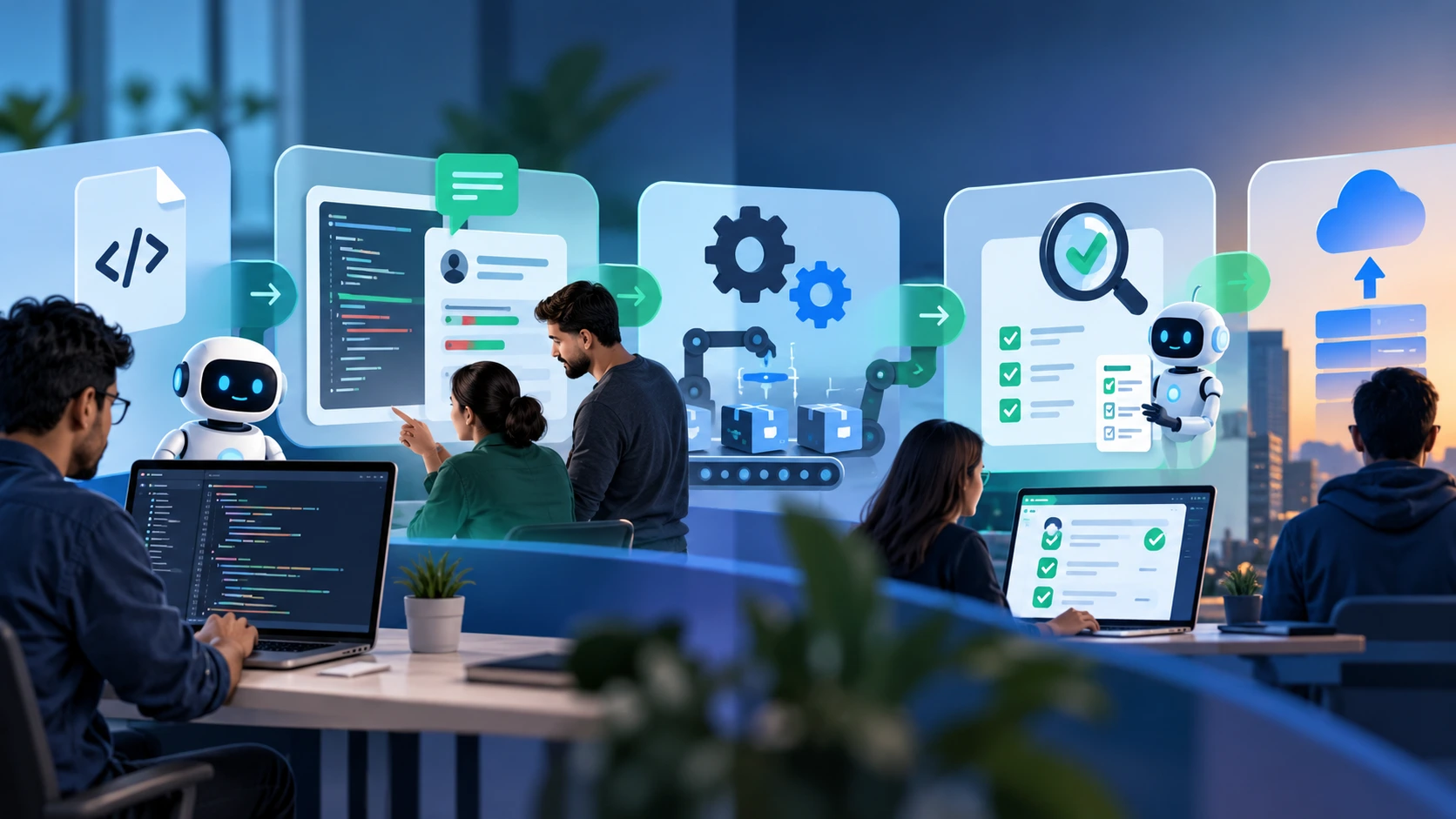
Rather than pursuing expensive and risky system replacements, organizations are increasingly adopting AI-driven modernization strategies that reduce technical debt, accelerate transformation, and improve long-term agility.
According to research from McKinsey & Company, enterprises modernizing digital infrastructure often achieve substantial operational improvements while reducing maintenance overhead and accelerating innovation.
The challenge is no longer whether modernization matters.
The challenge is how to modernize without disrupting business continuity.
Technical Debt Is No Longer an IT Problem
Many organizations still view legacy modernization as a technical initiative.
That mindset is increasingly outdated.
Legacy systems have evolved into enterprise-wide business constraints.
The cost of maintaining outdated infrastructure extends beyond IT budgets.
It affects:
- Speed to market
- Customer experience
- Operational resilience
- Security posture
- Innovation capacity
- Data accessibility
- AI readiness
A system built fifteen or twenty years ago may still function operationally.
But functionality alone no longer determines competitiveness.
The real question is:
Can your technology ecosystem adapt fast enough to support modern business demands?
Increasingly, the answer is no.
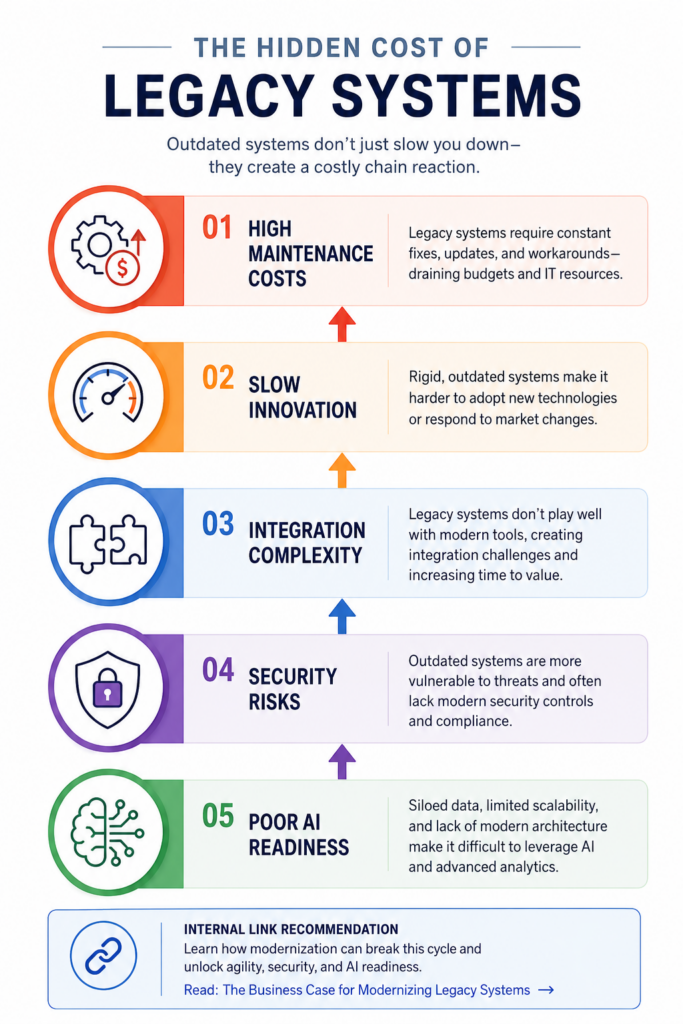
The Hidden Cost of Legacy Systems
Many enterprises underestimate how expensive legacy environments truly are.
Direct costs include:
- High infrastructure expenses
- Vendor lock-in
- Expensive maintenance contracts
- Specialized talent shortages
Indirect costs are often worse.
These include:
Slower innovation
Modern products take longer to launch because teams work around rigid systems.
Integration bottlenecks
Legacy platforms often struggle to connect with APIs, cloud services, and AI systems.
Poor data accessibility
Disconnected data limits analytics and enterprise intelligence.
Security vulnerabilities
Older systems frequently introduce compliance and cyber risks.
According to insights from Accenture, technical debt continues to constrain enterprise transformation, limiting agility and increasing operational risk.
Why Legacy Systems Limit AI Adoption
One of the biggest modernization drivers in 2026 is AI readiness.
Organizations often assume they can simply layer AI on top of legacy environments.
In reality, most legacy systems lack:
- Real-time data access
- API connectivity
- Unified data foundations
- Scalable compute infrastructure
- Governance mechanisms
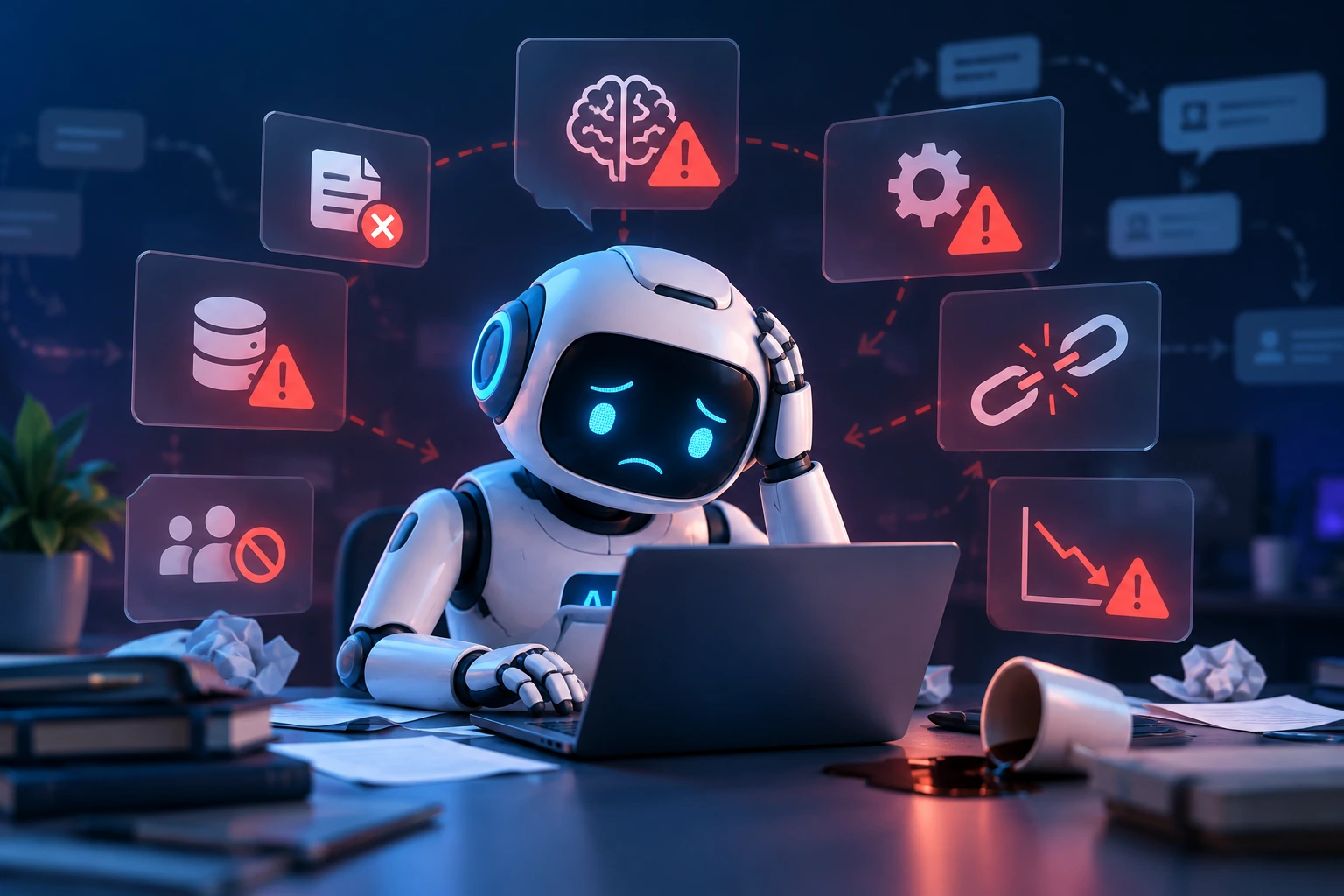
This creates a major bottleneck.
Without modernization, enterprises struggle to operationalize:
- Copilots
- Predictive intelligence
- Enterprise search
- Retrieval systems (RAG)
- Workflow automation
- AI agents
Executive Insight
AI transformation increasingly depends on modernization readiness.
Many enterprises discover:
Their biggest AI challenge is not the model—it is the infrastructure underneath it.
Explore 7 critical warning signs that indicate your enterprise data foundation may not yet support scalable, trustworthy AI—and what strategic leaders can do about it.
What Are Legacy Modernization Services?
Defining Legacy Modernization Services
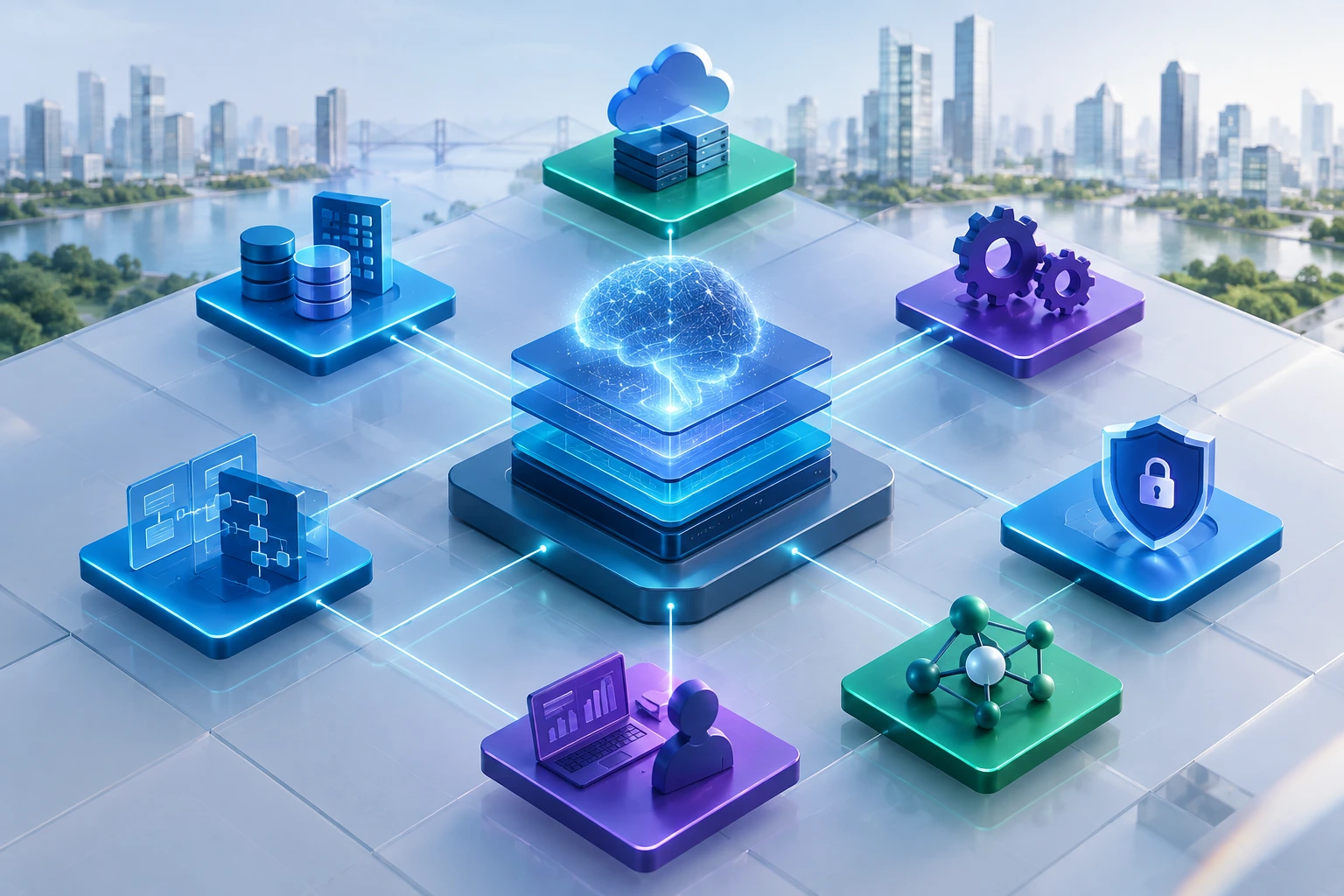
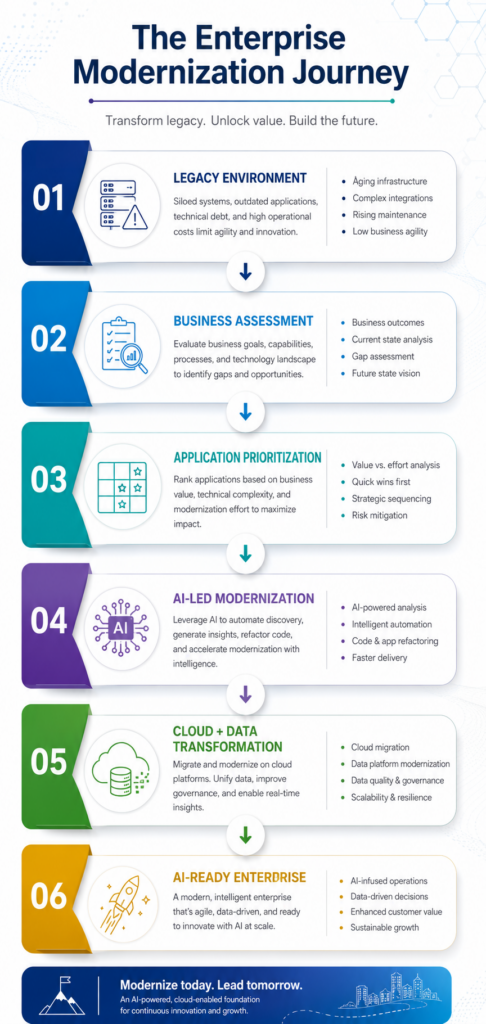
At a strategic level, legacy modernization services help enterprises transform outdated applications, infrastructure, and workflows into scalable, modern systems aligned with current business needs.
This can include:
- Application modernization
- Infrastructure transformation
- Cloud migration
- API enablement
- Data modernization
- Workflow redesign
- Security upgrades
Modernization is not simply migration.
It is enterprise reinvention.
The goal is not just replacing systems.
The goal is enabling:
- Faster innovation
- Better customer experiences
- Enterprise agility
- AI readiness
- Operational resilience
Why “Rip and Replace” No Longer Works
Traditional modernization strategies often followed one assumption:
Replace everything.
This approach introduced major risks:
- Business disruption
- High implementation cost
- Operational instability
- Long timelines
- Change resistance
Today, enterprises increasingly favor incremental modernization.
Instead of rebuilding everything, organizations modernize selectively.
This includes:
- Decoupling applications
- Exposing APIs
- Replatforming workloads
- Modernizing priority systems first
This phased approach reduces risk while accelerating business value.
The Five Most Common Modernization Strategies
Enterprises generally choose among five modernization paths.
1. Rehost (“Lift and Shift”)
Move applications to cloud infrastructure without redesigning architecture.
Best for:
Quick migration.
Limitation:
Minimal innovation gains.
2. Replatform
Make selective platform improvements without rebuilding applications.
Examples:
- Database modernization
- Containerization
- Managed services
3. Refactor
Modify application code to support modern architecture.
Examples:
- Microservices
- APIs
- Cloud-native environments
4. Rebuild
Completely redesign applications.
Best for:
Highly outdated systems with limited future viability.
5. Replace
Move to packaged enterprise software.
Examples:
- ERP transformation
- CRM replacement
- SaaS adoption
Executive Comparison Table
| Modernization Strategy | Best For | Complexity | Cost | AI Readiness |
|---|---|---|---|---|
| Rehost | Fast migration | Low | Low | Low |
| Replatform | Incremental improvement | Medium | Medium | Moderate |
| Refactor | Long-term transformation | High | High | Strong |
| Rebuild | Strategic reinvention | Very High | Very High | Excellent |
| Replace | Standardized systems | Medium | Medium–High | Moderate |
The strongest modernization strategies rarely rely on one path. Most enterprises adopt a hybrid modernization model.
Example:
- Rehost non-critical workloads
- Refactor high-value applications
- Replace commodity systems
Explore a practical enterprise framework for building trusted data foundations through quality, governance, architecture, and modernization — the four pillars required for scalable AI readiness in our How to Build AI-Ready Data Foundations: A Strategic Enterprise Guide.
Common Legacy Modernization Challenges Enterprises Face
Challenge 1: Business Disruption Risk
Executives fear downtime.
And often for good reason.
Poorly planned modernization initiatives can disrupt:
- Customer experiences
- Revenue operations
- Supply chains
- Compliance processes
How Leaders Mitigate Risk
Successful enterprises modernize incrementally.
They avoid:
“Big bang transformation”
Instead, they prioritize:
- Business-critical systems
- Phased rollouts
- Pilot programs
- Parallel environments
Challenge 2: Institutional Knowledge Loss
Many enterprises rely on systems built decades ago.
The problem:
Original developers often no longer exist.
Documentation is incomplete.
Knowledge is fragmented.
AI increasingly helps bridge this gap by interpreting:
- Legacy code
- Workflows
- Dependencies
- Business logic
Challenge 3: Integration Complexity
Modernization rarely occurs in isolation.
Applications interact with:
- ERP systems
- CRM
- Data platforms
- Third-party APIs
This complexity often slows modernization programs.
Recommended Strategy
Adopt:
API-first modernization
This improves interoperability while reducing disruption.
Challenge 4: Security and Compliance
Legacy environments frequently expose enterprises to:
- Security vulnerabilities
- Compliance failures
- Audit challenges
Modernization increasingly strengthens:
- Access control
- Encryption
- Governance
- Monitoring
According to guidance from Microsoft Learn, modernization strategies increasingly prioritize security-by-design principles.
Explore the most critical enterprise AI agent adoption challenges, including data readiness, governance complexity, orchestration issues, ROI ambiguity, and organizational resistance.
Future Trends in Legacy Modernization
Trend 1: AI-First Modernization
AI will increasingly automate:
- Discovery
- Refactoring
- Testing
- Documentation
Trend 2: Composable Architectures
Monolithic systems will increasingly evolve into:
- APIs
- Microservices
- Event-driven systems
Trend 3: Hybrid Cloud Modernization
Organizations increasingly combine:
- Public cloud
- Private cloud
- Edge infrastructure
Trend 4: Continuous Modernization
Modernization will shift from one-time projects to continuous operating models.
Leading enterprises increasingly treat modernization as an ongoing capability.
How Techment Helps Enterprises Modernize Legacy Systems
Legacy modernization succeeds when technology transformation aligns with business outcomes.
This is where Techment helps enterprises move beyond isolated modernization initiatives toward scalable, AI-ready operating environments.
AI-Led Application Modernization
Techment helps organizations modernize:
- Enterprise applications
- Legacy platforms
- Cloud infrastructure
- APIs
- Data ecosystems
Rather than forcing disruptive rebuilds, Techment focuses on modernization pathways aligned with business goals.
AI-Ready Data Foundations
Modernization increasingly depends on strong data infrastructure.
Techment supports enterprises through:
- Microsoft Fabric implementation
- Data modernization
- Governance
- Enterprise analytics
For a deeper dive into RAG models and enterprise patterns: RAG Models enterprise guide
AI-Native Engineering
Techment enables organizations to modernize applications while preparing for:
- Generative AI
- Enterprise copilots
- Agentic workflows
- Intelligent automation
Managed Transformation Support
Large-scale modernization often requires long-term governance.
Techment supports:
- Roadmaps
- Architecture decisions
- Platform implementation
- Optimization
The objective is not simply modernization.
It is building a future-ready enterprise.
Conclusion
The conversation around modernization is changing. For years, enterprises viewed modernization primarily as a technology problem. Today, it is increasingly a business strategy imperative. Legacy systems continue to power critical operations. But they also slow innovation, increase cost, constrain agility, and limit AI readiness. This is why legacy modernization services are becoming essential for enterprises navigating digital transformation in 2026 and beyond.
The most successful organizations are no longer pursuing disruptive “rip-and-replace” programs. Instead, they adopt pragmatic, AI-driven modernization strategies aligned with business priorities. The future belongs to enterprises that modernize intelligently. Because in the age of AI: Modern infrastructure is no longer optional—it is foundational.
FAQ Section on Legacy Modernization Services
1. What are legacy modernization services?
Legacy modernization services help enterprises upgrade outdated applications, infrastructure, and workflows to improve scalability, agility, security, and AI readiness.
2. How does AI help legacy modernization?
AI accelerates modernization through code analysis, dependency mapping, testing automation, and migration recommendations.
3. What is the difference between rehosting and refactoring?
Rehosting moves systems with minimal changes, while refactoring redesigns applications to support modern architecture.
4. Why is modernization important for AI adoption?
Legacy systems often lack APIs, real-time data, and scalable infrastructure required for AI systems.
5. How long does enterprise modernization take?
Timelines vary depending on complexity, but phased modernization often reduces risk and accelerates value.
Related Reads
- 7 Strategic Reasons Enterprise AI Adoption and Readiness Is No Longer Optional in 2026
- 7 Critical Differences Between AI Readiness vs AI Adoption That Most Enterprises Ignore in 2026
- Enterprise AI Strategy in 2026
- AI-Ready Enterprise Checklist for Microsoft Fabric
- Data Quality for AI in 2026: The Ultimate Blueprint
- Why Modern Data Platforms Are Critical for RAG Success in Enterprises