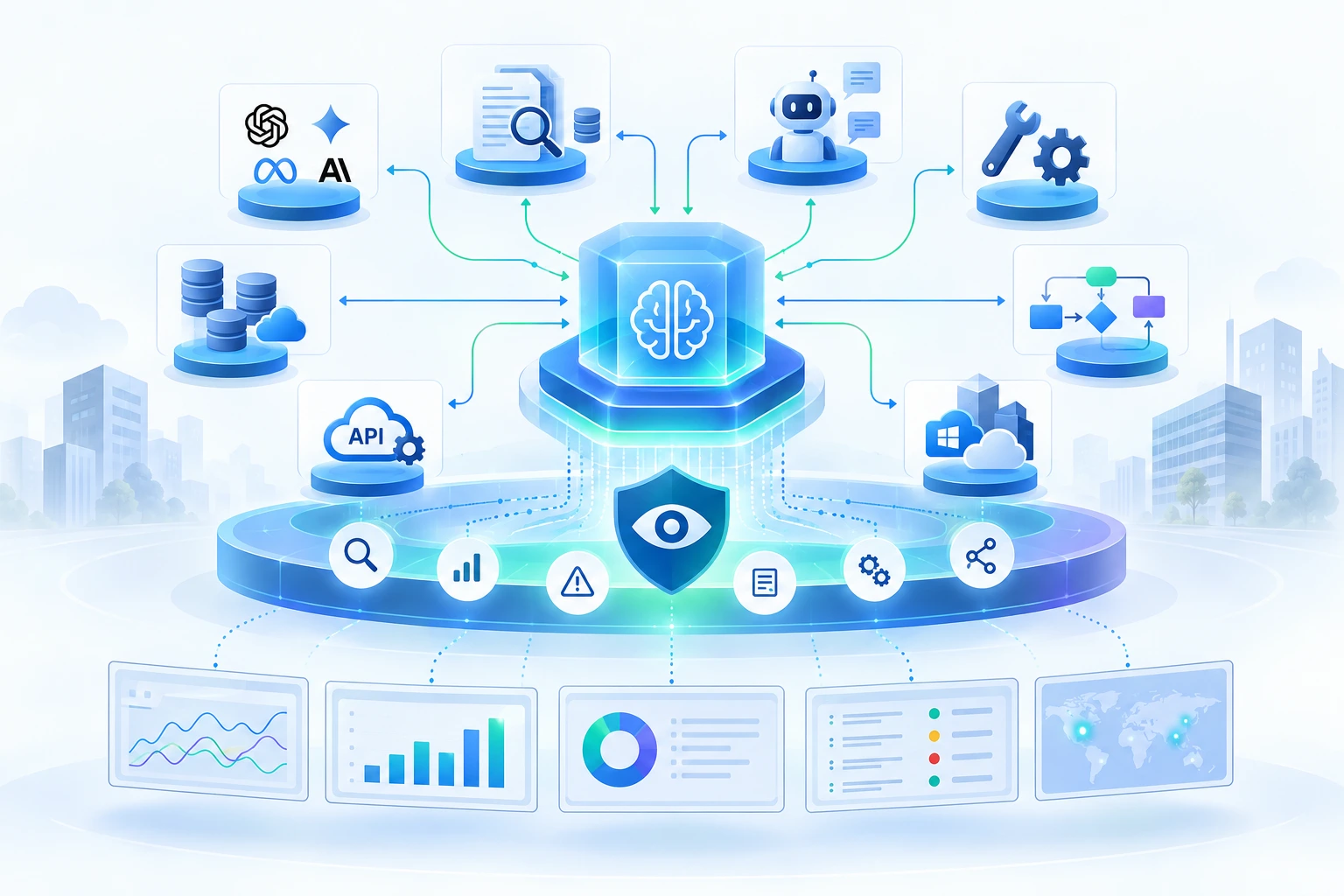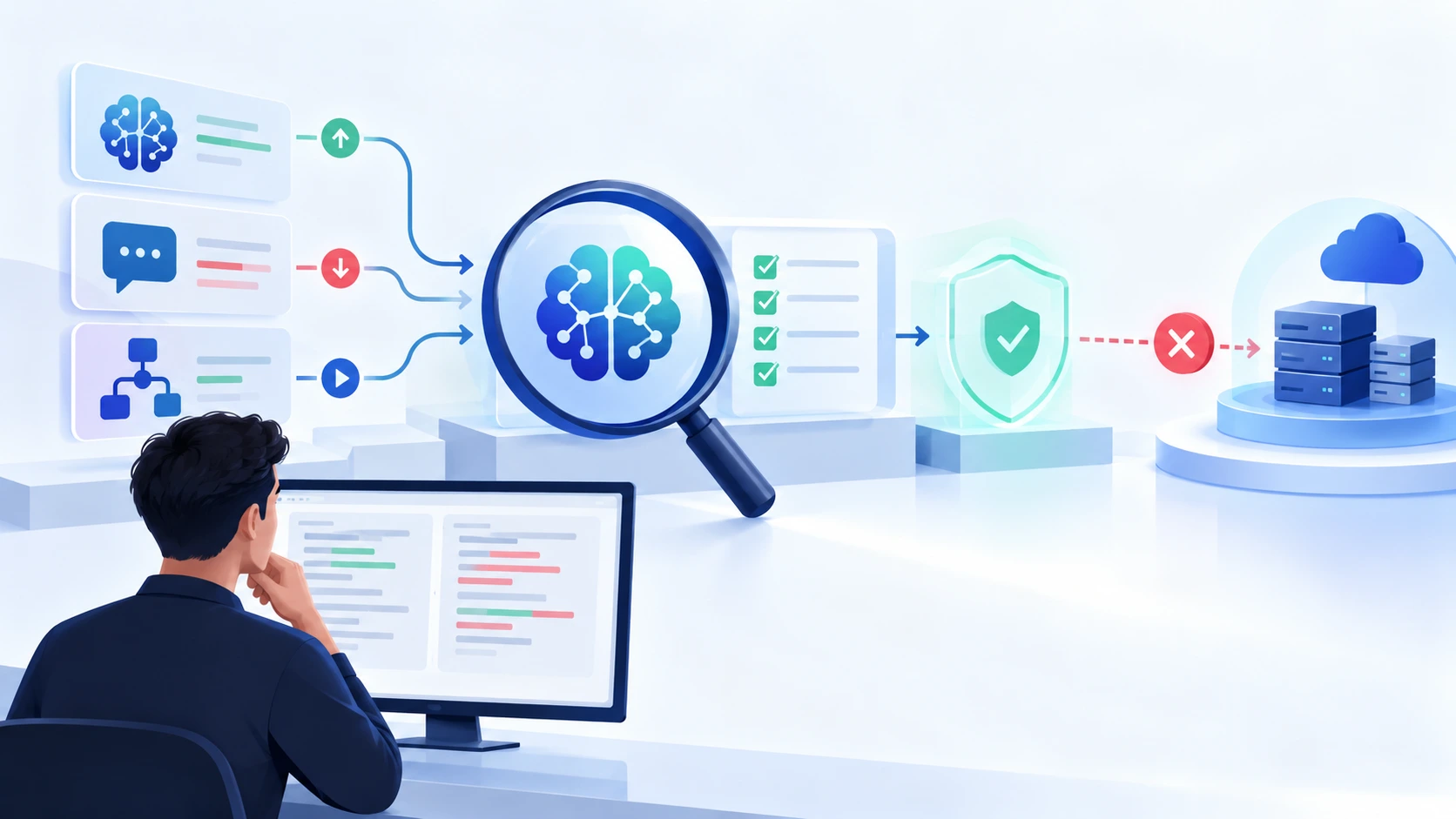
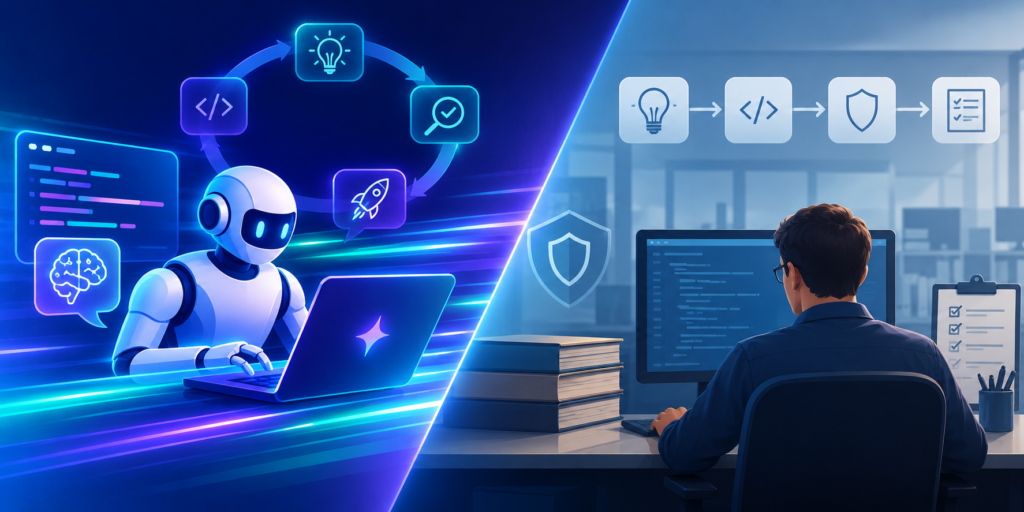
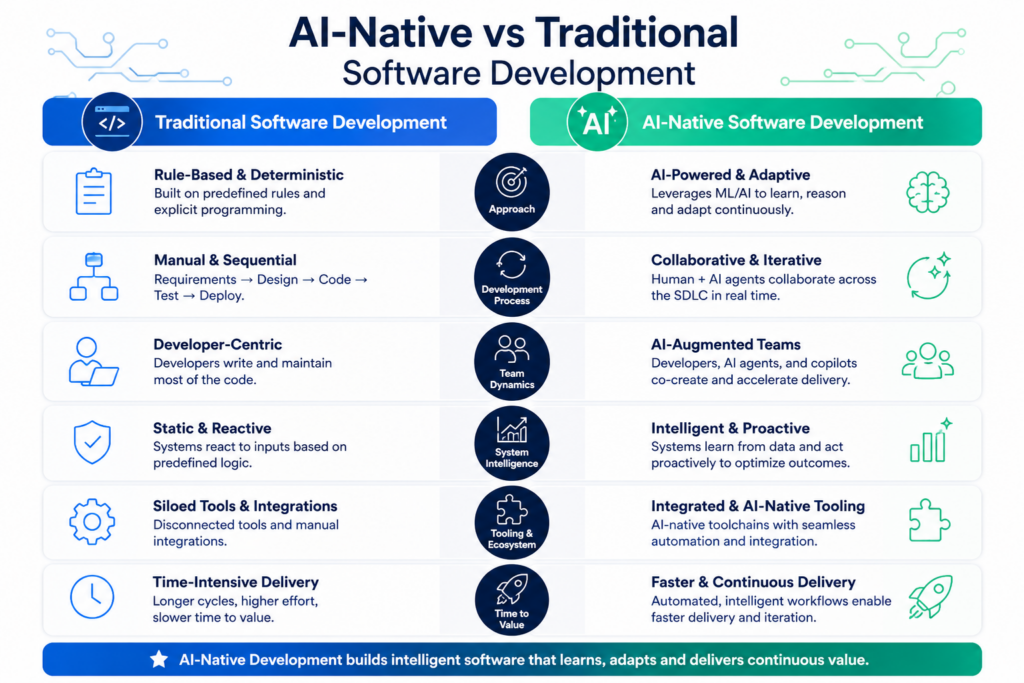
AI-Native vs Traditional Software Development is the comparison between an AI-driven engineering approach and a conventional human-led software development model. AI-native development integrates artificial intelligence throughout the software development lifecycle (SDLC) to accelerate coding, testing, and deployment, while traditional software development emphasizes structured engineering practices, governance, security, and long-term maintainability.
Introduction
AI-native software development represents a shift in how software is created. Instead of using artificial intelligence solely for coding assistance, AI becomes an active participant across planning, architecture, implementation, testing, deployment, and operations. Developers collaborate with AI to accelerate repetitive work, generate implementation options, automate testing, analyze code quality, and improve developer productivity.
Traditional software development, by comparison, follows structured engineering methodologies supported by human expertise, standardized design patterns, code reviews, testing frameworks, and established governance practices.
While AI-native development offers significant gains in development velocity and innovation, it also introduces new challenges around security, compliance, hallucinations, technical debt, governance, and explainability. As a result, AI-native development should not be viewed as a replacement for traditional engineering but as an evolution that enhances it.
For enterprises, the most successful strategy is rarely choosing one approach over the other. Instead, leading organizations are building AI-augmented engineering teams where AI accelerates execution while experienced engineers remain responsible for architecture, security, quality, and business-critical decision-making.
This guide compares AI-native and traditional software development across the software development lifecycle (SDLC), architecture, security, productivity, governance, and long-term maintainability. It also provides practical guidance for organizations planning to modernize their engineering practices without compromising software quality or compliance.
TL;DR
- AI-native software development embeds AI throughout the SDLC rather than treating it as an optional coding assistant.
- Traditional software development relies on predefined engineering processes, manual implementation, and established software engineering principles.
- AI-native teams typically accelerate prototyping, documentation, testing, and developer productivity.
- Traditional engineering continues to provide stronger governance, architectural consistency, compliance, and long-term maintainability for complex enterprise systems.
- Most organizations should adopt a hybrid AI-augmented engineering model, combining AI-driven automation with human architectural oversight and robust engineering discipline.
- Enterprise adoption should prioritize governance, security, responsible AI practices, and measurable business outcomes over simply increasing development speed.
What Is AI-Native Software Development?
AI-native software development is an engineering approach where artificial intelligence is embedded into every stage of the software development lifecycle, enabling AI to actively participate in planning, coding, testing, deployment, documentation, and operations.
Unlike AI-assisted development—which primarily focuses on code suggestions—AI-native development treats AI as a core engineering capability. AI systems continuously collaborate with developers, automate repetitive tasks, generate implementation alternatives, identify defects, recommend optimizations, and support architectural decisions.
In an AI-native environment, software teams no longer think of AI as another developer tool. Instead, they design workflows assuming AI will participate throughout the development process.
Watch our webinar to know more on how modern QA teams are leveraging AI to achieve faster, smarter, and more reliable test automation—all while accelerating delivery cycles and reducing risk.
Typical AI-native capabilities include:
- AI-assisted requirements analysis
- Architecture recommendations
- Intelligent code generation
- Automated documentation
- AI-powered testing
- Security vulnerability detection
- Continuous code review
- DevOps automation
- Incident analysis
- Predictive maintenance
This approach enables engineering teams to spend less time on repetitive implementation work and more time solving complex business problems, improving customer experiences, and driving innovation.
Read our expert insights on AI-Native Engineering Explained: The Enterprise Guide to AI-Driven Software Development
Core Characteristics of AI-Native Development
Enterprise AI-native teams typically exhibit several defining characteristics:
| Capability | AI-Native Approach |
|---|---|
| Requirements | AI-assisted analysis and refinement |
| Development | Human-AI collaborative coding |
| Testing | AI-generated unit, integration, and regression tests |
| Documentation | Automatically generated and continuously updated |
| DevOps | Intelligent CI/CD optimization |
| Monitoring | AI-driven observability and anomaly detection |
| Maintenance | Continuous optimization using AI insights |
Rather than replacing software engineers, AI-native development shifts their responsibilities toward system design, architectural governance, security, business logic, and validation.
Read our blog on How to Build An AI-First Enterprise: A Complete Guide
What Is Traditional Software Development?
Traditional software development follows structured engineering methodologies in which software is designed, implemented, tested, and maintained primarily through human expertise and predefined processes.
Over several decades, this approach has evolved through methodologies such as Waterfall, Agile, Scrum, DevOps, and Continuous Delivery. Despite differences in execution, they share common engineering principles:
- Clear software architecture
- Modular design
- Coding standards
- Peer reviews
- Comprehensive testing
- Documentation
- Security validation
- Governance
- Continuous improvement
Developers manually design application logic, implement features, perform testing, review code, and manage deployments using established engineering practices.
Traditional development remains the preferred approach for systems requiring high levels of reliability, compliance, traceability, and long-term maintainability, particularly in regulated industries such as healthcare, banking, insurance, manufacturing, and government.
Strengths of Traditional Development
Traditional engineering continues to provide several advantages:
- Mature development processes
- Predictable delivery models
- Strong architectural governance
- Proven security practices
- Well-established testing methodologies
- Easier regulatory compliance
- Lower long-term technical debt
- Better maintainability for large enterprise applications
These strengths explain why many mission-critical enterprise systems continue to rely on traditional engineering principles even as AI capabilities expand.
AI-Native vs Traditional Software Development at a Glance
The following comparison highlights how both approaches differ across the dimensions that matter most to enterprise software teams.
| Factor | AI-Native Software Development | Traditional Software Development |
|---|---|---|
| Development Philosophy | Human-AI collaboration | Human-driven engineering |
| Speed | Rapid prototyping and iteration | Structured, sequential delivery |
| Coding | AI-assisted generation with human validation | Manual implementation |
| Requirements | AI-supported discovery | Business analyst-led planning |
| Architecture | AI-assisted design with human governance | Human-designed architecture |
| Testing | AI-generated and automated | Manual plus automated testing |
| Documentation | Continuously generated using AI | Manually maintained |
| Code Reviews | AI-assisted plus peer review | Peer review driven |
| Security | AI-assisted detection with governance controls | Security integrated through established engineering practices |
| Compliance | Requires additional AI governance | Mature compliance processes |
| Technical Debt | Faster delivery but requires active governance | Better controlled through engineering standards |
| Developer Productivity | High for repetitive and exploratory tasks | Consistent but more manual |
| Best Fit | Digital products, innovation, rapid delivery, AI-enabled platforms | Enterprise systems, regulated industries, long-term platforms |
For most enterprises, the choice is not between AI-native and traditional software development. The greatest value comes from combining AI-driven automation with proven engineering practices to accelerate delivery while preserving software quality, security, and maintainability.
Know more about AI Orchestration vs Traditional Workflow Automation.
10 Key Differences Between AI-Native and Traditional Software Development
AI-native software development integrates AI throughout the software development lifecycle to accelerate engineering tasks and decision-making, while traditional software development relies on human-led processes, established engineering principles, and structured governance. The most effective enterprise strategy combines the strengths of both approaches.
The choice between AI-native and traditional software development isn’t about replacing one with the other—it’s about understanding where each delivers the most value. Below are the ten areas where these approaches differ most significantly.
1. Development Philosophy: AI Collaboration vs Human-Centric Engineering
The fundamental difference lies in how software is created. Traditional software development is driven by human expertise. Business analysts define requirements, architects design solutions, developers implement features, testers validate functionality, and operations teams manage deployments.
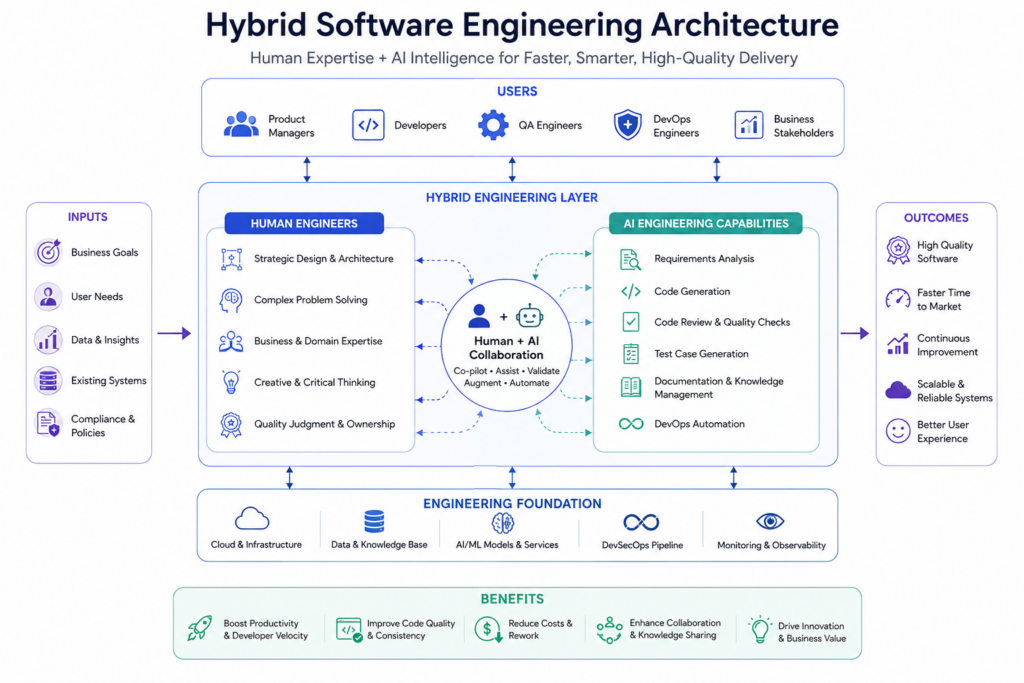
In contrast, AI-native software development treats AI as an active collaborator throughout the engineering lifecycle. AI assists in interpreting requirements, generating implementation options, writing boilerplate code, creating documentation, suggesting tests, identifying defects, and optimizing workflows. Human engineers remain responsible for architecture, validation, and strategic decisions.
Traditional approach
Requirements → Design → Code → Test → Deploy
AI-native approach
Requirements + AI Analysis → Human-AI Design → AI-Assisted Development → Automated Testing → Continuous Optimization
Enterprise takeaway: AI-native development augments engineering teams rather than replacing them. Organizations should position AI as a productivity multiplier while retaining human accountability for business-critical decisions.
2. Development Speed: Accelerated Iteration vs Structured Delivery
AI-native development significantly accelerates prototyping and feature delivery, while traditional development emphasizes predictability and controlled execution.
One of the most immediate benefits of AI-native development is speed. AI coding assistants and intelligent automation reduce the time spent on repetitive engineering tasks such as generating code, writing documentation, creating test cases, and troubleshooting common issues.
This enables teams to move from concept to prototype in hours instead of days.
Traditional development, while slower, follows structured review and validation processes that reduce implementation risks and improve software quality.
| AI-Native | Traditional |
|---|---|
| Faster MVP development | Predictable delivery cycles |
| Rapid experimentation | Structured planning |
| Continuous iteration | Formal release processes |
| High developer velocity | Strong engineering governance |
Enterprise insight: Faster delivery should not come at the expense of architecture, testing, or security. The highest-performing engineering teams accelerate execution while maintaining disciplined review processes.
3. Software Architecture: Adaptive Intelligence vs Fixed Design
AI-native architectures are designed to support intelligent automation, AI models, and continuous learning, whereas traditional architectures focus on stable business logic and deterministic workflows.
Traditional enterprise applications typically follow layered, service-oriented, or microservices architectures designed around business functionality.
AI-native systems often introduce additional architectural components, including:
- Large Language Models (LLMs)
- Retrieval-Augmented Generation (RAG)
- Vector databases
- AI agents
- Model orchestration
- Prompt management
- AI governance layers
- Observability for AI workloads
These components enable applications to reason, generate content, automate workflows, and continuously improve through feedback.
Enterprise takeaway: AI-native architecture extends—not replaces—cloud-native and microservices principles. Strong architectural governance remains essential.
4. Developer Productivity: Automation vs Manual Engineering
AI-native development automates repetitive engineering tasks, allowing developers to focus on higher-value work.
Modern developers spend a significant portion of their time on activities beyond writing business logic, including documentation, debugging, testing, dependency management, and code reviews.
AI-native engineering automates many of these activities, enabling developers to dedicate more time to system design, innovation, and solving complex business problems.
Common AI-assisted tasks include:
- Code generation
- Test creation
- API documentation
- Refactoring suggestions
- Pull request summaries
- Root cause analysis
- Dependency recommendations
Rather than replacing developers, AI changes the nature of software engineering by reducing repetitive work.
Enterprise takeaway: Productivity gains are highest when experienced engineers use AI responsibly within established engineering standards.
5. Code Quality and Maintainability: Speed Requires Governance
Traditional development generally produces more consistent long-term maintainability, while AI-native development requires strong governance to prevent technical debt.
AI can generate functional code rapidly, but generated code may vary in style, architecture, and maintainability if left unchecked.
Without engineering standards, organizations risk creating inconsistent implementations, duplicated logic, unnecessary dependencies, or poorly documented code.
Traditional software engineering mitigates these risks through:
- Coding standards
- Architecture reviews
- Peer reviews
- Design documentation
- Static analysis
- Continuous refactoring
AI-native organizations should strengthen—not eliminate—these practices.
Best practices for AI-generated code
- Establish AI coding guidelines.
- Review all AI-generated code.
- Enforce architecture standards.
- Maintain automated quality gates.
- Continuously refactor generated code.
Enterprise takeaway: AI accelerates code creation; engineering governance ensures that code remains maintainable over time.
As enterprises adopt AI-native development, implementing structured AI governance and risk management frameworks is essential to ensure transparency, accountability, and regulatory compliance. The NIST AI Risk Management Framework provides practical guidance for managing AI-related risks across the AI lifecycle.
6. Testing and Quality Assurance: Intelligent Automation vs Manual Validation
AI-native development enhances testing through intelligent automation, while traditional testing relies more heavily on manually designed quality assurance processes.
Testing has historically been one of the most time-consuming phases of software development.
AI now assists by:
- Generating unit tests
- Creating integration tests
- Identifying edge cases
- Detecting flaky tests
- Prioritizing regression suites
- Recommending test coverage improvements
Traditional QA processes remain valuable for exploratory testing, usability validation, accessibility assessments, and business rule verification.
Enterprise takeaway: AI should automate repetitive testing while QA professionals continue validating customer experience and business outcomes.
7. Security and Compliance: Automation Supports, Governance Protects
AI can improve vulnerability detection and secure coding practices, but human governance remains essential for regulatory compliance and risk management.
Enterprise software must comply with stringent security and regulatory requirements.
Traditional engineering integrates security through:
- Secure SDLC practices
- Threat modeling
- Security code reviews
- Penetration testing
- Compliance audits
- DevSecOps pipelines
AI strengthens these practices by identifying vulnerabilities earlier, recommending secure coding patterns, and accelerating remediation.
However, AI-generated code can also introduce risks such as insecure dependencies, outdated libraries, or non-compliant implementations if outputs are accepted without review.
Enterprise takeaway: AI enhances security engineering but cannot replace human accountability for compliance, governance, and risk management.
8. Cost and Team Efficiency: Better Utilization, Not Fewer Engineers
AI-native development improves engineering efficiency by automating routine work, enabling teams to deliver more value without compromising quality.
One of the biggest misconceptions is that AI reduces the need for software engineers.
In practice, organizations are seeing a shift in how engineering time is allocated.
Instead of spending hours writing repetitive code, developers focus on:
- Solution architecture
- System integration
- Performance optimization
- Security
- Customer experience
- Innovation
This results in:
- Faster delivery cycles
- Reduced rework
- Improved engineering throughput
- Better resource utilization
The greatest return on investment comes from empowering existing engineering teams rather than reducing headcount.
Enterprise takeaway: AI changes how developers work—not why they are needed.
9. Governance and Decision-Making: AI Requires Responsible Engineering
AI-native software development introduces new governance responsibilities around transparency, accountability, and responsible AI usage.
Unlike traditional applications, AI-native systems may generate dynamic outputs that evolve over time.
Organizations therefore need additional governance mechanisms, including:
- AI usage policies
- Prompt management
- Model versioning
- Human approval workflows
- Audit trails
- Data governance
- Responsible AI guidelines
These practices help ensure AI-generated outputs remain accurate, secure, explainable, and compliant with organizational policies.
Enterprise takeaway: Successful AI-native engineering is built on strong governance frameworks rather than unrestricted automation.
10. Long-Term Maintainability: Evolution Over Replacemen
Traditional software development offers proven long-term maintainability, while AI-native development introduces new opportunities for continuous optimization alongside new governance challenges.
Enterprise software often remains in production for many years.
Long-term success depends on:
- Clean architecture
- Consistent coding standards
- Comprehensive documentation
- Automated testing
- Observability
- Knowledge sharing
AI can assist with many of these activities by generating documentation, identifying obsolete code, recommending refactoring opportunities, and improving operational insights.
However, organizations must ensure that AI-generated changes remain aligned with architectural standards and business objectives.
Enterprise takeaway: Maintainability is ultimately determined by engineering discipline—not whether software was written by humans, AI, or a combination of both.
Read more about AI-Native vs. AI-Enabled: What’s the Difference
AI-Native vs Traditional Software Development: Which Approach Is Right for Your Enterprise?
Most organizations do not need to choose between AI-native and traditional software development. A hybrid engineering model delivers the best balance of speed, quality, security, and governance.
| Business Need | Recommended Approach |
|---|---|
| Rapid prototyping | AI-native |
| MVP development | AI-native |
| Enterprise modernization | Hybrid |
| Highly regulated industries | Hybrid with strong governance |
| Banking and healthcare platforms | Traditional engineering enhanced with AI |
| AI-powered products | AI-native |
| Legacy modernization | Hybrid |
| Mission-critical enterprise systems | Traditional engineering with AI-assisted development |
The future of enterprise software engineering is not a competition between AI-native and traditional development. It is a convergence of both, where AI accelerates execution while experienced engineers provide the architectural vision, governance, and accountability needed to build resilient, secure, and scalable software.
Read our blog that explores how AI copilots for enterprises are transforming executive leadership in 2026.
Enterprise Adoption: Where AI-Native Development Delivers the Most Value
AI-native software development delivers the greatest value in environments that require rapid innovation, continuous product evolution, and intelligent automation. However, enterprises achieve the best outcomes by adopting AI incrementally while maintaining proven engineering governance.
AI-native development is not limited to technology companies. Organizations across industries are embedding AI into their engineering workflows to accelerate software delivery, improve developer productivity, and enhance customer experiences.
Industry Use Cases
| Industry | AI-Native Use Case | Business Impact |
|---|---|---|
| Financial Services | Fraud detection platforms, AI-powered customer support, risk analytics | Faster product innovation with stronger operational efficiency |
| Healthcare | Clinical decision support, medical imaging, patient engagement platforms | Improved care delivery and workflow automation |
| Retail & E-commerce | Personalized recommendations, inventory optimization, intelligent search | Higher conversions and improved customer experience |
| Manufacturing | Predictive maintenance, quality inspection, supply chain optimization | Reduced downtime and operational costs |
| Insurance | Claims automation, underwriting assistance, document intelligence | Faster claims processing and improved customer satisfaction |
| Telecommunications | Network optimization, AI service assistants, predictive maintenance | Increased service reliability and reduced operational costs |
| SaaS | AI copilots, workflow automation, intelligent analytics | Higher product adoption and competitive differentiation |
Regardless of industry, successful AI-native initiatives share one common trait: they augment human expertise rather than replace it.
Read our blog on Agentic AI Use Cases: 7 Enterprise Examples Driving Autonomous Operations.
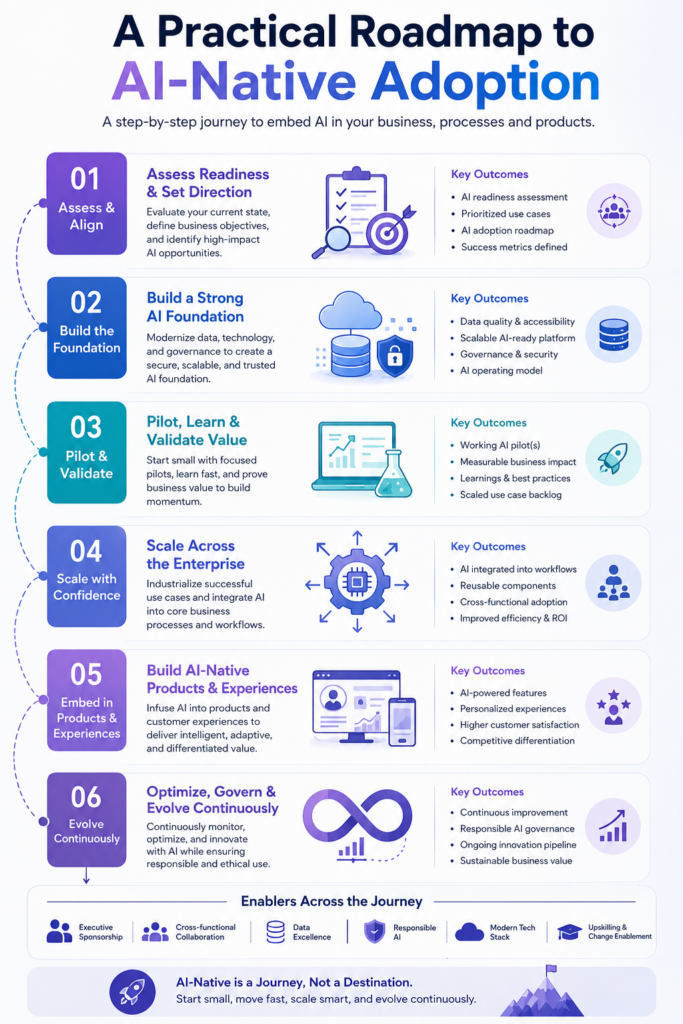
A Practical Roadmap to AI-Native Adoption
Enterprises should adopt AI-native development in phases, starting with low-risk engineering tasks before expanding AI across the software development lifecycle.
Attempting a full-scale AI transformation without governance can create more complexity than value. A phased approach allows teams to build confidence, establish standards, and measure outcomes.
Phase 1: Enhance Developer Productivity
Introduce AI for routine engineering activities such as:
- Code completion
- Documentation generation
- Test case creation
- Pull request summaries
- Code explanation
- Knowledge discovery
Goal: Improve developer efficiency without changing core engineering processes.
Phase 2: Embed AI Across the SDLC
Expand AI into:
- Requirements analysis
- Solution design
- Automated testing
- CI/CD optimization
- Security analysis
- Production monitoring
Goal: Streamline delivery while maintaining governance.
Phase 3: Build AI-Native Products
Design applications where AI is a core capability rather than an add-on.
Examples include:
- AI copilots
- Intelligent search
- Conversational interfaces
- Autonomous workflows
- Recommendation engines
- Decision support systems
Goal: Deliver differentiated customer experiences powered by AI.
Phase 4: Enable Continuous AI Optimization
Use AI to continuously improve software by analyzing:
- Performance metrics
- User behavior
- Operational telemetry
- Security events
- Application reliability
- Customer feedback
This creates a feedback loop where software evolves based on real-world usage rather than periodic release cycles.
Best Practices for AI-Native Software Development
Short Answer: Successful AI-native engineering combines AI automation with strong governance, secure development practices, and human oversight.
Organizations should focus on these best practices:
Build on Proven Engineering Principles
AI should enhance—not replace—foundational software engineering practices such as modular architecture, clean code, automated testing, and peer reviews.
Define AI Governance Policies
Establish clear guidelines for:
- Approved AI tools
- Data privacy
- Prompt management
- Model usage
- Human approval requirements
- Auditability
Keep Humans in the Loop
Critical architectural decisions, security reviews, and production approvals should always involve experienced engineers.
Strengthen DevSecOps
Integrate AI into existing DevSecOps pipelines for vulnerability detection, dependency analysis, and policy enforcement while maintaining manual security reviews for high-risk changes.
Measure Business Outcomes
Track success using metrics that matter, including:
- Deployment frequency
- Lead time for changes
- Defect rates
- Mean time to recovery (MTTR)
- Developer productivity
- Customer satisfaction
Common Mistakes to Avoid
The biggest mistake is treating AI as a replacement for engineering discipline instead of a tool to enhance it.
Avoid these common pitfalls:
- Adopting AI without governance or usage policies.
- Accepting AI-generated code without validation or review.
- Prioritizing speed over software quality and maintainability.
- Ignoring security and compliance requirements.
- Using AI tools without protecting sensitive enterprise data.
- Failing to upskill engineering teams on responsible AI practices.
- Measuring success solely by lines of code or development speed instead of business outcomes.
Organizations that avoid these mistakes are better positioned to realize sustainable value from AI-native development.
The Future of AI-Native Software Development
Short Answer: AI-native software development will evolve from AI-assisted coding to autonomous engineering systems that support planning, development, testing, operations, and continuous optimization.
Several trends are shaping the future of enterprise software engineering:
AI Coding Agents
AI is moving beyond code suggestions toward autonomous agents capable of handling multi-step engineering tasks such as implementing features, refactoring code, and resolving defects under human supervision.
Agentic Software Development
Multiple AI agents will collaborate across the SDLC, each specializing in areas such as architecture, testing, security, documentation, or deployment.
Intelligent DevSecOps
AI will become deeply integrated into CI/CD pipelines, enabling predictive testing, automated compliance checks, and real-time security monitoring.
Self-Optimizing Applications
Applications will increasingly use AI to monitor user behavior, detect performance issues, and recommend improvements, creating systems that continuously evolve based on operational insights.
Despite these advancements, human expertise will remain essential for strategic decision-making, ethical oversight, governance, and innovation.
Explore more in our blog on Enterprise AI Strategy in 2026: A Practical Guide for CIOs and Data Leaders.
Conclusion
AI-native software development represents the next evolution of software engineering—not a replacement for traditional development, but an enhancement of it.
Traditional engineering has long provided the foundation for building reliable, secure, and scalable software. AI-native development builds on that foundation by embedding artificial intelligence into every stage of the software development lifecycle, enabling teams to automate repetitive work, accelerate delivery, and innovate faster.
For enterprises, the question is no longer whether to adopt AI. The real challenge is determining how to integrate AI responsibly while preserving the engineering rigor, governance, and security required to build resilient digital products.
Organizations that embrace a balanced, AI-augmented engineering approach will be better positioned to improve developer productivity, accelerate modernization, and deliver greater business value—without compromising quality or trust.
Explore what defines an AI-First Enterprise, how Copilot and intelligent business apps transform workflows, and how Techment helps organizations chart their roadmap from pilot to scale.
Frequently Asked Questions
1. Is AI-native software development replacing traditional software development?
No. AI-native development complements traditional engineering by automating repetitive tasks and accelerating delivery. Human expertise remains critical for architecture, governance, security, and business decision-making.
2. What is the difference between AI-native and AI-assisted software development?
AI-assisted development uses AI tools to support individual tasks such as code completion or debugging. AI-native development embeds AI across the entire software development lifecycle, making it an integral part of engineering workflows and product delivery.
3. Which industries benefit the most from AI-native development?
Industries with large-scale digital transformation initiatives—such as financial services, healthcare, retail, manufacturing, telecommunications, and SaaS—can significantly improve productivity, innovation, and customer experience through AI-native development.
4,. Is AI-generated code secure?
AI-generated code can accelerate development but should always be validated through secure coding practices, code reviews, automated testing, and security scanning. AI enhances secure development but does not replace established DevSecOps processes.
5. How should enterprises start adopting AI-native development?
Begin by introducing AI into low-risk engineering activities such as code generation, documentation, and testing. As governance, skills, and confidence mature, expand AI into architecture, DevSecOps, and AI-native product development.
Related Reads
- Enterprise AI Strategy in 2026
- AI-Native vs. AI-Enabled: What’s the Difference
- Best Practices for Generative AI Implementation in Business
- Microsoft Fabric Architecture: A CTO’s Guide
- Data Quality for AI in 2026
- AI-Ready Enterprise Checklist with Microsoft Fabric
- Top AI Workflow Orchestration Tools in 2026 for Enterprise Scale
- AI- Native Application Engineering
- AI-Powered Customer Journey Orchestration in Retail: A CTO’s Guide for 2026