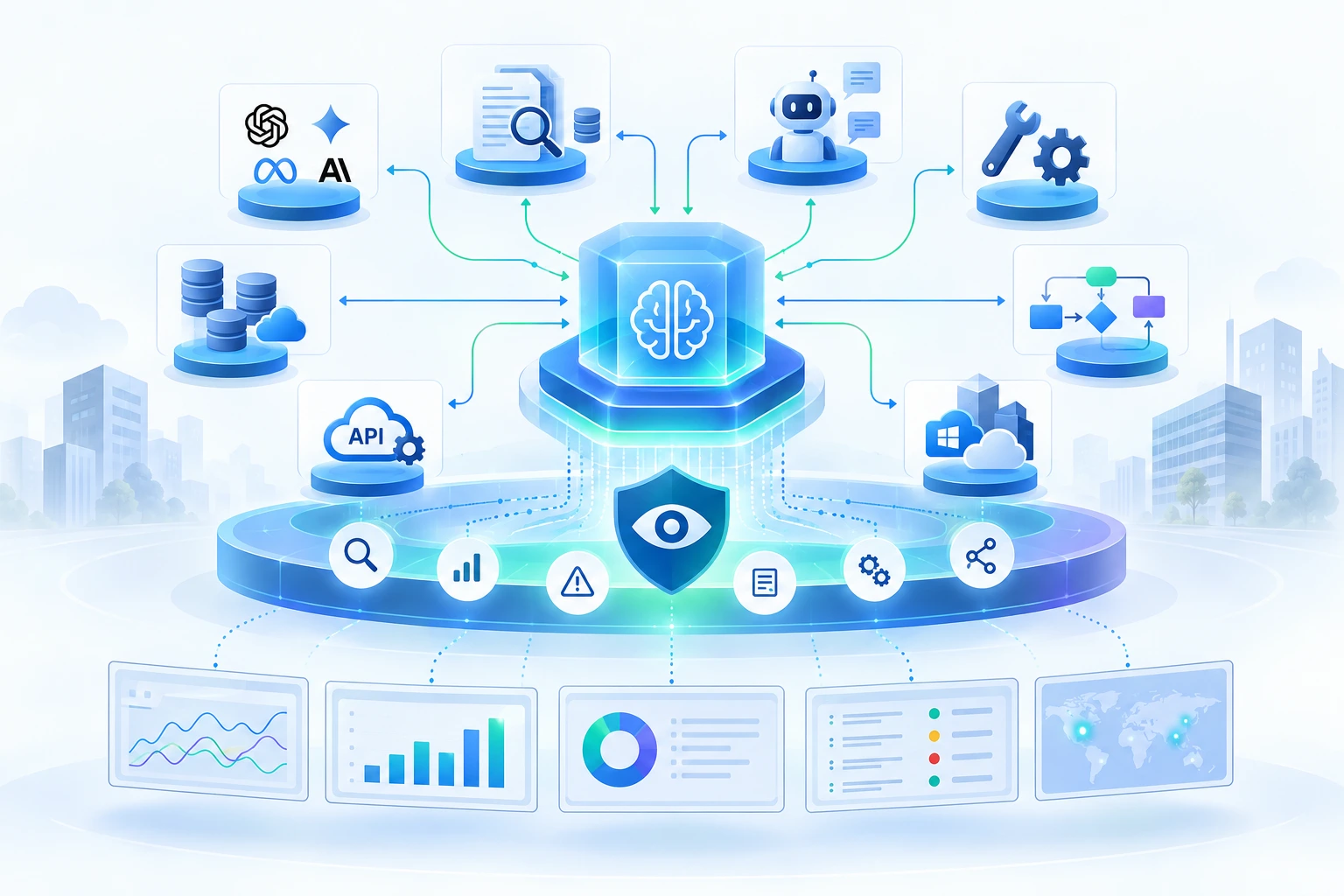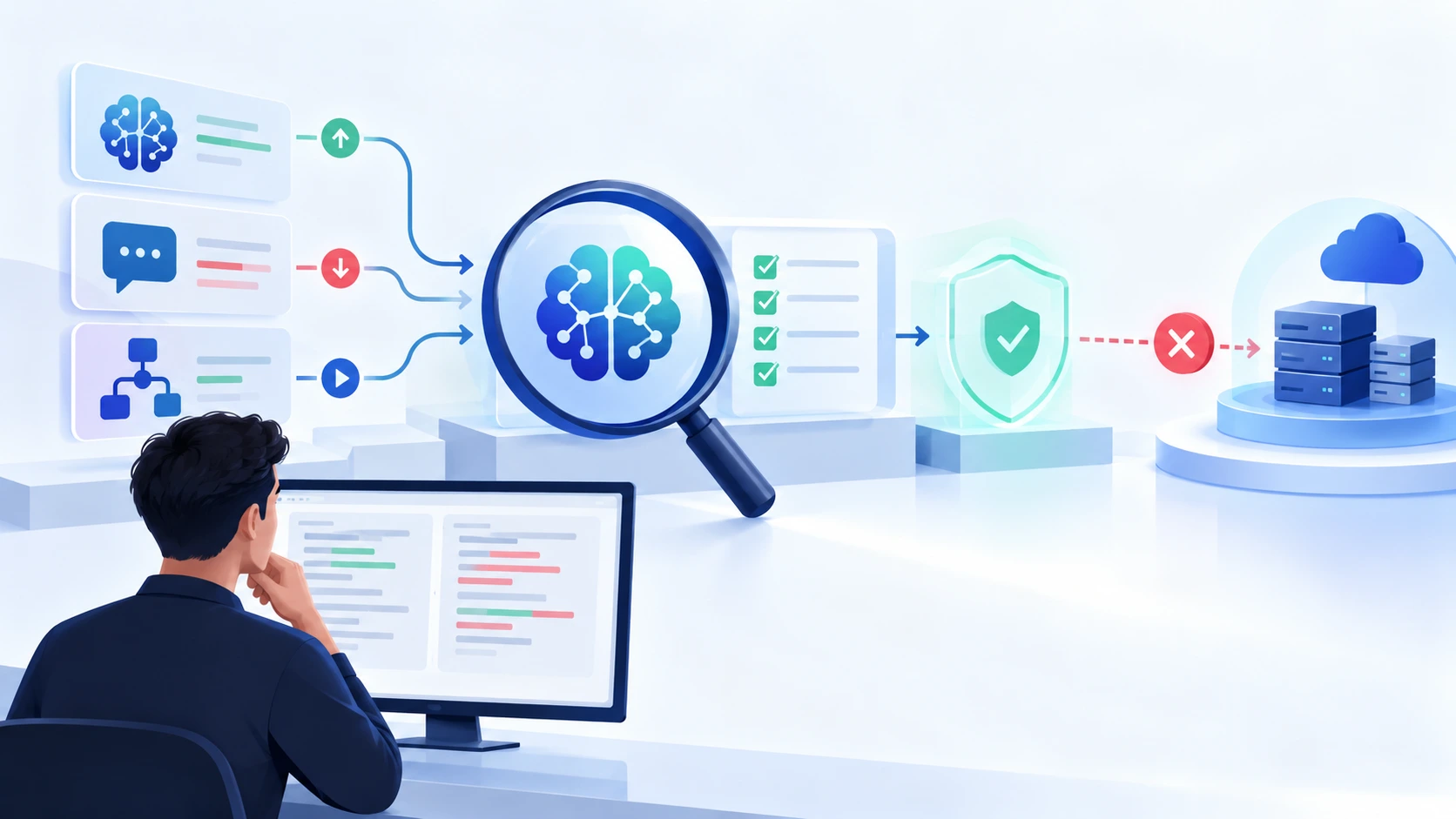
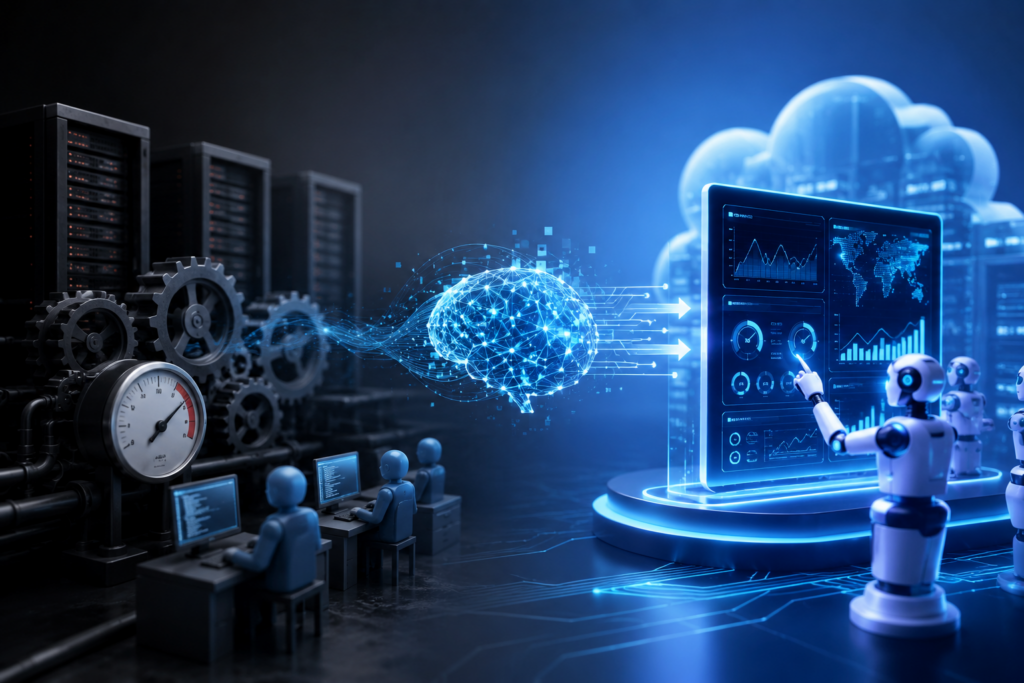
AI-powered testing enhances traditional load testing by using artificial intelligence, machine learning, and predictive analytics to identify defects, optimize test execution, and improve software quality. While traditional load testing validates application performance under expected workloads, AI-powered testing enables continuous, data-driven quality engineering, helping enterprises accelerate releases, improve resilience, and reduce testing effort.
Modern software systems are more distributed, dynamic, and customer-facing than ever before. As organizations embrace cloud-native architectures, microservices, DevOps, and continuous delivery, ensuring application performance has become significantly more complex. While traditional load testing remains an essential practice for validating system capacity under expected workloads, it is no longer sufficient on its own to address the speed, scale, and unpredictability of today’s digital environments.
Watch How AI Is Revolutionizing Test Automation!
Discover how forward-thinking QA teams are boosting speed, coverage, and ROI with intelligent automation—catch the full session and take your QA strategy to the next level.
AI-powered testing represents the next evolution of quality engineering. By combining artificial intelligence, machine learning, predictive analytics, and intelligent automation, organizations can move beyond reactive performance validation to proactive quality assurance. Rather than simply identifying performance bottlenecks after executing test scenarios, AI-powered testing continuously learns from historical execution data, production telemetry, and user behavior to predict failures, optimize test coverage, and accelerate software delivery.
For technology leaders, the question is no longer whether AI will influence software testing—but how quickly organizations can integrate AI-driven capabilities into their quality engineering strategy while continuing to leverage proven performance testing techniques.
TL;DR
- Traditional load testing validates whether applications can handle expected user traffic but relies on predefined scenarios and manual analysis.
- AI-powered testing enhances quality engineering by introducing predictive analytics, intelligent automation, adaptive testing, and continuous learning.
- Rather than replacing load testing, AI complements it by identifying performance risks earlier, reducing maintenance effort, and improving release confidence.
- Organizations adopting AI-assisted testing can accelerate software delivery, improve application resilience, and better support cloud-native and DevOps operating models.
- A hybrid strategy that combines traditional performance testing with AI-driven quality engineering provides the strongest foundation for enterprise software reliability.
Why Traditional Load Testing Alone Is No Longer Enough
Traditional load testing continues to play a vital role in validating application performance. It remains one of the most effective methods for benchmarking system capacity, verifying service-level agreements, and evaluating infrastructure resilience under controlled workloads.
However, modern software ecosystems have introduced complexities that traditional testing was never designed to address.
Dynamic Infrastructure
- Cloud platforms automatically provision and decommission infrastructure based on demand.
- Containers may exist for only a few minutes.
- Microservices scale independently.
- Traffic patterns fluctuate continuously.
- Static load scenarios cannot accurately replicate these constantly changing environments.
- Many organizations now deploy software several times each day.
Rapid Release Cycle
- Waiting until the end of a release cycle to execute large-scale performance tests creates bottlenecks and delays valuable feedback.
- Performance validation must become continuous rather than episodic.
Distributed Architectures
- Modern applications depend on hundreds of interconnected services, APIs, third-party integrations, databases, event streams, and edge infrastructure.
- Performance issues rarely originate from a single component.
- Instead, they emerge from complex interactions across distributed systems.
- Traditional load testing identifies symptoms.
- AI-powered analysis helps identify root causes.
Increasing Maintenance Overhead
Conventional automated testing frameworks require continuous maintenance.
Every application update can necessitate:
- Script modifications
- Test data updates
- Environment configuration changes
- Validation rule adjustments
As applications evolve, maintaining large test suites often becomes as resource-intensive as developing them.
AI-assisted testing reduces this burden through adaptive test generation, intelligent maintenance, and self-healing automation techniques.
Limited Predictive Capabilities
Traditional performance testing answers important questions such as:
- Can the infrastructure support 50,000 users?
- Does response time remain within SLA?
- Which server becomes saturated first?
However, it cannot answer equally important questions like:
- Which application module is becoming increasingly unstable?
- Which releases introduce the highest performance risk?
- Which customer journeys require greater testing coverage?
- Which defects are likely to appear after deployment?
These predictive insights are where AI creates the greatest strategic value.
Key Takeaways
Traditional load testing remains indispensable for validating application capacity and resilience under predefined conditions. However, it was designed for an era of relatively static architectures and scheduled release cycles. As organizations adopt cloud-native platforms, continuous delivery, and increasingly complex software ecosystems, quality engineering must evolve beyond reactive testing. AI-powered testing complements—not replaces—traditional load testing by introducing continuous learning, predictive risk analysis, and intelligent automation that enable faster, more resilient software delivery.
How AI-Powered Testing Works
Artificial intelligence enhances software testing by transforming it from a rules-based activity into a continuously learning process. Instead of relying solely on predefined scripts and static test scenarios, AI analyzes historical test executions, production telemetry, application logs, user behavior, and code changes to determine where defects are most likely to occur and which tests should be prioritized. The result is faster feedback, improved test coverage, and higher confidence in software releases.
Unlike conventional automation, AI-powered testing continuously adapts as applications evolve, making it particularly valuable for cloud-native architectures, agile development, and continuous delivery environments.
Explore how to boost software quality through right implementation in our blog on Test Automation Implementation: Boost Software Quality.
The AI-Powered Testing Lifecycle
A modern AI-driven testing framework typically follows five interconnected stages.
1. Data Collection and Learning
The process begins by aggregating data from multiple sources across the software delivery lifecycle, including:
- Historical test execution results
- Application performance metrics
- Production logs and observability platforms
- Source code repositories
- CI/CD pipelines
- Defect tracking systems
- User interaction analytics
By correlating these datasets, AI establishes baseline behavior and identifies patterns that traditional testing often overlooks.
2. Intelligent Test Prioritization
Not every test case contributes equally to release quality.
Machine learning models evaluate factors such as:
- Recent code changes
- Business-critical workflows
- Historical defect density
- Frequently failing components
- Customer usage patterns
Based on these insights, AI prioritizes the tests most likely to detect regressions, enabling faster feedback while reducing unnecessary execution.
3. Predictive Risk Analysis
Rather than waiting for failures to occur, AI continuously evaluates indicators that signal increasing performance or reliability risks.
Examples include:
- Gradually increasing API response times
- Growing memory consumption
- Changes in database query execution
- Infrastructure utilization trends
- Error-rate anomalies
This predictive capability enables engineering teams to address potential issues before they affect production systems.
4. Intelligent Test Execution
During execution, AI dynamically adapts testing based on observed application behavior.
Instead of simply replaying predefined scripts, AI can:
- Adjust workloads dynamically
- Expand test coverage when anomalies are detected
- Focus on high-risk application components
- Detect unexpected behavioral deviations
- Recommend additional validation scenarios
Testing becomes adaptive rather than static.
5. Continuous Learning
Perhaps the greatest differentiator is continuous improvement.
Every execution contributes additional data that refines future testing decisions.
Over time, AI becomes increasingly accurate at:
- Predicting failures
- Identifying unstable components
- Optimizing regression suites
- Eliminating redundant tests
- Improving release confidence
This creates a feedback loop that continuously strengthens software quality.
Learn more about The New QA Roles in 2026: AI Output Reviewer, Bias Evaluator, LLM Auditor.
Traditional Load Testing vs. AI-Powered Testing
Both approaches serve important but fundamentally different objectives within a modern quality engineering strategy. Traditional load testing validates system performance under predefined conditions, while AI-powered testing expands quality assurance through prediction, continuous learning, and intelligent automation.
| Capability | Traditional Load Testing | AI-Powered Testing |
|---|---|---|
| Primary objective | Validate system capacity | Predict, optimize, and continuously improve quality |
| Test creation | Manual scripting | AI-assisted test generation |
| Test maintenance | Manual updates | Adaptive and self-healing |
| Performance analysis | Reactive | Predictive and proactive |
| Root cause identification | Manual investigation | AI-assisted correlation and analysis |
| Scalability | Fixed scenarios | Dynamic and adaptive |
| User simulation | Scripted behavior | Realistic behavior modeling |
| Regression optimization | Full-suite execution | Risk-based prioritization |
| CI/CD integration | Periodic execution | Continuous validation |
| Infrastructure optimization | Limited | Data-driven recommendations |
| Learning capability | None | Continuous improvement from execution history |
| Best suited for | Capacity validation and benchmarking | Continuous quality engineering and intelligent automation |
Together, these capabilities provide both validation and foresight, enabling organizations to improve release quality while accelerating delivery.
When Should Organizations Use Traditional Load Testing?
Despite rapid advances in AI, traditional load testing remains indispensable for many scenarios.
It is particularly valuable when organizations need to:
- Validate infrastructure capacity before major product launches
- Benchmark application performance against service-level agreements (SLAs)
- Conduct stress, endurance, and spike testing
- Demonstrate regulatory or contractual compliance
- Evaluate disaster recovery and business continuity readiness
- Verify infrastructure scaling thresholds
For these use cases, deterministic testing under controlled conditions remains the industry standard.
When Does AI-Powered Testing Deliver Greater Value
Organizations gain the greatest benefits when they need to:
AI-powered testing becomes increasingly valuable in environments characterized by rapid change, distributed architectures, and continuous delivery.
- Support frequent software releases
- Improve release confidence within CI/CD pipelines
- Prioritize testing for large and complex applications
- Predict production risks before deployment
- Reduce automation maintenance effort
- Analyze massive volumes of testing and observability data
- Improve testing efficiency across cloud-native environments
- Continuously optimize software quality using production insights

Rather than replacing traditional performance engineering, AI extends its capabilities by making testing more adaptive, predictive, and aligned with modern software delivery practices.
Our Enterprise data platform modernization frameworks provide a structured, risk-managed blueprint for transforming legacy ecosystems into resilient, scalable, AI-ready architectures.
Enterprise Perspective
For most organizations, the question is not AI-powered testing versus traditional load testing. The more practical question is how to combine both approaches effectively.
Traditional load testing continues to provide the objective benchmarks required to validate scalability and performance under controlled conditions. AI-powered testing complements these capabilities by continuously learning from development and production data, identifying emerging risks, and enabling engineering teams to make faster, more informed release decisions.
This hybrid approach allows enterprises to move beyond reactive testing toward a more intelligent, data-driven model of quality engineering—one that supports both operational reliability and the speed demanded by modern digital businesses.
Best Practices for Enterprise Adoption
Successfully adopting AI-powered testing requires more than implementing new technology—it requires embedding intelligence into the software development lifecycle. Start by identifying high-impact use cases such as regression testing, performance monitoring, and defect prediction, where AI can deliver measurable improvements quickly. Build on a strong automation foundation with reliable test suites, standardized test data, and well-integrated CI/CD pipelines, as AI is most effective when combined with mature testing practices.
Leverage application performance metrics, production telemetry, and historical test results to improve the accuracy of AI-driven insights. Establish governance frameworks to ensure AI recommendations remain transparent, explainable, and aligned with organizational quality standards. Equally important is investing in people. Equip QA engineers, developers, and DevOps teams with the skills to interpret AI-generated insights and incorporate them into everyday workflows.
Finally, measure success using business-centric metrics such as release frequency, defect leakage, application availability, and customer experience rather than simply counting executed test cases. Organizations that combine AI with performance engineering, observability, and continuous testing are better positioned to accelerate software delivery while improving resilience, scalability, and release confidence.
Conclusion
The future of software quality lies in combining proven testing methodologies with intelligent automation. Traditional load testing remains essential for validating application performance under expected workloads, but it alone cannot keep pace with the complexity of cloud-native architectures, continuous delivery, and rapidly evolving user expectations.
AI-powered testing complements traditional approaches by introducing predictive analytics, adaptive test automation, and data-driven decision-making throughout the software development lifecycle. Rather than replacing load testing, it enhances performance engineering by helping teams identify risks earlier, optimize test coverage, reduce maintenance effort, and accelerate release cycles.
For enterprise leaders, the most effective strategy is a hybrid approach that leverages the strengths of both methods. By integrating AI into existing quality engineering practices, organizations can build more resilient applications, improve customer experiences, and confidently deliver high-quality software at the speed modern digital businesses demand.
Learn all about our accelerator – CRIS – Accelerating Smarter Releases Through Comprehensive Release Intelligence
Frequently Asked Questions
1. Is AI-powered testing replacing traditional load testing?
No. AI-powered testing complements traditional load testing rather than replacing it. Load testing remains essential for validating application performance under controlled workloads, while AI adds predictive insights, intelligent automation, and continuous optimization to improve overall software quality.
2. What are the key benefits of AI-powered testing?
AI-powered testing helps organizations accelerate release cycles, improve defect detection, reduce test maintenance, optimize regression testing, enhance test coverage, and identify performance risks before they impact end users.
3. Which organizations benefit most from AI-powered testing?
Organizations adopting Agile, DevOps, cloud-native architectures, microservices, and continuous delivery benefit the most. Industries such as banking, healthcare, retail, telecommunications, and manufacturing use AI-powered testing to improve software reliability and customer experience.
4. Can AI-powered testing integrate with existing DevOps and CI/CD pipelines?
Yes. Modern AI-powered testing solutions integrate seamlessly with CI/CD pipelines, enabling continuous testing, intelligent test prioritization, automated risk assessment, and faster feedback throughout the software development lifecycle.
5. How should enterprises begin adopting AI-powered testing?
Start by strengthening your existing test automation framework, identifying high-value use cases such as regression testing and performance monitoring, integrating AI into CI/CD workflows, and measuring outcomes using business metrics like release frequency, defect leakage, and application availability.
Related Reads
- Accelerating Quality with AI-Driven Test Automation
- Test Automation Implementation: Transforming Software Quality with Techment
- AI-Native vs Traditional Software Development: Key Differences, Benefits, and Enterprise Adoption
- AI-Native Engineering Explained: The Enterprise Guide to AI-Driven Software Development
- How to Build An AI-First Enterprise: A Complete Guide