Retail margins are thinner than ever. Customer expectations are rising. Omnichannel complexity is accelerating. In this environment, Retail Business Intelligence is no longer optional — it is foundational.
Retail Business Intelligence empowers enterprises to transform fragmented operational data into strategic insight. From inventory optimization and customer segmentation to sales forecasting and risk assessment, Retail Business Intelligence enables retailers to compete with precision rather than intuition.
Yet many retailers still operate with siloed dashboards, inconsistent data, and reactive reporting. The result? Missed revenue opportunities, excess inventory, inefficient promotions, and weak demand planning.
This comprehensive guide explores Retail Business Intelligence in depth — what it is, how it works, enterprise use cases, implementation challenges, governance implications, and how retailers can build scalable BI ecosystems that support long-term growth. We also examine how Techment helps enterprises modernize retail analytics with unified, AI-ready data foundations.
If you are a CTO, CDO, retail architect, or analytics leader, this guide will provide a strategic blueprint for leveraging Retail Business Intelligence as a competitive differentiator.
TL;DR
- Retail Business Intelligence enables data-driven retail strategy across stores, eCommerce, and supply chains.
- It powers inventory optimization, sales forecasting, customer segmentation, and performance management.
- Enterprise adoption requires scalable architecture, governance, and data quality automation.
- Retail BI is a strategic capability — not just a reporting tool.
- Techment helps retailers modernize analytics platforms for AI-ready, unified retail intelligence.
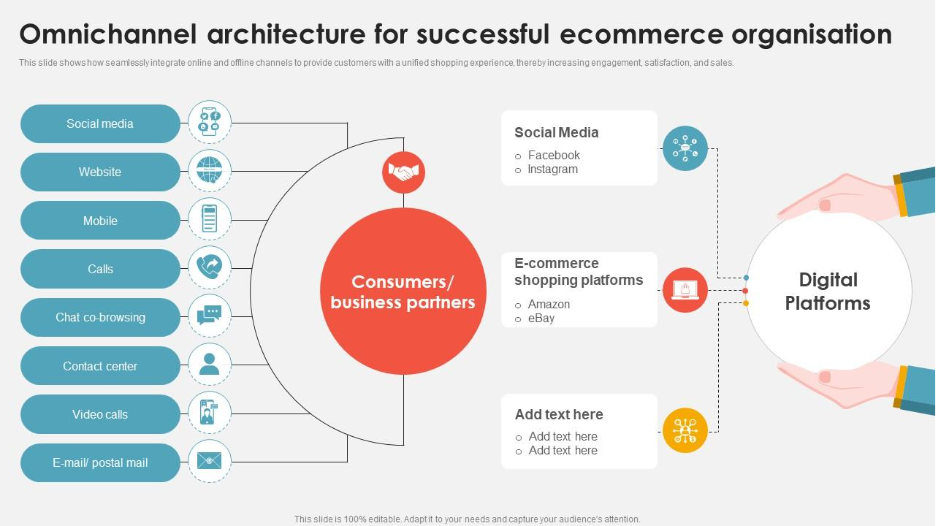
Enterprise Retail Business Intelligence dashboard integrating omnichannel retail analytics
Why Retail Business Intelligence Is a Strategic Imperative
Retail has transformed dramatically over the past decade. According to Gartner, organizations that leverage advanced analytics effectively outperform competitors in profitability and customer retention. Retail Business Intelligence is the operational engine behind that advantage.
Market Complexity Demands Unified Intelligence
Modern retailers operate across:
- Physical stores
- eCommerce platforms
- Marketplaces
- Mobile apps
- Social commerce
- Third-party logistics networks
Each channel generates massive volumes of structured and unstructured data. Without Retail Business Intelligence, these data streams remain disconnected.
Retail Business Intelligence creates a unified analytical layer that consolidates POS systems, CRM platforms, ERP systems, supply chain applications, and digital engagement data into a single source of truth.
For enterprises scaling multiple stores or regions, this unified view becomes critical. As discussed in Techment’s perspective on What a Microsoft Data and AI Partner Brings to Your Data Strategy, strategic data partnerships enable organizations to convert raw information into structured enterprise intelligence.
Competitive Pressure Is Data-Driven
Retail leaders now compete on:
- Price optimization accuracy
- Inventory precision
- Demand forecasting reliability
- Personalization effectiveness
Retail Business Intelligence shifts decision-making from lagging metrics to predictive and prescriptive insights.
For example:
- Forecasting demand 8–12 weeks ahead reduces stockouts.
- Identifying underperforming SKUs early prevents working capital lock-up.
- Analyzing promotional ROI avoids margin erosion.
Retail Business Intelligence transforms analytics from reporting into strategic foresight.
Executive Insight
Retail BI is not a reporting layer. It is a decision architecture. Enterprises that treat it as a dashboard project fail. Enterprises that treat it as an operating model win.
For retailers pursuing digital transformation, integrating Retail Business Intelligence into broader modernization initiatives — similar to strategies outlined in Techment’s blog that explores how AI copilots for enterprises are transforming executive leadership in 2026.
What Is Retail Business Intelligence?
Retail Business Intelligence refers to the processes, platforms, governance structures, and analytical models that enable retailers to collect, integrate, analyze, and visualize data across business functions.
It includes:
- Data ingestion from POS, ERP, CRM, WMS
- Data transformation and cleansing
- Centralized data storage (warehouse or lakehouse)
- Analytics modeling
- Visualization and reporting
- Predictive analytics and AI augmentation
Core Components of Retail Business Intelligence
1. Data Integration Layer
Retail BI consolidates structured and unstructured data from physical and digital channels.
2. Analytics Engine
Transforms raw data into KPIs, trend analysis, and forecasts.
3. Visualization Interface
Delivers dashboards for executives, store managers, and category heads.
4. Governance Framework
Ensures data accuracy, compliance, and security.
Retail Business Intelligence integrates operational metrics such as:
- Sales performance
- Inventory turnover
- Customer lifetime value
- Promotion effectiveness
- Supplier performance
- Market trend indicators
Retail BI vs Traditional Reporting
Traditional retail reporting answers:
“What happened?”
Retail Business Intelligence answers:
- Why did it happen?
- What will happen next?
- What should we do about it?
This evolution requires advanced modeling, machine learning integration, and robust data governance.
Retail Business Intelligence is also increasingly embedded within AI initiatives. As outlined in enterprise AI modernization discussions, data quality and architectural maturity directly determine AI success. Retail BI provides that structured foundation.
Top 8 Enterprise Use Cases of Retail Business Intelligence
Retail Business Intelligence supports a wide spectrum of strategic and operational functions. Below are the most impactful enterprise-level use cases.
1. Performance Analysis
Retail BI enables deep performance assessment across:
- Store profitability
- Regional revenue distribution
- Category performance
- Employee productivity
Executives can identify:
- High-performing store clusters
- Underperforming SKUs
- Margin inconsistencies
Rather than monthly static reports, Retail Business Intelligence provides near real-time insights. This reduces decision latency.
Strategic implication: performance management shifts from reactive to continuous optimization.
2. Consumer Pattern Analysis
Understanding purchasing behavior is essential in retail.
Retail Business Intelligence analyzes:
- Basket composition
- Seasonal buying behavior
- Channel preference shifts
- Customer lifetime value
Advanced segmentation enables micro-targeted campaigns.
Retail BI also supports predictive personalization engines, driving higher engagement and improved retention.
3. Market Trend Monitoring
Retail BI integrates external market data with internal performance metrics.
This allows retailers to:
- Track competitor pricing
- Monitor category growth rates
- Identify macroeconomic impact
Retailers that align Retail Business Intelligence with strategic planning cycles can pivot faster than competitors.
4. Risk Assessment
Retail enterprises face risks including:
- Inventory shrinkage
- Fraud
- Supply chain disruptions
- Demand volatility
Retail Business Intelligence integrates anomaly detection and trend monitoring to identify potential risks early.
This shifts risk management from incident response to proactive mitigation.
5. Inventory Management
Inventory is one of the largest capital commitments in retail.
Retail Business Intelligence enables:
- Real-time stock visibility
- Demand forecasting
- Overstock prevention
- Stockout reduction
Inventory optimization powered by Retail BI reduces carrying costs and improves cash flow.
Strategic insight: inventory precision directly impacts EBITDA.
6. Customer Segmentation
Retail BI clusters customers based on:
- Demographics
- Purchase history
- Engagement frequency
- Channel preference
Segmentation supports:
- Personalized promotions
- Loyalty programs
- Upselling and cross-selling
Retail Business Intelligence ensures segmentation is dynamic rather than static.
7. Sales Forecasting
Accurate forecasting drives operational stability.
Retail Business Intelligence incorporates:
- Historical sales data
- Seasonality trends
- Promotional calendars
- Market indicators
This enables retailers to optimize:
- Procurement
- Staffing
- Distribution planning
Forecasting accuracy often determines supply chain efficiency.
8. Promotional Effectiveness
Promotions drive traffic — but often erode margins.
Retail Business Intelligence evaluates:
- Campaign ROI
- Lift analysis
- Cannibalization effects
- Long-term retention impact
Retail BI ensures marketing spend aligns with profitability goals.
Read our Microsoft Fabric real-time retail analytics guide examines how Fabric enables real-time decisioning for retail leaders, why it matters for modern retail strategy, and how enterprises can operationalize these capabilities responsibly at scale.
Benefits of Retail Business Intelligence for Enterprise Retailers
Retail Business Intelligence delivers measurable impact across financial performance, operational efficiency, and strategic agility. When implemented at enterprise scale, Retail Business Intelligence becomes a core value driver rather than a reporting utility.
Enhanced Decision-Making Across Leadership Layers
Retail Business Intelligence democratizes insight.
Executives gain visibility into enterprise KPIs.
Regional leaders access store-level performance.
Category managers track SKU trends.
Operations teams monitor logistics metrics.
According to McKinsey, organizations that embed analytics into decision-making processes see productivity improvements of up to 20%. Retail Business Intelligence operationalizes this advantage.
Strategically, this reduces decision latency. Instead of waiting for month-end summaries, leadership teams can respond to demand shifts, price fluctuations, and supply bottlenecks in near real time.
Retail Business Intelligence elevates planning cycles from quarterly reviews to continuous optimization.
To maximize this capability, enterprises must align BI initiatives with broader data strategy foundations such as those discussed in Unleashing the Power of Data: Building a Winning Data Strategy.
Managing Multi-Store Expansion
Opening new stores introduces complexity:
- Diverse regional demand
- Operational variability
- Localized inventory dynamics
- Workforce management differences
Retail Business Intelligence provides a standardized performance framework across all locations.
Enterprise retailers can:
- Benchmark new stores against mature ones
- Identify high-performing regional clusters
- Replicate successful merchandising strategies
Retail BI also enables scenario modeling before expansion, reducing risk exposure.
As retailers modernize analytics platforms—similar to the strategies outlined in Microsoft Data Fabric vs Traditional Data Warehousing: What Leaders Need to Know—Retail Business Intelligence becomes scalable across geographies.
Adapting to Rapidly Changing Consumer Trends
Consumer expectations shift rapidly across digital and physical channels.
Retail Business Intelligence enables:
- Real-time trend detection
- Omnichannel purchasing behavior analysis
- Personalization modeling
Instead of reacting months later, enterprises can adjust assortments and campaigns immediately.
Retail BI transforms trend awareness into competitive responsiveness.
Supply Chain Optimization
Retail supply chains are multi-layered ecosystems involving:
- Suppliers
- Warehouses
- Distribution centers
- Transportation networks
Retail Business Intelligence integrates operational metrics across this network.
This enables:
- Lead-time tracking
- Supplier performance scoring
- Logistics efficiency measurement
- Bottleneck identification
Retail BI reduces inefficiencies, improves fulfillment accuracy, and protects margins.
For deeper architectural considerations, see Leveraging Data Transformation for Modern Analytics, which outlines scalable data frameworks critical to supply chain analytics.
Increased Operational Efficiency
Retail Business Intelligence automates data consolidation and reporting.
This reduces:
- Manual spreadsheet dependency
- Redundant data reconciliation
- Reporting delays
Automation increases workforce productivity while improving analytical consistency.
Operational efficiency is not just about cost reduction—it is about resource optimization aligned with revenue growth.
Retail Business Intelligence ensures operational insight supports strategic ambition.
Deep dive into Enterprise AI Strategy in 2026: A Practical Guide for CIOs and Data Leaders.
Enterprise Challenges in Retail Business Intelligence
Despite its advantages, Retail Business Intelligence implementation presents significant challenges. Addressing them requires strategic design rather than tool deployment.
Data Integration Complexity
Retail data originates from:
- POS systems
- eCommerce platforms
- CRM systems
- ERP applications
- Third-party logistics providers
These systems often operate in silos.
Integrating them into a unified Retail Business Intelligence environment demands:
- Standardized data models
- ETL or ELT pipelines
- Real-time streaming capabilities
Without integration maturity, Retail BI produces fragmented insight.
Also explore our guide on Data Quality for AI: The Ultimate 2026 Blueprint for Trustworthy & High-Performing Enterprise AI
Data Quality Risks
Poor data quality undermines Retail Business Intelligence credibility.
Common issues include:
- Duplicate records
- Inconsistent product categorization
- Missing transactional data
- Delayed updates
When executives lose trust in dashboards, adoption declines.
Data quality automation, governance workflows, and master data management are essential components of sustainable Retail BI.
For a comprehensive enterprise blueprint, explore The Anatomy of a Modern Data Quality Framework.
Retail Business Intelligence is only as strong as its data foundation.
Read our blog on Is Your Enterprise AI-Ready? A Fabric-Focused Readiness Checklist
Scalability Constraints
Retail data volumes grow exponentially with:
- Increased digital engagement
- Expanded store networks
- IoT integration
- Loyalty program expansion
Retail Business Intelligence systems must scale seamlessly without performance degradation.
Cloud-native lakehouse architectures, distributed processing, and modular data pipelines are critical for long-term scalability.
Enterprises that underestimate scalability requirements often face costly replatforming initiatives.
Explore Best Practices for Generative AI Implementation in Business
User Adoption & Change Management
Technology alone does not guarantee success.
Retail Business Intelligence requires:
- Executive sponsorship
- Clear KPI alignment
- Training programs
- Governance ownership
Resistance often arises when BI changes established decision-making patterns.
Adoption improves when:
- Dashboards are role-specific
- Insights are embedded into workflows
- Performance incentives align with data-driven practices
Retail BI is as much a cultural transformation as a technological upgrade.
Security and Privacy
Retailers manage sensitive customer information.
Retail Business Intelligence platforms must ensure:
- Data encryption
- Role-based access control
- Compliance with data protection regulations
- Secure API integrations
Security must be integrated into architecture from inception, not added retroactively.
Understand Enterprise Data Quality Framework: Best Practices for Reliable Analytics and AI
Architecture Blueprint for Scalable Retail Business Intelligence
Enterprise-grade Retail Business Intelligence requires a layered architecture.
1. Data Ingestion Layer
Sources include:
- POS systems
- ERP
- CRM
- E-commerce
- Marketing automation tools
- Supply chain systems
Streaming and batch ingestion pipelines ensure continuous data flow.
2. Data Storage Layer
Modern retail BI platforms often use:
- Cloud data warehouses
- Lakehouse architectures
- Distributed storage frameworks
This layer supports structured and semi-structured data.
3. Data Transformation & Modeling
Retail-specific models include:
- Sales fact tables
- Inventory fact tables
- Customer dimension tables
- Promotion effectiveness models
Transformations standardize metrics across channels.
4. Analytics & AI Layer
Retail Business Intelligence increasingly integrates:
- Predictive forecasting models
- Demand optimization algorithms
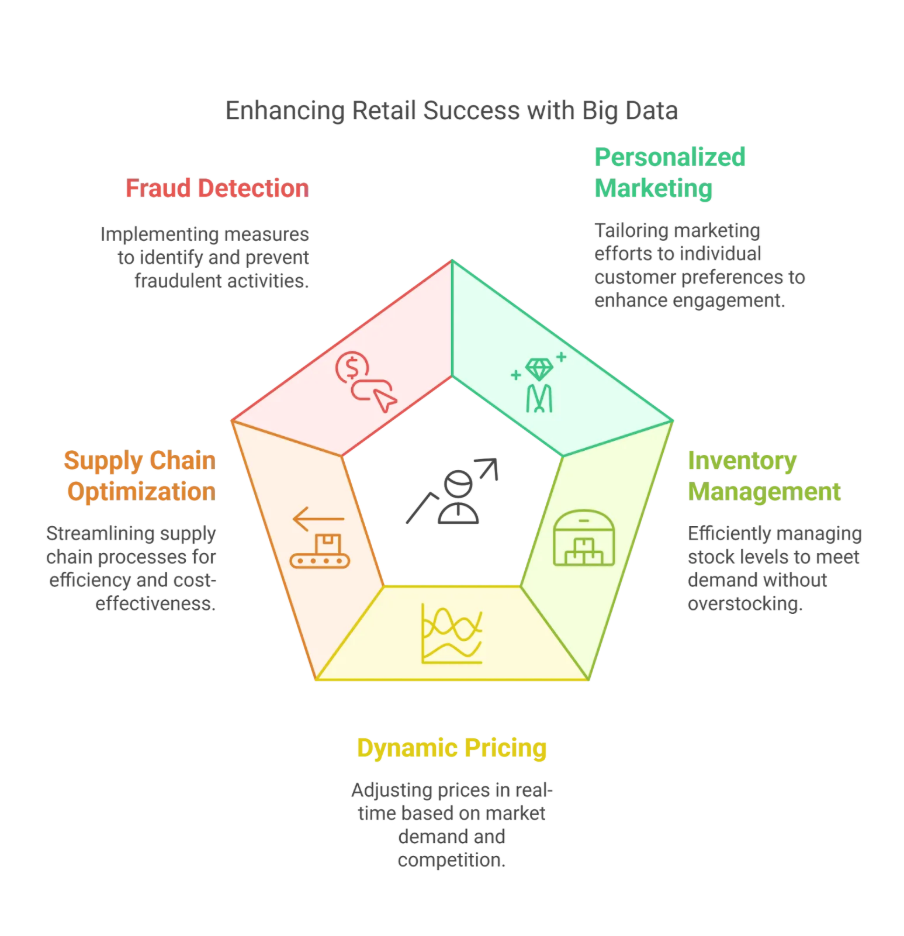
- Dynamic pricing engines
- Fraud detection systems
Retail BI becomes a foundation for AI-driven retail operations.
For organizations preparing for AI integration, explore Fabric AI Readiness: How to Prepare Your Data for Scalable AI Adoption.
5. Visualization & Access Layer
Role-based dashboards ensure tailored insight delivery:
- C-suite strategic dashboards
- Store manager operational dashboards
- Marketing analytics views
- Supply chain performance panels
Retail Business Intelligence must prioritize clarity and actionability.

Layered Retail Business Intelligence architecture showing ingestion, storage, analytics, and AI layers
How Techment Helps Enterprises Modernize Retail Business Intelligence
Retail Business Intelligence transformation requires more than tool deployment. It requires strategic alignment, architecture modernization, and governance integration.
Techment partners with enterprise retailers to:
Build Unified Data Foundations
We design scalable data architectures that consolidate POS, ERP, CRM, and digital platforms into a unified analytical ecosystem.
Our approach ensures Retail Business Intelligence becomes enterprise-grade and future-ready.
Enable Data Quality & Governance
Techment implements structured governance models, automation frameworks, and quality controls to ensure BI insights remain trustworthy.
Explore our perspective in Data Quality for AI in 2026: The Ultimate Blueprint for Accuracy, Trust & Scalable Enterprise Adoption.
Retail Business Intelligence cannot deliver strategic value without data integrity.
Modernize Analytics Platforms
We help enterprises transition from fragmented legacy systems to unified analytics ecosystems leveraging Microsoft Fabric and modern data platforms.
For a deeper technical perspective, review Microsoft Fabric Architecture: CTO’s Guide to Modern Analytics & AI.
Retail Business Intelligence modernization must align with long-term AI readiness.
Drive AI-Enabled Retail Insights
Retail BI increasingly integrates AI for:
- Demand forecasting
- Personalization
- Intelligent supply chain optimization
- Fraud detection
Techment supports AI-driven analytics initiatives aligned with enterprise strategy.
Provide End-to-End Implementation
From roadmap design to deployment, governance integration, training, and optimization, Techment ensures Retail Business Intelligence adoption is sustainable and scalable.
We do not implement dashboards.
We architect intelligence ecosystems.
Enhance your analytics outcomes and turn fragmented data with our data engineering solutions and MS Fabric capabilities.
Conclusion
Retail Business Intelligence has evolved from a reporting tool into a strategic enterprise capability.
In an environment defined by omnichannel complexity, volatile demand, and margin pressure, Retail Business Intelligence enables retailers to:
- Optimize inventory
- Personalize engagement
- Forecast accurately
- Protect margins
- Scale confidently
However, success requires more than dashboards. It demands:
- Scalable architecture
- Data governance discipline
- Cross-functional adoption
- AI integration readiness
Retailers that treat Retail Business Intelligence as infrastructure rather than software will lead the next decade of retail innovation.
FAQs
1. What is Retail Business Intelligence?
Retail Business Intelligence is a framework of tools, processes, and governance models that enable retailers to collect, analyze, and visualize operational and customer data for strategic decision-making.
2. How is AI used in retail stores?
AI enhances Retail Business Intelligence through demand forecasting, dynamic pricing, recommendation engines, and fraud detection. It builds on structured BI data foundations.
3. What are the three major types of business intelligence?
The three major types are:
Descriptive analytics (what happened)
Predictive analytics (what will happen)
Prescriptive analytics (what should be done)
Retail Business Intelligence incorporates all three laye
4. What is a retail intelligence agent?
A retail intelligence agent is an AI-powered system that monitors retail data streams, detects anomalies, generates insights, and sometimes automates operational decisions within Retail Business Intelligence ecosystems.