
Introduction
AI in insurance is no longer experimental—it’s strategic. From underwriting precision to claims automation and personalized customer engagement, the promise is clear: AI can fundamentally reshape how insurers operate. Yet despite heavy investments and widespread experimentation, most insurers remain stuck in pilot mode.
This paradox defines the current state of AI in insurance. While nearly every major carrier has launched AI initiatives, only a small fraction have successfully scaled them across the enterprise. The gap is not due to lack of ambition or even technology. It stems from something far more foundational—data.
An AI model is only as effective as the data ecosystem it operates within. When data is fragmented, inconsistent, or poorly governed, AI outputs become unreliable, unscalable, and ultimately unusable. This is why many insurers find themselves in “pilot purgatory”—experimenting endlessly without achieving enterprise impact.
This blog explores why AI in insurance fails to scale and how building an AI-ready data foundation transforms isolated experiments into enterprise-wide capabilities. We will examine root causes, architectural gaps, governance challenges, and strategic fixes that enable insurers to move from proof-of-concept to measurable business value.
TL;DR Summary
- Over 80% of AI in insurance initiatives stall at pilot stage due to weak data foundations
- Fragmented data, inconsistent business logic, and legacy systems block AI scalability
- AI success requires domain-level transformation—not isolated use cases
- A unified semantic layer ensures consistent, trusted data across systems
- Governance, operating models, and architecture must evolve alongside AI
- Enterprises that fix data foundations unlock measurable business impact
The Reality Gap: Why AI in Insurance Stalls at Scale
The Illusion of Progress in AI Adoption
Across the insurance industry, AI adoption appears widespread—but the reality is more nuanced. While a significant majority of insurers have initiated AI projects, only a small percentage have successfully scaled them across core operations.
This disconnect reveals a critical insight: launching AI is easy; scaling it is not.
Many insurers invest in chatbots, fraud detection models, or predictive analytics tools. These initiatives often show promising results in controlled environments. However, when organizations attempt to expand these solutions across underwriting, claims, or distribution, they encounter systemic barriers.
The issue is not technological capability—it is enterprise readiness.
Why AI in Insurance Fails vs What Fixes It
| Failure Area in AI in Insurance | Root Cause | Enterprise Impact | AI-Ready Data Foundation Fix |
|---|---|---|---|
| Fragmented Data Systems | Siloed policy, claims, and CRM platforms | Inconsistent AI outputs, low trust | Unified data architecture with data fabric |
| Conflicting Business Logic | KPI definitions vary across tools | Multiple versions of truth | Semantic layer for standardized metrics |
| Legacy Infrastructure | Batch processing, limited integration | Slow AI workflows, no real-time insights | Modern cloud-native data pipelines |
| Poor Data Quality | Incomplete, duplicate, inconsistent data | Model inaccuracies, bias risk | Automated data quality frameworks |
| Weak Governance | Lack of lineage, auditability | Regulatory risk, stalled deployments | End-to-end data and AI governance |
| Pilot-Driven Approach | Disconnected use cases | No enterprise-scale ROI | Domain-focused AI transformation |
| Low Adoption | Lack of trust and usability | AI remains unused | Explainable AI + business alignment |
Our blog on Enterprise AI Strategy 2026 highlights how data-driven organizations unlock competitive advantage through modern analytics platforms.
The Cost of Remaining in Pilot Mode
Operating in perpetual pilot mode has tangible business consequences:
- Wasted investment: Resources are spent on initiatives that never deliver enterprise ROI
- Operational inefficiency: Teams duplicate efforts across disconnected use cases
- Strategic stagnation: AI remains a tactical experiment rather than a competitive differentiator
According to industry insights, insurers that successfully scale AI focus on domain-level transformation rather than isolated use cases. This distinction is critical.
Our blog on Data Quality for AI in 2026: The Ultimate Blueprint highlights how scalable AI depends on trusted data foundations.
Without a clear path to scale, AI becomes a checkbox initiative rather than a driver of business transformation.
The Core Problem: AI in Insurance Fails at the Data Foundation
Fragmented Data Ecosystems
The typical insurance data landscape is highly fragmented:
- Policy administration systems operate independently
- Claims platforms maintain separate data structures
- CRM systems store customer data in different formats
- BI tools recreate metrics inconsistently
This fragmentation creates multiple versions of truth across the organization.
| Challenge | AI-Powered Solution |
|---|---|
| Data privacy | Use AI for data anonymization and monitoring |
| Ethical bias | Implement explainable AI models |
| Job displacement | Reskill and upskill via AI simulators |
| Regulatory changes | Harness AI-driven compliance tools and dashboards |
| Cyber threat | Deploy predictive AI for threat detection |
As highlighted in enterprise data research, inconsistent data logic directly undermines AI reliability.
When AI models consume conflicting data, they produce inconsistent outputs—eroding trust and preventing adoption.
Our article The Future of AI in Insurance: How Intelligent Automation Is Rewiring the Industry explores how AI is reshaping insurance across underwriting, claims, risk modeling, customer engagement, and enterprise operations—and what insurers must do to stay competitive in an AI-driven future.
The Hidden Risk: Conflicting Business Logic
One of the most overlooked issues in AI in insurance is not data availability, but data logic inconsistency.
For example:
- Finance and underwriting teams may calculate “loss ratio” differently
- Actuarial models may interpret risk metrics differently than operational dashboards
This leads to a critical failure point:
Two systems answer the same question differently—and both are technically correct.
AI trained on such environments inherits these inconsistencies, making its outputs unreliable.
Why This Breaks AI Scalability
AI systems require:
- Consistent data definitions
- Traceable lineage
- Unified context
Without these, AI cannot scale beyond isolated use cases.
Four Root Causes Behind AI in Insurance Failure
Data, Legacy Systems, and Workflow Constraints
Legacy systems remain one of the biggest barriers to scaling AI in insurance. Many insurers operate on decades-old infrastructure that was never designed for real-time data processing or machine learning workflows.
Challenges include:
- Batch-based data processing instead of real-time pipelines
- Limited interoperability between systems
- Weak access controls and data governance
AI requires data in motion—not static datasets. Without modern data pipelines, even the most advanced models cannot deliver value.
Use-Case Fragmentation vs Domain Transformation
A common mistake insurers make is launching multiple disconnected AI pilots.
While this creates innovation momentum, it prevents scale.
Successful insurers take a different approach:
- Focus on core domains (claims, underwriting, distribution)
- Redesign workflows around AI capabilities
- Align AI initiatives with business outcomes
This shift from experimentation to transformation is critical.
For a deeper understanding of scalable data frameworks, refer to
“The Anatomy of a Modern Data Quality Framework”
Operating Model and Talent Gaps
Scaling AI requires new ways of working:
- Cross-functional teams (business + IT + data)
- AI product ownership models
- Continuous iteration and deployment
Traditional operating models—where business defines requirements and IT builds solutions—are too slow for AI-driven environments.
Organizations must adopt product-centric, agile approaches to embed AI into everyday operations.
Governance, Trust, and Regulatory Complexity
Insurance is inherently risk-sensitive. Introducing AI amplifies concerns around:
- Bias and fairness
- Regulatory compliance
- Model explainability
- Data privacy
If governance is treated as an afterthought, AI initiatives will stall before scaling.
Why the Data Logic Layer Is the Real Bottleneck
Business Logic Locked Inside Tools
In many insurers, business logic is embedded within individual tools:
- SQL scripts define metrics differently
- BI dashboards calculate KPIs independently
- Excel models override system outputs
This creates a fragmented logic layer across the enterprise.
As a result:
- AI models rely on inconsistent definitions
- Teams cannot align on insights
- Decision-making slows down
This problem is often invisible—but highly damaging.
The Trust Deficit in AI Outputs
When AI produces conflicting results, users lose trust.
This leads to:
- Increased manual validation
- Reduced adoption
- Delayed decision-making
In extreme cases, teams revert to manual processes—negating AI investments entirely.
Real-World Impact
A well-documented case involved a leading insurer struggling with fragmented data systems and inconsistent governance.
Their teams spent more time validating data than acting on insights.
The turning point came when they unified business logic across systems—creating a consistent foundation for analytics and AI.
This shift enabled:
- Scalable AI deployment
- Faster decision-making
- Improved trust in data
The Breakthrough: Building an AI-Ready Data Foundation
What Defines an AI-Ready Data Foundation
An AI-ready data foundation is not just about centralizing data—it’s about standardizing how data is defined, accessed, and used across the enterprise.
Key components include:
- Unified data models
- Consistent business logic
- Real-time data pipelines
- Strong governance frameworks
Key Components of an AI-Ready Data Foundation
| Component | Description | Business Benefit |
|---|---|---|
| Data Fabric | Unified layer across distributed data sources | Seamless data access and integration |
| Semantic Layer | Standardized business logic and KPIs | Consistent decision-making |
| Data Governance | Policies for data quality, lineage, and access | Regulatory compliance and trust |
| Real-Time Pipelines | Continuous data ingestion and processing | Faster insights and responsiveness |
| AI/ML Infrastructure | Scalable model deployment and monitoring | Reliable AI performance |
| Metadata Management | Centralized data definitions and context | Improved data discoverability |
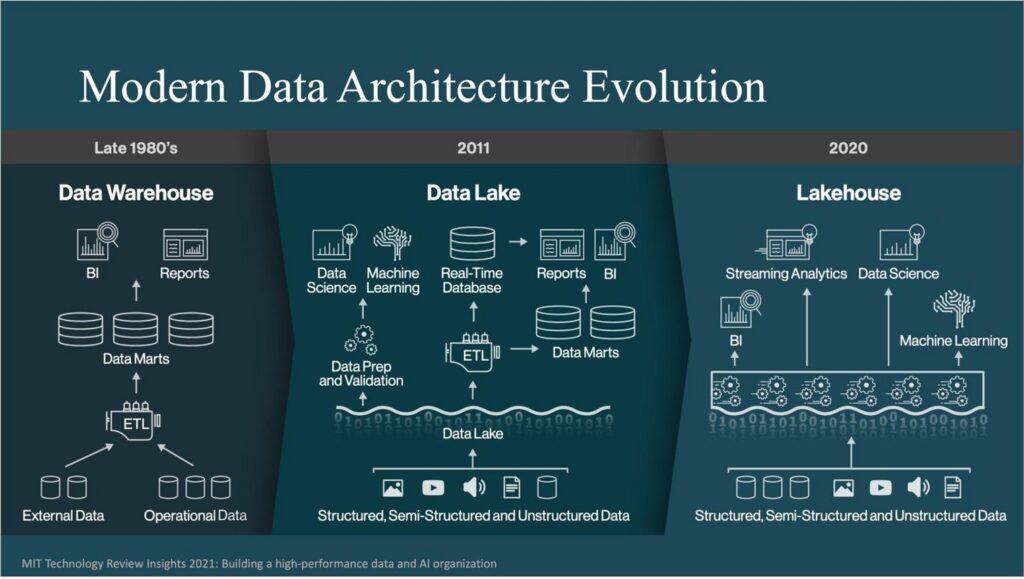
This foundation enables AI systems to operate reliably at scale.
The Role of a Semantic Layer
A semantic layer acts as a bridge between raw data and business users.
It ensures that:
- Metrics are defined once and reused consistently
- Data is interpreted uniformly across systems
- AI models operate on standardized inputs
This approach eliminates the “multiple versions of truth” problem.
Why This Changes Everything
With a unified data foundation:
- AI outputs become consistent and trustworthy
- Cross-functional teams align on insights
- Scaling AI becomes operationally feasible
Our blog on AI readiness maturity model breaks down a comprehensive, enterprise-grade strategy inspired by leading frameworks and real-world transformation journeys.
The CXO Framework: Scaling AI in Insurance with an AI-Ready Data Foundation
Start with Domain-Level Transformation, Not Experiments
Scaling AI in insurance requires a fundamental shift—from fragmented pilots to domain-centric transformation. Leading insurers prioritize high-impact domains such as claims, underwriting, and distribution, where AI can directly influence business outcomes.
Instead of launching dozens of disconnected initiatives, enterprises must:
- Identify 1–3 strategic domains
- Align AI initiatives with measurable KPIs
- Focus on reuse and scalability
For example, transforming claims processing with AI-driven triage can reduce cycle times, improve fraud detection, and enhance customer satisfaction simultaneously.
This domain-first approach ensures that AI investments translate into enterprise value rather than isolated wins.
Tie AI to Business Metrics, Not Technical Outputs
One of the most common pitfalls in AI in insurance is measuring success using technical metrics:
- Number of models built
- Accuracy improvements
- Processing speed
While important, these do not reflect business impact.
Instead, CXOs must anchor AI initiatives to outcomes such as:
- Loss ratio improvement
- Claims cycle time reduction
- Customer retention uplift
- Expense ratio optimization
This shift ensures alignment between AI investments and enterprise priorities.
Designing a Modular AI Architecture for Insurance Scale
From Monolithic Systems to Composable AI
Traditional insurance systems are monolithic, making it difficult to integrate AI capabilities seamlessly.
A modern AI-ready architecture must be:
- Modular
- Scalable
- Reusable
Key components include:
- Data pipelines for real-time ingestion
- Feature stores for consistent model inputs
- Microservices for AI capabilities
- Monitoring systems for performance tracking
This composable approach allows insurers to reuse components across domains, accelerating AI adoption.

The Role of Data Fabric and Semantic Layers
A data fabric architecture provides a unified layer across distributed data sources, enabling seamless data access and governance.
When combined with a semantic layer:
- Data definitions remain consistent
- AI models operate on standardized inputs
- Insights are aligned across the enterprise
This architecture eliminates redundancy and ensures scalability.
For architectural insights, refer to
“Microsoft Data Fabric vs Traditional Data Warehousing: What Leaders Need to Know”
Modular AI architecture with data fabric and semantic layer

Embedding Governance, Trust, and Compliance from Day One
Why Governance Cannot Be an Afterthought
In insurance, governance is not optional—it is foundational.
AI systems must address:
- Regulatory compliance
- Data privacy
- Model explainability
- Bias detection
Without these, AI initiatives face resistance from leadership and regulators.
Building a Trust Framework for AI
A robust governance framework includes:
- Data governance: lineage, quality, and access control
- Model governance: versioning, audit trails, and validation
- Ethical AI practices: fairness and transparency
- Operational monitoring: performance and drift detection
Embedding these elements early ensures that AI systems are scalable and compliant.
For modern centralized data platforms enabling AI, also read our comprehensive guide on the Microsoft Fabric Architecture- A CTOs guide to modern analytics and AI.
AI governance framework


Operating Model Transformation: From Projects to Products
The Shift to AI Product Thinking
Scaling AI requires treating it as a product rather than a project.
This involves:
- Continuous iteration
- Cross-functional collaboration
- Ownership and accountability
AI products evolve over time, improving with data and feedback.
New Roles and Capabilities
Organizations must introduce new roles such as:
- AI product owners
- Model operators
- Data stewards
- Business translators
These roles bridge the gap between business and technology.
Driving Adoption Across the Enterprise
Even the best AI systems fail without adoption.
Key success factors include:
- Training and enablement
- Transparent communication
- Incentives aligned with usage

Implementation Roadmap: From Data Chaos to AI Scale
Phase 1: Data Foundation and Assessment
- Audit existing data systems
- Identify inconsistencies in business logic
- Establish governance frameworks
Phase 2: Build Unified Data Layer
- Implement semantic layer
- Standardize KPI definitions
- Integrate data across systems
Phase 3: Deploy Domain-Specific AI
- Focus on high-impact use cases
- Align with business metrics
- Ensure governance compliance
Phase 4: Scale and Optimize
- Expand across domains
- Monitor performance
- Continuously improve models
Read our blog on The Ultimate Guide to Insurance Data Analytics in 2026: Transforming Risk, Claims & Customer Intelligence for a comprehensive, enterprise-focused blueprint for insurance data analytics in 2026, covering infrastructure, use cases, implementation strategies, and future trends.
Roadmap infographic


How Techment Helps Enterprises Scale AI in Insurance
Scaling AI in insurance requires more than technology—it demands a strategic partner who understands data, architecture, governance, and business transformation.
Techment enables insurers to:
- Build AI-ready data foundations with unified architecture
- Implement scalable data fabric and semantic layers
- Establish governance frameworks for compliance and trust
- Modernize legacy systems for real-time AI workflows
- Align AI initiatives with business outcomes
From strategy to execution, Techment supports the entire journey—ensuring that AI delivers measurable enterprise value.
Conclusion
AI in insurance is at a critical inflection point. While the potential is immense, the reality is clear: without a strong data foundation, AI initiatives will continue to stall.
The path forward requires more than experimentation. It demands a strategic shift toward unified data architectures, domain-level transformation, governance, and operating model evolution.
Organizations that invest in an AI-ready data foundation will unlock scalable, trustworthy, and high-impact AI capabilities—transforming AI from a pilot initiative into a core business driver.
Techment stands as a trusted partner in this journey, helping enterprises move from fragmented data environments to fully scalable AI ecosystems.
FAQ Section
1. Why does AI in insurance fail to scale?
Because of fragmented data, inconsistent business logic, weak governance, and legacy systems that prevent enterprise-wide deployment.
2. What is an AI-ready data foundation?
A unified data architecture with consistent logic, governance, and real-time access that enables scalable AI.
3. How does a semantic layer help AI?
It standardizes business logic, ensuring consistent data definitions across systems and improving AI reliability.
4. What are the biggest risks in insurance AI?
Bias, regulatory non-compliance, lack of explainability, and data inconsistencies.
5. How long does it take to scale AI in insurance?
Typically 12–24 months, depending on data maturity and organizational readiness.
Related Reads
- Microsoft Fabric Architecture: A CTO’s Guide to Modern Analytics & AI
- Fabric AI Readiness: How to Prepare Your Data for Scalable AI Adoption
- Data Quality for AI in 2026: The Ultimate Enterprise Guide
- Enterprise AI Strategy in 2026: What Leaders Must Get Right
- How to Assess Data Quality Maturity: Your Enterprise Roadmap
- Data Migration
- Data Transformation
- Data Pipeline Engineering
- Data Cleansing & Cataloging
- Data Governance & Quality
- Visualization and Analytics