

Introduction
Artificial intelligence is no longer a technology initiative—it is a boardroom priority. In 2026, enterprises are moving beyond pilots and proofs of concept toward full-scale AI-driven transformation. However, the reality is stark: while investments in AI continue to surge, only a fraction of organizations are realizing meaningful business outcomes.
This is where CXO strategies for AI-driven business transformation become critical. The responsibility has shifted from CIOs alone to a collective leadership mandate involving CEOs, CTOs, CDOs, and CFOs. AI is now reshaping operating models, revenue streams, customer experiences, and risk frameworks.
Leading research from McKinsey and Gartner indicates that enterprises with strong executive alignment on AI strategy are 2–3x more likely to achieve measurable ROI. Yet, challenges persist—fragmented data ecosystems, lack of governance, unclear ROI metrics, and scaling limitations.
This blog provides a comprehensive, executive-level blueprint for CXOs navigating AI transformation in 2026. It explores strategic frameworks, architectural considerations, governance imperatives, and real-world applications—helping leaders move from experimentation to enterprise-scale impact.
TL;DR Summary
- AI is no longer experimental—CXOs must lead enterprise-wide transformation strategies in 2026
- Success depends on data readiness, governance, and scalable operating models
- Generative AI, data fabrics, and automation are reshaping business value chains
- Poor data quality and lack of governance remain the top risks to AI adoption
- Enterprises need a structured roadmap combining strategy, architecture, and execution
- CXOs must align AI with business outcomes, not just technology adoption
The Strategic Imperative: Why AI Transformation is a CXO Priority in 2026
From Digital Transformation to AI-First Enterprises
Over the past decade, digital transformation focused on cloud adoption, automation, and data modernization. In 2026, the paradigm has shifted to AI-first enterprises, where intelligence is embedded into every process.
According to industry benchmarks, over 70% of enterprises are actively deploying AI in at least one business function, yet fewer than 30% have scaled it enterprise-wide. This gap highlights a critical need for CXO-led transformation strategies.
To understand how enterprises are aligning AI with business outcomes, refer to Techment’s perspective on 7 Proven Strategies to Build Secure, Scalable AI with Microsoft Azure
Business Impact: Beyond Efficiency to Competitive Advantage
AI is no longer just about cost optimization. It is driving:
- Revenue growth through hyper-personalization
- Faster decision-making via real-time analytics
- Risk mitigation using predictive intelligence
- Operational resilience through automation
For CXOs, the challenge is not whether to adopt AI—but how to align it with enterprise value creation.
Executive Insight
Organizations that treat AI as a strategic capability rather than a technical tool are outperforming peers in:
- Customer retention
- Innovation velocity
- Market responsiveness
The Core Pillars of CXO Strategies for AI-Driven Business Transformation
1. Data as the Foundation of AI Success
AI is only as effective as the data it relies on. Poor data quality remains the single largest barrier to AI success.
Explore Techment’s deep dive: 7 Proven Strategies to Build Secure, Scalable AI with Microsoft Azure
Key Challenges
- Fragmented data silos
- Inconsistent data governance
- Lack of real-time data pipelines
Enterprise Implications
Without a unified data foundation, AI initiatives:
- Deliver inconsistent outputs
- Fail to scale
- Erode stakeholder trust
2. Establish AI Governance and Responsible AI
As AI adoption accelerates, governance becomes a board-level concern. Modern AI platforms such as those described by Microsoft highlight the importance of unified data architectures.
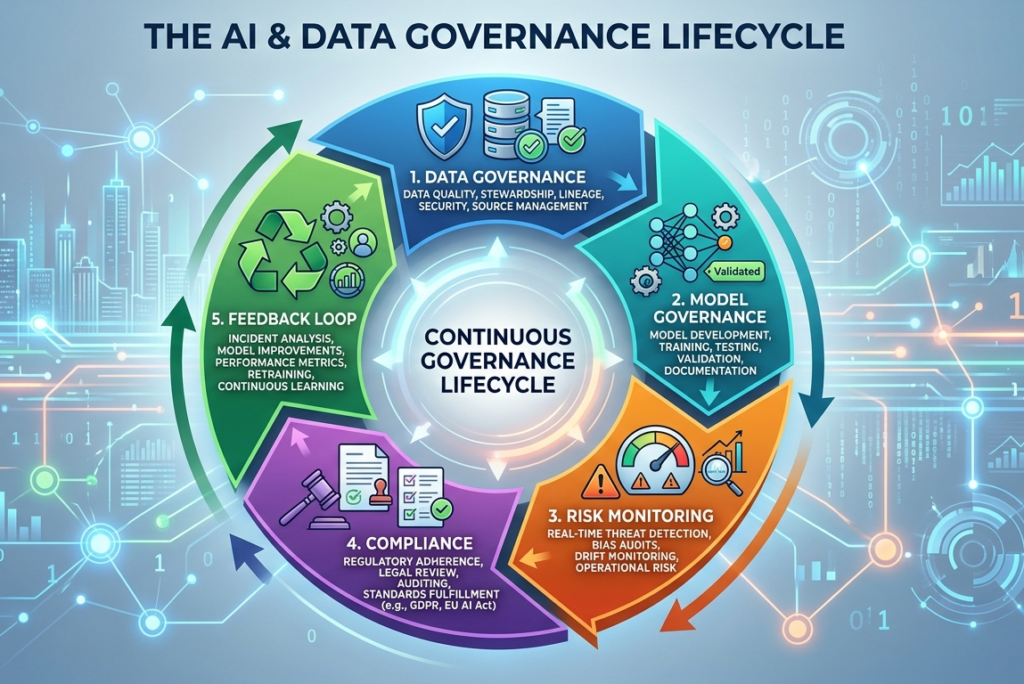
Refer to: Designing Scalable Data Architectures for Enterprise Data Platforms
Governance Priorities
- Ethical AI frameworks
- Model transparency and explainability
- Regulatory compliance (GDPR, AI Act)
- Risk monitoring
Executive Insight
Enterprises that invest early in governance frameworks experience:
- Faster AI adoption cycles
- Reduced compliance risks
- Greater stakeholder trust
3. Build Scalable AI Operating Models
One of the most overlooked aspects of AI transformation is the operating model.
Common Models
- Centralized AI teams
- Federated AI structures
- Hub-and-spoke models
Trade-offs
Centralized models:
- Strong governance
- Slower innovation
Decentralized models:
- Faster experimentation
- Risk of fragmentation
Recommendation
CXOs should adopt a hybrid model, balancing control and agility.
4. Modernize Data & AI Architecture
AI transformation requires a reimagined enterprise architecture:
- Data ingestion layers
- Data lakes and warehouses
- AI/ML platforms
- Visualization and decision layers
For a deeper architectural perspective:Microsoft Fabric Architecture: CTO’s Guide to Modern Analytics & AI
Enterprise AI Architecture: Building for Scale and Resilience
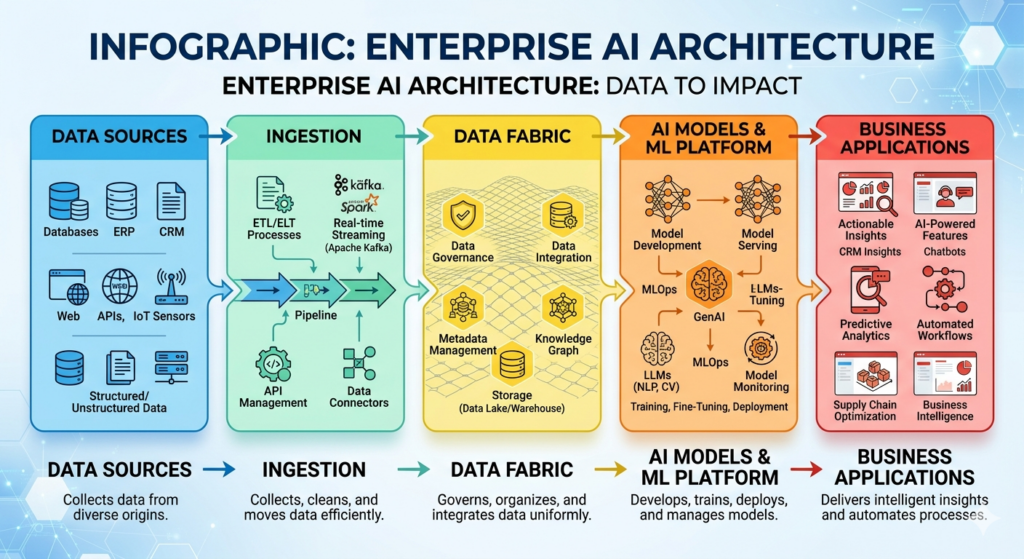
The Role of Data Fabric in AI Transformation
Traditional architectures cannot support the scale of AI in 2026. Data fabric architectures enable:
- Unified data access
- Real-time analytics
- Cross-platform integration
Learn more: Microsoft Data Fabric vs Traditional Data Warehousing
Generative AI and the Next Wave of Enterprise Innovation
The Rise of Generative AI
Generative AI is transforming:
- Content creation
- Customer interactions
- Software development
- Knowledge management
Explore enterprise implementation best practices: Best Practices for Generative AI Implementation in Business
5. Operationalize Generative AI Use Cases
Customer Experience
- Conversational AI
- Intelligent chatbots
- Personalized recommendations
Operations
- Automated reporting
- Code generation
- Process optimization
Decision Intelligence
- Predictive analytics
- Scenario modeling
Risks and Trade-offs
While generative AI offers immense potential, it introduces:
- Hallucination risks
- Data privacy concerns
- High compute costs
CXOs must balance innovation with control.
6. Embed Data Quality as a Strategic Priority – The Hidden Differentiator
Why Data Quality is Critical
AI failures are often data failures in disguise.
Refer to: Data Quality for AI in 2026: The Ultimate Blueprint
Key Metrics for Data Quality
| Metric | Impact on AI |
|---|---|
| Accuracy | Model reliability |
| Completeness | Decision coverage |
| Consistency | Cross-system alignment |
| Timeliness | Real-time insights |
Automation vs Manual Data Quality
Manual approaches cannot scale with AI demands.
7. Align AI with Measurable Business Outcomes
Enterprises investing in automated data quality frameworks see:
- 40–60% improvement in AI model accuracy
- Faster deployment cycles
- Reduced operational risks
Implementation Roadmap: How CXOs Can Drive AI Transformation
Phase 1: Strategy and Vision
- Define AI objectives aligned with business goals
- Identify high-value use cases
- Establish governance frameworks
Phase 2: Data and Platform Readiness
- Modernize data infrastructure
- Implement data governance
- Ensure AI-ready data pipelines
Refer to:
AI Ready Enterprise Checklist
Phase 3: Pilot and Scale
- Launch pilot projects
- Measure ROI
- Scale successful initiatives
Phase 4: Continuous Optimization
- Monitor model performance
- Update governance policies
- Drive continuous innovation
AI Transformation Maturity Model
| Stage | Characteristics |
|---|---|
| Experimentation | Isolated pilots |
| Adoption | Functional use cases |
| Scaling | Enterprise integration |
| Optimization | Continuous AI-driven decisions |
Organizational Change: Building an AI-Ready Enterprise Culture
Why Culture is the Biggest Barrier to AI Success
Despite significant investments in AI technologies, many enterprises fail to scale because of organizational resistance, skill gaps, and misaligned incentives. In fact, studies from leading analysts indicate that over 60% of AI initiatives stall due to non-technical challenges.
This makes cultural transformation a critical component of CXO strategies for AI-driven business transformation.
To align culture with AI readiness, enterprises must integrate change management with data strategy. Techment highlights this intersection in: Leveraging Data Transformation for Modern Analytics
Key Organizational Challenges
Skill Gaps in AI and Data
- Shortage of AI engineers and data scientists
- Lack of AI literacy among business leaders
- Limited understanding of AI risk and governance
Resistance to Change
- Fear of job displacement
- Lack of trust in AI systems
- Organizational silos
Executive Strategies to Overcome These Challenges
Build AI Literacy at the Leadership Level
CXOs must lead by example, ensuring that leadership teams understand:
- AI capabilities and limitations
- Strategic implications of AI adoption
- Governance and ethical considerations
Redesign Incentives and KPIs
Traditional KPIs often fail to capture AI-driven value. Enterprises should:
- Align KPIs with data-driven outcomes
- Incentivize experimentation and innovation
- Reward cross-functional collaboration
Foster a Data-Driven Culture
A successful AI transformation requires:
- Democratization of data access
- Self-service analytics capabilities
- Continuous learning environments
Executive Insight
Organizations that invest in people and culture alongside technology are significantly more likely to scale AI successfully. Culture is not a soft factor—it is a strategic enabler of transformation.
Industry-Specific CXO Strategies for AI Transformation
AI is Not One-Size-Fits-All
Different industries face unique challenges and opportunities when implementing AI. CXOs must tailor their strategies accordingly.
Financial Services
Key Use Cases
- Fraud detection using machine learning
- Risk modeling and credit scoring
- Algorithmic trading
Strategic Implication
Regulatory compliance and explainability are critical. AI must be transparent and auditable.
Healthcare
Key Use Cases
- Diagnostic AI models
- Patient engagement platforms
- Predictive analytics for treatment outcomes
Strategic Implication
Data privacy and ethical considerations are paramount. CXOs must ensure HIPAA-compliant AI systems.
Retail and E-Commerce
Key Use Cases
- Personalized recommendations
- Demand forecasting
- Supply chain optimization
Strategic Implication
AI directly impacts revenue growth and customer experience, making it a core business driver.
Manufacturing
Key Use Cases
- Predictive maintenance
- Quality inspection using computer vision
- Smart factory automation
Strategic Implication
Integration with IoT and real-time data systems is essential.
Internal Perspective
To understand how AI integrates across industries, explore: Microsoft Fabric AI Solutions for Enterprise Intelligence
Executive Insight
Industry context determines:
- AI investment priorities
- Risk frameworks
- Implementation timelines
CXOs must align AI strategies with industry-specific dynamics and regulations.
Advanced AI Governance: From Compliance to Competitive Advantage
Moving Beyond Basic Governance
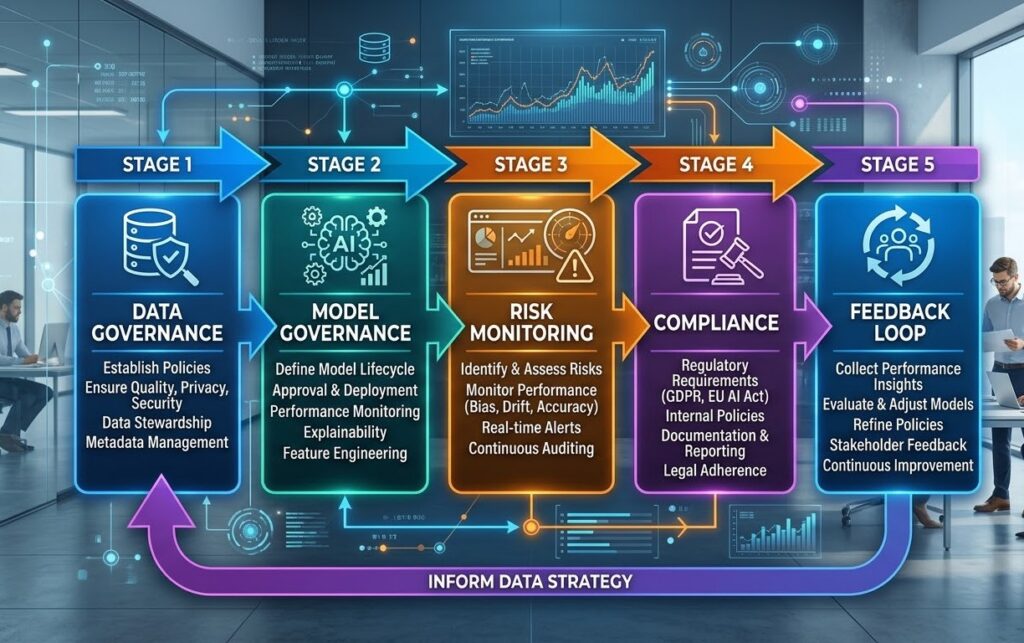
In 2026, governance is not just about compliance—it is about building trust and enabling scale.
Refer to:
Data Governance for Data Quality: Future-Proofing Enterprise Data
Key Components of Advanced AI Governance
Model Lifecycle Management
- Version control for models
- Continuous monitoring
- Performance tracking
Explainability and Transparency
- Interpretable AI models
- Clear decision-making logic
- Audit trails
Risk Management
- Bias detection
- Data privacy safeguards
- Security controls
Executive Insight
Organizations with mature governance frameworks:
- Accelerate AI adoption
- Reduce operational risks
- Build stakeholder confidence
Governance is no longer a constraint—it is a strategic accelerator.
Measuring AI ROI: From Experimentation to Enterprise Value
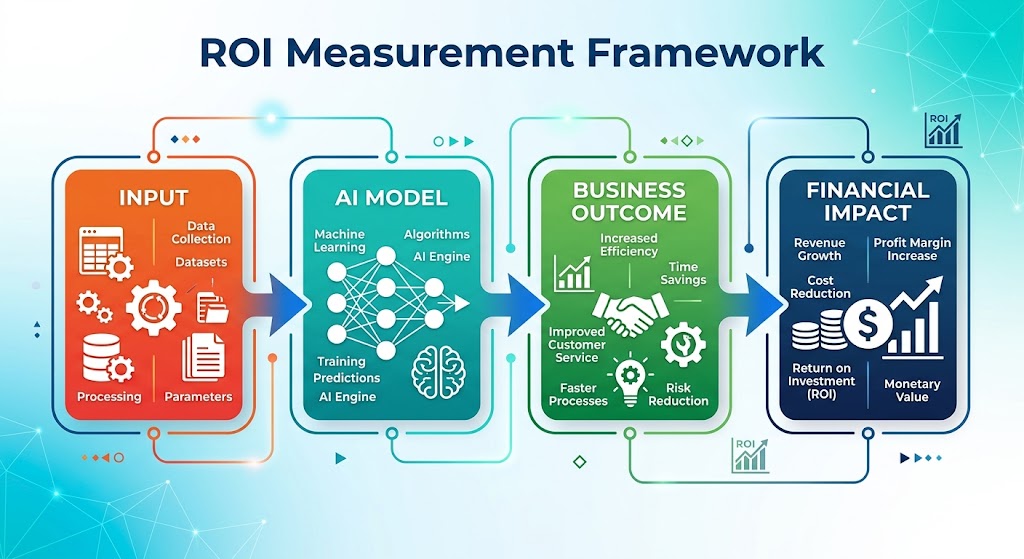
The Challenge of Measuring AI Success
One of the biggest concerns for CXOs is the lack of clear ROI metrics for AI initiatives.
Key Metrics for AI ROI
Financial Metrics
- Revenue uplift
- Cost savings
- Productivity gains
Operational Metrics
- Process efficiency
- Cycle time reduction
- Error rate reduction
Strategic Metrics
- Innovation rate
- Customer satisfaction
- Market competitiveness
Executive Insight
Enterprises that define clear ROI frameworks early are more successful in:
- Securing stakeholder buy-in
- Scaling AI initiatives
- Demonstrating business value
How Techment Helps Enterprises Drive AI Transformation
A Strategic Partner for AI-Led Growth
Techment enables enterprises to move from AI ambition to measurable outcomes by combining strategy, technology, and execution.
Core Capabilities
Data Modernization
- Building scalable data platforms
- Implementing data fabric architectures
- Ensuring real-time data accessibility
AI Readiness and Implementation
Explore: AI Ready Enterprise Checklist with Microsoft Fabric
- Preparing data for AI models
- Deploying scalable AI solutions
- Integrating AI into business workflows
Governance and Compliance
- Implementing enterprise data governance frameworks
- Ensuring regulatory compliance
- Establishing AI risk management systems
Unified Analytics and Decision Intelligence
- Enabling real-time analytics
- Building executive dashboards
- Driving data-driven decision-making
End-to-End Engagement Model
Techment supports enterprises across:
- Strategy definition
- Platform implementation
- AI model deployment
- Continuous optimization
Executive Positioning
Techment acts as a trusted advisor, helping CXOs:
- Navigate complex AI ecosystems
- Align AI with business strategy
- Achieve scalable transformation
Conclusion
As we move deeper into 2026, AI is redefining how enterprises operate, compete, and innovate. However, success is not guaranteed. Organizations that approach AI as a strategic transformation initiative—led by CXOs—are the ones that will lead their industries.
This blog has outlined the critical components of CXO strategies for AI-driven business transformation, from data foundations and governance to operating models and ROI measurement. The message is clear: AI is not just about technology—it is about aligning people, processes, and platforms to drive business value.
Looking ahead, enterprises must focus on:
- Building AI-ready data ecosystems
- Establishing governance frameworks
- Scaling AI across business functions
- Continuously evolving operating models
With the right strategy and execution, AI can become a sustainable competitive advantage.
Techment stands ready to partner with enterprises on this journey—helping transform AI ambition into real, measurable impact.
FAQ: CXO Strategies for AI-Driven Business Transformation
1. What are the key components of CXO strategies for AI-driven business transformation?
They include data strategy, governance frameworks, AI operating models, and scalable architecture, aligned with business outcomes.
2. How can enterprises scale AI beyond pilot projects?
By focusing on data quality, governance, and operating models, and aligning AI initiatives with measurable business value.
3. What are the biggest risks in AI transformation?
Poor data quality
Lack of governance
Unrealistic ROI expectations
Organizational resistance
4. How long does enterprise AI transformation take?
Typically 18–36 months, depending on organizational maturity and investment levels.
5. What skills are required for AI transformation?
Data engineering
Machine learning
AI governance
Business strategy alignment