
Enterprises today are not struggling with a lack of data—they are overwhelmed by it. From transactional systems and IoT streams to SaaS platforms and unstructured content, organizations are generating more data than ever before. Yet, despite this abundance, many leaders still face a critical challenge: finding the right insights at the right time.
This is where AI data discovery is emerging as a strategic differentiator. Traditional data discovery approaches—manual cataloging, static dashboards, and fragmented metadata—can no longer keep pace with modern enterprise complexity. AI data discovery introduces automation, intelligence, and context-awareness into the process, enabling organizations to surface insights faster and with greater accuracy.
According to industry estimates, up to 80% of enterprise data remains unused due to discoverability challenges. This is not just a technical inefficiency—it is a strategic risk.
In this blog, we explore how AI data discovery is reshaping enterprise analytics, what architectures enable it, and how organizations can operationalize it to accelerate insight generation and decision-making.
TL;DR Summary
- AI data discovery transforms how enterprises locate, understand, and utilize data at scale
- It reduces time-to-insight by automating metadata analysis, pattern detection, and semantic search
- Enterprises adopting AI data discovery see faster decision cycles and improved data governance
- Success depends on architecture, governance, and data quality maturity
- AI data discovery is foundational for analytics, GenAI, and real-time intelligence
The Growing Need for AI Data Discovery in Enterprises
Why Traditional Data Discovery Falls Short
Traditional data discovery approaches were designed for a different era—one where data volumes were manageable, sources were limited, and analytics needs were relatively static.
Traditional vs AI Data Discovery
| Capability | Traditional Data Discovery | AI Data Discovery |
|---|---|---|
| Metadata Management | Manual, static | Automated, dynamic |
| Data Search | Keyword-based | Semantic & NLP-driven |
| Scalability | Limited | Enterprise-scale |
| Time-to-Insight | Weeks | Hours or minutes |
| Data Classification | Manual tagging | AI-driven classification |
| Adaptability | Low | Self-learning systems |
Today, enterprises operate in highly distributed environments:
- Multi-cloud ecosystems
- Hybrid data architectures
- Streaming and real-time data pipelines
- Diverse data formats (structured, semi-structured, unstructured)
In such environments, manual data discovery processes become bottlenecks.
Key limitations include:
- Manual metadata tagging: Time-consuming and error-prone
- Siloed data catalogs: Lack of unified visibility
- Static lineage tracking: Limited adaptability to change
- Delayed insights: Weeks or months to identify usable datasets
As a result, data teams spend more time searching for data than analyzing it.
To understand how enterprises can overcome these challenges, explore 7 Proven Strategies to Build Secure, Scalable AI with Microsoft Azure
The Shift Toward AI-Powered Data Discovery
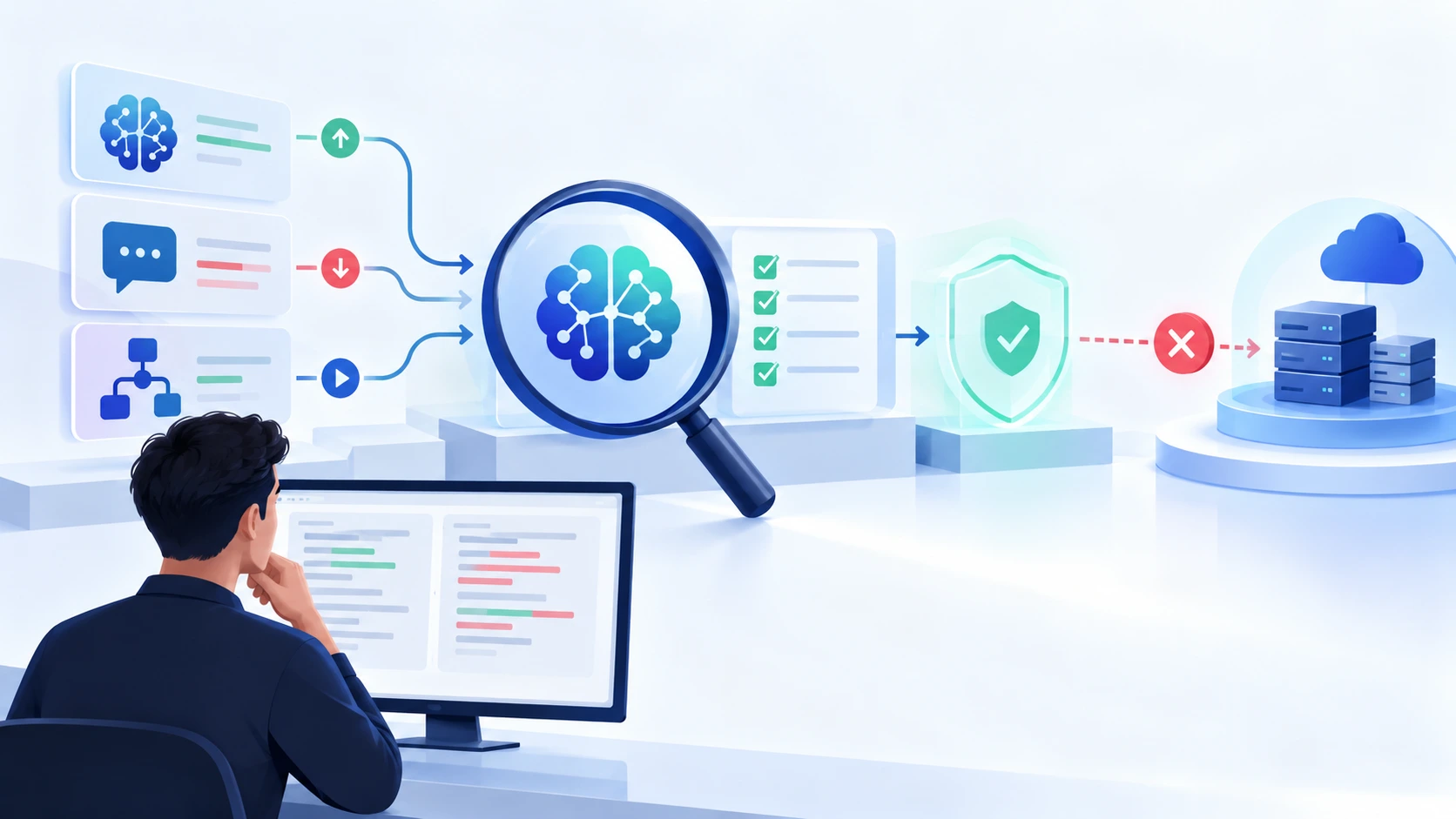
AI data discovery introduces automation and intelligence into the discovery lifecycle. Instead of relying on manual processes, AI models analyze data patterns, relationships, and usage behaviors to surface relevant insights.
Core capabilities include:
- Automated metadata extraction
- Semantic data search
- Pattern recognition across datasets
- Intelligent data classification
- Context-aware recommendations
This shift is not incremental—it is transformational.
Executive Insight:
Organizations that adopt AI data discovery reduce time-to-insight by up to 60–70%, enabling faster decision-making across business functions.
Business Impact of Faster Data Discovery
AI data discovery directly impacts enterprise performance in multiple ways:
1. Accelerated Decision-Making
Leaders gain faster access to actionable insights, reducing latency in strategic decisions.
2. Improved Data Utilization
Previously unused data becomes discoverable and usable.
3. Enhanced Collaboration
Business and technical teams can access shared data contexts.
4. Reduced Operational Costs
Less time spent on data wrangling and discovery.
5. Stronger Data Governance
AI helps enforce policies and track lineage automatically.
To further understand how reliable data drives enterprise outcomes, refer to Designing Scalable Data Architectures for Enterprise Data Platforms
What Is AI Data Discovery? A Deep Dive
Defining AI Data Discovery
AI data discovery refers to the use of machine learning, natural language processing (NLP), and automation to identify, classify, and surface relevant data across enterprise ecosystems.
Unlike traditional tools, AI-driven systems:
- Learn from user behavior
- Continuously update metadata
- Provide contextual recommendations
- Enable natural language queries
In simple terms:
AI data discovery transforms data from “hidden assets” into “accessible intelligence.”
Core Components of AI Data Discovery
A robust AI data discovery framework typically includes:
1. Intelligent Data Catalogs
AI-powered catalogs automatically index data assets and enrich metadata.
2. Metadata Management
Dynamic metadata evolves as data changes, ensuring accuracy.
3. Semantic Layer
AI understands relationships between datasets, enabling contextual insights.
4. Search and Query Engine
Natural language interfaces allow users to search data intuitively.
5. Data Lineage Tracking
AI maps data flows across systems, improving transparency.
Core Components of AI Data Discovery
| Component | Function | Enterprise Impact |
|---|---|---|
| Data Catalog | Indexes data assets | Improves discoverability |
| Metadata Engine | Enriches data context | Enhances accuracy |
| Semantic Layer | Maps relationships | Enables contextual insights |
| AI Models | Detect patterns | Accelerates analysis |
| Search Interface | Enables natural queries | Improves usability |
AI vs Traditional Data Discovery
Traditional Approach:
- Static catalogs
- Manual tagging
- Limited search capabilities
AI-Driven Approach:
- Dynamic, self-learning systems
- Automated classification
- Context-aware search and recommendations
Executive Perspective:
AI data discovery is not just a tool upgrade—it is a shift toward data intelligence as a capability.
To explore how modern platforms enable this shift, read Microsoft Fabric Architecture: A CTO’s Guide to Modern Analytics & AI
Architecture of AI Data Discovery in Modern Enterprises
The Evolution Toward Unified Data Platforms
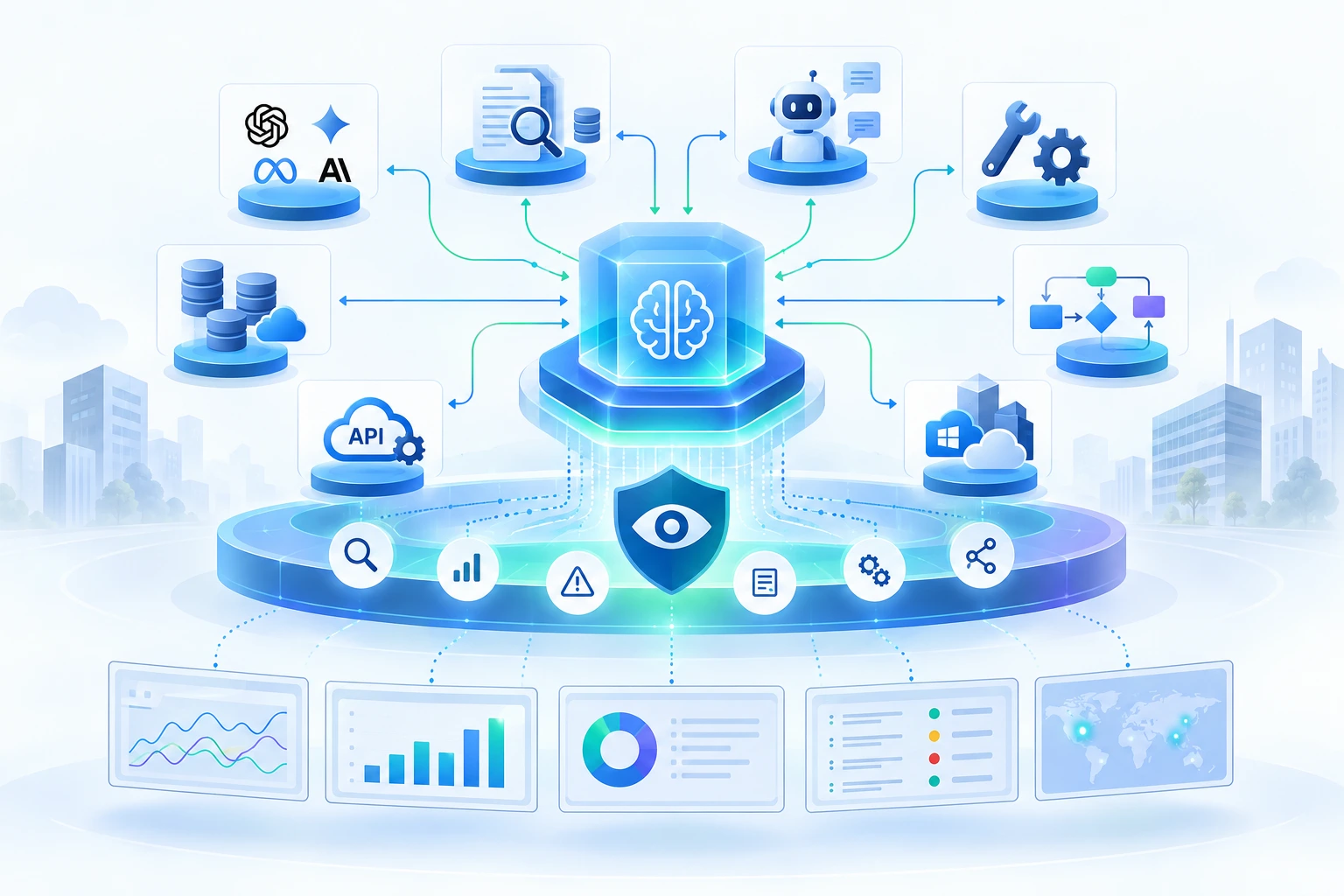
Modern AI data discovery thrives on unified data architectures such as:
- Data fabric
- Data mesh
- Lakehouse architectures
These architectures eliminate silos and enable seamless data access.
Key Architectural Layers
1. Data Ingestion Layer
Collects data from multiple sources:
- ERP systems
- CRM platforms
- IoT devices
- APIs
2. Storage Layer
Centralized storage such as:
- Data lakes
- Lakehouses
- Cloud warehouses
3. Processing Layer
Transforms and prepares data using:
- ETL/ELT pipelines
- Stream processing
- Data transformation engines
4. AI Discovery Layer
This is where AI data discovery operates:
- Metadata extraction
- Pattern detection
- Data classification
5. Consumption Layer
End-users access insights via:
- BI tools
- AI copilots
- Dashboards

Why Architecture Matters
Modern architectures such as data fabric and lakehouse are extensively documented in Microsoft Learn on modern data architectures, highlighting their role in enabling scalable AI data discovery. Without the right architecture, AI data discovery cannot scale.
Challenges include:
- Data fragmentation
- Latency issues
- Governance gaps
Executive Insight:
Architecture determines whether AI data discovery becomes a strategic enabler or just another isolated tool.
To compare modern vs traditional approaches, explore Microsoft Data Fabric vs Traditional Data Warehousing
AI Data Discovery – Maturity Model Table
Understanding where your organization stands in its AI data discovery journey is critical to scaling insight generation effectively. Most enterprises evolve through distinct maturity stages—from fragmented, siloed data environments to fully autonomous, AI-driven ecosystems. This maturity model helps leaders assess current capabilities, identify gaps, and prioritize strategic investments required to accelerate AI data discovery and unlock faster, more reliable insights at scale.
| Maturity Level | Characteristics | AI Discovery Capability |
|---|---|---|
| Level 1: Siloed | Disconnected systems | Minimal |
| Level 2: Integrated | Basic data pipelines | Limited |
| Level 3: Governed | Strong data policies | Moderate |
| Level 4: Intelligent | AI-enabled systems | Advanced |
| Level 5: Autonomous | Self-optimizing data ecosystem | Fully automated |
How AI Data Discovery Accelerates Insights
From Data to Insight: The Traditional Bottleneck
In traditional workflows:
- Identify data sources
- Request access
- Clean and prepare data
- Analyze and visualize
This process can take weeks.
AI-Driven Acceleration
AI data discovery compresses this cycle dramatically:
Step 1: Automated Data Identification
AI scans systems and identifies relevant datasets instantly.
Step 2: Intelligent Data Profiling
Patterns, anomalies, and trends are detected automatically.
Step 3: Contextual Recommendations
AI suggests datasets and insights based on user intent.
Step 4: Real-Time Insights
Users access insights immediately via dashboards or queries.
Enterprise Use Cases
1. Customer Analytics
Identify churn patterns and behavior trends faster.
2. Financial Forecasting
Real-time data discovery improves accuracy.
3. Supply Chain Optimization
Detect disruptions and inefficiencies early.
4. Risk Management
AI surfaces anomalies in real time.
Strategic Impact
AI data discovery enables:
- Faster innovation cycles
- Better customer experiences
- Improved operational efficiency
To see how AI readiness impacts enterprise outcomes, refer to AI-Ready Enterprise Checklist with Microsoft Fabric
Benefits, Risks, and Trade-Offs of AI Data Discovery
Key Benefits
1. Speed and Efficiency
Automated discovery reduces manual effort significantly.
2. Scalability
Handles massive data volumes seamlessly.
3. Improved Accuracy
AI reduces human errors in data classification.
4. Enhanced Governance
Automated lineage and policy enforcement.
Risks and Challenges
1. Data Quality Issues
AI is only as good as the data it processes.
2. Governance Complexity
Automated systems require strong oversight.
3. Skill Gaps
Teams need expertise in AI and data engineering.
4. Integration Challenges
Legacy systems may not support AI-driven discovery.
Trade-Offs
Automation vs Control
More automation can reduce visibility into processes.
Speed vs Accuracy
Rapid insights must still be validated.
Centralization vs Flexibility
Unified systems may limit local autonomy.
Benefits vs Risks vs Trade-offs
| Category | Key Points |
|---|---|
| Benefits | Faster insights, scalability, automation |
| Risks | Data quality issues, governance complexity |
| Trade-offs | Speed vs accuracy, automation vs control |
Executive Perspective
AI data discovery should not be viewed as a standalone solution. It must be integrated into a broader data strategy that balances speed, governance, and scalability.
To understand how governance supports discovery, explore Data Governance for Data Quality
Implementation Roadmap for AI Data Discovery in Enterprises
From Strategy to Execution
Adopting AI data discovery is not a plug-and-play initiative—it requires a structured, phased approach aligned with enterprise data maturity.
Phase 1: Data Assessment and Readiness
Enterprises must evaluate:
- Data availability and accessibility
- Existing data architecture (lake, warehouse, hybrid)
- Data quality and governance maturity
Without this foundation, AI data discovery initiatives often fail to scale.
Phase 2: Platform and Architecture Alignment
Organizations should align their architecture with AI-driven discovery capabilities:
- Adopt unified platforms (data fabric, lakehouse)
- Integrate metadata management systems
- Enable real-time data processing
Key Insight:
Platforms that unify storage, analytics, and AI significantly accelerate discovery outcomes.
To understand how modern platforms enable this, explore What is Microsoft Fabric: A Comprehensive Overview
Phase 3: AI Model Integration
AI data discovery relies on multiple models:
- NLP for semantic search
- Machine learning for pattern detection
- Graph models for relationship mapping
Critical Consideration:
Models must be continuously trained using enterprise-specific data contexts.
Phase 4: Governance and Compliance Setup
AI-driven discovery increases data access—making governance essential.
- Define data ownership
- Implement access controls
- Ensure compliance with regulations
To build a strong governance backbone, refer to Data Governance for Data Quality: Future-Proofing Enterprise Data
Phase 5: Adoption and Change Management
Technology alone does not drive success—adoption does.
| Phase | Focus Area | Outcome |
|---|---|---|
| 1 | Data Readiness | Clean, accessible data |
| 2 | Architecture | Scalable foundation |
| 3 | AI Integration | Intelligent discovery |
| 4 | Governance | Secure, compliant access |
| 5 | Adoption | Enterprise-wide usage |
AI Data Discovery Trends Shaping the Future
Rise of Autonomous Data Discovery
AI data discovery is moving toward autonomous systems that:
- Continuously scan and classify data
- Automatically generate insights
- Trigger actions without manual intervention
Example:
AI systems detecting anomalies and alerting decision-makers in real time.
Convergence with Generative AI
Generative AI is transforming how users interact with data:
- Natural language queries
- Conversational analytics
- AI copilots for decision support
This convergence enables non-technical users to access insights effortlessly.
To explore enterprise GenAI adoption, read Best Practices for Generative AI Implementation in Business
Data Products and Data-as-a-ServiceEnterprises are shifting toward:
- Treating data as a product
- Creating reusable data assets
- Enabling self-service discovery
AI plays a key role in making these data products discoverable
Real-Time and Streaming Discovery
Batch processing is no longer sufficient.
Modern enterprises require:
- Real-time data discovery
- Streaming analytics
- Instant insights
Increased Focus on Data Trust
As AI systems automate discovery, trust becomes critical.
Key priorities:
- Data lineage transparency
- Explainable AI models
- Data quality assurance
To understand how data quality impacts AI, refer to Data Quality for AI in 2026
How Techment Helps Enterprises with AI Data Discovery
AI data discovery is not just about deploying tools—it requires a holistic transformation across data strategy, architecture, governance, and AI readiness.
Techment partners with enterprises to operationalize AI data discovery at scale through a structured, outcome-driven approach.
End-to-End Data Strategy and Modernization
Techment helps organizations define and execute data strategies aligned with business goals:
- Data ecosystem assessment
- Architecture design (fabric, lakehouse, hybrid)
- Roadmap for AI-driven discovery
Explore:
Unleashing the Power of Data: Building a Winning Data Strategy
AI-Ready Data Foundations
AI data discovery requires high-quality, well-governed data.
Techment enables:
- Data quality frameworks
- Metadata management
- Data standardization
Learn more:
The Anatomy of a Modern Data Quality Framework
Platform Implementation and Integration
Techment specializes in implementing modern data platforms:
- Microsoft Fabric
- Azure data services
- Unified analytics ecosystems
This enables seamless AI data discovery across enterprise systems.
Explore: Microsoft Fabric AI Solutions for Enterprise Intelligence
Governance, Security, and Compliance
Techment ensures that AI-driven discovery operates within a secure and compliant framework:
- Data governance models
- Access controls and policies
- Regulatory compliance
Continuous Optimization and Innovation
AI data discovery is an evolving capability.
Techment supports:
- Performance optimization
- AI model refinement
- Continuous improvement cycles
Executive Takeaway
Techment enables enterprises to move from fragmented data environments to intelligent, AI-driven discovery ecosystems—unlocking faster insights and better decisions.
Conclusion
AI data discovery is rapidly becoming a foundational capability for modern enterprises. In a world where data volume continues to grow exponentially, the ability to find insights faster is no longer optional—it is a competitive necessity.
By combining AI, automation, and modern data architectures, organizations can unlock the full potential of their data ecosystems. However, success requires more than technology—it demands strategy, governance, and cultural alignment.
Enterprises that invest in AI data discovery today will be better positioned to:
- Accelerate decision-making
- Improve operational efficiency
- Drive innovation at scale
As the data landscape continues to evolve, AI data discovery will play a central role in shaping the future of enterprise intelligence.
Techment stands as a strategic partner in this journey—helping organizations transform data into actionable, trusted, and scalable insights.
FAQ: AI Data Discovery in Enterprises
1. What is AI data discovery in simple terms?
AI data discovery uses machine learning and automation to find, classify, and analyze data faster, enabling quicker insights.
2. How is AI data discovery different from traditional data discovery?
Traditional methods rely on manual processes, while AI data discovery automates metadata analysis, pattern detection, and recommendations.
3. What are the prerequisites for implementing AI data discovery?
Enterprises need:
High-quality data
Scalable architecture
Strong governance frameworks
4. How long does it take to implement AI data discovery?
Implementation timelines vary but typically range from 3 to 12 months, depending on data maturity and complexity.
5. What industries benefit the most from AI data discovery?
Industries with large, complex datasets benefit the most:
Banking and financial services
Healthcare
Retail
Manufacturing