
Introduction
The Build vs Buy AI debate has become one of the most critical strategic decisions for enterprise leaders in 2026. As artificial intelligence transitions from isolated pilots to core business infrastructure, CIOs, CTOs, and data leaders are no longer asking if they should invest in AI—they are deciding how to operationalize it at scale.
Enterprise AI today powers everything from autonomous customer service and predictive maintenance to multi-agent financial workflows and real-time decision intelligence. According to industry research, over 70% of enterprises are increasing AI investments year-over-year, but a significant portion still struggles with translating these investments into measurable business outcomes.
At the heart of this challenge lies a fundamental question: should enterprises build AI systems in-house for maximum control and differentiation, or buy AI platforms to accelerate deployment and reduce complexity?
This is no longer a purely technical decision. It is a strategic trade-off involving cost structures, governance models, time-to-value, risk exposure, and long-term competitive positioning.
This blog explores the Build vs Buy AI decision in depth—analyzing enterprise use cases, architectural considerations, operating models, and emerging hybrid approaches. It provides a practical framework to help leaders make informed decisions aligned with business priorities, regulatory requirements, and innovation goals.
TL;DR Summary
- The Build vs Buy AI decision in 2026 is driven by time-to-value, governance, and internal capability maturity
- Building AI offers control, differentiation, and IP ownership, but comes with high cost and longer timelines
- Buying AI platforms enables rapid deployment, scalability, and compliance readiness
- Most enterprises are adopting a hybrid AI strategy, combining platforms with custom extensions
- Success depends on aligning AI decisions with enterprise data strategy, operating model, and regulatory landscape
- Leading organizations are shifting from a binary decision to a portfolio-based AI approach
Why the Build vs Buy AI Debate Matters More Than Ever in 2026
The Shift from Experiments to Enterprise-Scale AI
The Build vs Buy AI conversation has evolved significantly over the past few years. In earlier phases, AI adoption was largely experimental—focused on proofs of concept, pilot use cases, or isolated analytics initiatives.
In 2026, the landscape is fundamentally different.
AI systems are now deeply embedded in enterprise operations. Organizations are deploying:
- Agentic AI systems capable of multi-step reasoning
- Autonomous decision engines in finance and supply chains
- Real-time personalization engines in retail and telecom
- AI-driven compliance and risk monitoring systems
These are not lightweight applications. They are mission-critical systems with direct impact on revenue, risk, and customer experience.
This shift dramatically increases the stakes of the Build vs Buy AI decision.
Rising Complexity of AI Architectures
Modern enterprise AI architectures are inherently complex. They involve:
- Large Language Models (LLMs) and domain-specific fine-tuning
- Retrieval-Augmented Generation (RAG) pipelines
- Multi-agent orchestration frameworks
- Data pipelines spanning structured and unstructured sources
- Governance layers for explainability, auditability, and compliance
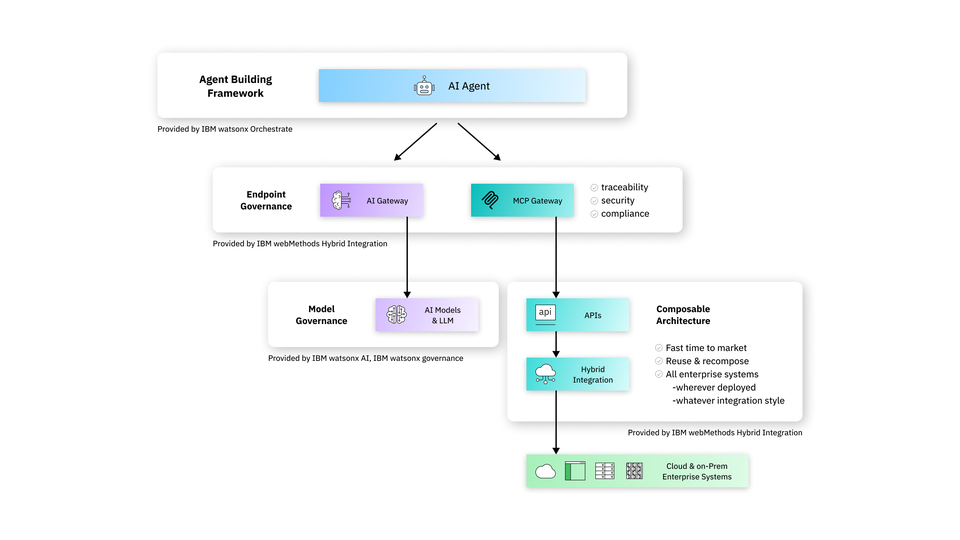
Building such systems from scratch requires deep expertise across data engineering, machine learning, MLOps, and cloud infrastructure.
As highlighted in enterprise AI strategy discussions , organizations that underestimate this complexity often face delays, cost overruns, and scalability challenges.
Increased Regulatory and Governance Pressure
AI is no longer operating in a regulatory vacuum.
Enterprises must now comply with:
- Data privacy regulations
- Model explainability requirements
- Auditability and traceability mandates
- Industry-specific compliance frameworks
These requirements significantly influence the Build vs Buy AI decision.
Buying a platform often provides built-in compliance capabilities, while building requires organizations to design governance frameworks from scratch.
The Cost of Getting It Wrong
A poorly executed AI strategy can lead to:
- Millions in sunk infrastructure costs
- Fragmented data ecosystems
- Low user adoption
- Compliance risks and reputational damage
This is why the Build vs Buy AI decision is no longer tactical—it is a board-level strategic priority.
Our blog on Cost Optimization Strategies for LLM Deployments: The Ultimate Enterprise Playbook for Scalable AI in 2026 provides a comprehensive enterprise playbook covering architecture, governance, infrastructure, and operational best practices
The Case for Building AI In-House: Control, Differentiation, and Ownership
Full Control Over AI Architecture and Data
One of the strongest arguments in the Build vs Buy AI debate is control.
Building AI systems internally allows enterprises to:
- Design custom model architectures
- Control data pipelines and preprocessing
- Define reasoning logic and workflows
- Implement bespoke governance frameworks
This level of control is particularly important in industries such as:
- Banking and financial services
- Healthcare
- Insurance
- Government
In these sectors, data sensitivity and regulatory requirements demand highly customized solutions.
For example, a financial institution implementing AI-driven KYC processes may require:
- Full audit trails
- Explainable decision logic
- Integration with legacy systems
These requirements are often difficult to achieve with off-the-shelf solutions.
Competitive Differentiation Through Proprietary AI
Enterprises with unique data assets often choose to build AI systems to create competitive advantage.
Proprietary AI capabilities can become core differentiators, such as:
- Personalized recommendation engines
- AI-powered fraud detection systems
- Predictive maintenance models in manufacturing
- Intelligent logistics optimization
These systems are deeply tied to an organization’s data and domain expertise, making them difficult to replicate.
In such scenarios, the Build vs Buy AI decision leans strongly toward building.
Ownership of Intellectual Property
Building AI internally ensures that enterprises retain ownership of:
- Models and algorithms
- Training data pipelines
- Feature engineering logic
- Agent workflows and orchestration
This is critical for organizations that:
- Aim to patent AI innovations
- Embed AI into their core products
- Build long-term AI-driven revenue streams
Owning intellectual property also reduces dependency on external vendors.
Challenges of Building AI
However, the advantages of building come with significant challenges.
High upfront costs:
Building AI systems requires investment in infrastructure, talent, and tooling.
Longer time-to-value:
Development cycles can extend over months or even years.
Talent scarcity:
AI and ML expertise remains limited and highly competitive.
Operational complexity:
Maintaining and scaling AI systems requires robust MLOps frameworks.
Organizations that integrate AI cost governance into their broader data governance strategy achieve significantly better outcomes. Explore Data Quality for AI in 2026: The Ultimate Blueprint for Accuracy, Trust & Scalable Enterprise Adoption.
When Building AI Makes Strategic Sense
The Build vs Buy AI decision should favor building when:
AI is central to product differentiation
The use case is highly domain-specific
Data is proprietary and strategically valuable
Regulatory requirements demand full control
The Case for Buying AI: Speed, Scalability, and Enterprise Readiness
Accelerated Time-to-Value
One of the most compelling advantages in the Build vs Buy AI debate is speed.
AI platforms today offer:
- Prebuilt models and workflows
- Ready-to-use APIs and integrations
- Deployment templates and accelerators
This enables enterprises to:
- Launch AI initiatives within weeks
- Validate use cases
- Achieve faster ROI
In a competitive market, speed often outweighs customization.
Organizations that delay AI adoption risk falling behind competitors who leverage ready-made solutions.
Lower Initial Investment
Buying AI reduces the need for:
- Infrastructure setup
- Model training from scratch
- Extensive engineering resources
Instead, enterprises can adopt subscription-based or usage-based pricing models.
This shifts AI investment from capital expenditure to operational expenditure, making it more predictable and scalable.
Built-In Scalability and Security
Modern AI platforms are designed for enterprise-scale operations.
They typically include:
- Multi-tenant architectures
- Role-based access control (RBAC)
- Compliance certifications (SOC2, ISO, etc.)
- Monitoring and observability tools
These capabilities are critical for deploying AI in production environments.
For example, AI-driven customer support systems must handle:
- High transaction volumes
- Real-time interactions
- Data privacy requirements
Platforms abstract much of this complexity.
Reduced Operational Burden
Managing AI systems internally requires:
- Continuous model retraining
- Infrastructure scaling
- Monitoring and debugging
- Governance enforcement
Buying AI platforms transfers much of this burden to the provider.
This allows internal teams to focus on:
- Business use cases
- Process optimization
- Strategic innovation
Limitations of Buying AI
Despite its advantages, buying AI comes with trade-offs.
Limited customization:
Off-the-shelf solutions may not fully align with specific business needs.
Vendor dependency:
Enterprises may become reliant on external providers.
Data control concerns:
Sensitive data may need to be shared with third-party platforms.
Integration challenges:
Aligning platforms with legacy systems can be complex.
When Buying AI Is the Right Choice
The Build vs Buy AI decision should favor buying when:
- Speed is a critical factor
- Use cases are standardized or horizontal
- Internal AI expertise is limited
- Budget constraints exist
Organizations exploring scalable AI adoption strategies can benefit from Best Practices for Generative AI Implementation in Business to ensure strong data foundations before platform adoption.
The Rise of Hybrid AI: Why Enterprises Are Moving Beyond Build vs Buy
From Binary Decisions to Strategic Composability
The Build vs Buy AI debate in 2026 is no longer binary. Leading enterprises are increasingly adopting a hybrid AI strategy—combining the speed of platforms with the control of custom development.
This shift is driven by a fundamental realization:
no single approach can meet the diverse requirements of modern enterprise AI.
Hybrid AI enables organizations to:
- Use prebuilt AI platforms for common capabilities
- Customize domain-specific components internally
- Maintain control over sensitive data and workflows
- Accelerate deployment without sacrificing differentiation
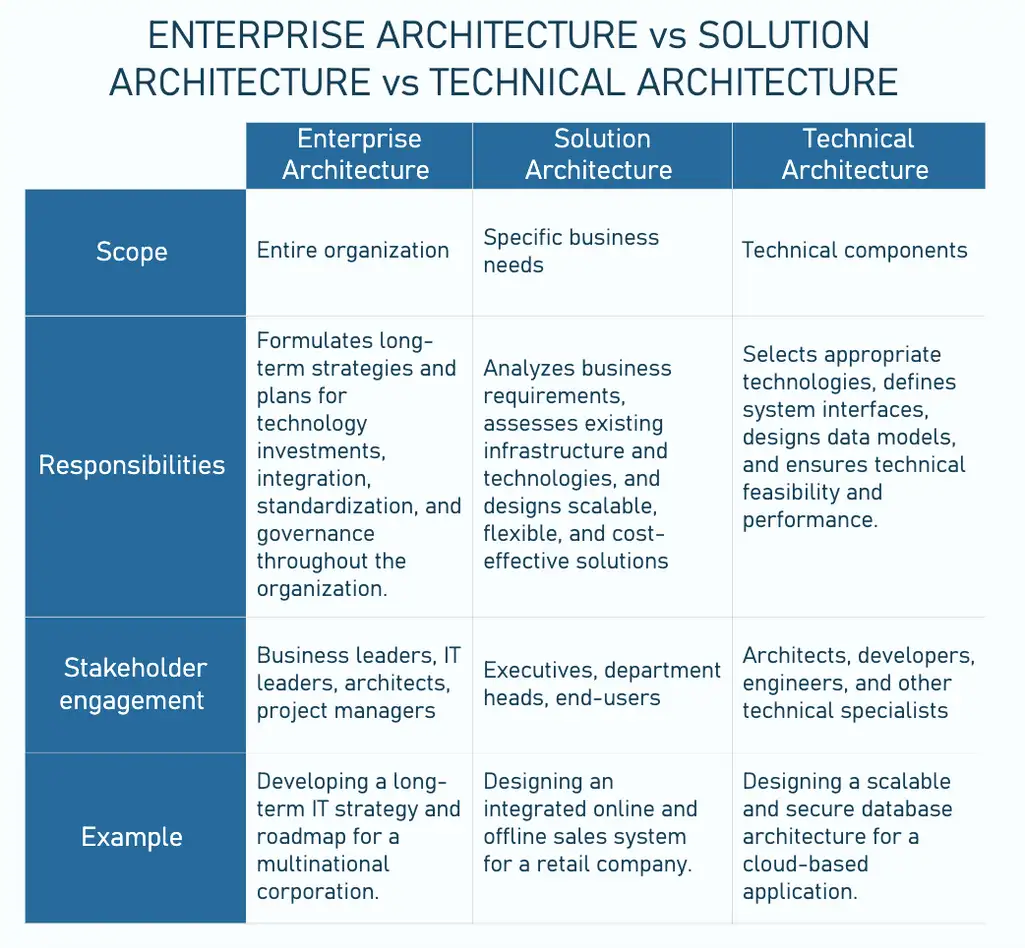
This approach aligns with modern enterprise architecture principles such as composability, modularity, and interoperability.
As highlighted in What a Microsoft Data and AI Partner Brings to Your Data Strategy,
enterprises that adopt modular AI architectures are better positioned to scale and adapt to evolving technologies.
What Hybrid AI Looks Like in Practice
In a hybrid model, enterprises typically:
- Use AI platforms for orchestration, APIs, and infrastructure
- Build custom models or fine-tune LLMs using proprietary data
- Integrate internal systems with external AI services
- Maintain governance layers internally
For example:
- A bank may use a platform for conversational AI but build proprietary fraud detection models
- A telecom provider may adopt agent orchestration frameworks while customizing network optimization logic
- A retailer may deploy prebuilt recommendation engines but fine-tune them with internal customer data
Strategic Advantages of Hybrid AI
The hybrid approach offers several benefits:
Balanced time-to-value:
Faster than building, more flexible than buying
Optimized cost structure:
Avoids high upfront costs while enabling targeted investment
Improved governance:
Sensitive components remain under enterprise control
Future-proofing:
Easier to adapt to new models, tools, and frameworks
Why Hybrid Is Becoming the Default
The rise of agentic AI, multi-model ecosystems, and rapidly evolving LLM capabilities makes it impractical to commit fully to either building or buying.
Instead, enterprises are adopting a portfolio-based AI strategy, where different components follow different approaches.
In the Build vs Buy AI landscape, hybrid is no longer a compromise—it is a strategic advantage.
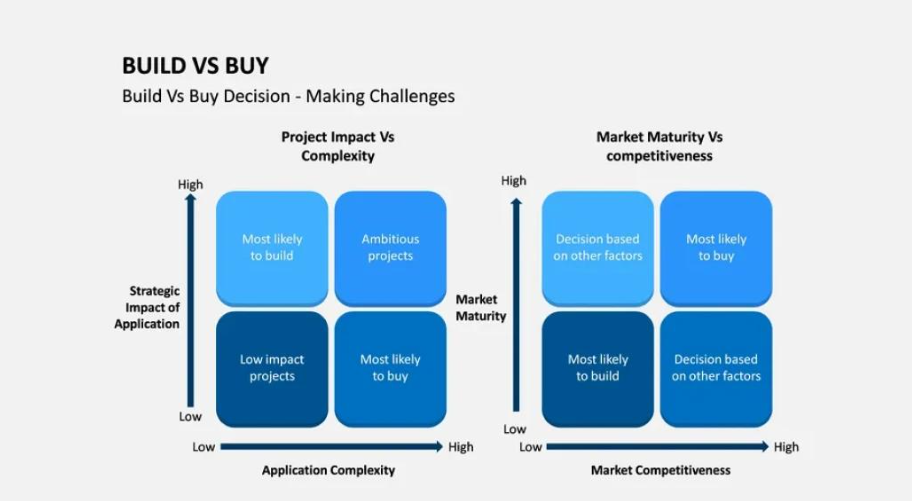
A Practical Decision Framework for Build vs Buy AI
Key Factors Every Enterprise Must Evaluate
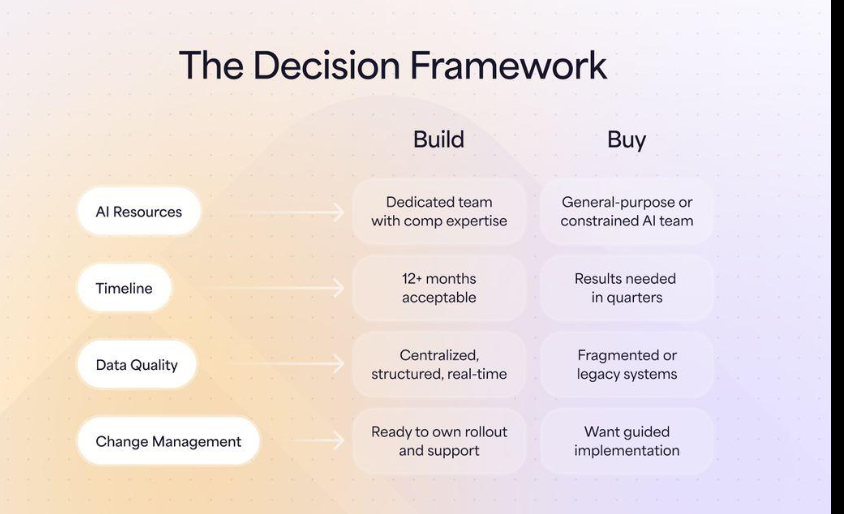
Making the right Build vs Buy AI decision requires a structured evaluation across multiple dimensions.
1. Time-to-Value Requirements
- Do you need results within 90 days? → Buy or Hybrid
- Can you invest in long-term capability building? → Build
2. Data Sensitivity and Compliance
- Highly regulated data → Build or Hybrid
- Standard enterprise data → Buy
3. Internal Capabilities
- Strong AI/ML teams → Build or Hybrid
- Limited expertise → Buy
4. Strategic Importance
- Core business differentiator → Build
- Supporting function → Buy
5. Integration Complexity
- Complex legacy systems → Hybrid
- Cloud-native environment → Buy
Decision Matrix in Action
Enterprises should avoid one-size-fits-all thinking.
Instead, evaluate each use case individually:
- Customer support automation → Buy
- Fraud detection → Build
- Sales intelligence → Hybrid
- Supply chain optimization → Hybrid
This granular approach ensures optimal outcomes across the AI portfolio.
Embedding Decision-Making into Governance
The Build vs Buy AI decision should not be made in isolation.
It must be embedded into:
- Enterprise architecture governance
- Data strategy frameworks
- AI operating models
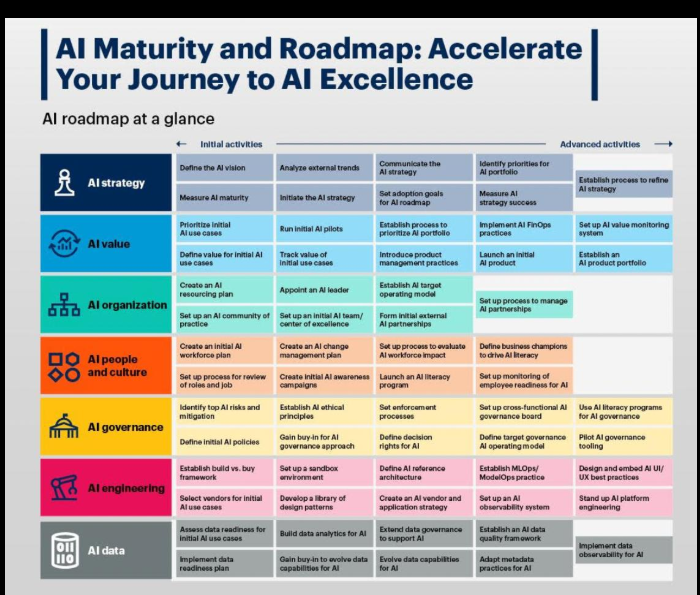
As explored in internal AI strategy and road-mapping, improving retrieval precision directly improves generation reliability.
Real-World Enterprise Use Cases Across Industries
Banking and Financial Services
In BFSI, the Build vs Buy AI decision is heavily influenced by compliance and risk.
Typical approach: Hybrid
- Build: Fraud detection, credit scoring
- Buy: Customer service AI, document processing
Banks often deploy AI on-premises or in private clouds to maintain control over sensitive data.
Telecom
Telecom companies operate at massive scale, requiring highly optimized AI systems.
Typical approach: Hybrid
- Build: Network optimization, predictive maintenance
- Buy: Customer interaction platforms
The ability to integrate domain-specific logic into AI systems is critical.
Manufacturing
Manufacturers rely on AI for operational efficiency.
Typical approach: Build or Hybrid
- Build: Predictive maintenance models
- Hybrid: Supply chain optimization
AI systems often integrate with IoT and operational technology, requiring customization.
Retail and E-commerce
Retailers prioritize speed and customer experience.
Typical approach: Buy → Hybrid
- Buy: Recommendation engines, chatbots
- Hybrid: Personalization using proprietary data
Healthcare
Healthcare demands strict compliance and data privacy.
Typical approach: Build
- Build: Diagnostic models, patient risk analysis
- Hybrid: Administrative automation
Industry Use Case Mapping Table
| Industry | Preferred Strategy | Why |
|---|---|---|
| Banking | Hybrid | Compliance + customization |
| Telecom | Hybrid | Scale + domain-specific workflows |
| Retail | Buy → Hybrid | Speed + personalization |
| Manufacturing | Build/Hybrid | Predictive models, IoT integration |
| Healthcare | Build | Data sensitivity, regulations |
Benefits, Risks, and Trade-Offs of Each Approach
Building AI: Strategic Benefits and Risks
Benefits:
- Full control and customization
- Strong competitive differentiation
- Ownership of intellectual property
Risks:
- High cost and long timelines
- Talent dependency
- Operational complexity
Buying AI: Strategic Benefits and Risks
Benefits:
- Rapid deployment
- Lower upfront cost
- Built-in scalability and security
Risks:
- Limited customization
- Vendor lock-in
- Data governance concerns
Hybrid AI: Strategic Balance
Benefits:
- Combines speed and flexibility
- Optimizes cost and performance
- Enables modular innovation
Risks:
- Integration complexity
- Requires strong architecture governance
- Potential duplication of capabilities
Implementation Strategy: How to Operationalize Your AI Decision
Step 1: Define Business Objectives
Start with clear business outcomes:
- Revenue growth
- Cost optimization
- Risk reduction
- Customer experience improvement
AI should be aligned with measurable KPIs.
Step 2: Assess Data Readiness
AI success depends on data quality.
Evaluate:
- Data availability
- Data governance
- Data integration
Read our guide on 10 Effective Steps To Building RAG Applications: From Prototype to Production-Grade Enterprise Systems that provides a step-by-step enterprise roadmap for building RAG applications.
Step 3: Select the Right Architecture
Choose between:
- Custom AI stack
- Platform-based AI
- Hybrid architecture
This decision should align with enterprise architecture principles.
Step 4: Build an AI Operating Model
Define:
- Roles and responsibilities
- Governance structures
- MLOps processes
Step 5: Start Small, Scale Fast
- Begin with high-impact use cases
- Validate ROI
- Scale across the enterprise
As emphasized in best practices for AI implementation , iterative scaling is key to long-term success.
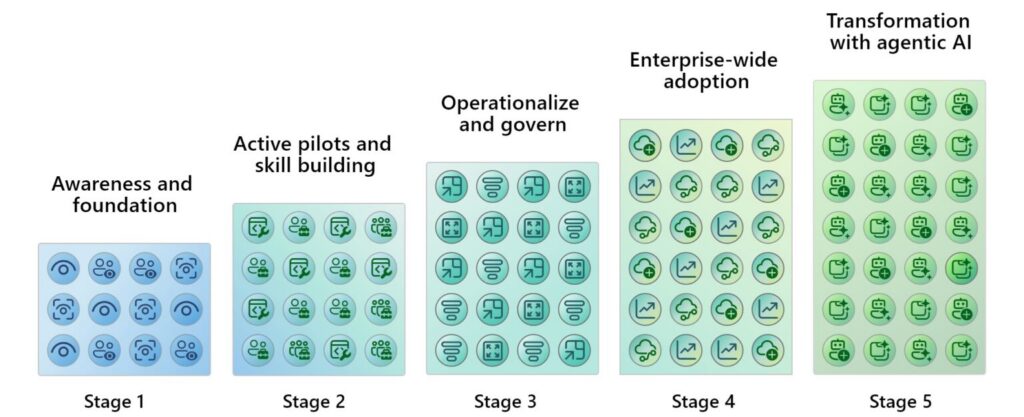
AI Maturity vs Strategy Model
Trends Shaping the Future of Build vs Buy AI
Rise of Agentic AI Systems
AI is evolving from passive tools to autonomous agents capable of:
- Multi-step reasoning
- Task execution
- Decision-making
This increases the importance of modular architectures.
Platformization of AI
AI platforms are becoming more powerful, offering:
- Prebuilt agents
- Orchestration frameworks
- Integrated governance
This strengthens the case for buying or hybrid approaches.
Increasing Focus on AI Governance
Governance is becoming a top priority.
Enterprises must ensure:
- Transparency
- Accountability
- Compliance
Rapid Evolution of LLM Ecosystems
The pace of innovation in AI models makes long-term commitments risky.
Hybrid strategies allow enterprises to remain flexible.
As organizations mature their AI strategies, RAG implementations evolve beyond simple retrieval pipelines.
Modern enterprise architectures incorporate multiple optimization layers to improve performance and reliability.
How Techment Helps Enterprises Navigate Build vs Buy AI
Enterprises do not need to navigate the Build vs Buy AI decision alone.
Techment partners with organizations to design and implement AI strategies that align with business goals, data maturity, and regulatory requirements.
Strategic AI Advisory
Techment helps enterprises:
- Evaluate build vs buy trade-offs
- Define AI roadmaps
- Align AI with business outcomes
Data Modernization and AI Readiness
AI success starts with data.
Techment enables:
- Data platform modernization
- Data quality and governance frameworks
- AI-ready data architectures
Explore Fabric AI Readiness: How to Prepare Your Data for Scalable AI Adoption
Platform Implementation and Customization
Techment supports:
- Implementation of AI platforms (Azure, Microsoft Fabric, etc.)
- Custom model development and fine-tuning
- Integration with enterprise systems
Governance and Compliance
Techment ensures:
- Responsible AI frameworks
- Regulatory compliance
- Auditability and transparency
End-to-End Execution
From strategy to execution, Techment delivers:
- AI use case identification
- Architecture design
- Implementation and scaling
- Continuous optimization
Conclusion
The Build vs Buy AI decision in 2026 is no longer about choosing one path over another. It is about strategically aligning AI investments with enterprise priorities, capabilities, and long-term goals.
Building offers unmatched control and differentiation but requires significant investment. Buying accelerates adoption and reduces complexity but may limit customization. Hybrid strategies provide the best of both worlds, enabling enterprises to innovate faster while maintaining control where it matters most.
The organizations that succeed will not be those that simply adopt AI—but those that make deliberate, strategic decisions about how they build, buy, and integrate AI into their business ecosystems.
As AI continues to evolve, enterprises must remain agile, continuously reassessing their approach to stay competitive.
Techment stands as a trusted partner in this journey—helping organizations navigate complexity, unlock value, and build future-ready AI ecosystems.
Talk to our experts to get details on comprehensive solutions that help you accelerate your digital transformation journey. Contact Us.
FAQ: Build vs Buy AI in 2026
1. What is the biggest factor in the Build vs Buy AI decision?
Time-to-value and internal capabilities are the most critical factors.
2. Is hybrid AI becoming the standard?
Yes, most enterprises are adopting hybrid strategies to balance speed and control.
3. When should an enterprise build AI?
When the use case is highly strategic, data-sensitive, or requires differentiation.
4. Are AI platforms secure for enterprise use?
Most leading platforms offer enterprise-grade security and compliance features.
5. How long does it take to implement AI?
Buying can take weeks, while building may take several months.