Blog

Real-Time Analytics for AI Decisions: Designing Event-Driven Architectures with Microsoft Fabric

Introduction: Why Real-Time Analytics Is Now a Strategic AI Requirement

Enterprises are entering a new phase of AI adoption—one where decisions must be made in real time, not hours later.

Fraud detection systems must block transactions instantly.
Supply chains must react to disruptions as they occur.
Customer platforms must personalize experiences in the moment—not after the session ends.

Yet many organizations still rely on batch-oriented analytics pipelines. Data is collected, stored, transformed overnight, and analyzed the next day. While this approach works for historical reporting, it fails when AI systems are expected to sense, decide, and act in real time.

This is where real-time analytics event-driven architecture becomes foundational.

Microsoft Fabric Real-Time Intelligence (RTI) introduces a unified way to ingest, process, analyze, and operationalize streaming data—without fragmenting architectures across multiple tools. It enables AI-powered real-time decisioning by combining live event processing with historical context at enterprise scale.

Related insight: Read our blog that explores how AI copilots for enterprises are transforming executive leadership in 2026.   

TLDR- Executive Summary

  • Real-time analytics is now essential for AI decisions.
    Batch-based analytics cannot support fraud detection, personalization, or operational decisions that must happen instantly.
  • Microsoft Fabric Real-Time Intelligence (RTI) enables event-driven analytics at scale.
    It unifies real-time ingestion, streaming analytics, storage, and governance in a single enterprise platform.
  • Event-driven architectures power AI-powered real-time decisioning.
    Events trigger analytics, analytics trigger AI inference, and AI triggers actions—eliminating decision latency.
  • Fabric Eventstreams enable real-time data ingestion with low operational complexity.
    High-volume event data can be ingested, filtered, enriched, and routed in real time without external tools.
  • Eventhouse + KQL deliver low-latency streaming analytics.
    KQL enables windowed aggregations, anomaly detection, and pattern matching on live data streams.
  • Combining real-time signals with historical data improves AI accuracy.
    Live events provide freshness, while Lakehouse data adds behavioral and contextual depth.
  • Real-time dashboards make AI decisions observable and actionable.
    Business users can monitor KPIs, alerts, and outcomes as events occur.
  • Microsoft Fabric simplifies end-to-end real-time analytics architecture.
    Streaming, analytics, AI readiness, and governance are built-in—not stitched together.
  • Common use cases include fraud detection, operational monitoring, personalization, and IoT analytics.
    All benefit from faster decisions and reduced response times.
  • The shift is from insights to instant intelligence.
    With Microsoft Fabric, enterprises can design AI systems that respond to events in real time—confidently and at scale.

What Is Real-Time Analytics in Microsoft Fabric?

Real-time analytics focuses on processing and analyzing data as events occur, rather than after they are stored and batch-processed.

In Microsoft Fabric, real-time analytics is delivered through Real-Time Intelligence (RTI)—a native capability designed to handle high-velocity, high-volume streaming data with minimal latency.

At a high level, real-time analytics Microsoft Fabric enables organizations to:

  • Ingest streaming data continuously
  • Process events within seconds or milliseconds
  • Detect patterns, anomalies, and trends instantly
  • Trigger alerts, dashboards, or AI actions in real time
  • Combine live signals with historical data for richer decisions

Unlike traditional streaming platforms that operate in isolation, Fabric integrates streaming analytics, storage, BI, and AI into a single governed environment.

Related reading:  Enterprise AI Strategy in 2026: A Practical Guide for CIOs and Data Leaders 

Key Characteristics of Microsoft Fabric Real-Time Event Processing

CapabilityWhy It Matters
Real-time data ingestionCapture events without delay
Low-latency analyticsEnable instant decisions
Native KQL supportQuery streaming data efficiently
Unified Lakehouse integrationCombine real-time + historical context
Built-in governanceEnterprise-grade security and compliance

This foundation is essential for AI decision automation in streaming data environments.


Why Event-Driven Architecture Powers AI Decisions

From Batch Pipelines to Event-Driven Systems

In a traditional batch architecture:

  1. Data is collected
  2. Stored in a warehouse or lake
  3. Processed periodically
  4. Analyzed after the fact

For AI systems, this introduces decision latency—a critical limitation.

An event-driven data architecture flips this model.

Instead of waiting for data to accumulate:

  • Each event (transaction, sensor reading, click, log entry) becomes a trigger
  • Processing happens immediately
  • Decisions are made in the moment

This shift is fundamental for AI-powered real-time decisioning.

Core Principles of Event-Driven Data Architecture

  1. Events are first-class data assets
  2. Processing happens continuously
  3. Decisions are triggered, not scheduled
  4. Systems react rather than poll
  5. Latency is measured in seconds, not hours

Microsoft Fabric enables this model natively—without stitching together multiple streaming platforms.

Related insight: Data Quality for AI: The Ultimate 2026 Blueprint for Trustworthy & High-Performing Enterprise AI 


End-to-End Real-Time Analytics Architecture in Microsoft Fabric

Microsoft Fabric Real-Time Intelligence provides native capabilities for event-driven analytics, enabling organizations to ingest, process, and analyze streaming data with low latency across enterprise workloads. To understand how Fabric enables real-time AI decisions, let’s break down an end-to-end real-time analytics architecture.

1. Real-Time Data Ingestion in Microsoft Fabric

Data sources typically include:

  • Application events
  • Transaction streams
  • IoT and telemetry data
  • Logs and clickstreams
  • External event brokers

Fabric uses Eventstreams to ingest data continuously.

Eventstreams act as the entry point for streaming analytics Microsoft Fabric architectures:

  • Ingest events from multiple sources
  • Apply lightweight transformations
  • Route data to downstream consumers

This eliminates the need for external ingestion tools.


2. Eventstream Pipelines for AI Decisions

Building eventstream pipelines in Fabric enables organizations to design logical flows for event processing.

Common pipeline patterns:

  • Filtering irrelevant events
  • Enriching events with metadata
  • Branching streams for multiple consumers
  • Forwarding events for analytics and AI inference

These pipelines are declarative, scalable, and fully managed—reducing operational overhead.


3. Eventhouse Analytics in Fabric

Once ingested, events are stored in Eventhouses—optimized for high-volume, low-latency querying.

Eventhouse analytics in Fabric provides:

  • Optimized storage for time-series and event data
  • High-performance querying
  • Native support for streaming analytics workloads

This layer ensures that low latency analytics Microsoft Fabric requirements are consistently met.


4. Using KQL for Real-Time Streaming Analytics

Fabric uses KQL (Kusto Query Language) for real-time analytics.

KQL for real-time streaming analytics enables:

  • Windowed aggregations
  • Pattern detection
  • Time-based joins
  • Anomaly detection
  • Real-time metrics computation

Example use cases:

  • Detecting fraud patterns within seconds
  • Monitoring operational thresholds
  • Identifying behavioral anomalies

KQL is purpose-built for event data—making it ideal for AI decision automation in streaming data environments.


5. Persisting Signals to the Lakehouse

Real-time signals are powerful—but their true value emerges when combined with history.

Fabric allows processed event outputs to be written directly to Lakehouse Delta tables.

This enables:

  • Feature enrichment for AI models
  • Behavioral baselining
  • Long-term trend analysis
  • Model retraining with fresh signals

This hybrid architecture—real-time + historical—is critical for accurate AI decisions.


6. Real-Time Dashboards in Microsoft Fabric

Decision-makers need visibility—not just automation.

Real-time dashboards in Microsoft Fabric allow:

  • Live monitoring of KPIs
  • Operational awareness
  • Instant alerting
  • Business-friendly views of streaming data

Dashboards update continuously as events flow—closing the gap between data and action.

Related Reading: Is Your Enterprise AI-Ready? A Fabric-Focused Readiness Checklist 


How Real-Time Analytics Enables AI-Powered Decisioning

Why AI Needs Real-Time Context

AI models trained on historical data alone struggle with:

  • Changing patterns
  • Emerging anomalies
  • Contextual shifts

Real-time analytics provides fresh signals, while historical data provides behavioral context.

Together, they enable:

  • More accurate predictions
  • Faster interventions
  • Higher trust in AI outcomes

Automating AI Decisions with Event Triggers

In an event-driven system:

  • Events trigger analytics
  • Analytics trigger AI inference
  • AI triggers actions

Examples:

  • A transaction event triggers fraud scoring
  • A sensor anomaly triggers predictive maintenance
  • A user action triggers personalization logic

This is AI decision automation in streaming data—not retrospective analysis.

Related reading: Leveraging Data Transformation for Modern Analytics 


Microsoft Fabric RTI Use Cases Across Industries

1. Fraud Detection and Risk Scoring

  • Real-time transaction ingestion
  • Pattern detection with KQL
  • AI scoring based on live + historical behavior
  • Instant transaction blocking

Outcome: Reduced fraud loss and faster response.


2. Operational Monitoring and Alerting

  • Streaming logs and telemetry
  • Threshold-based alerts
  • Predictive anomaly detection
  • Real-time dashboards for operations teams

Outcome: Reduced downtime and faster root-cause analysis.


3. Customer Personalization

  • Live interaction events
  • Behavioral enrichment from history
  • AI-driven recommendations in real time

Outcome: Higher engagement and conversion rates.


4. IoT and Predictive Maintenance

  • Continuous sensor data ingestion
  • Anomaly detection in streaming data
  • Maintenance triggers before failures occur

Outcome: Lower maintenance costs and improved asset reliability.

Related reading: Microsoft Fabric Architecture: A CTO’s Guide to Modern Analytics & AI 


Best Practices for Designing Event-Driven Analytics with Microsoft Fabric

1. Design for Latency First

  • Minimize unnecessary transformations
  • Keep hot paths lean
  • Separate real-time and batch workloads

2. Treat Events as Products

  • Define schemas clearly
  • Version events intentionally
  • Apply governance from day one

3. Combine Real-Time and Historical Data Thoughtfully

  • Use real-time data for decisions
  • Use historical data for context
  • Avoid overloading streaming pipelines with heavy joins

4. Govern Streaming Data Like Enterprise Data

  • Apply access controls
  • Monitor data quality
  • Ensure auditability for AI decisions

5. Align Architecture to Business Decisions

Real-time analytics is not about speed alone—it’s about decision relevance.

Design pipelines around:

  • What decision is being made
  • How fast it must happen
  • What data truly matters

Related reading: Best Practices for Generative AI Implementation in Business   


Common Challenges (and How Fabric Solves Them)

ChallengeHow Fabric Helps
Tool sprawlUnified platform
Operational complexityFully managed services
Governance gapsCentralized security
Latency trade-offsOptimized RTI stack
AI integration frictionNative Lakehouse + analytics

Final Thoughts: From Insights to Instant Intelligence

Real-time analytics is no longer optional for AI-driven enterprises.

As organizations move from dashboards to decisions, event-driven data architecture becomes the backbone of intelligent systems. Microsoft Fabric simplifies this journey—bringing real-time analytics, AI readiness, governance, and scalability into a single platform.

By designing end-to-end real-time analytics architectures with Fabric, enterprises can:

  • Reduce decision latency
  • Increase AI impact
  • Respond to change as it happens

The future of analytics is not faster reports—it’s instant intelligence.

Frequently Asked Questions (FAQ)

What is real-time intelligence in Microsoft Fabric?

Real-Time Intelligence (RTI) is Fabric’s capability for ingesting, processing, analyzing, and acting on streaming data with low latency.

How does Microsoft Fabric support event-driven system design?

Fabric provides Eventstreams, Eventhouses, KQL analytics, and Lakehouse integration—enabling end-to-end event-driven architectures.

Can real-time analytics improve AI decision accuracy?

Yes. Real-time data provides freshness, while historical data adds context—together enabling more accurate and trustworthy AI decisions.

Is Microsoft Fabric suitable for enterprise-scale streaming analytics?

Yes. Fabric is designed for high-volume, low-latency, governed enterprise workloads.

Related Reads

Social Share or Summarize with AI

Share This Article

Related Blog

Comprehensive solutions to accelerate your digital transformation journey

Ready to Transform
your Business?

Let’s create intelligent solutions and digital products that keep you ahead of the curve.

Schedule a free Consultation

Stay Updated with Techment Insight

Get the Latest industry insights, technology trends, and best practices delivered directly to your inbox

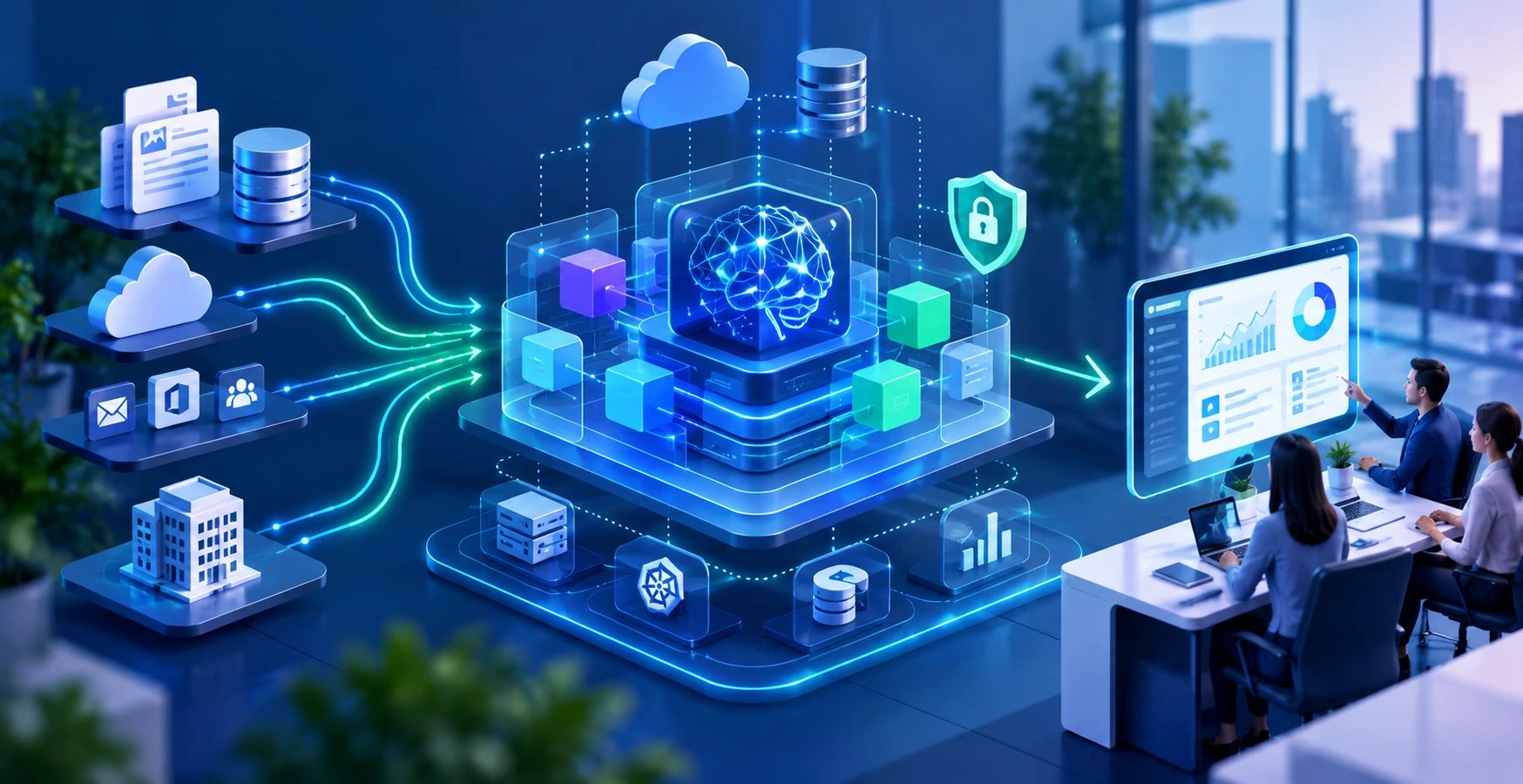
Event-driven real-time analytics architecture in Microsoft Fabric showing Eventstreams, Eventhouse, KQL analytics, Lakehouse integration, and AI-powered decisioning

Introduction: Why Real-Time Analytics Is Now a Strategic AI Requirement

Enterprises are entering a new phase of AI adoption—one where decisions must be made in real time, not hours later.

Fraud detection systems must block transactions instantly.
Supply chains must react to disruptions as they occur.
Customer platforms must personalize experiences in the moment—not after the session ends.

Yet many organizations still rely on batch-oriented analytics pipelines. Data is collected, stored, transformed overnight, and analyzed the next day. While this approach works for historical reporting, it fails when AI systems are expected to sense, decide, and act in real time.

This is where real-time analytics event-driven architecture becomes foundational.

Microsoft Fabric Real-Time Intelligence (RTI) introduces a unified way to ingest, process, analyze, and operationalize streaming data—without fragmenting architectures across multiple tools. It enables AI-powered real-time decisioning by combining live event processing with historical context at enterprise scale.

Related insight: Read our blog that explores how AI copilots for enterprises are transforming executive leadership in 2026.   

TLDR- Executive Summary

  • Real-time analytics is now essential for AI decisions.
    Batch-based analytics cannot support fraud detection, personalization, or operational decisions that must happen instantly.
  • Microsoft Fabric Real-Time Intelligence (RTI) enables event-driven analytics at scale.
    It unifies real-time ingestion, streaming analytics, storage, and governance in a single enterprise platform.
  • Event-driven architectures power AI-powered real-time decisioning.
    Events trigger analytics, analytics trigger AI inference, and AI triggers actions—eliminating decision latency.
  • Fabric Eventstreams enable real-time data ingestion with low operational complexity.
    High-volume event data can be ingested, filtered, enriched, and routed in real time without external tools.
  • Eventhouse + KQL deliver low-latency streaming analytics.
    KQL enables windowed aggregations, anomaly detection, and pattern matching on live data streams.
  • Combining real-time signals with historical data improves AI accuracy.
    Live events provide freshness, while Lakehouse data adds behavioral and contextual depth.
  • Real-time dashboards make AI decisions observable and actionable.
    Business users can monitor KPIs, alerts, and outcomes as events occur.
  • Microsoft Fabric simplifies end-to-end real-time analytics architecture.
    Streaming, analytics, AI readiness, and governance are built-in—not stitched together.
  • Common use cases include fraud detection, operational monitoring, personalization, and IoT analytics.
    All benefit from faster decisions and reduced response times.
  • The shift is from insights to instant intelligence.
    With Microsoft Fabric, enterprises can design AI systems that respond to events in real time—confidently and at scale.

What Is Real-Time Analytics in Microsoft Fabric?

Real-time analytics focuses on processing and analyzing data as events occur, rather than after they are stored and batch-processed.

In Microsoft Fabric, real-time analytics is delivered through Real-Time Intelligence (RTI)—a native capability designed to handle high-velocity, high-volume streaming data with minimal latency.

At a high level, real-time analytics Microsoft Fabric enables organizations to:

  • Ingest streaming data continuously
  • Process events within seconds or milliseconds
  • Detect patterns, anomalies, and trends instantly
  • Trigger alerts, dashboards, or AI actions in real time
  • Combine live signals with historical data for richer decisions

Unlike traditional streaming platforms that operate in isolation, Fabric integrates streaming analytics, storage, BI, and AI into a single governed environment.

Related reading:  Enterprise AI Strategy in 2026: A Practical Guide for CIOs and Data Leaders 

Key Characteristics of Microsoft Fabric Real-Time Event Processing

CapabilityWhy It Matters
Real-time data ingestionCapture events without delay
Low-latency analyticsEnable instant decisions
Native KQL supportQuery streaming data efficiently
Unified Lakehouse integrationCombine real-time + historical context
Built-in governanceEnterprise-grade security and compliance

This foundation is essential for AI decision automation in streaming data environments.


Why Event-Driven Architecture Powers AI Decisions

From Batch Pipelines to Event-Driven Systems

In a traditional batch architecture:

  1. Data is collected
  2. Stored in a warehouse or lake
  3. Processed periodically
  4. Analyzed after the fact

For AI systems, this introduces decision latency—a critical limitation.

An event-driven data architecture flips this model.

Instead of waiting for data to accumulate:

  • Each event (transaction, sensor reading, click, log entry) becomes a trigger
  • Processing happens immediately
  • Decisions are made in the moment

This shift is fundamental for AI-powered real-time decisioning.

Core Principles of Event-Driven Data Architecture

  1. Events are first-class data assets
  2. Processing happens continuously
  3. Decisions are triggered, not scheduled
  4. Systems react rather than poll
  5. Latency is measured in seconds, not hours

Microsoft Fabric enables this model natively—without stitching together multiple streaming platforms.

Related insight: Data Quality for AI: The Ultimate 2026 Blueprint for Trustworthy & High-Performing Enterprise AI 


End-to-End Real-Time Analytics Architecture in Microsoft Fabric

Microsoft Fabric Real-Time Intelligence provides native capabilities for event-driven analytics, enabling organizations to ingest, process, and analyze streaming data with low latency across enterprise workloads. To understand how Fabric enables real-time AI decisions, let’s break down an end-to-end real-time analytics architecture.

1. Real-Time Data Ingestion in Microsoft Fabric

Data sources typically include:

  • Application events
  • Transaction streams
  • IoT and telemetry data
  • Logs and clickstreams
  • External event brokers

Fabric uses Eventstreams to ingest data continuously.

Eventstreams act as the entry point for streaming analytics Microsoft Fabric architectures:

  • Ingest events from multiple sources
  • Apply lightweight transformations
  • Route data to downstream consumers

This eliminates the need for external ingestion tools.


2. Eventstream Pipelines for AI Decisions

Building eventstream pipelines in Fabric enables organizations to design logical flows for event processing.

Common pipeline patterns:

  • Filtering irrelevant events
  • Enriching events with metadata
  • Branching streams for multiple consumers
  • Forwarding events for analytics and AI inference

These pipelines are declarative, scalable, and fully managed—reducing operational overhead.


3. Eventhouse Analytics in Fabric

Once ingested, events are stored in Eventhouses—optimized for high-volume, low-latency querying.

Eventhouse analytics in Fabric provides:

  • Optimized storage for time-series and event data
  • High-performance querying
  • Native support for streaming analytics workloads

This layer ensures that low latency analytics Microsoft Fabric requirements are consistently met.


4. Using KQL for Real-Time Streaming Analytics

Fabric uses KQL (Kusto Query Language) for real-time analytics.

KQL for real-time streaming analytics enables:

  • Windowed aggregations
  • Pattern detection
  • Time-based joins
  • Anomaly detection
  • Real-time metrics computation

Example use cases:

  • Detecting fraud patterns within seconds
  • Monitoring operational thresholds
  • Identifying behavioral anomalies

KQL is purpose-built for event data—making it ideal for AI decision automation in streaming data environments.


5. Persisting Signals to the Lakehouse

Real-time signals are powerful—but their true value emerges when combined with history.

Fabric allows processed event outputs to be written directly to Lakehouse Delta tables.

This enables:

  • Feature enrichment for AI models
  • Behavioral baselining
  • Long-term trend analysis
  • Model retraining with fresh signals

This hybrid architecture—real-time + historical—is critical for accurate AI decisions.


6. Real-Time Dashboards in Microsoft Fabric

Decision-makers need visibility—not just automation.

Real-time dashboards in Microsoft Fabric allow:

  • Live monitoring of KPIs
  • Operational awareness
  • Instant alerting
  • Business-friendly views of streaming data

Dashboards update continuously as events flow—closing the gap between data and action.

Related Reading: Is Your Enterprise AI-Ready? A Fabric-Focused Readiness Checklist 


How Real-Time Analytics Enables AI-Powered Decisioning

Why AI Needs Real-Time Context

AI models trained on historical data alone struggle with:

  • Changing patterns
  • Emerging anomalies
  • Contextual shifts

Real-time analytics provides fresh signals, while historical data provides behavioral context.

Together, they enable:

  • More accurate predictions
  • Faster interventions
  • Higher trust in AI outcomes

Automating AI Decisions with Event Triggers

In an event-driven system:

  • Events trigger analytics
  • Analytics trigger AI inference
  • AI triggers actions

Examples:

  • A transaction event triggers fraud scoring
  • A sensor anomaly triggers predictive maintenance
  • A user action triggers personalization logic

This is AI decision automation in streaming data—not retrospective analysis.

Related reading: Leveraging Data Transformation for Modern Analytics 


Microsoft Fabric RTI Use Cases Across Industries

1. Fraud Detection and Risk Scoring

  • Real-time transaction ingestion
  • Pattern detection with KQL
  • AI scoring based on live + historical behavior
  • Instant transaction blocking

Outcome: Reduced fraud loss and faster response.


2. Operational Monitoring and Alerting

  • Streaming logs and telemetry
  • Threshold-based alerts
  • Predictive anomaly detection
  • Real-time dashboards for operations teams

Outcome: Reduced downtime and faster root-cause analysis.


3. Customer Personalization

  • Live interaction events
  • Behavioral enrichment from history
  • AI-driven recommendations in real time

Outcome: Higher engagement and conversion rates.


4. IoT and Predictive Maintenance

  • Continuous sensor data ingestion
  • Anomaly detection in streaming data
  • Maintenance triggers before failures occur

Outcome: Lower maintenance costs and improved asset reliability.

Related reading: Microsoft Fabric Architecture: A CTO’s Guide to Modern Analytics & AI 


Best Practices for Designing Event-Driven Analytics with Microsoft Fabric

1. Design for Latency First

  • Minimize unnecessary transformations
  • Keep hot paths lean
  • Separate real-time and batch workloads

2. Treat Events as Products

  • Define schemas clearly
  • Version events intentionally
  • Apply governance from day one

3. Combine Real-Time and Historical Data Thoughtfully

  • Use real-time data for decisions
  • Use historical data for context
  • Avoid overloading streaming pipelines with heavy joins

4. Govern Streaming Data Like Enterprise Data

  • Apply access controls
  • Monitor data quality
  • Ensure auditability for AI decisions

5. Align Architecture to Business Decisions

Real-time analytics is not about speed alone—it’s about decision relevance.

Design pipelines around:

  • What decision is being made
  • How fast it must happen
  • What data truly matters

Related reading: Best Practices for Generative AI Implementation in Business   


Common Challenges (and How Fabric Solves Them)

ChallengeHow Fabric Helps
Tool sprawlUnified platform
Operational complexityFully managed services
Governance gapsCentralized security
Latency trade-offsOptimized RTI stack
AI integration frictionNative Lakehouse + analytics

Final Thoughts: From Insights to Instant Intelligence

Real-time analytics is no longer optional for AI-driven enterprises.

As organizations move from dashboards to decisions, event-driven data architecture becomes the backbone of intelligent systems. Microsoft Fabric simplifies this journey—bringing real-time analytics, AI readiness, governance, and scalability into a single platform.

By designing end-to-end real-time analytics architectures with Fabric, enterprises can:

  • Reduce decision latency
  • Increase AI impact
  • Respond to change as it happens

The future of analytics is not faster reports—it’s instant intelligence.

Frequently Asked Questions (FAQ)

What is real-time intelligence in Microsoft Fabric?

Real-Time Intelligence (RTI) is Fabric’s capability for ingesting, processing, analyzing, and acting on streaming data with low latency.

How does Microsoft Fabric support event-driven system design?

Fabric provides Eventstreams, Eventhouses, KQL analytics, and Lakehouse integration—enabling end-to-end event-driven architectures.

Can real-time analytics improve AI decision accuracy?

Yes. Real-time data provides freshness, while historical data adds context—together enabling more accurate and trustworthy AI decisions.

Is Microsoft Fabric suitable for enterprise-scale streaming analytics?

Yes. Fabric is designed for high-volume, low-latency, governed enterprise workloads.

Related Reads

Social Share or Summarize with AI

Real-Time Analytics for AI Decisions: Designing Event-Driven Architectures with Microsoft Fabric