Introduction
Enterprise AI adoption is accelerating, but one fundamental challenge persists: large language models lack reliable access to enterprise data. This gap leads to hallucinations, outdated responses, and compliance risks—issues that no CTO or data leader can ignore.
This is where RAG tools (Retrieval-Augmented Generation tools) have become mission-critical. Instead of relying solely on pre-trained knowledge, RAG tools connect LLMs with real-time or proprietary data sources, dramatically improving accuracy, trust, and relevance.
According to industry benchmarks from McKinsey and Gartner, enterprises deploying retrieval-augmented architectures see 30–60% improvements in answer accuracy and significant reductions in hallucinations.
In this blog, we provide a comprehensive, enterprise-grade comparison of the top 10 RAG tools in 2026, covering:
- Features and architecture capabilities
- Pricing models and scalability considerations
- Real-world enterprise use cases
- Strategic trade-offs for CTOs and architects
We also break down how to choose the right tool for your organization—and how to operationalize RAG at scale.
For a deeper understanding of enterprise data foundations, explore: Enterprise AI strategy 2026
TL;DR Summary
- RAG tools are essential for reducing hallucinations and improving LLM accuracy in enterprise AI
- The top RAG tools include Meilisearch, LangChain, Pinecone, Vespa, and LlamaIndex
- Open-source tools dominate early-stage innovation, while managed platforms enable enterprise scale
- Choosing the right RAG tool depends on retrieval method, scalability, and integration flexibility
- Enterprises must prioritize governance, latency, and data security when deploying RAG systems
Why RAG Tools Are Critical for Enterprise AI in 2026
The Shift from Generative AI to Grounded AI
Generative AI alone is no longer sufficient. Enterprises now demand grounded AI systems—systems that can:
- Retrieve trusted internal data
- Provide explainable responses
- Maintain compliance and governance
RAG tools enable this shift by acting as the bridge between data platforms and LLMs.
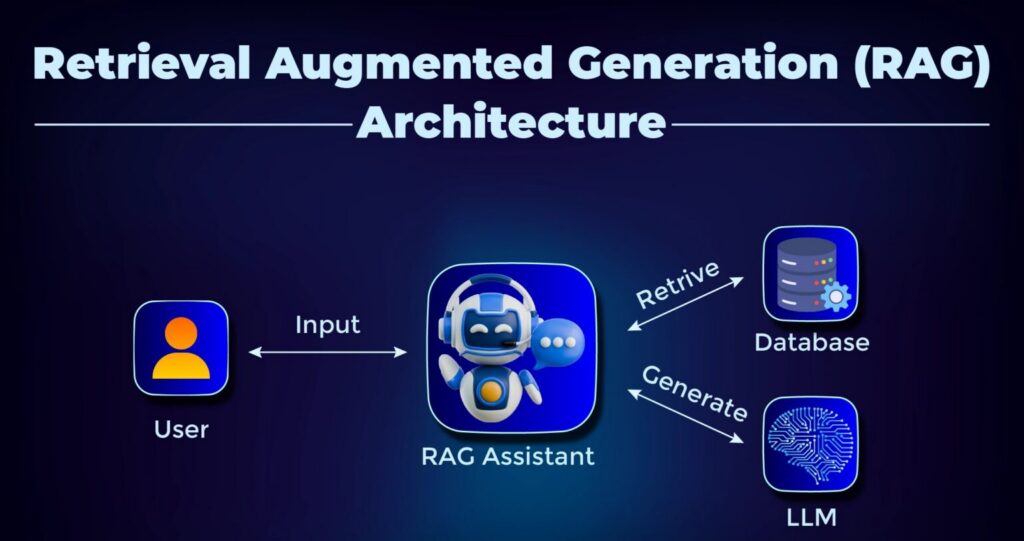
From an enterprise architecture standpoint, RAG introduces a new layer:
- Data ingestion and indexing
- Vector and hybrid retrieval
- Context injection into LLM prompts
This architecture transforms AI from experimental to operational.
For a deeper dive into RAG models and enterprise patterns: RAG Models enterprise guide
Business Impact of RAG Tools
Improved decision intelligence
Executives gain access to accurate, contextual insights derived from internal data.
Reduced operational risk
RAG minimizes hallucinations, which is critical in regulated industries like finance and healthcare.
Faster time-to-value
RAG tools accelerate deployment of AI assistants, copilots, and knowledge systems.
Enterprise Implications
RAG is not just a tooling decision—it is a strategic data architecture decision.
Organizations must rethink:
- Data quality and governance
- Metadata management
- Retrieval latency and scalability
For more insights on foundational AI architectures, refer to: RAG architectures Enterprise Use Cases in 2026.
What Are RAG Tools? Architecture and Core Components
Understanding Retrieval-Augmented Generation
RAG tools enhance LLM outputs by injecting relevant external context during inference.
A typical RAG pipeline includes:
- LLM response generation
- Data ingestion and chunking
- Embedding generation
- Vector storage
- Retrieval (semantic, keyword, hybrid)
- Prompt augmentation
Key Capabilities of Modern RAG Tools
Hybrid search (dense + sparse)
Combines vector embeddings with keyword search for better relevance.
Low-latency retrieval
Critical for real-time applications like chatbots and copilots.
Metadata filtering
Enables contextual narrowing of search results.
Scalable indexing
Supports millions to billions of documents.
Why Architecture Matters
Poorly designed RAG pipelines lead to:
- Latency spikes
- Irrelevant retrieval
- Increased infrastructure costs
The choice of RAG tools directly impacts performance, cost, and scalability.
For more on building scalable data foundations that support AI, explore: Data Quality For AI in 2026 Enterprise Guide
Top 10 RAG Tools Compared – Overview
In this section, we analyze the top 10 RAG tools based on enterprise adoption, capabilities, and architectural flexibility.
1. Meilisearch – High-Speed Hybrid Search for RAG Pipelines
Overview
Meilisearch is a developer-first search engine optimized for speed and simplicity, making it highly effective for RAG pipelines requiring low-latency retrieval.
Key Features
- Hybrid search (BM25 + vector search)
- Typo-tolerant indexing
- Custom ranking rules
- Multilingual support
Pricing
- Build: $30/month
- Pro: $300/month
- Enterprise: Custom
- Open-source: Free
Enterprise Use Cases
- AI-powered internal search
- Knowledge assistants
- Product discovery systems
Strategic Insight
Meilisearch is ideal for teams prioritizing developer velocity and fast deployment. However, enterprise governance features are still evolving.
Explore the architectural, operational, and strategic differences between Multi-Agent Systems vs Single-Agent Architectures, helping you make informed decisions aligned with scalability, governance, and AI maturity.
2. LangChain – The Orchestration Layer for RAG Systems
Overview
LangChain is not just a tool—it is a framework for building end-to-end RAG pipelines, including agents, workflows, and integrations.
Key Features
- Chains and agents for workflow orchestration
- Prompt templates and memory
- Extensive integrations with LLMs and vector DBs
Pricing
- Free tier available
- Paid plans from $39/month
- Enterprise pricing available
Enterprise Use Cases
- AI agents and copilots
- Multi-step reasoning systems
- Document Q&A platforms
Strategic Insight
LangChain is essential for complex, multi-step RAG architectures, but requires strong engineering maturity.
Learn more:
https://www.techment.com/blogs/best-practices-for-generative-ai-implementation-in-business/
3. RAGatouille – Precision Retrieval with ColBERT
Overview
RAGatouille introduces token-level retrieval precision, making it highly effective for domain-specific applications.
Key Features
- ColBERT-based late interaction retrieval
- Training pipelines for custom indexing
- Reranking capabilities
Pricing
- Fully open-source (free)
Enterprise Use Cases
- Legal and research applications
- High-accuracy document retrieval
- Scientific knowledge systems
Strategic Insight
Best suited for accuracy-critical workloads, but requires computational resources and ML expertise.
4. Verba – Simplified RAG for Rapid Prototyping
Overview
Verba provides a UI-driven approach to RAG, enabling even non-technical users to build document-based chat systems.
Key Features
- Web-based chat interface
- Hybrid search with semantic caching
- Flexible chunking strategies
Pricing
- Open-source (free)
Enterprise Use Cases
- Internal knowledge bots
- Training and education systems
- Rapid prototyping
Strategic Insight
Great for early-stage experimentation, but not suitable for enterprise-scale deployments.
5. Haystack – Production-Grade RAG Framework
Overview
Haystack is designed for enterprise-grade RAG pipelines, offering modular architecture and production readiness.
Key Features
- Modular pipelines
- REST API deployment
- Built-in observability
Pricing
- Open-source
- Enterprise version via deepset
Enterprise Use Cases
- AI-powered search platforms
- Customer support automation
- Enterprise knowledge systems
Strategic Insight
Haystack is ideal for organizations moving from prototype to production, especially those needing observability and control.
To further understand how reliable data drives enterprise outcomes, refer to Designing Scalable Data Architectures for Enterprise Data Platforms
6. Embedchain – Lightweight RAG for Rapid Prototyping
Overview
Embedchain is a minimalistic framework designed to simplify RAG pipeline creation into just a few lines of code. It abstracts ingestion, embedding, and querying into a unified interface, making it highly attractive for fast experimentation.
Key Features
- One-line ingestion for PDFs, websites, and APIs
- Built-in chat interface
- Multi-model embedding support (OpenAI, Hugging Face, Cohere)
Pricing
- Fully open-source (free)
Enterprise Use Cases
- Proof-of-concept AI assistants
- Internal demos and hackathons
- Lightweight document chatbots
Strategic Insight
Embedchain excels in speed and simplicity, but lacks the customization and scalability required for enterprise-grade deployments.
Explore why modern data platforms are critical for RAG success, how they reshape enterprise AI architectures, and what leaders must prioritize to build scalable, secure, and high-performance RAG systems.
7. LlamaIndex – Data Framework for Context-Aware RAG
Overview
LlamaIndex is one of the most widely adopted data frameworks for RAG, enabling structured ingestion, indexing, and retrieval across diverse enterprise data sources.
Key Features
- Composable indexing strategies
- Structured and unstructured data ingestion
- Built-in agent and routing capabilities
Pricing
- Free tier
- Starter: $50/month
- Pro: $500/month
- Enterprise: Custom
Enterprise Use Case
- Enterprise knowledge assistants
- AI copilots
- Cross-system data querying
Strategic Insigh
LlamaIndex is ideal for building scalable, flexible RAG pipelines, particularly when integrating multiple data sources.
For more insights on foundational AI architectures, refer to: RAG architectures Enterprise Use Cases in 2026.
8. MongoDB Atlas Vector Search – Unified Data + RAG
Overview
MongoDB integrates vector search directly into its database, enabling RAG pipelines without separate vector infrastructure.
Key Features
- Native vector search (HNSW)
- Combined structured + unstructured querying
- Aggregation pipeline integration
Pricing
- Free tier available
- Usage-based pricing (cluster dependent)
Enterprise Use Cases
- Applications already using MongoDB
- Real-time AI-powered applications
- Operational analytics with AI
Strategic Insight
MongoDB is ideal for reducing architectural complexity, but may lack the advanced optimization of specialized vector databases.
Explore the architectural, operational, and strategic differences between Multi-Agent Systems vs Single-Agent Architectures, helping you make informed decisions aligned with scalability, governance, and AI maturity.
9. Pinecone – Managed Vector Database for Scalable RAG
Overview
Pinecone is a leading cloud-native vector database designed specifically for high-performance similarity search in RAG pipelines.
Key Features
- Serverless scaling
- Hybrid search (dense + sparse)
- Real-time indexing and updates
- Multi-tenant architecture
Pricing
- Starter: Free
- Standard: $50/month minimum
- Enterprise: $500/month+
- Dedicated: Custom
Enterprise Use Cases
- Large-scale AI applications
- Recommendation systems
- Multi-tenant SaaS AI platforms
Strategic Insight
Pinecone offers best-in-class scalability and performance, but introduces cost and vendor lock-in considerations.
To understand how enterprises are aligning AI with business outcomes, refer to Techment’s perspective on 7 Proven Strategies to Build Secure, Scalable AI with Microsoft Azure
10. Vespa – Internet-Scale RAG and Search Platform
Overview
Vespa is a powerful open-source platform built for massive-scale, real-time retrieval and ranking, widely used by companies like Yahoo and Spotify.
Key Features
- Hybrid and multimodal search
- On-node ML inference
- Real-time indexing at scale
- Custom ranking pipelines
Pricing
- Open-source (self-managed)
- Cloud pricing based on compute
Enterprise Use Cases
- Large-scale search platforms
- AI-driven recommendation systems
- Real-time analytics pipelines
Strategic Insight
Vespa is best suited for large enterprises with advanced infrastructure capabilities and high-scale requirements.
Best Open-Source RAG Tool
Open-source RAG tools remain the backbone of innovation, offering flexibility and transparency.
Top Picks
- Meilisearch – Fast hybrid search
- LlamaIndex – Flexible data framework
- Haystack – Production-ready pipelines
Enterprise Perspective
Open-source tools provide:
- Cost efficiency
- Customization
- Control over data and infrastructure
However, they require:
- Strong engineering teams
- Ongoing maintenance
Best RAG Search Engine Tools
Search engines are the core of any RAG pipeline, directly impacting retrieval quality.
Leading Tools
- Meilisearch – Developer-friendly hybrid search
- Pinecone – High-performance vector search
- Vespa – Enterprise-scale retrieval
What Makes a Great RAG Search Engine?
- Low latency (<100 ms)
- Hybrid search capabilities
- Metadata filtering
- Real-time indexing
Strategic Insight
Search quality determines LLM output quality—making this one of the most critical architectural decisions.
Explore data discovery solutions from Techment.
Best RAG Tools for Enterprises
Enterprise-Grade Options
- Meilisearch – Scalable hybrid search
- Vespa – Large-scale deployments
- MongoDB – Unified data + AI
Enterprise Requirements
- Security and compliance (SOC2, GDPR)
- Scalability across millions of documents
- Integration with existing data ecosystems
Strategic Insight
Enterprises must prioritize governance, reliability, and observability over experimentation.
How to Choose the Right RAG Tool (Enterprise Framework)
Choosing among RAG tools requires aligning technical capabilities with business objectives.
1. Retrieval Method
- Keyword (BM25)
- Vector (semantic)
- Hybrid (recommended for enterprises)
2. Performance and Scalability
Evaluate:
- Query latency
- Indexing speed
- Concurrent users
3. Integration Ecosystem
Look for compatibility with:
- LLM providers
- Data platforms
- APIs and SDKs
4. Deployment Model
- Open-source (self-hosted)
- Managed cloud
- Hybrid
5. Cost and ROI
Consider:
- Infrastructure costs
- Licensing
- Operational overhead
6. Governance and Security
- Data access control
- Auditability
- Compliance
Strategic Recommendation
The best RAG tools are those that balance:
- Accuracy
- Scalability
- Cost
- Governance
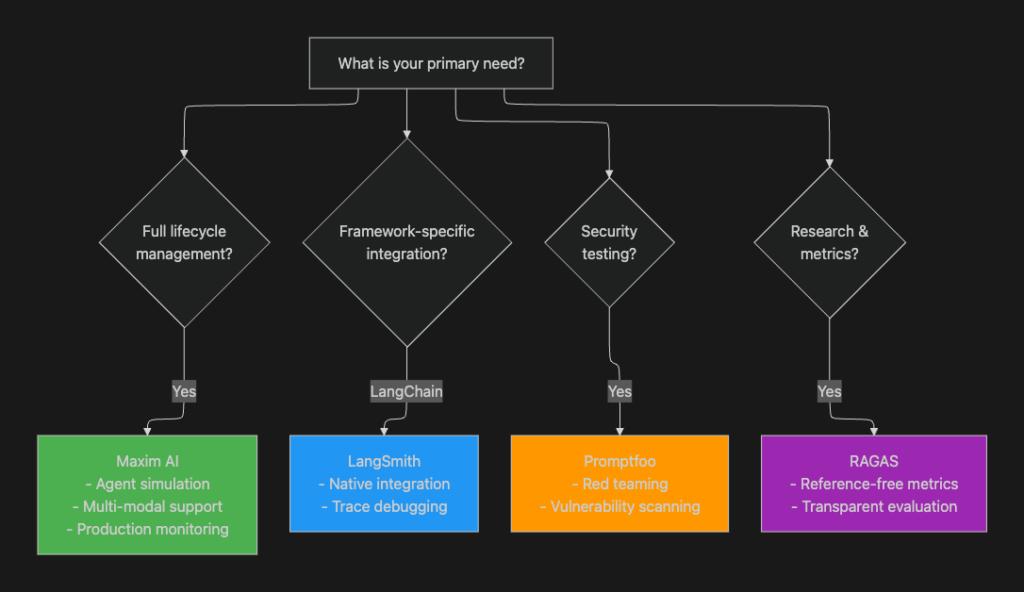
Selection Criteria For Choosing The Best Fit Among RAG Tools
Explore Techment’s deep dive: 7 Proven Strategies to Build Secure, Scalable AI with Microsoft Azure
How Techment Helps Enterprises Build Scalable RAG Architectures
At Techment, we help organizations move beyond experimentation to enterprise-grade RAG implementation. According to Gartner, organizations adopting retrieval-augmented architectures are significantly improving AI reliability and reducing hallucination risks, reinforcing the importance of RAG tools in enterprise AI strategies.
Our Approach
Data foundation first
We ensure your data is AI-ready through governance, quality, and transformation.
Architecture design
We design scalable RAG pipelines aligned with your enterprise ecosystem.
Platform integration
We integrate RAG tools with platforms like Microsoft Fabric, Azure AI, and modern data stacks.
AI readiness and governance
We ensure compliance, security, and observability across AI systems.
Key Capabilities
- Data modernization and transformation
- Vector search and retrieval optimization
- AI copilots and enterprise assistants
- Governance with tools like Microsoft Purview
Business Impact
- Faster AI deployment
- Improved decision intelligence
- Reduced operational risk
For a deeper architectural perspective:Microsoft Fabric Architecture: CTO’s Guide to Modern Analytics & AI
Conclusion
RAG tools have become the foundation of reliable enterprise AI systems. As organizations scale AI adoption, the ability to connect LLMs with trusted data is no longer optional—it is a strategic necessity.
From lightweight frameworks like Embedchain to enterprise-scale platforms like Vespa and Pinecone, each tool serves a distinct purpose in the RAG ecosystem.
The key is not choosing the “best” tool—but choosing the right tool for your architecture, scale, and business goals.
As AI continues to evolve, organizations that invest in robust RAG architectures today will lead the next wave of enterprise intelligence.
FAQs
1. What are RAG tools?
RAG tools connect LLMs with external data sources to improve accuracy and reduce hallucinations.
2. Which RAG tool is best for enterprises?
Pinecone, Vespa, and MongoDB are strong choices depending on scale and architecture needs.
3. Are open-source RAG tools enough for production?
Yes, but they require engineering maturity and infrastructure management.
4. How long does it take to implement RAG?
Typically 6–16 weeks depending on complexity and data readiness.
5. What skills are required?
Data engineering, ML engineering, and cloud architecture expertise.