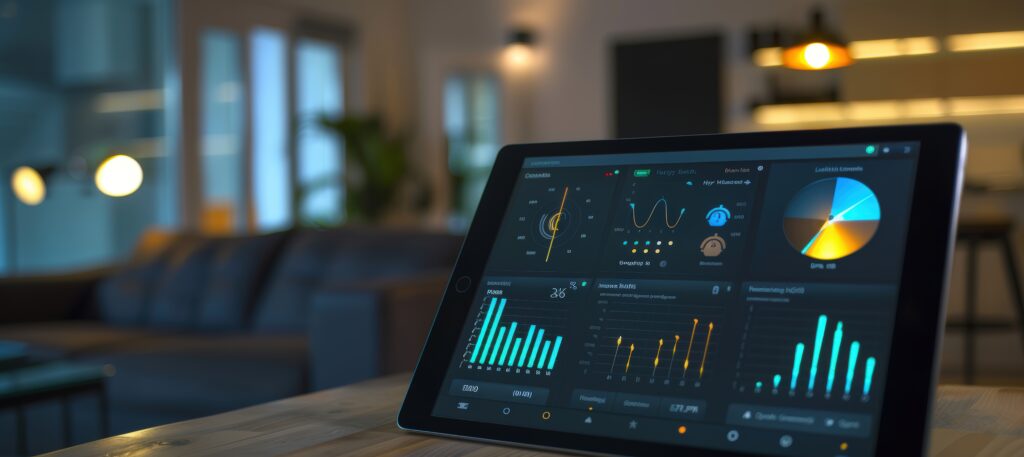
Imagine this — you’re the Chief Technology Officer of a global e-commerce business. It’s 2 a.m. in one region and your operations centre lights up with a sudden drop in conversion rate. Traditional nightly reports arrive hours too late. What you need is a live window into campaign performance, website health, inventory flow — and the ability to act before the next wave of traffic hits.
That scenario captures why real-time dashboard visualizations: tools & challenges are more than just a nice-to-have. In an era of accelerating data volumes, distributed systems, stakeholder expectations for immediacy, and unpredictable market signals, organisations demand speed, clarity and agility. A live dashboard that updates continuously from multiple sources becomes a strategic asset: enabling anomaly detection, operational pivots, and proactive leadership.
TLDR
In this article we provide a roadmap for technology leaders :
- What a real-time dashboard is, and how it differs from traditional analytics;
- the core use-cases across industries where live visualisation truly delivers value;
- the tools and technologies powering real-time dashboards;
- the challenges enterprises face during implementation and scale;
- best-practice frameworks and approaches to overcome those hurdles;
- a selection checklist for choosing or building a real-time dashboard solution;
- a real-world case example illustrating success and lessons;
- how Techment can partner as your strategic guide in this journey.
By the end of this deep dive, you’ll be equipped to shape a roadmap for your organization’s live insights capability — and confidently lead your teams toward early wins and sustainable value.
Discover Insights, Manage Risks, and Seize Opportunities with Our Data Discovery Solutions
2. What is a Real-Time Dashboard?
A real-time dashboard is a visual interface that continuously ingests, processes and displays data from multiple sources with minimal latency (often seconds or near-real-time). Unlike static reports or dashboards refreshed periodically (e.g., daily, hourly), a real-time dashboard reflects the current state of affairs and supports immediate insight and action.
Key Characteristics
- Live or near-live ingestion of streaming or event-driven data (for example via message brokers or service bus).
- Multi-source integration: combining IoT sensor feeds, web clickstreams, transactional systems, external APIs and third-party data.
- Interactive visuals and drill-downs: users can zoom into anomalies, filter by dimensions, and explore root-causes rather than passively view charts.
- Alerts/notifications: threshold breaches or defined rules trigger notifications or workflow steps.
- Scalable architecture: supporting high-velocity and high-volume data without compromising performance or usability.
- Role-based access and tailored views: operational staff, analytics leads, product owners, executives each get relevant slices of the dashboard.
Traditional Dashboards vs Real-Time
In a conventional dashboard paradigm, data might be extracted overnight, loaded into a data-warehouse, and dashboards refreshed once per day or hour. Decisions are reactive. With real-time visualisation, data flows continuously, enabling proactive decision-making, rapid anomaly detection and operational awareness.
Because of this difference, real-time dashboards empower faster response, better operational alignment, and greater visibility into emergent trends — which is increasingly essential as business cycles shorten and stakeholder expectations rise. For example, research shows dashboards enhance organizational decision-making by dynamically incorporating real-time data.
Dive into our insights on How Techment Transforms Insights into Actionable Decisions Through Data Visualization?
3. Core Use Cases Across Industries
Real-time dashboard visualisations bring value across multiple industries by bridging live data flows with decision-makers. Here are several prominent use-cases:
• IT / DevOps / Infrastructure Monitoring
Use-case: A centralized operations command center monitors server health, latency, error-rates, throughput, service-availability, across global cloud platforms. A sudden uptick in error rates triggers an alert, and the engineering team drills into the root cause before customers even notice.
Value: Minimized downtime, improved SLO/SLA compliance, and elevated customer experience.
• E-commerce & Digital Marketing
Use-case: A digital marketing team tracks website traffic, funnel conversion, campaign performance and promotion outcomes in real-time. If a flash-sale triggers a surge beyond capacity, the team pivots promotions, adjusts inventory-offers, or triggers backup infrastructure.
Value: Higher conversion, lower bounce rates, dynamic management of marketing spend.
• Manufacturing / IoT / Supply-Chain
Use-case: On a factory floor, sensors stream machine health data, throughput metrics and environmental readings. A real-time visualization shows equipment performance, predictive maintenance alerts, and shipment tracking. If a key machine begins to degrade, maintenance is triggered before a breakdown.
Value: Reduced unplanned downtime, improved OEE (Overall Equipment Efficiency), smoother supply-chain flows.
• Finance & Trading
Use-case: Traders monitor market, risk, portfolio exposure and counter-party credit in real-time dashboards. If a rapid market move occurs, the risk team is alerted instantly and can trigger hedging mechanisms.
Value: Faster risk mitigation, tighter controls, increased competitiveness.
• Healthcare / Operations
Use-case: In a hospital operations centre, a real-time dashboard tracks patient vitals, bed-occupancy, equipment utilization, staffing levels and emergency-admissions. If bed-occupancy spikes or a major event occurs, operations can re-allocate staff or open surge capacity.
Value: Better operational responsiveness, improved patient outcomes, and cost control.
Bullet Summary of Use-Cases
- IT/DevOps → Operational health, alerting
- E-commerce/Marketing → Real-time funnel & campaign monitoring
- Manufacturing/IoT → Sensor data, machine health, shipment tracking
- Finance/Trading → Market data, risk exposure, live dashboards
- Healthcare/Operations → Patient vitals, bed occupancy, resource management
For broader enterprise insight, see Data Integrity: The Backbone of Business Success
4. Tools & Technologies for Real-Time Visualization
Building effective real-time dashboard visualizations requires a stack of technologies across ingestion, analytics, visualization and infrastructure. Below, we outline the components, typical tool categories, and evaluation criteria.
Data Ingestion & Streaming
Tools in this category handle high-velocity data capture and continuous flow: e.g., Apache Kafka, AWS Kinesis, message brokers, event-streams. They enable ingestion of sensor data, clickstreams, API feeds and legacy systems events. Use cases often require a streaming architecture (event-driven) for minimal latency.
Analytics Back-End
Once streaming data is ingested, you need a processing and query engine capable of real-time or near-real-time analytics: in-memory databases, time-series databases, event-processing engines, or real-time query engines like Apache Flink, or cloud offerings. These power the dashboard’s backend computations, aggregation and alerting.
Visualization / Dashboard Platforms
This layer is what users interact with. Traditional BI tools (e.g., Tableau, Microsoft Power BI) have added live-data features. There are also platforms tuned for real-time dashboards that connect directly to streaming data sources. Visualization features to look for include live refresh, drill-down/filter, alerts, customizable widgets, role-based access.
Supporting Infrastructure & Architecture
To enable scale and reliability you’ll need data hubs, event buses, a modern data architecture (often cloud-native, micro-services, and containerized). The architecture must support high velocity and a variety of data sources (IoT, web, legacy systems) and enable low-latency computation and visualization.
Visual Features to Evaluate
When evaluating tools, consider:
- Live refresh / auto-update frequency
- Customizable dashboards/widgets
- Drill-down and filtering capabilities
- Alerts and notification integration
- Role-based views & access control
- Performance under high data-volumes and concurrency
- Ease of connecting to event-streams and real-time data sources
Summary Table
| Tool Type | Role | What to Evaluate |
| Data Ingestion/Streaming | Captures continuous data flows | Latency, throughput, source connectors |
| Analytics Back-End | Processes, aggregates and queries live data | Real-time query performance, scale |
| Visualization Platform | Presents insights to users | Live update cadence, user-experience |
| Infrastructure/Architecture | Supports scale, reliability & integration | Scalability, latency, multi-source support |
For an enterprise-grade approach, you might want to explore The Anatomy of a Modern Data Quality Framework: Pillars, Roles & Tools Driving Reliable Enterprise Data – Techment
5. Key Challenges in Real-Time Dashboard Visualizations
While the promise of real-time dashboard visualizations is compelling, enterprises often encounter significant hurdles. Below we unpack the major challenges, backed by empirical research.
Latency & Performance
Real-time dashboards lose value if data is delayed, or the visualization is sluggish. The underlying cause is often architecture or query bottlenecks. Studies show that if dashboards cannot refresh quickly or support concurrent users, decision-making suffers.
Data Quality, Variety & Veracity
Streaming data often arrives from diverse sources, formats, and quality. Research notes that dashboards struggle if the data veracity is uncertain or formats inconsistent. For example, a real-time property-market dashboard found inconsistent update frequency and data-formats across sources
Integration of Multiple Sources & Real-Time Processing
Legacy systems, IoT sensors, APIs and unstructured feeds all need to feed into the dashboard. Merging these in real time is a challenge in terms of connector development, schema alignment, event-handling, and transformation.
Scalability & Volume
High-velocity streaming plus many users plus rich visuals equals heavy load. Organizations struggle to build dashboards that scale with both data and users. Research on BI dashboards highlights “technical complexities” as a major barrier.
Design & User Experience
Real-time dashboards can become data-dumps rather than insight-drivers. Visual clutter, poor filtering, unclear alerts undermine adoption. One academic work noted mismatch between user literacy and dashboard design.
Change Management & Adoption
Even with a working dashboard, if users don’t trust it or don’t know how to use it, the investment fails. Governance, training and cultural work are required, and there is greater emphasis on user-centered design and evolution as ongoing.
Security, Governance & Access Control
Live data often includes sensitive information (customer data, equipment performance, financials). Proper role-based access, encryption, and audit trails are essential.
Maintenance & Support
Real-time systems are live operations: alerting, event-flows; visualizations need constant monitoring, tuning and evolution. Without this, dashboards degrade over time or become irrelevant.
For a deeper dive into enterprise data challenges, see Data Management for Enterprises: Roadmap
6. Best Practices & How to Overcome the Challenges
To transform the vision of real-time dashboard visualizations: tools & challenges into a successful programme, consider the following best practices.
Start with the Business Questions & Audience
Before selecting tools or building pipelines, define what you need to monitor in real time and why. Who cares? What decisions will they make? What threshold warrants an alert? Real-time visibility without purpose is noise.
Build a Strong Data Foundation
From ingestion to transformation to analytics, the data foundation must support real-time flow. Streams must be reliable, schemas consistent, transformations performant. A well-architected data hub reduces latency and complexity.
Choose the Right Visuals
Keep it simple and focused. Live dashboards should highlight key metrics, not show every granule by default. Use intuitive visuals, drill-down only when necessary. Avoid over-engineering.
Ensure Proper Architecture
Design for streaming, event-driven processing, scalable query engines, and high-performance delivery. Consider micro-services, containerization, scalable cloud infrastructure. A modern architecture also supports future growth.
Design for Performance
Avoid heavy queries or full dataset recomputation on every refresh. Use aggregations, caching, and incremental processing. Limit the load by pre-filtering or summarizing. Monitor performance metrics continuously.
Enable Interactivity & Alerts
Allow users to filter, drill-down, set alerts, and subscribe to incidents. A dashboard that only shows is less powerful than one that asks the user to act. Use notifications and escalation of workflows to turn insight into action.
Governance & User Adoption
Establish roles, responsibilities, data ownership, and security. Provide user training and embed dashboards into daily workflows. Encourage active use, solicit feedback, and iterate. Design dashboards with input from target audiences (see academic research on mismatch between designers and users).
Monitor & Iterate
Dashboards aren’t “build-once”. As business evolves, new data sources emerge, new KPIs matter; user needs change. Set iteration cycles, review adoption of metrics (views, alert clicks, decisions made).
Embed Narrative & Storytelling
Even live dashboards benefit from context. Provide annotations, tooltips, and commentary. Highlight on why a spike matters, what action should follow. Story-driven dashboards help anchor user attention.
Further read How Techment Transforms Insights into Actionable Decisions Through Data Visualization?
7. Checklist for Selecting a Real-Time Dashboard Solution
When selecting a solution (vendor or build) for real-time dashboard visualizations: tools & challenges, use the following checklist:
- Clear business objectives & KPIs defined ahead of tool selection
- Ability to ingest and process streaming/real-time data sources (Kafka, Kinesis, etc)
- Low latency and performant backend query processing
- Flexible visualization layer with live update capabilities
- Alerts/notification mechanism built-in
- Data governance, security, role-based access controls
- Scalability and future-proof architecture (cloud-native, micro-services)
- Good user-experience & adoption strategy (training, support)
- Vendor/partner support for implementation, customisation and ongoing management
- Monitoring and performance metrics built into the solution
For choosing the right infrastructure, read Future-Proof Your Data Infrastructure: Benefits of Using MySQL HeatWave for SMEs
8. Case Example
Let’s illustrate with a hypothetical but representative example:
Organisation: Global online retailer “ABC Retail”
Challenge: During seasonal flash-sales, website traffic spikes unpredictably and marketing campaigns dynamically shift. Conversion rates started dropping during peak times because backend systems couldn’t catch anomalies quickly.
Solution: They implemented a real-time dashboard monitoring website traffic, funnel conversion, error-rates, database latency and campaign performance. Data ingestion via event-streams (clickstream + transaction logs) was fed into a real-time query engine. The visualisation layer provided live views accessible to product owners and marketing leads.
What they did well:
- Focused on a handful of high-impact KPIs rather than building complex visuals.
- Triggered real-time alerts when bounce-rates rose above thresholds.
- Enabled drilling from high-level metrics into user-session granular logs to identify root cause (e.g., dropped service, campaign ad mismatch).
- Linked visual insight to action: marketing paused a campaign, ops shifted traffic, dev team hot-fixed code.
Lessons learned:
- Initially, the dashboard was overwhelmed by data spikes → they added caching and summary layers.
- Users received too many alerts → they refined thresholds and added escalation logic.
- Some data sources were unreliable (legacy systems) → they introduced data-quality monitoring upstream.
Result: Conversion losses were reduced during peak sale events; operations were visibly more aligned; marketing felt empowered with live insights.
For another industry scenario, see our case-study on Autonomous Anomaly Detection and Automation in Multi-Cloud Micro-Services environment
9. How Techment Can Be Your Trusted Partner
At Techment, we recognize that real-time dashboard visualizations: tools & challenges is not just a technology topic—it’s a strategic capability. We bring end-to-end services to help you transition from data-inertia to live insight.
Techment is a global IT services & consulting firm specializing in enterprise data, analytics and AI transformation. We partner with organizations across industries to modernize data architecture, implement streaming pipelines, build real-time visualizations and embed insight into operations.
Why partner with us
- Proven cross-industry experience: We’ve delivered live dashboards for manufacturing, retail, financial services and healthcare.
- End-to-end execution: From business question → data ingestion → streaming analytics → dashboard → adoption.
- Domain expertise: We understand both technical architecture and business impact. We speak the language of CTOs, engineering heads and product leads.
- Support at scale: We operate globally and provide managed services to ensure your dashboards stay aligned with evolving business needs.
If you’re ready to turn your data into live insights and act in real time, reach out to Techment for a discovery session.
For more on how Techment transforms insights into action, see How Techment Transforms Insights into Actionable Decisions Through Data Visualization?
10. Conclusion
In today’s fast-moving enterprise landscape, real-time dashboard visualizations: tools & challenges are not optional—they are increasingly a competitive differentiator. When built correctly, live dashboards deliver speed, visibility and operational agility; when built poorly, they become costly, under-utilized and ignored.
We’ve walked through the definition of real-time dashboards, core use-cases across industries, the key technology stack, major implementation challenges and practical best practices. We provided a checklist for tool selection and a case example to ground the thinking. Finally, we explained why Techment is well-positioned to partner strategic organizations in transforming their live-insight capability.
Your next step? Define the two or three high-impact KPIs you want live visibility into this quarter, validate your data-source readiness, assemble a small cross-functional team (engineering, data, product, operations), and begin a live-dashboard pilot. With clear focus, modern architecture and user-centred design, you’ll be on the path to turning real-time data into real-time decisions.
If you’re ready to convert your data into live strategic advantage—partner with Techment and let us guide you from concept to continuous insight.
FAQs
Q1. What is the ROI of real-time dashboard visualizations: tools & challenges?
Real-time dashboards drive value by reducing decision-latency, catching anomalies earlier, improving operational uptime, boosting conversion or throughput, and aligning stakeholder actions. For example, one study found real-time dashboards rescued failing IT projects within 90 days.
Q2. How can enterprises measure the success of real-time dashboards?
Metrics include reduction in time-to-insight, decrease in downtime or latency incidents, increase in conversion/throughput, number of alerts acted upon, and user-engagement (dashboard views, drilldowns).
Q3. What tools enable scalability for real-time dashboards?
Key enabling tools include streaming ingestion (Kafka, Kinesis), real-time query engines/in-memory databases, time-series stores, and visualization platforms that support live optimized queries, caching and high concurrency.
Q4. How do I integrate real-time dashboards with existing data ecosystems?
Start by assessing existing data sources (batch, legacy, real-time), planning a streaming layer or event-bus to capture live data, enable transformation/aggregation in real time, then connect to visualization platform. Architecture should accommodate legacy systems, API feeds and new data.
Q5. What governance challenges arise with real-time dashboards?
Live dashboards introduce new governance needs: data-quality monitoring of streaming sources, versioning of schemas, access control for live data, audit trails for alerts/actions, oversight on what metrics are surfaced to which roles, and change-management for evolving dashboards.
For more governance & quality thinking, read How Techment Transforms Insights into Actionable Decisions Through Data Visualization?