Introduction
The enterprise workplace is undergoing its most profound transformation in decades. Hybrid work, distributed teams, and digital-first operations have shifted how organizations operate, collaborate, and compete. Yet despite heavy investments in tools, 86% of employees and executives still cite ineffective collaboration as a primary driver of workplace failure.
This is where Microsoft Modern Workplace emerges as a strategic enabler—not just a technology stack, but a comprehensive framework for redefining enterprise productivity.
At its core, Microsoft Modern Workplace integrates collaboration, automation, security, and analytics into a unified ecosystem powered by Microsoft 365. It moves organizations beyond fragmented tools toward an intelligent, connected, and adaptive workplace model.
This blog explores how Microsoft Modern Workplace is reshaping enterprise operations, the architecture behind it, its business impact, and how organizations can successfully adopt it at scale.
TL;DR Summary
- Microsoft Modern Workplace is transforming how enterprises collaborate, automate, and secure work environments
- Microsoft 365, Teams, Power Platform, and security tools create a unified digital workplace ecosystem
- Enterprises see measurable gains in productivity, employee experience, and operational agility
- Automation and AI are shifting workplaces from task execution to decision intelligence
- Governance, adoption strategy, and integration are critical for success
- Techment enables enterprises to operationalize Microsoft Modern Workplace at scale
Why Microsoft Modern Workplace Matters for Enterprise Strategy
The Shift from Tools to Work Experience
Enterprises are no longer evaluating workplace tools in isolation. The focus has shifted toward employee experience, productivity outcomes, and business agility.
Traditional workplaces suffered from:
- Siloed communication systems
- Manual workflows
- Limited remote capabilities
- Fragmented data access
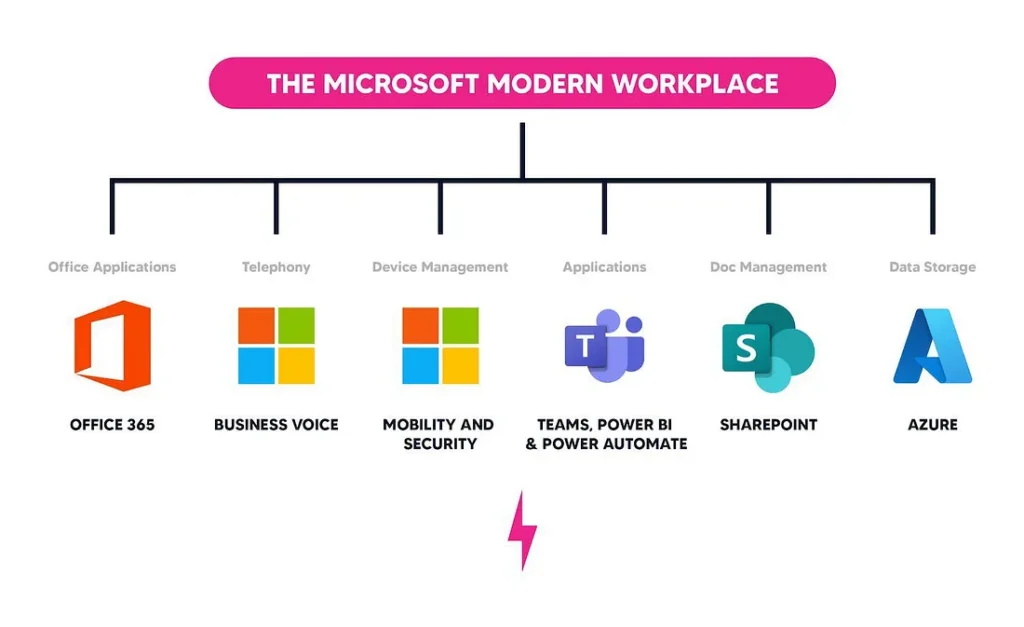
Microsoft Modern Workplace addresses these gaps by creating a unified experience layer across communication, content, workflows, and insights.
From a strategic standpoint, this transformation aligns directly with enterprise priorities:
- Faster decision-making
- Increased workforce productivity
- Improved employee engagement
- Reduced operational complexity
For organizations, exploring enterprise Ai strategy 2026 in the modern workplace becomes a foundational layer for enabling intelligent automation and AI-driven workflows.
The Hybrid Work Imperative
The rise of hybrid work has permanently altered enterprise expectations. Employees demand flexibility, while organizations require governance and control.
Microsoft Modern Workplace bridges this gap through:
- Cloud-first infrastructure
- Device-agnostic access
- Real-time collaboration
- Integrated security
Strategic Insight:
Organizations that fail to modernize their workplace risk losing talent, slowing innovation, and increasing operational friction.
What Is Microsoft Modern Workplace? A Strategic Breakdown
Beyond Tools: A Unified Digital Workplace
Microsoft Modern Workplace is not just a bundle of applications—it is a holistic operating model for enterprise productivity.
It combines:
- Collaboration platforms
- Productivity applications
- Security frameworks
- Automation tools
- Data and analytics capabilities
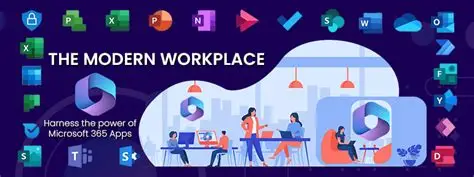
At the center of this ecosystem is Microsoft 365, which integrates tools into a seamless experience.
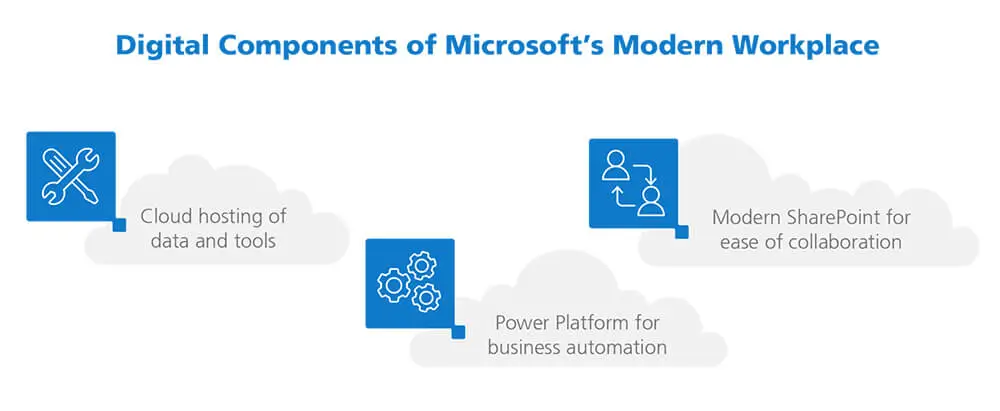
Core Components of Microsoft Modern Workplace
1. Collaboration Layer
- Microsoft Teams (chat, meetings, calling)
- SharePoint (document management, intranet)
- OneDrive (file storage and sharing)
2. Productivity Layer
- Office applications (Word, Excel, PowerPoint)
- Outlook (communication and scheduling)
3. Automation Layer
- Power Automate (workflow automation)
- Power Apps (low-code applications)
- Power BI (analytics and visualization)
4. Security & Compliance Layer
- Identity management
- Threat protection
- Data governance
5. Device & Endpoint Management
- Microsoft Endpoint Manager
- Windows 10/11 integration
Enterprise Perspective
Microsoft Modern Workplace enables organizations to transition from:
- Fragmented systems → Integrated platforms
- Manual processes → Automated workflows
- Reactive operations → Predictive insights
Further explore why modern data platforms are critical for RAG success, how they reshape enterprise AI architectures, and what leaders must prioritize to build scalable, secure, and high-performance RAG systems.
Architecture of Microsoft Modern Workplace: A CTO’s View
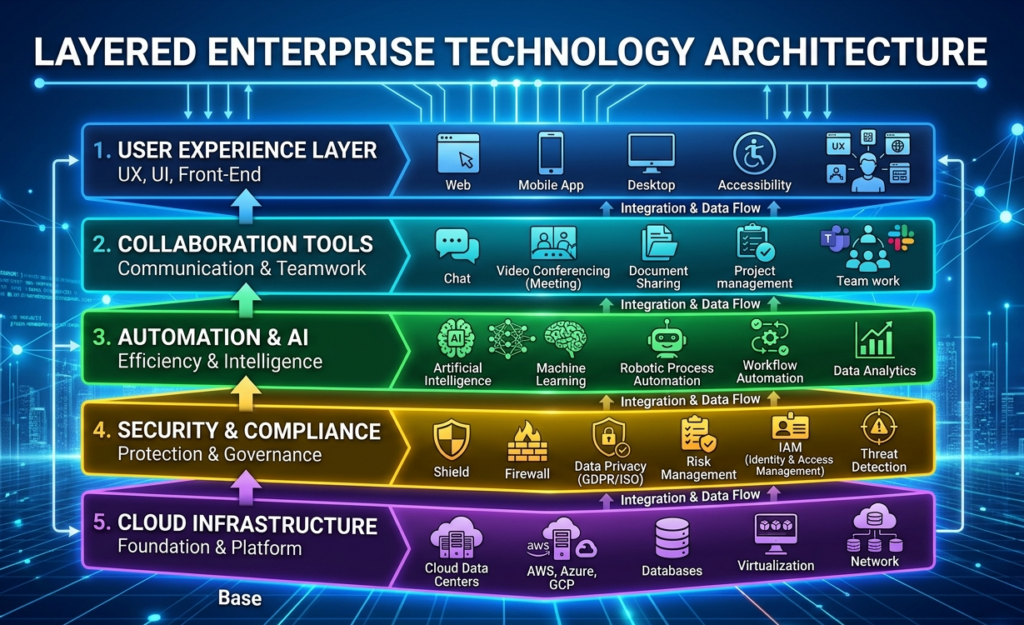
Layered Enterprise Architecture
The Microsoft Modern Workplace architecture can be understood across five strategic layers:
1. Experience Layer
Employees interact through Teams, Outlook, and Office apps.
2. Collaboration Layer
Enables communication, document sharing, and teamwork.
3. Data & Insights Layer
Powered by Power BI and analytics tools.
4. Automation Layer
Low-code and workflow automation via Power Platform.
5. Security & Governance Layer
Identity, compliance, and threat protection.
Enterprise Architecture Flow
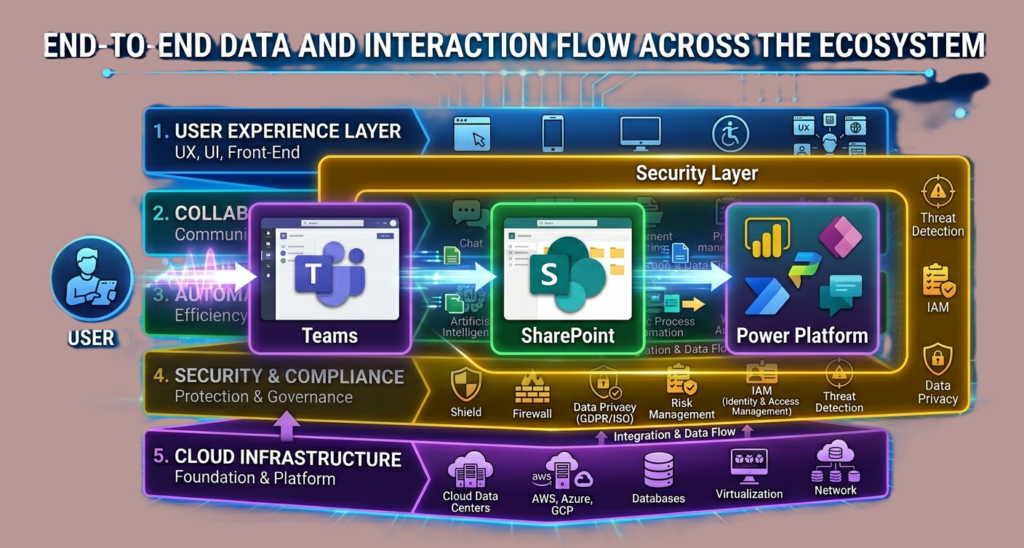
This flow illustrates how data and interactions move across the ecosystem.
Microsoft Modern Workplace vs Traditional Workplace – Comparison Table
Enterprise Workplace Evolution
| Dimension | Traditional Workplace | Microsoft Modern Workplace |
|---|---|---|
| Infrastructure | On-premise systems | Cloud-first (Microsoft 365) |
| Collaboration | Email-centric | Real-time (Teams, co-authoring) |
| Work Model | Office-bound | Hybrid & remote |
| Workflows | Manual processes | Automated workflows |
| Security | Reactive | Proactive & AI-driven |
| Scalability | Limited | Elastic and scalable |
| Data Access | Siloed | Unified and integrated |
Strategic Insight
The real value lies not in individual tools, but in how seamlessly they integrate.
Enterprises leveraging Microsoft platform, should read about its architecture here in detail to further enhance workplace intelligence by connecting workplace data with enterprise analytics platforms.
Business Benefits of Microsoft Modern Workplace
1. Increased Productivity
Employees spend less time switching between tools and more time executing meaningful work.
Automation reduces repetitive tasks such as:
- Data entry
- Approvals
- Reporting
Impact:
- Faster execution cycles
- Reduced operational friction
- Higher output per employee
2. Enhanced Collaboration
Microsoft Teams enables real-time collaboration across geographies.
Key capabilities include:
- Video conferencing
- Document co-authoring
- Integrated workflows
Enterprise Outcome:
Improved alignment and faster decision-making.
3. Cost Optimization
Cloud-based infrastructure reduces:
- Hardware costs
- Maintenance expenses
- IT overhead
4. Improved Security
Microsoft Modern Workplace integrates enterprise-grade security:
- Multi-factor authentication
- Data encryption
- Threat detection
For organizations focusing on modern workplace, should also explore the role of data governance for data quality as this ensures secure and compliant operations.
5. Scalability and Flexibility
Organizations can:
- Scale users dynamically
- Add new capabilities easily
- Support hybrid work seamlessly
Automation and AI: The Next Evolution of Microsoft Modern Workplace
From Productivity to Intelligence
Microsoft Modern Workplace is evolving from a productivity platform to an intelligent workplace ecosystem.
Automation through Power Platform enables:
- Workflow orchestration
- Business process automation
- Low-code innovation
AI Integration
With AI capabilities:
- Meetings are summarized automatically
- Insights are generated from data
- Decisions are supported with analytics
Use Case Example
Scenario:
A sales team uses Teams integrated with Power BI and CRM.
Outcome:
- Real-time insights during meetings
- Automated reporting
- Faster deal closures
Strategic Insight
Enterprises that combine Microsoft Modern Workplace with AI capabilities gain:
- Competitive advantage
- Faster innovation cycles
- Improved decision intelligence
Security and Governance in Microsoft Modern Workplace
Enterprise-Grade Security Framework
Security is not an add-on—it is embedded into every layer.
Key components include:
- Identity and access management
- Data loss prevention
- Threat analytics
Governance Challenges
Enterprises must address:
- Data sprawl
- Shadow IT
- Compliance requirements
Governance Framework Table
Table: Microsoft Modern Workplace Governance Model
| Governance Area | Key Capability | Enterprise Strategy |
|---|---|---|
| Identity | Azure AD | Centralized access control |
| Data | Microsoft Purview | Classification & compliance |
| Devices | Endpoint Manager | Secure device management |
| Collaboration | Teams Policies | Controlled sharing |
| Security | Defender Suite | Threat protection |
Without governance, modern workplace adoption can lead to chaos instead of efficiency.
Organizations investing in data quality and governance frameworks ensure sustainable transformation.
Implementation Strategy: Operationalizing Microsoft Modern Workplace at Scale
From Vision to Execution
Adopting Microsoft Modern Workplace is not a one-time deployment—it is a multi-phase transformation program that impacts technology, processes, and people.
Enterprises that succeed follow a structured approach:
Phase 1: Assessment & Readiness
- Evaluate current collaboration gaps
- Identify redundant tools and inefficiencies
- Assess security and compliance posture
Phase 2: Architecture Design
- Define workplace architecture aligned with business goals
- Map Microsoft 365 capabilities to enterprise use cases
- Establish governance frameworks
Phase 3: Deployment & Integration
- Roll out Microsoft Teams, SharePoint, and Power Platform
- Integrate with existing enterprise systems
- Migrate legacy content and workflows
Phase 4: Adoption & Change Management
- Train employees across roles
- Drive behavioral change
- Monitor usage and engagement
Phase 5: Optimization & Innovation
- Continuously improve workflows
- Introduce automation and AI
- Measure ROI and business impact
Enterprise Use Case Mapping Table
Table: Business Use Cases → Microsoft Solutions
| Use Case | Microsoft Tool | Business Outcome |
|---|---|---|
| Remote Collaboration | Microsoft Teams | Faster communication |
| Document Management | SharePoint | Centralized knowledge |
| Workflow Automation | Power Automate | Reduced manual work |
| Data Insights | Power BI | Real-time decisions |
| App Development | Power Apps | Faster innovation |
Strategic Insight
Organizations that treat Microsoft Modern Workplace as an IT rollout often fail. Those that treat it as a business transformation initiative achieve measurable outcomes.
Read our Best practices for Gen AI implementation to get detailed information on how aligning workplace transformation with AI strategy ensures long-term scalability.
Risks, Trade-offs, and Enterprise Challenges
1. Over-Reliance on Tools Without Strategy
Many organizations deploy Microsoft 365 tools without defining:
- Clear use cases
- Governance policies
- Adoption frameworks
Risk:
Low adoption and fragmented usage
2. Shadow IT and Data Sprawl
Without governance, employees may:
- Create duplicate workspaces
- Share data without controls
- Use unauthorized tools
Impact:
- Security vulnerabilities
- Compliance risks
- Data inconsistencies
3. Change Resistance
Employees accustomed to legacy systems may resist:
- New collaboration tools
- Automated workflows
- Digital-first processes
4. Integration Complexity
Enterprises often struggle to integrate Microsoft Modern Workplace with:
- Legacy ERP systems
- CRM platforms
- Data warehouses
Risk Mitigation Framework (Battle Card)
| Enterprise Challenge | Mitigation Strategy | Business Impact |
|---|---|---|
| Low adoption | Structured change management (training, communication, champions) | Higher user engagement and ROI |
| Data sprawl | Governance policies, data classification, and access controls | Improved data consistency and compliance |
| Security risks | Identity and access management (MFA, Zero Trust) | Reduced breach risk and stronger security posture |
| Integration gaps | API-driven architecture and middleware integration | Seamless data flow across enterprise systems |
Strategic Insigh
The biggest risk is not technology failure—it is organizational misalignment.
Real-World Enterprise Use Cases of Microsoft Modern Workplace
1. Global Collaboration at Scale
Scenario:
A multinational organization with distributed teams
Solution:
- Microsoft Teams for communication
- SharePoint for document collaboration
- OneDrive for secure file access
Outcome:
- Reduced communication delays
- Improved cross-functional alignment
2. Workflow Automation in Operations
Scenario:
Manual approval processes slowing operations
Solution:
- Power Automate workflows
- Integration with enterprise systems
Outcome:
- Faster approvals
- Reduced manual errors
3. Data-Driven Decision Making
Scenario:
Executives lack real-time insights
Solution:
- Power BI dashboards integrated with Teams
Outcome:
- Real-time visibility
- Faster strategic decisions
4. Secure Remote Work Enablement
Scenario:
Hybrid workforce with security concerns
Solution:
- Microsoft Endpoint Manager
- Identity and access management
Outcome:
- Secure access from any device
- Reduced security incidents
Strategic Insight
The most successful implementations focus on business outcomes, not tool adoption.
For organizations leveraging , integrating workplace tools with AI-driven interfaces enhances both employee and customer experiences.
Future Trends: The Evolution of Microsoft Modern Workplace
1. AI-Native Workplaces
The future workplace will be AI-first, where:
- Tasks are automated
- Insights are proactive
- Decisions are data-driven
2. Hyper-Automation
Automation will extend beyond workflows to:
- End-to-end business processes
- Cross-platform orchestration
3. Unified Data + Workplace Platforms
Integration between workplace tools and platforms like Microsoft Fabric will enable:
- Seamless data access
- Advanced analytics
- AI-powered insights
4. Experience-Centric Design
Workplaces will prioritize:
- Employee experience
- Personalization
- Productivity optimization
Strategic Insight
Microsoft Modern Workplace is evolving into a central nervous system for enterprise operations.
Organizations aligning it with AI readiness Checklist will lead the next wave of digital transformation.
How Techment Helps Enterprises Build a Microsoft Modern Workplace
Techment partners with enterprises to transform workplace strategies into scalable, secure, and intelligent ecosystems.
End-to-End Microsoft Modern Workplace Enablement
1. Strategy & Roadmap
- Assess enterprise readiness
- Define transformation roadmap
- Align workplace with business objectives
2. Platform Implementation
- Microsoft 365 deployment
- Teams, SharePoint, and Power Platform integration
- Custom workplace solutions
3. Data & AI Integration
- Connect workplace with analytics platforms
- Enable AI-driven workflows
- Build intelligent dashboards
4. Governance & Security
- Implement compliance frameworks
- Establish data governance
- Secure identities and devices
5. Adoption & Change Management
- Training programs
- User adoption strategies
- Continuous optimization
Strategic Positioning
Techment does not just implement tools—it enables:
- Unified data + workplace ecosystems
- AI-ready enterprise environments
- Scalable digital transformation
For enterprises exploring modern data platforms, get detailed inisght on what is Microsoft Fabric to ensure seamless integration between data, analytics, and workplace layers.
Conclusion
The Microsoft Modern Workplace is no longer optional—it is a strategic necessity for enterprises navigating the complexities of hybrid work, digital transformation, and AI-driven operations.
By integrating collaboration, automation, security, and analytics into a unified ecosystem, Microsoft Modern Workplace enables organizations to move beyond fragmented tools toward intelligent, connected, and adaptive operations.
However, success depends on more than technology. It requires:
- Clear strategy
- Strong governance
- Effective adoption
- Continuous optimization
Enterprises that align Microsoft Modern Workplace with broader initiatives such as AI, data platforms, and cloud modernization will unlock sustainable competitive advantage.
As organizations look to the future, the workplace will not just support work—it will actively enhance decision-making, innovation, and business outcomes.
Techment stands as a trusted partner in this journey, helping enterprises transform their workplace into a strategic growth engine.
FAQs
1. What is Microsoft Modern Workplace in simple terms?
Microsoft Modern Workplace is a unified ecosystem of tools and technologies that enable collaboration, automation, and secure work environments using Microsoft 365.
2. How does Microsoft Modern Workplace improve productivity?
It reduces tool fragmentation, automates workflows, and enables real-time collaboration, allowing employees to focus on high-value tasks.
3. Is Microsoft Modern Workplace suitable for large enterprises?
Yes. It is highly scalable and supports complex enterprise environments with advanced security, governance, and integration capabilities.
4. What are the biggest challenges in adoption?
Key challenges include change resistance, governance gaps, integration complexity, and lack of strategic alignment.
5. How long does implementation take?
Implementation timelines vary based on enterprise size and complexity, typically ranging from a few months to a year.
4. Does Microsoft Modern Workplace support AI initiatives?
Yes. It integrates with AI tools and platforms, enabling intelligent workflows, automation, and data-driven decision-making.