Introduction To AI Agents Driving Productivity
Enterprise productivity is under unprecedented pressure. Teams spend large portions of their day navigating repetitive workflows, reconciling fragmented data, and responding to operational bottlenecks. Analysts estimate that knowledge workers spend up to 60% of their time on repetitive administrative tasks, leaving limited bandwidth for strategic work.
At the same time, competition is accelerating. Digital-native organizations are achieving dramatically higher efficiency by leveraging AI agents driving productivity across operations. These intelligent systems are transforming how work gets done—automating complex processes, orchestrating decisions across departments, and continuously improving workflows through machine learning.
Unlike traditional automation tools that follow fixed scripts, modern AI agents function as autonomous digital collaborators. They interpret context, reason through complex problems, interact with multiple enterprise systems, and learn from outcomes. The result is not incremental improvement but a step-change in operational efficiency—often reaching 10x productivity gains.
This shift is reshaping enterprise architecture, workforce design, and data strategy. AI agents are no longer experimental technologies; they are rapidly becoming a core operating layer for modern enterprises.
This article explores:
- What AI agents are and how they differ from traditional automation
- The key mechanisms through which AI agents driving productivity create exponential efficiency gains
- Real-world enterprise applications across industries
- Strategic considerations for implementation
- How organizations can prepare their data, governance, and platforms for an AI-driven productivity future
TL;DR
- AI agents driving productivity are transforming enterprise operations by automating complex workflows and augmenting human decision-making.
- Unlike traditional automation, AI agents learn, adapt, and reason, enabling continuous process optimization.
- Organizations adopting AI agents report up to 10x productivity improvements, faster decisions, and reduced operational costs.
- AI agents operate 24/7, enabling real-time customer service, supply chain monitoring, and analytics.
- Enterprises that integrate AI agents with strong data governance and AI strategy will unlock sustainable competitive advantage.
The Productivity Crisis in Modern Enterprises
Why Traditional Automation Is No Longer Enough
Over the past two decades, enterprises have invested heavily in automation technologies such as robotic process automation (RPA), workflow engines, and integration tools. While these solutions improved efficiency in structured processes, they struggle in environments characterized by complexity, ambiguity, and continuous change.
Traditional automation systems typically operate through:
Rule-Based Execution
Processes are defined using static logic such as “if–then” rules. While effective for predictable workflows, these systems break when data patterns shift or unexpected scenarios occur.
Limited Context Awareness
Conventional automation tools lack the ability to understand context, intent, or semantic meaning in data. As a result, they require extensive human intervention whenever workflows encounter unstructured inputs such as emails, documents, or conversations.
High Maintenance Overhead
Because workflows are rigid, any change in business logic requires manual reconfiguration. This often results in automation programs becoming difficult to maintain and scale.
According to enterprise transformation studies by organizations such as Gartner, more than 50% of automation initiatives fail to scale due to these limitations.”
The challenge is not simply automating tasks—it is automating decision-making and adaptability.
This is where AI agents driving productivity fundamentally change the equation.
Organizations exploring AI-led transformation often begin by establishing a strong data foundation and governance strategy. Frameworks such as Enterprise AI Strategy in 2026 highlight how aligning AI adoption with enterprise architecture ensures sustainable innovation.
The Rise of Intelligent Digital Workers
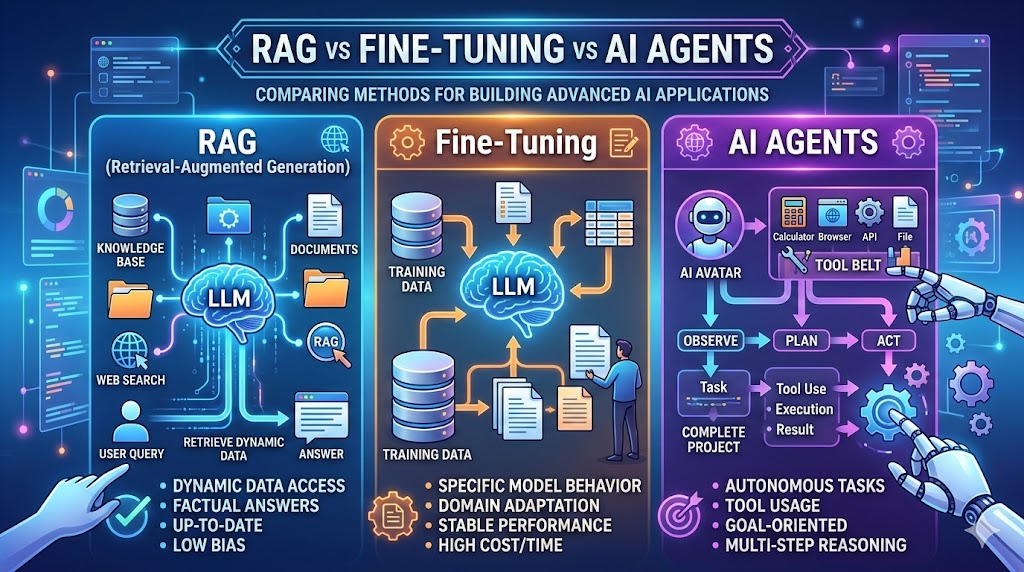
AI agents represent a new class of enterprise technology. Rather than executing pre-defined scripts, these systems act as autonomous digital workers capable of reasoning, planning, and learning.
An AI agent typically integrates multiple AI capabilities:
- Large language models for reasoning and language understanding
- Machine learning models for predictions
- Data analytics for pattern recognition
- Workflow orchestration engines for execution
- API integrations with enterprise systems
This combination allows agents to perform tasks such as:
- analyzing data across systems
- identifying operational bottlenecks
- generating reports
- interacting with customers
- initiating business processes
The most transformative aspect of AI agents driving productivity is their ability to adapt dynamically. When business conditions change, AI agents learn from new data and update their strategies automatically.
This adaptability enables organizations to transition from static operations to self-optimizing business processes.
Enterprises building modern analytics platforms—such as those described in Microsoft Fabric Architecture: CTO’s Guide to Modern Analytics & AI—are increasingly designing infrastructure specifically to support AI agents and intelligent automation.
What Makes AI Agents Different from Traditional Automation
Cognitive Capabilities and Decision Intelligence
The defining characteristic of AI agents driving productivity is cognitive intelligence.
Instead of merely executing workflows, AI agents evaluate options and make decisions based on context.
Contextual Understanding
AI agents can interpret natural language inputs such as emails, documents, and chat conversations. This capability allows them to automate workflows previously dependent on human interpretation.
For example:
- parsing customer inquiries
- extracting information from contracts
- summarizing operational reports
- generating responses based on historical context
Multi-Step Reasoning
Modern AI agents can break complex tasks into smaller steps and execute them sequentially. This planning capability enables them to perform sophisticated operations such as research analysis or financial forecasting.
Adaptive Learning
Through reinforcement learning and continuous feedback, AI agents refine their behavior over time. This means productivity improvements compound over time rather than plateauing.
| Capability | Traditional Automation | AI Agents |
|---|---|---|
| Workflow Type | Rule-based scripts | Context-aware reasoning |
| Adaptability | Requires manual updates | Learns and adapts continuously |
| Data Handling | Structured data only | Structured + unstructured data |
| Decision Making | Predefined logic | Dynamic decision intelligence |
| Integration Scope | Single-system automation | Cross-platform orchestration |
| Learning Ability | None | Continuous improvement |
| Maintenance | High configuration effort | Self-optimizing workflows |
| Productivity Impact | Incremental gains | Up to 10x productivity improvements |
Organizations building AI-ready infrastructure frequently rely on unified data platforms to support such adaptive intelligence. Solutions like What Is Microsoft Fabric: A Comprehensive Overview demonstrate how integrated analytics ecosystems enable scalable AI agent deployment.
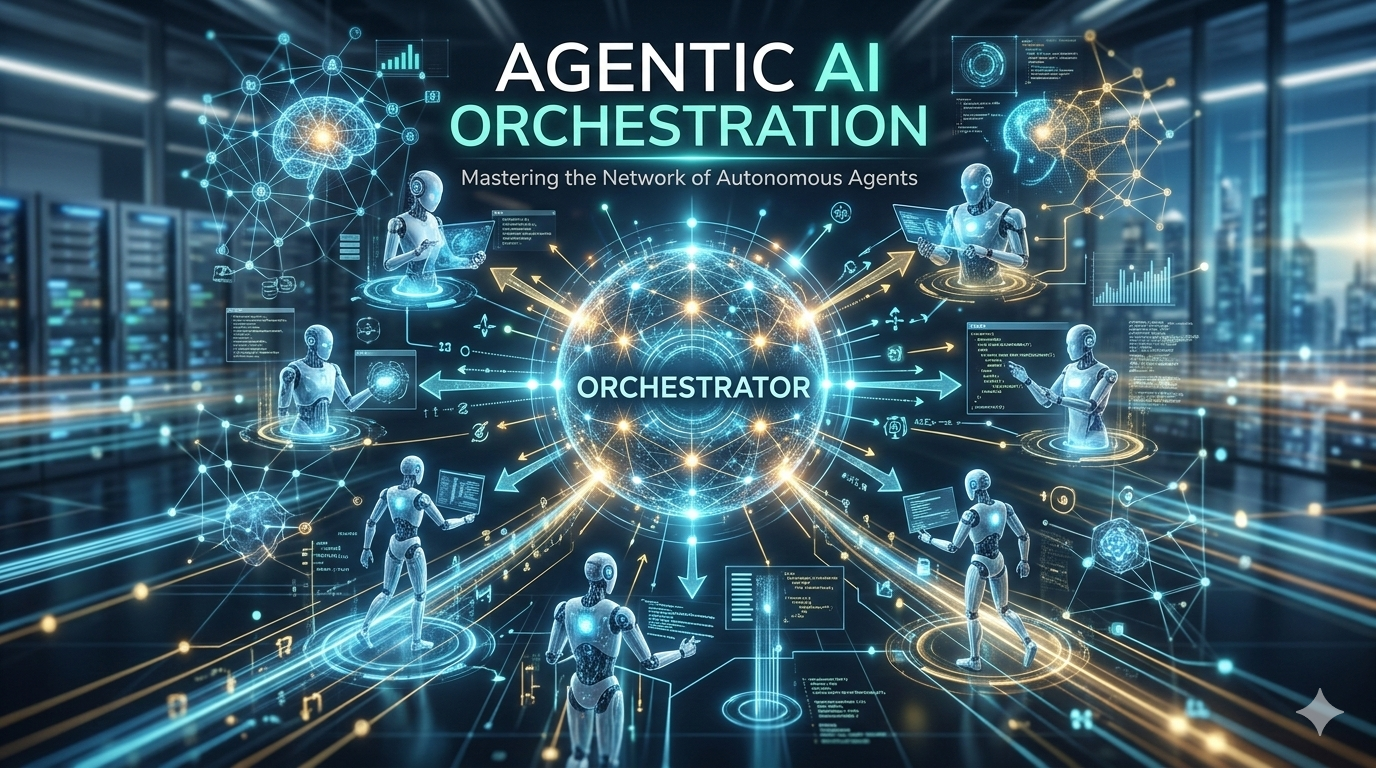
Autonomous Workflow Orchestration
Another critical distinction is workflow orchestration.
Traditional automation tools operate within a single application or process. AI agents, however, can coordinate workflows across multiple enterprise systems simultaneously.
For example, a sales operations AI agent might:
- Monitor incoming leads from marketing systems
- Analyze customer data in CRM platforms
- Generate personalized proposals
- Schedule follow-up meetings
- Update revenue forecasts automatically
This orchestration capability allows organizations to automate end-to-end processes rather than isolated tasks.
Cross-Department Collaboration
AI agents frequently operate across organizational boundaries.
A single agent may coordinate:
- marketing automation systems
- customer service platforms
- financial systems
- supply chain tools
This cross-functional orchestration removes operational silos, significantly improving enterprise productivity.
Continuous Optimization and Self-Improvement
One of the most powerful attributes of AI agents driving productivity is continuous optimization.
Traditional automation delivers static efficiency gains. AI agents, however, improve performance through learning.
Performance Monitoring – AI agents track key operational metrics such as processing time, error rates, and resource utilization.
Strategy Adjustment -Based on observed outcomes, agents refine their workflows to improve efficiency.
Predictive Optimization – By analyzing historical patterns, AI agents anticipate future bottlenecks and proactively adjust processes.
This creates a feedback loop in which productivity gains accelerate over time.
Organizations investing in enterprise data reliability—such as those adopting Data Quality for AI in 2026: The Ultimate Blueprint for Accuracy, Trust & Scalable Enterprise Adoption—ensure that AI agents can operate effectively with trusted data inputs.
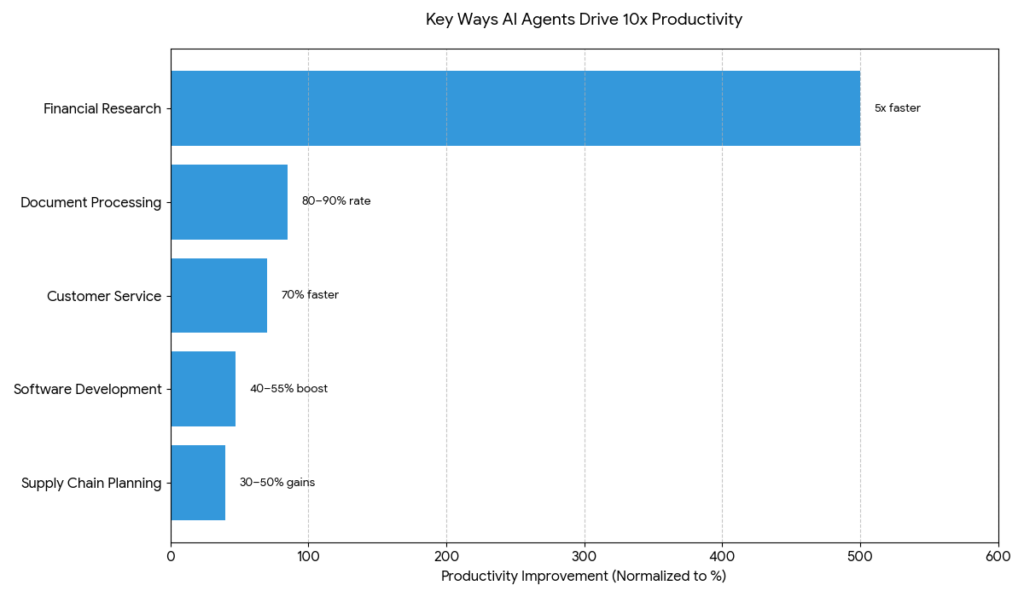
Key Ways AI Agents Drive 10x Productivity
Intelligent Task Automation at Enterprise Scale
One of the most visible impacts of AI agents driving productivity is intelligent task automation.
However, modern AI automation goes far beyond simple task execution.
Workflow Compression
AI agents reduce the time required for complex processes dramatically.
Tasks that once required days or weeks—such as financial reconciliation or compliance reporting—can now be completed in hours.
For example:
- AI agents compile reports by aggregating data from multiple systems automatically
- document processing systems extract insights from contracts and legal documents
- supply chain agents optimize logistics routes dynamically
Elastic Scalability
Human teams often struggle with fluctuating workloads. AI agents, by contrast, scale instantly.
During peak periods:
- customer inquiries can be processed simultaneously
- analytics workloads expand automatically
- operational monitoring continues without interruption
This scalability ensures consistent service levels regardless of demand fluctuations.
Operational Consistency
AI agents apply standardized logic to every task, eliminating inconsistencies common in manual processes.
For enterprises, this means:
- improved compliance
- standardized reporting
- predictable operational outcomes
These improvements collectively contribute to the 10x productivity gains reported by organizations deploying intelligent AI agents.
24/7 Continuous Enterprise Operations
Another powerful advantage of AI agents driving productivity is continuous operation.
Unlike human employees, AI agents operate without interruptions caused by time zones, weekends, or holidays.
Real-Time Customer Support
AI-powered service agents respond instantly to customer inquiries across global markets.
This reduces response times dramatically and improves customer satisfaction.
Continuous Data Processing
Enterprise analytics pipelines often require overnight batch processing. AI agents can analyze data continuously, generating insights in real time.
Supply Chain Monitoring
AI agents monitor supply chains 24/7, identifying disruptions before they escalate into operational crises.
The result is a shift from reactive operations to proactive operational intelligence.
Organizations implementing modern cloud platforms—such as those discussed in Microsoft Azure for Enterprises: Cloud AI Modernization—enable these continuous AI-driven operations at scale.
Accelerated Data-Driven Decision Making
Perhaps the most transformative capability of AI agents driving productivity is decision acceleration.
In traditional enterprises, decision-making often involves manual data collection, analysis, and reporting—a process that can take days or weeks.
AI agents compress this cycle dramatically.
Real-Time Data Analysis – AI agents analyze vast datasets instantly, identifying trends and anomalies.
Decision Recommendations – Agents generate recommendations based on predictive models and historical outcomes.
Scenario Simulation – Advanced AI agents simulate multiple scenarios to determine optimal strategies.
For executives, this means decisions that once required lengthy analysis can now be made in near real-time.
This speed advantage becomes particularly valuable in volatile markets where timing directly impacts competitiveness.
Real-World Enterprise Results: How AI Agents Deliver Measurable Productivity Gains
Enterprise Case Studies Demonstrating 10x Efficiency
The concept of AI agents driving productivity is no longer theoretical. Across industries, organizations are reporting dramatic efficiency gains after deploying AI-driven digital workers.
Customer Service Transformation
Large enterprises are deploying AI agents to manage customer interactions at scale.
Modern conversational agents can:
- analyze customer intent
- retrieve relevant knowledge articles
- generate contextual responses
- escalate complex issues to human representatives
Recent enterprise deployments show that AI agents can automatically resolve up to 70% of customer service inquiries, significantly reducing support costs while improving response times.
AI agents also enhance human productivity by assisting support agents with real-time recommendations and automated documentation.
Organizations adopting conversational AI architectures frequently rely on solutions such as Conversational AI on Microsoft Azure: Building Intelligent Enterprise Assistants, which enable scalable AI-powered service experiences.
Software Development Acceleration
AI agents are also reshaping software engineering productivity.
Development teams now use AI agents to:
- generate code snippets
- test applications
- detect security vulnerabilities
- optimize deployment pipelines
These capabilities dramatically reduce development cycles.
According to enterprise productivity studies, AI-augmented development environments can improve developer productivity by 40–55%, enabling faster product innovation and shorter time-to-market.
For engineering leaders, this means teams can focus on architectural design and innovation rather than repetitive coding tasks.
Financial Research and Analytics
Investment firms and financial institutions rely heavily on large volumes of data for decision-making.
AI agents streamline this process by:
- collecting financial reports
- analyzing market signals
- generating predictive insights
- producing research summaries
Tasks that once required weeks of manual research can now be completed in hours.
The ability of AI agents driving productivity to analyze massive datasets instantly allows organizations to respond faster to market changes and identify emerging opportunities earlier than competitors.
Quality Improvements and Error Reduction
Beyond efficiency, AI agents also significantly improve accuracy and reliability.
Consistent Data Handling
Manual data entry and repetitive administrative tasks are prone to human errors. AI agents apply consistent rules across every operation, reducing variability and improving data quality.
Organizations deploying AI automation report up to 90% reduction in data entry errors, particularly in financial reconciliation and regulatory reporting.
Automated Validation
AI agents can validate outputs in real time by cross-checking results across multiple data sources.
For example:
- financial reports can be automatically verified against transaction systems
- inventory records can be reconciled with supply chain data
- compliance documentation can be checked against regulatory requirements
This capability reduces costly rework and strengthens enterprise data reliability.
Ensuring trusted data pipelines is critical for AI success. Frameworks such as Data Governance for Data Quality: Future-Proofing Enterprise Data provide guidance on building governance systems that support scalable AI adoption.
Industry Applications of AI Agents Driving Productivity
Healthcare and Life Sciences
Healthcare organizations are rapidly adopting AI agents to manage administrative workflows and clinical operations.
Patient Scheduling and Administrative Automation
Hospitals process thousands of scheduling requests daily. AI agents automate this process by analyzing:
- physician availability
- patient preferences
- appointment urgency
- insurance coverage requirements
This reduces administrative workload while improving patient experience.
Clinical Decision Support
AI agents can analyze patient records, medical research, and diagnostic data to assist physicians with treatment decisions.
These systems do not replace clinicians but augment their expertise by surfacing insights quickly.
Drug Discovery Acceleration
Pharmaceutical companies are also using AI agents to accelerate drug discovery.
AI systems analyze molecular structures, clinical trial data, and research publications to identify promising compounds.
In some cases, AI-driven drug discovery processes have reduced research timelines from years to months.
Financial Services and Banking
The financial sector is one of the earliest adopters of AI-driven automation.
Fraud Detection
AI agents analyze transaction patterns in real time to detect anomalies that may indicate fraud.
Unlike traditional systems that rely on static rules, AI agents adapt continuously as fraud tactics evolve.
Loan Processing Automation
Banks use AI agents to automate credit assessments by evaluating:
- customer financial history
- credit scores
- income verification
- risk indicators
This reduces loan approval timelines from days to minutes.
Regulatory Compliance Monitoring
Financial institutions face complex compliance requirements. AI agents help automate regulatory reporting and monitor transactions to ensure adherence to financial regulations.
Manufacturing and Supply Chain
Manufacturers are increasingly deploying AI agents driving productivity across production environments.
Predictive Maintenance
AI agents monitor machine performance data to identify patterns that signal potential failures.
Instead of reacting to equipment breakdowns, organizations can perform maintenance proactively, reducing downtime and operational disruptions.
Quality Control Automation
Computer vision systems powered by AI agents inspect products in real time during manufacturing.
These systems detect defects with higher accuracy than manual inspections.
Supply Chain Optimization
AI agents coordinate logistics operations across suppliers, warehouses, and transportation networks.
They dynamically adjust shipping routes, inventory levels, and production schedules based on demand forecasts.
Modern data platforms—such as those described in Microsoft Data Fabric vs Traditional Data Warehousing—enable the unified data environments required for these advanced supply chain AI capabilities.
Enterprise Architecture for AI Agents
The Technology Stack Behind AI-Driven Productivity
To successfully deploy AI agents driving productivity, organizations must build the right technology architecture.
AI agents typically operate within a layered ecosystem that includes:
Data Layer
AI agents require access to high-quality enterprise data.
This includes:
- transactional databases
- customer relationship systems
- operational analytics platforms
- document repositories
Without reliable data infrastructure, AI agents cannot generate accurate insights.
AI and Machine Learning Layer
This layer includes models responsible for:
- natural language processing
- predictive analytics
- pattern recognition
- reasoning capabilities
Large language models often serve as the cognitive engine powering modern AI agents.
Workflow Orchestration Layer
AI agents must interact with enterprise systems.
Workflow orchestration platforms enable agents to execute tasks such as:
- initiating business processes
- updating records
- triggering notifications
- coordinating multi-system workflows
Governance and Security Layer
Enterprise AI deployments require strong governance controls.
Organizations must ensure:
- secure data access
- compliance with regulations
- monitoring of AI decisions
- ethical use of AI systems
Guidance for building secure AI environments can be found in frameworks such as AI-Ready Enterprise Checklist for Microsoft Fabric.
Implementation Strategies of AI Agents for Productivity for Maximum ROI
Start with High-Impact Use Cases
Successful AI adoption begins with targeted use cases that deliver measurable business value.
Common starting points include:
- customer support automation
- financial reporting
- document processing
- IT operations monitoring
These areas provide clear productivity metrics that demonstrate the value of AI agents driving productivity.
Build Human-AI Collaboration Models
Contrary to common fears, AI agents are most effective when working alongside humans.
Human employees provide:
- strategic judgment
- creativity
- ethical oversight
- complex problem-solving
AI agents complement these strengths by handling repetitive tasks and large-scale data analysis.
This collaboration model enables employees to focus on high-value strategic work.
Establish AI Governance Frameworks
As AI adoption expands, governance becomes increasingly important.
Organizations should implement:
- data governance policies
- AI risk management frameworks
- audit trails for AI decisions
- compliance monitoring systems
Strong governance ensures AI agents operate transparently and responsibly.
AI Productivity Maturity Model
The AI Productivity Maturity Model illustrates how enterprises evolve from simple automation to fully autonomous, AI-driven operations. At the early stages, organizations focus on basic automation, where scripts handle repetitive tasks such as data entry or report generation. As digital capabilities mature, businesses move toward workflow automation, orchestrating processes across multiple systems to improve operational efficiency.
In the next phase, intelligent automation introduces AI-powered decision support, enabling systems to analyze data and assist employees with insights and recommendations. This evolution ultimately leads to autonomous operations, where AI agents driving productivity independently manage workflows, optimize processes, and continuously learn from operational data.
At the highest maturity level, organizations achieve a self-optimizing enterprise, where AI-led operational intelligence continuously analyzes performance, predicts challenges, and adapts workflows in real time. Enterprises that reach this stage unlock exponential productivity gains, faster decision-making, and sustained competitive advantage.
| Maturity Level | Enterprise Capability | AI Role |
|---|---|---|
| Level 1 | Basic automation | Script-based tasks |
| Level 2 | Workflow automation | Process orchestration |
| Level 3 | Intelligent automation | AI decision support |
| Level 4 | Autonomous operations | AI agents driving productivity |
| Level 5 | Self-optimizing enterprise | AI-led operational intelligence |
How Techment Helps Enterprises Implement AI Agents
Enterprises exploring AI agents driving productivity often face significant challenges.
These include fragmented data systems, lack of AI expertise, and complex integration requirements.
Techment helps organizations overcome these challenges by providing end-to-end enterprise AI transformation services.
Data Modernization for AI Readiness
AI agents require high-quality, unified data environments.
Techment helps organizations modernize their data architecture by implementing scalable platforms that support advanced analytics and AI workloads.
Solutions such as Leveraging Data Transformation for Modern Analytics demonstrate how enterprises can build strong data foundations for AI adoption.
AI Strategy and Platform Implementation
Techment partners with enterprise leaders to design AI strategies aligned with business objectives.
This includes:
- identifying high-value AI use cases
- designing enterprise AI architecture
- implementing intelligent automation platforms
- integrating AI agents with business systems
Resources such as What a Microsoft Data and AI Partner Brings to Your Data Strategy highlight the strategic value of expert partnerships in enterprise AI adoption.
Governance, Security, and Compliance
Techment also helps organizations establish strong governance frameworks for AI.
This ensures AI deployments remain secure, compliant, and aligned with enterprise risk management policies.
Through a combination of strategy, platform implementation, and operational optimization, Techment enables enterprises to unlock the full potential of AI-driven productivity transformation.
Conclusion
The emergence of AI agents driving productivity marks one of the most significant shifts in enterprise technology in decades.
By combining cognitive intelligence, workflow orchestration, and continuous learning, AI agents enable organizations to move beyond incremental automation toward self-optimizing business operations.
Enterprises adopting these systems are already experiencing dramatic efficiency improvements:
- faster decision-making
- reduced operational costs
- improved customer experiences
- accelerated innovation
However, realizing these benefits requires more than deploying new technology. Organizations must also modernize their data infrastructure, establish governance frameworks, and redesign workflows around human-AI collaboration.
As AI capabilities continue to evolve, enterprises that invest early in intelligent automation will gain significant competitive advantages.
With the right strategy, platforms, and partnerships, organizations can transform AI agents into a powerful engine for sustained productivity growth and innovation.
FAQs
1. What are AI agents in enterprise environments?
AI agents are autonomous software systems capable of analyzing data, making decisions, and executing tasks across enterprise systems. They automate workflows while continuously learning and improving.
2. How do AI agents improve enterprise productivity?
AI agents improve productivity by automating repetitive tasks, accelerating data analysis, enabling real-time decision-making, and operating continuously without downtime.
3. Are AI agents replacing human workers?
AI agents typically augment human capabilities rather than replace workers. They handle routine tasks while employees focus on strategic and creative work.
4. What infrastructure is required to deploy AI agents?
Enterprises need strong data infrastructure, scalable cloud platforms, AI models, workflow orchestration systems, and governance frameworks to deploy AI agents effectively.
5. How long does it take to implement enterprise AI agents?
Initial pilot deployments can be completed within a few months. Full enterprise adoption may take longer depending on data readiness, integration complexity, and organizational change management.