Introduction to Microsoft Fabric AI Solutions
AI Intelligence Is No Longer an Aspiration—It’s an Operational Necessity
Across industries, enterprises are moving beyond dashboards and static analytics toward AI-driven decisioning, autonomous workflows, and real-time operational intelligence. The shift is not optional; it’s existential. Organizations that harness their data to train AI models, personalize interactions, automate decisions, and forecast outcomes at speed will dominate their markets. Those that rely on outdated architectures will be left behind.
Generative AI is rapidly gaining traction in the workplace, yet many organizations still lack the capabilities and structures needed to manage and guide its use effective, according to a McKinsey global survey because of the following things:
- their data is fragmented,
- governance is inconsistent,
- infrastructure is outdated, and
- real-time intelligence is nearly impossible to operationalize at scale.
This is exactly where Microsoft Fabric AI solutions enter the picture.
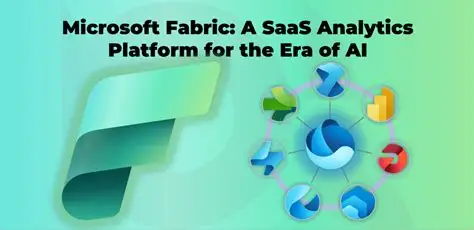
Fabric represents a complete paradigm shift: a unified, SaaS-based intelligence platform that seamlessly combines data engineering, real-time analytics, AI/ML workflows, governance, and business intelligence—powered by OneLake and deeply integrated with Azure AI and Microsoft 365 Copilot.
Instead of stitching together dozens of disparate tools, Microsoft Fabric AI solutions give enterprises one cohesive ecosystem to collect, prepare, model, analyze, govern, automate, and activate intelligence across every department.
TL;DR (Summary Box)
- Microsoft Fabric AI solutions fundamentally transform how enterprises unify data, automate intelligence, and deploy AI at scale.
- Traditional data architectures can’t meet the needs of real-time analytics, generative AI, and AI-driven decisioning.
- Microsoft Fabric’s unified AI fabric—activated by OneLake, Synapse, Power BI, Azure AI, and Purview—provides an end-to-end intelligence platform.
- This shift enables AI-first enterprises to accelerate innovation, reduce operational friction, and derive insights from all data types.
- Techment, as a Microsoft Fabric Partner, equips enterprises with architecture, implementation, governance, and optimization expertise to turn Fabric AI into competitive advantage.
Begin your journey by learning more about our partnership with Microsoft to help you make the right choice for MS Fabric adoption partner.
1. Understanding Microsoft Fabric AI Solutions: The New Foundation of Enterprise Intelligence
Microsoft Fabric is far more than an analytics platform. At its core, it is a unified AI-driven data foundation, designed to help enterprises transition from fragmented information systems to a connected, intelligent, and automated ecosystem.
Microsoft Fabric AI solutions brings together:
- OneLake — a universal, centralized data lake for the entire organization
- Synapse Data Engineering — Spark-based ETL and transformations
- Synapse Data Warehouse — cloud-scale SQL engines
- Real-Time Analytics — for logs, IoT, telemetry, and event-driven intelligence
- Data Factory — modern orchestration and ELT pipelines
- Power BI (Direct Lake) — lightning-fast BI at scale
- Microsoft Purview — unified governance, lineage, and compliance
- Azure AI + OpenAI — embedded AI/ML capabilities, copilots, and automation
Together, Microsoft Fabric AI solutions enable end-to-end AI workflows:
- ingestion
- preparation
- unification
- governance
- modeling
- visualization
- operational activation
—all without moving data between tools.
Fabric’s native integration with Microsoft 365 and Copilot means AI insights can be accessed directly inside Teams, Excel, PowerApps, or business workflows.
Microsoft Fabric AI solutions gives enterprise users something traditional platforms never offered:
AI intelligence available everywhere, not just in dashboards.
Enhance your analytics outcomes and turn fragmented data with our data engineering solutions and MS Fabric capabilities.
2. Why Traditional Enterprise AI Pipelines Break Down
Many enterprises attempt AI modernization but fail due to brittle, siloed architectures that weren’t designed for real-time data, hybrid AI/ML workloads, or governance at enterprise scale.
Here are the biggest blockers:
1. Data Fragmentation
Data lives across dozens of SaaS apps, ERP systems, legacy databases, and cloud platforms—none of which speak the same language.
2. High Latency
Traditional ETL pipelines run on nightly or weekly schedules, making real-time intelligence impossible.
3. Duplicate Data Copies
Multiple BI, analytics, and ML tools require their own datasets, driving up cost and inconsistency.
4. Governance Gaps
Lineage, classification, and access controls often exist in silos—dangerous for regulated industries.
5. Disconnected AI and Data Teams
ML engineers, BI analysts, and data engineers rarely work in the same ecosystem.
6. Infrastructure Limitations
Legacy warehouses cannot handle:
- streaming workloads
- unstructured data
- vector embeddings
- generative AI context windows
7. Manual Model Deployment
AI workflows require switching across environments, increasing risk and reducing speed.
In short:
Traditional pipelines can analyze the past—but they cannot predict, generate, or automate the future.
Microsoft Fabric AI solutions were built to solve precisely these limitations.
Explore the comparative study of Microsoft Vs Power BI to help you choose the right analytics platform.
3. How Microsoft Fabric AI Solutions Work: A Unified Intelligence Architecture
Microsoft Fabric AI is powered by a tightly integrated architecture that consolidates data, governance, analytics, and AI into a single platform.
Here’s how the ecosystem comes together:
3.1 OneLake: The AI-Ready Universal Data Lake
Think of OneLake as the “OneDrive for Data”—a single, logically unified store for all enterprise information, regardless of source or format.
OneLake enables:
- One copy of data, multiple experiences
- Zero-copy sharing
- Delta Lake formats for open analytics
- Cross-domain collaboration
- Automatic indexing and metadata
This eliminates redundant pipelines, reduces cost, and ensures consistent AI inputs.
3.2 Synapse for AI Workloads
Fabric includes Synapse Data Engineering (Spark) and Synapse Data Warehouse, enabling:
- Feature engineering at scale
- Model training preparations
- Historical data storage
- High-speed SQL analytics
- Integration with Azure ML
3.3 Real-Time Intelligence with Event Streams
Enterprises increasingly rely on real-time telemetry:
- IoT sensors
- Supply chain signals
- Web/app clickstreams
- Fraud indicators
- Social listening data
Fabric’s Real-Time Analytics converts these into live dashboards, predictive triggers, and automated ML workflows.
3.4 AI Integration with Azure OpenAI & Azure ML
Fabric seamlessly connects with:
- OpenAI models (GPT, embeddings, generative AI)
- Azure ML pipelines for training, testing, validation
- LLMOps tools for operationalizing AI at scale
- Vector search and semantic reasoning
This turns data into intelligent actions—not just insights.
3.5 Copilot Everywhere
Copilot experiences in:
- Fabric
- Power BI
- Synapse
- Excel
- Teams
- PowerApps
- Dynamics
…allow users to ask natural-language questions, build models, generate reports, or automate workflows.
This democratizes AI across the organization.
3.6 Microsoft Purview for Governance
Purview ensures:
- end-to-end lineage
- classification
- compliance
- security
- RBAC & ABAC controls
- audit-ready governance
All centralized.
See how Microsoft Data Fabric compares against traditional data warehousing across scalability, governance, AI readiness, cost, and decision intelligence.
4. Key Advantages of Microsoft Fabric AI Solutions for Modern Enterprises
Microsoft Fabric AI is not just a technology upgrade; it is a strategic accelerator for enterprises seeking to build intelligence at scale.
Below are the most transformative advantages:
4.1 End-to-End Intelligence in One Platform
Traditional AI toolchains are fragmented, requiring stitching together:
- ingestion
- ETL
- modeling
- warehousing
- BI
- ML lifecycle
- governance
Fabric combines all of these in one unified ecosystem.
The result:
Seamless intelligence with dramatically reduced friction.
4.2 Real-Time AI Decisioning
Fabric’s Real-Time Analytics + Data Activator enables:
- event-driven automation
- anomaly alerts
- threshold-based triggers
- AI-enriched notifications
Use cases:
- fraud detection
- autonomous supply chains
- energy optimization
- predictive maintenance
4.3 AI Democratization Through Copilot
Copilot empowers:
- analysts
- engineers
- business leaders
- citizen developers
…to build analytics or automate workflows using conversational language—not code.
This dramatically increases adoption and reduces backlog on engineering teams.
4.4 Built-In Responsible AI & Security Through Microsoft Fabric AI solutions
Fabric inherits Microsoft’s responsible AI framework and integrates deeply with:
- role-based access
- data masking
- encryption
- sensitivity labels
- compliance certifications
- risk audits
This is critical for industries like healthcare, BFSI, manufacturing, and government.
4.5 Reduced Cost & Operational Complexity With Microsoft Fabric AI solutions
Fabric reduces cost by:
- eliminating redundant data copies
- consolidating 8–10 analytics tools into one
- optimizing compute with capacity-based pricing
- automating pipeline maintenance
4.6 Faster Time-to-Insight With Microsoft Fabric AI solutions
Fabric’s unified stack significantly compresses the time between data arrival and action.
What once took days or weeks can happen in:
- minutes
- seconds
- or even instantly
Begin your modernization roadmap and automate governance across all platforms with our data solutions.
5. Industry Use Cases: How Microsoft Fabric AI Solutions Are Transforming Enterprise Operations
Microsoft Fabric AI solutions are reshaping how enterprises in every sector collect, analyze, and activate intelligence. Because Fabric unifies real-time data, AI, governance, and analytics under one architecture, organizations finally achieve what legacy systems could not: continuous, contextual, AI-driven decision-making at scale.
Below are industry-leading examples illustrating Fabric AI’s transformative potential.
5.1 Healthcare: Intelligent Patient Care & Operational Efficiency
Healthcare generates massive volumes of clinical, imaging, IoT, and administrative data — often siloed across EHRs, laboratories, pharmacy systems, and wearables. Fabric unifies this into a governed, AI-ready environment.
Microsoft Fabric AI solutions Use Case Highlights
- Predictive patient deterioration alerts
- AI-assisted clinical documentation & coding
- Care pathway optimization
- Hospital capacity forecasting
- Personalized treatment recommendations
- Claims fraud detection
By integrating Purview, Azure AI, and OneLake, healthcare organizations can automate compliance, accelerate insights, and increase patient safety.
Explore healthcare intelligence capabilities in Data Cloud Continuum: Value-Based Care Whitepaper.
5.2 Retail & eCommerce: Hyper-Personalization and Demand Intelligence
Retailers rely on real-time signals from POS systems, web analytics, purchases, social media, and supply chain operations. Fabric enables retailers to infer behavior, predict trends, and personalize experiences.
Use Case Highlights
- Real-time inventory optimization
- Personalized product recommendations (AI-driven)
- Footfall analytics & demand forecasting
- Customer lifetime value prediction
- Supply chain anomaly detection
- Dynamic pricing powered by AI
Fabric’s Real-Time Analytics + Copilot empower merchandisers, store managers, and analysts to make decisions instantly.
5.3 BFSI: Fraud Detection, Compliance Automation & AI-Risk Modeling
Banks and insurers must analyze high-frequency transactions, risk indicators, and compliance data while maintaining strict regulatory governance.
Use Case Highlights
- Fraud detection using real-time anomaly detection
- AI-powered risk scoring and predictive underwriting
- Automated regulatory compliance reporting
- Customer behavioral segmentation
- Document intelligence for KYC/AML
Purview ensures traceable lineage and governance across all financial risk models and data domains.
5.4 Manufacturing: Autonomous Operations & Predictive Maintenance
Sensor-based operational data is critical for modern manufacturing. Fabric AI transforms this data into actionable intelligence.
Use Case Highlights
- Predictive maintenance using IoT and telemetry
- Yield optimization using ML-driven anomaly detection
- Autonomous energy and resource optimization
- Supply chain visibility in real-time
- Production line AI-automation
With Fabric’s real-time ingestion and Synapse ML integration, manufacturers reduce downtime and improve throughput.
See how leveraging AI-first data strategies and deep expertise can help unlock sspeed, accuracy in our latest whitepaper.
6. Microsoft Fabric AI vs. Traditional Enterprise AI Architectures
Traditional AI architectures typically require enterprises to stitch together numerous technologies:
- Independent data lakes
- On-prem or cloud warehouses
- Separate AI/ML platforms
- Legacy BI tools
- Patchwork governance tools
- ETL + workflow engines
- Monitoring & MLOps frameworks
This approach introduces operational friction, governance challenges, data duplication, and high latency.
6.1 What Traditional AI Architecture Looks Like
A typical setup involves:
- One platform for data ingestion
- Another for transformations
- A warehouse for analytics
- An ML platform for experimentation
- BI tools for visualization
- Manual governance layer
- Separate CI/CD tooling
It is expensive, slow, and nearly impossible to scale.
6.2 What Microsoft Fabric AI Solutions Provides Instead
Fabric replaces this fragmentation with a single integrated intelligence layer:
- OneLake as the universal storage
- Synapse for preparation & warehousing
- Azure AI for model development
- Power BI for visualization
- Data Activator for real-time triggers
- Purview for governance and compliance
- Copilot for democratized intelligence
Fabric delivers:
- Unified governance (single policy plane)
- Unified compute and storage
- Unified AI pipelines
- Unified user experience
This reduces:
- Data duplication
- Integration effort
- Operational overhead
- Security blind spots
- Model deployment friction
Fabric is not simply an upgrade — it is a next-generation AI operating system for enterprises.
Modernize legacy systems to align with Fabric through our data transformation services.
7. The Enterprise Advantage: How Microsoft Fabric AI Accelerates AI-Driven Business Transformation
Fabric AI solutions don’t just modernize data systems — they fundamentally change how enterprises operate.
Below are the most strategic advantages for enterprise leaders.
7.1 Unified AI Operating Model
Decision-makers no longer wait for IT cycles. Fabric enables:
- Live intelligence
- Embedded AI in workflows
- Self-service data modeling
- Automated insights
- Natural language analytics through Copilot
This moves the organization from reporting to predicting and automating.
7.2 Faster Innovation Cycles
Traditional AI project timelines:
8–20 weeks → Data preparation
4–8 weeks → Feature engineering
4–12 weeks → Model training
2–4 weeks → Deployment
Fabric compresses many of these steps through:
- ready-to-use pipelines
- zero-copy data access
- native integration with Azure ML
- pre-trained models via OpenAI
Innovation cycles decrease by 60–70%.
7.3 Intelligent Automation Across the Enterprise
Data Activator + AI triggers can automate:
- compliance alerts
- logistics forecasting
- customer engagement
- anomaly detection
- fraud workflows
- operational controls
This shifts organizations from manual decision-making to intelligent, automated operations.
7.4 Cost Efficiency & Sustainable Scaling
Fabric optimizes costs through:
- OneLake (single copy of data)
- pay-as-you-go compute
- capacity-based workloads
- reduced tool sprawl
- automated pipeline optimization
Organizations typically realize 30–40% cost reduction compared to traditional architectures.
7.5 Governance Built for AI
With Purview:
- lineage is automatic
- classification is continuous
- access control is unified
- compliance is streamlined
- sensitive data is protected
This is essential for regulated sectors adopting generative AI.
See how your enterprise can develop self-service capabilities, and integrate augmented analytics/AI modules in our solution offerings.
8. Building with Fabric AI: The Enterprise Implementation Roadmap
A successful Microsoft Fabric AI adoption requires a structured, multi-phase approach.
Here is the end-to-end blueprint we recommend for enterprise leaders:
Step 1 — Visioning & Readiness Assessment
Techment helps enterprises articulate:
- business outcomes
- data maturity
- AI adoption readiness
- model governance policies
- architecture constraints
This stage anchors your future intelligence strategy.
Step 2 — Architecture & Platform Blueprint
We define:
- OneLake zoning
- ingestion and ELT pipelines
- security & access models
- governance and lineage patterns
- real-time analytics architecture
- model serving flows
- CI/CD and DevOps practices
Step 3 — Foundation Build
Includes:
- infrastructure setup
- Fabric workspace design
- Data Factory orchestration
- Synapse pipelines
- Power BI semantic models
- Purview policy implementation
Step 4 — AI + Advanced Analytics Enablement
Here, we operationalize:
- Azure ML pipelines
- monitoring & MLOps
- LLM integrations via Azure OpenAI
- business domain AI models
- predictive & generative AI use cases
Step 5 — User Enablement & Adoption
We train:
- data teams
- business analysts
- domain leaders
- decision-makers
…to leverage Copilot, Power BI, and real-time intelligence.
Step 6 — Run, Optimize & Scale
Techment manages:
- continuous governance
- cost optimization
- performance tuning
- domain expansion
- enterprise AI scaling
Leanr more about Microsoft Architecture to understand how you can modernize your platform to become AI-ready.
9. Why Techment Is Your Ideal Partner for Microsoft Fabric AI Transformation
As a Microsoft Fabric Partner, Techment empowers enterprises to build AI-first ecosystems using Microsoft Fabric’s unified data and AI foundation.
What sets Techment apart?
9.1 Deep Expertise Across Fabric’s AI Stack
Our engineers and architects specialize in:
- OneLake lakehouse architecture
- data engineering & modeling
- real-time analytics
- Azure ML & MLOps
- Azure OpenAI & generative AI
- Power BI Direct Lake
- Purview governance
We deploy every component cohesively — not in silos.
9.2 Fabric-Aligned Accelerators
Techment brings pre-built frameworks for:
- ingestion
- lakehouse deployment
- governance templates
- real-time workloads
- semantic model modernization
- AI operationalization
This dramatically reduces time-to-value.
9.3 AI-First Modernization Strategy
We help you shift from traditional analytics to intelligence-driven operations with:
- predictive modeling
- anomaly detection
- generative AI copilots
- domain-specific AI use cases
9.4 End-to-End Partnership
From strategy → implementation → adoption → optimization, Techment provides:
- architecture design
- migration
- governance
- MLOps
- real-time analytics
- ongoing optimization
9.5 Industry-Specific Expertise
Our solutions are proven across:
- healthcare
- BFSI
- retail
- manufacturing
- logistics
- energy
- EdTech
9.6 Co-Creation With Microsoft
As a Microsoft Partner, we:
- access early insights into Fabric updates
- align with Microsoft engineering best practices
- collaborate on enterprise deployments
- adopt Microsoft’s responsible AI approach
Ready to build AI-first intelligence? Schedule your Microsoft Fabric AI Consultation.
10. Conclusion: The Future of Enterprise Intelligence Is Fabric-Native
AI is rapidly reshaping how enterprises operate. But AI is only as powerful as the data foundation feeding it.
Microsoft Fabric AI solutions provide:
- unified data
- automated governance
- real-time decisioning
- enterprise AI integration
- democratized intelligence
- seamless activation
Organizations that adopt Fabric will accelerate innovation, improve operational resilience, and unlock new business value.
Those who delay risk falling permanently behind.
Now is the moment to build an AI-first enterprise — and Techment is your strategic partner for turning vision into reality.
Transform legacy architectures to get the most out of your enterprise data. Find out more about it in our enterprise platform solution offerings.
FAQ Section
1. What are Microsoft Fabric AI solutions?
They are unified, end-to-end analytics and AI capabilities built into Microsoft Fabric, enabling data engineering, warehousing, real-time analytics, AI/ML, and BI in one SaaS platform.
2. How does Fabric support generative AI?
Through Azure OpenAI integration, Fabric enables contextual AI, LLM-driven insights, automated workflows, and natural language analytics.
3. Is Fabric suitable for regulated industries?
Yes — Purview provides unified governance, lineage, sensitivity labeling, encryption, and compliance-ready auditing.
4. How does Fabric differ from traditional AI architectures?
Fabric eliminates fragmentation by unifying data, AI, and governance into one ecosystem — reducing complexity and accelerating innovation.
5. Why partner with Techment?
Techment is a Microsoft Fabric Partner with deep expertise in architecture, AI engineering, MLOps, governance, and enterprise modernization.
Related Reads