Introduction: Why Modern Enterprises Are Rebuilding on Microsoft Azure
Enterprises today are facing an unprecedented convergence of forces: exponential data growth, AI adoption at scale, global digitization of supply chains, cyber threats, and increasing pressure to deliver real-time customer experiences. IDC forecasts that by 2026, 65% of global GDP will be digital, with enterprises running mission-critical applications in the cloud or at the edge.
Yet despite a decade of cloud adoption, many organizations still struggle with:
- Fragmented architectures
- Underutilized data assets
- Security blind spots
- Technical debt from legacy systems
- Slow modernization cycles
- Rising infrastructure complexity
Microsoft Azure for enterprises has emerged as the backbone for addressing these challenges—not because it is merely a cloud platform, but because it provides a cohesive, enterprise-grade ecosystem designed to integrate infrastructure, data, security, AI, and governance under a unified architectural vision.
Azure is not just competing in the cloud market; it’s reshaping how enterprises build future-proof digital foundations:
- Over 95% of Fortune 500 companies run on Azure
- Azure leads in enterprise hybrid cloud with Azure Arc
- Azure OpenAI and Azure AI Studio provide the most integrated enterprise AI environment
- Azure has the largest compliance portfolio of any cloud provider
For CTOs, CIOs, and Chief Data Officers, Azure represents not only a technology decision but a strategic commitment to long-term resilience, innovation, and intelligent operations.
Read what Microsoft Fabric is, how it works, why organizations are rapidly adopting it, and what leaders must know in our latest blog – What Is Microsoft Fabric? A Comprehensive Overview for Modern Data Leaders.
TL;DR (Executive Summary)
- Microsoft Azure for enterprises has become the foundation of cloud modernization due to its unmatched breadth of services, enterprise-grade governance, global infrastructure, and deep AI integration.
- As cloud demand accelerates, enterprises face pressures around multi-cloud complexity, AI readiness, data governance, modernization pace, and cost efficiency— Microsoft Azure provides a unified model for solving these challenges.
- Microsoft Azure’s strength lies in a combination of cloud-native architecture, flexible hybrid capabilities, mission-critical resilience, and an ecosystem tightly integrated with Microsoft 365, Power Platform, Dynamics, and Fabric.
- For CTOs and CIOs, Microsoft Azure offers the most complete cloud environment for building AI-first, secure-by-design, enterprise-scale digital ecosystems.
- A strategic partner like Techment accelerates Microsoft Azure value realization through modernization frameworks, governance-as-code, workload migration, AI/ML operationalization, and end-to-end transformation services.
Discover more in our partnership page and understand the strategic benefits we bring as a solutions partner.
Traditional Cloud and Microsoft Infrastructure Approaches: Where Enterprises Hit Limits
Many organizations still operate in hybrid environments with aging data centers, VM-heavy architectures, siloed business applications, and fragmented data systems. While these models provide familiarity, they are increasingly disruptive to enterprise growth.
Key Limitations of Legacy Cloud and On-Prem Strategies
- High cost structures tied to hardware refresh cycles
- Inability to scale AI workloads or real-time analytics
- Siloed data architectures producing inconsistent insights
- Security risk due to patchwork governance models
- Slow application modernization tied to monolithic codebases
- Limited automation capabilities
The shift toward AI-first operating models requires:
- unified data estates
- GPU-scalable platforms
- modern application architectures
- enterprise governance frameworks
- real-time connectivity across cloud, edge, and on-prem
Microsoft Azure is uniquely positioned to deliver this transformation because it bridges cloud, hybrid, and edge through a seamless architecture aligned with enterprise realities.
Explore how unified analytics enhances decisions and why Microsoft solutions partner can accelerate your market growth in our latest blog on Microsoft Data Fabric vs Traditional Data Warehousing: What Leaders Need to Know
Microsoft Azure sits at the center of this enterprise shift, delivering a powerful foundation for building, deploying, and scaling next-generation conversational systems. With capabilities spanning Azure Bot Service to AI-driven Language and Speech services, Azure enables organizations to evolve from basic, reactive chatbots to proactive, intelligent digital assistants that enhance customer and employee experiences. Azure’s leadership stems not from isolated features but from an interconnected ecosystem of capabilities that support every layer of enterprise technology.
What Makes Microsoft Azure for Enterprises Uniquely Powerful?
Below is a breakdown of the dimensions that differentiate Azure from traditional infrastructure and competing cloud platforms.
1. Comprehensive Cloud Platform: Infrastructure to AI in One Stack
Azure provides the broadest integrated platform for infrastructure, data, AI, and applications.
Azure Cloud Pillars
- Azure Compute (VMs, AKS, Functions, App Service)
- Azure Storage & Databases (SQL MI, Cosmos DB, PostgreSQL)
- Azure Networking (ExpressRoute, load balancers, VNets)
- Azure Data Services (Synapse, Data Factory, Databricks, Fabric)
- Azure Security (Defender, Sentinel, Key Vault)
- Azure AI Services (OpenAI, Cognitive Services, Azure ML)
This offers enterprises a single cohesive environment rather than a patchwork of tools across vendors.
Explore frameworks for architecture, implementation, and scaling conversational AI securely and efficiently in our latest blog on Conversational AI on Microsoft Azure: Building Intelligent Enterprise Assistants.
2. Enterprise-Grade Security and Governance
Security is Azure’s most significant competitive advantage.
Why Azure security stands out:
- Zero Trust architecture built into all layers
- Microsoft’s $20B investment in cybersecurity (2021–2026)
- Global threat intelligence from 65 trillion signals/day
- Integrated tools: Defender, Sentinel, Purview, Entra ID
- Extensive compliance certifications (more than AWS or GCP)
Microsoft Purview makes governance unified:
- Data lineage
- Classification
- Policy enforcement
- Access governance
- Regulatory compliance management
For enterprises operating in regulated industries, Azure delivers governance at cloud scale unlike any other platform.
Explore how enterprise reliability improves with governance-forward architecture in our data governance solution offerings.
3. Azure Hybrid & Multicloud Mastery: Arc, Stack, Edge
Unlike competitors, Azure was designed for hybrid enterprises.
Azure Arc
Extends Azure services across:
- On-prem data centers
- Multicloud environments
- Edge locations
Arc makes Kubernetes, SQL MI, security policies, and governance consistent everywhere.
Azure Stack
Brings Azure compute into onsite or edge environments where:
- Data sovereignty
- Low-latency processing
- Offline scenarios
are required.
Azure Edge
Supports edge AI, IoT, robotics, and connected products.
This capability is why manufacturing, healthcare, BFSI, and public sector organizations prefer Azure.
We help enterprises build governance-by-design foundations, know more about our data services here.
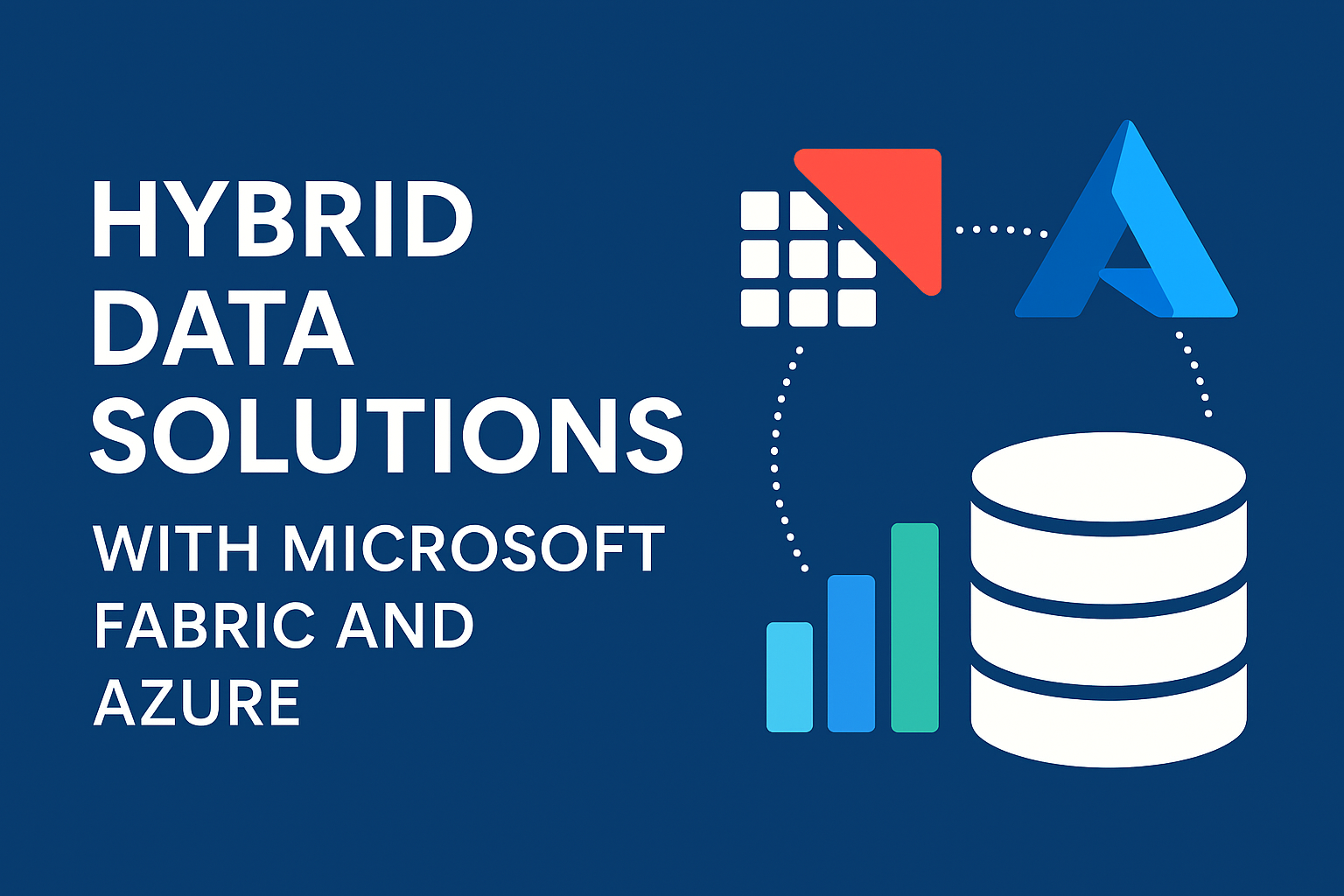
4. Integrated Data Estate: Azure Fabric, Synapse & OneLake
Microsoft is the only cloud provider offering a fully unified data platform:
- OneLake unified storage
- Synapse analytics
- Power BI (Direct Lake)
- Real-time analytics
- Data engineering
- Data governance via Purview
- AI insights with Copilot
- Pipelines with Data Factory
For enterprises building AI-first data estates, Azure offers the most complete ecosystem end-to-end.
Read more about Microsoft Fabric architecture, evaluate its advantages, compare it with traditional systems to leverage it to the fullest.
5. Azure AI Superiority: OpenAI, Copilot, and Enterprise AI
Azure is the exclusive enterprise partner for OpenAI and hosts the majority of global LLM workloads.
Why Azure is leading the AI revolution:
- Azure OpenAI gives enterprises secure access to GPT-4, GPT-4o, and other top-tier models
- Azure AI Studio supports model orchestration, evaluation, fine-tuning
- AI Safety & Responsible AI frameworks integrated into governance
- Copilot integrated across Microsoft 365, Dynamics, Fabric, and Power Platform
For enterprises building AI copilots, agentic workflows, and intelligent applications, Azure is the safest and most scalable platform.
Learn how we can help with intelligent automation, human-like interactions, and scalable business intelligence though our AI-powered solutions.
6. Industry-Specific Clouds for Accelerated Outcomes
Azure offers packaged cloud capabilities for industries:
- Healthcare Cloud
- Financial Services Cloud
- Manufacturing Cloud
- Retail Cloud
- Sustainability Cloud
These include templates, data models, workflows, connectors, and compliance guards.
Azure reduces time-to-value while ensuring compliance in complex industries.
Learn how Microsoft differs from other platforms, read Microsoft Fabric vs Power BI: A Strategic, Future-Ready Analytics Comparison
7. Mission-Critical Performance & Global Reach
Azure operates across:
- 60+ global regions
- 200+ datacenters
- 175+ edge PoPs
Enterprises benefit from:
- High availability
- Multi-zone redundancy
- Global traffic management
- Ultra-low latency workloads
Azure delivers 99.99% availability options and long-term SLAs that enterprises depend on.
Learn more about implementing unified data framework in Implementing Data Governance Frameworks That Work: A Strategic Playbook for Enterprise Leaders
8. Cost Efficiency Through Intelligent Cloud Economics
Azure FinOps tools enable:
- Cost forecasting
- Right-sizing
- Reserved instances
- Spend optimization analytics
- Autoscaling across workloads
- Hybrid benefits for Windows & SQL Server licensing
- Azure Savings Plans
Azure often offers lower total cost of ownership (TCO) for enterprise workloads compared to AWS or GCP, especially when integrating Microsoft 365 and Windows Server estates.
Read how we help you leverage Gen AI capabilities though RAG and AI agents to unlock maximum business value.
Microsoft Azure vs AWS vs Google Cloud: Executive Comparison
Azure vs AWS
- Better hybrid capabilities
- Deep enterprise integration
- Stronger identity governance (Entra ID)
- AI leadership via OpenAI partnership
Azure vs Google Cloud
- Stronger enterprise adoption
- Broader infrastructure footprint
- More mature compliance
- Superior enterprise app ecosystem
Conclusion:
Azure is the strongest choice for long-term enterprise modernization.
For more detailed understanding on how Microsoft differs from other platforms, read our latest blog on Microsoft Fabric vs Power BI: A Strategic, Future-Ready Analytics Comparison.
The Competitive Advantage of Azure for AI-Driven Enterprises
As organizations transition toward AI-first operating models, the strategic advantages of Microsoft Azure for enterprises become even more pronounced. Azure not only provides the infrastructure required to run modern applications but also delivers a fully integrated ecosystem that unifies data, governance, AI, automation, and hybrid operations. This cohesive foundation allows enterprises to build intelligent systems, accelerate innovation, and maintain operational resilience at global scale.
Enterprises adopting Microsoft Azure for enterprises experience transformational shifts in how they design, deliver, and optimize digital services. Below are the five core competitive advantages Azure delivers to AI-driven organizations—advantages that are difficult for any other cloud provider to match.
1. Unified Data + AI Architecture
Microsoft Azure for enterprises eliminates traditional fragmentation by consolidating data, analytics, and AI workloads into a single, interoperable ecosystem. Through services such as Microsoft Fabric, Synapse Analytics, Azure ML, Azure OpenAI, and OneLake, enterprises gain the ability to:
- ingest data from any system or format
- maintain governed, high-quality datasets at scale
- run advanced analytics and AI on unified data
- operationalize insights across business units
This unification ensures that every component—from ingestion to modeling to visualization—works together seamlessly, reducing complexity and enabling real-time intelligence.
Instead of maintaining siloed tools or disjointed data systems, enterprises can operate from a single source of truth, accelerating decision-making, improving accuracy, and enabling AI-driven automation across the organization.
2. Faster Innovation Cycles Through Embedded AI & Automation
The combination of Azure OpenAI, Azure AI Studio, Azure ML, and Microsoft Copilot gives enterprises a turbocharged innovation engine. By integrating AI directly into the underlying cloud platform, Microsoft Azure for enterprises enables teams to:
- prototype new ideas rapidly
- automate repetitive workflows
- build copilots and intelligent agents
- accelerate application development
- shorten testing and deployment cycles
Azure’s deep integration of generative AI, model orchestration, and cognitive capabilities results in dramatically shorter release timelines—often reducing development cycles from months to weeks.
Furthermore, Copilot across the Microsoft ecosystem (Power Platform, Dynamics, GitHub, Fabric, Security Center) empowers technical and business users alike to innovate without friction. This democratization of AI drastically increases organizational productivity and unlocks continuous improvement loops.
3. Stronger Compliance & Security for AI-Driven Workloads
Security becomes exponentially more important when enterprises introduce generative AI, LLMs, and automated decision-making. This is where Microsoft Azure for enterprises excels.
Key advantages include:
- Zero Trust by design across the platform
- 65 trillion daily threat signals feeding Microsoft’s threat intelligence
- Integrated protection via Defender, Sentinel, Entra ID, Purview
- Automated compliance enforcement across cloud, edge, and on-prem
Azure’s security architecture is deeply embedded—not bolted on—ensuring that AI workloads are governed, encrypted, monitored, and compliant with global regulatory standards.
Whether an enterprise operates in BFSI, healthcare, manufacturing, or government, Azure provides the compliance frameworks necessary to deploy safe, compliant, and trusted AI systems.
This level of built-in security is unmatched, making Microsoft Azure for enterprises the platform of choice for mission-critical, AI-driven operations.
4. Consistency Across Cloud, Edge & On-Prem with Arc + Stack
Enterprises rarely operate in a single cloud. Applications run across data centers, edge devices, branch locations, and multiple public clouds. Managing this landscape is a challenge—unless the environment is powered by Microsoft Azure for enterprises.
With Azure Arc, enterprises gain:
- unified governance of any server, VM, Kubernetes cluster
- consistent policy enforcement across clouds
- universal identity and access management
- extension of Azure services to any environment
With Azure Stack, organizations can:
- deploy Azure services on-prem
- support low-latency and offline environments
- ensure data sovereignty
- bring cloud-native operations to the edge
Together, Arc + Stack create a seamless operational continuum from cloud to edge to on-prem, solving one of the biggest architectural challenges facing enterprises today.
This consistency is critical for AI workloads that require:
- rapid model deployment
- consistent inferencing environments
- sovereign data boundaries
- low-latency processing
Azure is the only cloud that provides this unified hybrid fabric at global enterprise scale.
5. Operational Resilience with Predictability, Observability & Scale
AI-driven enterprises need an operational backbone that is resilient, predictive, and scalable. Microsoft Azure for enterprises provides this through:
- distributed cloud architecture across 60+ regions
- multi-zone and multi-region redundancy
- automated failover and self-healing infrastructure
- advanced observability with Azure Monitor, Log Analytics, Application Insights
- proactive security and anomaly detection
- autoscaling optimized for AI and GPU workloads
This ensures that AI applications and mission-critical services maintain uptime, performance, and security—even during unexpected traffic surges or system failures.
Operational resilience is not just a technical requirement—it is a competitive differentiator. With Azure, enterprises gain the stability, predictability, and performance needed to deploy AI at global scale without compromising on reliability.
Find our actionable guidance for leaders to modernize their data estate in our latest blog.
Why Azure Is the Backbone of Enterprise Cloud Architecture
Summarizing the core reasons Azure remains the backbone:
- Breadth + depth of services
- Unified ecosystem from infrastructure to AI
- Enterprise governance excellence
- Hybrid leadership unmatched in the industry
- Intelligent, AI-ready cloud services
- Global scalability and reliability
- Deep integration across Microsoft technology stack
For enterprise leaders, Azure is not merely a cloud platform—it is a strategic capability.
Discover how we integrated Azure services for efficient data ingestion, transformation, and reporting, ensuring scalability and reliability through our case study.
Partnering with Techment for Your Azure Transformation Journey
Techment is a Certified Microsoft Partner enabling enterprises to accelerate modernization, AI adoption, and data transformation using Azure.
We bring:
- Azure migration frameworks
- Cloud-native modernization strategies
- Governance-as-code implementations
- Purview-based governance
- Data engineering + Fabric implementations
- Azure AI operationalization (OpenAI, ML, Document Intelligence)
- Power Platform automation
- Cloud FinOps advisory
- Hybrid cloud architecture (Arc, Stack)
- Landing Zone design & implementation
Read our Microsoft Data and AI Partner blog explores the strategic value a Microsoft Data and AI Partner brings to enterprises
Techment’s Proven Azure Transformation Model
1. Discovery & Strategy
Cloud readiness assessment, business alignment, AI maturity mapping.
2. Roadmap & Architecture
Blueprints for cloud landing zones, data estate modernization, security baselines, and AI integration.
3. Migration & Modernization
Application modernization (AKS, App Service), data migration to Azure SQL/Synapse, pipeline modernization.
4. AI & Analytics Enablement
Fabric, Synapse, Power BI, Azure ML, OpenAI integration.
5. Run, Optimize & Scale
Cost governance, observability, continuous improvement.
Schedule your strategy consultation here
Conclusion: The Future Is Intelligent, Connected, and Powered by Azure
As enterprises shift toward AI-first operations, real-time digital ecosystems, and hyper-personalized customer experiences, traditional architectures simply cannot keep up.
Microsoft Azure for enterprises stands uniquely equipped to:
- unify global operations
- ensure security at scale
- accelerate innovation
- empower employees with AI
- deliver operational resilience
- scale data-driven applications
- support industry-specific compliance
- reduce total cost of ownership
Leaders building the next decade of digital ecosystems are choosing Azure as their core cloud backbone—not because it is simply powerful, but because it is purpose-built for the enterprise.
Transform your enterprise with a Microsoft Azure service adoption partner trusted by industry leaders. Contact us.
FAQs
1. Why do enterprises choose Microsoft Azure over other cloud platforms?
Because Azure offers the most comprehensive enterprise ecosystem integrating compute, data, AI, governance, productivity tools, and hybrid capabilities.
2. Is Azure more secure for enterprise workloads?
Yes. Azure is backed by Microsoft’s massive cybersecurity investments, Zero Trust architecture, and the industry’s largest compliance portfolio.
3. How does Azure support AI initiatives?
Azure provides Azure OpenAI, Azure ML, Fabric, and AI Studio—allowing enterprises to build AI models, copilots, and intelligent apps securely.
4. What workloads are ideal for Azure?
Modern applications, mission-critical workloads, large-scale analytics, hybrid environments, AI/ML pipelines, and data modernization.
5. Why work with an Azure partner like Techment?
Techment accelerates cloud adoption with architectural expertise, modernization frameworks, governance automation, and industry-specific best practices.