Blog

RAG in 2026: How Retrieval-Augmented Generation Works for Enterprise AI

RAG in 2026 in Enterprise AI scenario has shifted from experimentation to a production-critical architecture, redefining how organizations deploy retrieval augmented generation in 2026 to ensure accuracy, compliance, and real-time intelligence. Enterprise AI leaders — CTOs, data architects, and data executives — face mounting pressure to deliver AI systems that are not only powerful but deeply trustworthy. As large language model (LLM) adoption accelerates, so does a fundamental limitation: most models operate on static training data, frozen in time. They cannot naturally access the latest regulatory updates, proprietary internal documents, or fast-changing enterprise knowledge bases.

This has created widespread concern around hallucinations, outdated outputs, and the inability to cite authoritative sources — all of which increase risk, reduce trust, and limit enterprise deployment.

This is where RAG in 2026 (Retrieval-Augmented Generation models) become essential.

Instead of relying solely on what an LLM “remembers,” a RAG system retrieves the most relevant, up-to-date documents from trusted data sources — such as enterprise knowledge repositories, vector databases, and regulatory archives — and then uses them to augment the context provided to the generative model.

The result: accurate, contextual, and explainable AI outputs.

Let’s begin.

Strengthen your AI data foundation with our guide on Data Management for Enterprises: Roadmap

TL;DR — Executive Summary

  • RAG in 2026 combine retrieval systems with generative AI to deliver accurate, up-to-date, and source-grounded answers.
  • Enterprises increasingly adopt RAG in 2026 to improve factual reliability, leverage proprietary data, and reduce hallucinations.
  • RAG in 2026 is more scalable and cost-efficient than frequent fine-tuning — especially when knowledge changes regularly.
  • RAG in 2026 blog below delivers a clear, practical, and strategic understanding of RAG architecture, benefits, risks, and enterprise adoption best practices.
  • Techment provides end-to-end RAG in 2026 consulting, implementation, and optimization for data-heavy organizations.

What Is RAG in 2026? Understanding Retrieval-Augmented Generation Models

Retrieval-Augmented Generation (RAG) in 2026 is an AI architecture that enhances large language models by pairing them with an external retrieval system. Instead of generating answers solely from internal parameters, the model actively retrieves relevant supporting documents — such as PDFs, enterprise knowledge bases, or structured data — and uses them to produce grounded, accurate responses.

Simple Definition

A RAG in 2026 model = Retriever + Generator

  • The retriever searches a document database or vector store for the most relevant information.
  • The generator (an LLM) uses that retrieved context to craft an accurate answer.

This enables RAG in 2026 systems to overcome the limitations of traditional LLMs trained on static datasets. RAG ensures outputs stay grounded in verifiable information while significantly reducing hallucination rates.

Why RAG in 2026 Is Critical for Enterprise AI Strategy

Limitations of Traditional LLMs

  • Cannot access real-time or proprietary data
  • Tend to hallucinate facts, especially in niche domains
  • Are expensive to retrain whenever data changes

How RAG in 2026 Solves These Issues

  • Uses dynamic retrieval, enabling instant knowledge updates
  • Enables domain-specific reasoning from internal data
  • Reduces hallucinations through factual grounding
  • Avoids costly retraining cycles

Sources consistently highlight that RAG aligns perfectly with 2026 enterprise priorities: accuracy, explainability, compliance, and cost efficiency.y with 2026 enterprise priorities: accuracy, explainability, compliance, and cost efficiency. 

Strategic Insight for Data Leaders For RAG in 2026

RAG is not just an AI technique — it is a systems architecture choice that reshapes how enterprises operationalize knowledge. For CTOs and data architects, the shift from model-centric to data-centric AI is one of the defining transformations of the decade.

Read more on why enterprises must adopt a 2025 AI Data Quality Framework spanning acquisition, preprocessing, feature engineering, governance, and continuous monitoring.

How RAG Works in 2026: Architecture, Pipeline, and LLM Integration

For data leaders asking how does RAG work in LLMs, the answer lies in a tightly coupled retrieval-generation pipeline that connects large language models with enterprise knowledge sources in real time

How RAG in 2026 Works: Architecture & Pipeline in 2026  

RModern RAG systems consist of four tightly integrated components working together to deliver accurate, context-aware outputs.

Indexing & Embeddings in RAG 2026: Preparing Enterprise Knowledge Bases

In modern RAG models, vector databases are the backbone that enables scalable semantic search and precise retrieval across enterprise datasets. The first step is creating embeddings — numerical vector representations of text — using models such as BERT, OpenAI embeddings, or domain-specific embedding models. These vectors are stored in a vector database (e.g., Pinecone, Milvus, Weaviate) optimized for high-speed similarity search.

This step:

  • Transforms raw documents into searchable vectors
  • Enables deep semantic search
  • Scales retrieval across millions of documents

Retrieval Layer in RAG 2026: Semantic, Keyword, and Hybrid Search

When a user submits a query, the system retrieves relevant documents using:

  • Semantic search (embedding similarity)
  • Keyword search (BM25, Elasticsearch)
  • Hybrid search (widely adopted in 2025–26)

Advanced retrieval stacks now include cross-encoders, multi-stage retrieval, and contextual filtering for higher precision.

Context Augmentation in RAG 2026: Grounding LLM Responses

Selected documents are appended to the prompt as grounding context, providing the LLM with a factual basis for generation.

Generation in RAG 2026: How LLMs Produce Source-Grounded Outputs

The LLM synthesizes:

  • Retrieved documents
  • Its internal knowledge
  • The user query

The result is transparent, source-backed responses, a core requirement for enterprise trust.

Explore next steps with How to Assess Data Quality Maturity: Your Enterprise Roadmap   

RAG in 2026 vs Fine-Tuning vs Prompt Engineering: What Scales for Enterprises

Technique When It Works Best Limitations 
RAG Dynamic knowledge, proprietary data, accuracy-critical tasks Requires quality retrieval; infrastructure-heavy 
Fine-Tuning Stable, domain-specific tasks where knowledge doesn’t change often Expensive, static, time-consuming 
Prompt Engineering Light use cases, small prototypes, creative tasks Limited depth, lacks factual grounding 

Sources like Microsoft Learn reinforce that RAG is more flexible, scalable, and cost-efficient than constant fine-tuning — especially in rapidly changing domains. 

Explore scalable architectures in AI-Powered Automation: The Competitive Edge in Data Quality Management   

Key Benefits of RAG in 2026 for Enterprise AI Systems

Improved Accuracy & Reduced Hallucinations

  • Source-backed outputs
  • Higher reliability for regulated industries
  • Audit-ready traceability

Always Up-to-Date Knowledge

  • Update documents → update AI knowledge
  • No retraining
  • No downtime

Proprietary & Domain-Specific Intelligence

  • Internal documents
  • SOPs and policies
  • Compliance archives
  • Customer interactions

Cost & Scalability Advantages

  • Lower GPU costs
  • Faster deployment
  • Easier maintenance

Read more on how Microsoft Fabric AI solutions fundamentally transform how enterprises unify data, automate intelligence, and deploy AI at scale in our blog.      

High-Impact Use Cases of RAG in 2026 Across Enterprises

RAG models excel in high-value enterprise scenarios that require accuracy, context, and up-to-date knowledge. 

Below are the most impactful use cases for data leaders and AI architects. 

Enterprise Knowledge Management & Internal Search 

RAG empowers employees to query vast troves of internal documents and receive precise, reference-backed answers. 

Applications: 

  • QA systems for internal SOPs 
  • Search across Confluence, SharePoint, Jira 
  • Knowledge bots for engineering & support 
  • Onboarding assistants 
  • Contextual search for data catalogs 

Studies note that knowledge-intensive industries have seen the fastest adoption. 

Customer Support & Virtual Assistants 

RAG-powered assistants improve resolution accuracy by retrieving the latest product manuals, ticket histories, and troubleshooting guides. 

Benefits: 

  • Faster customer response 
  • Reduced agent burden 
  • Consistent answers 
  • Integration into CRM workflows 

Research reports identify customer support as one of the top ROI-driving RAG use cases. 

Legal, Compliance & Regulatory Intelligence 

RAG enables precise retrieval across thousands of pages of regulatory text, ensuring outputs cite the correct clauses and versions. 

Use cases: 

  • Compliance QA 
  • Regulation comparison 
  • Policy summarization 
  • Contract analysis 

Business Intelligence & Analytics 

RAG can turn structured and semi-structured data into narrative insights. 

Examples: 

  • Executive reports 
  • KPI explanations 
  • Trend analysis 
  • Analytical summaries 

The New Data Analyst: Transforming BI in the Age of AI” highlights how analysts shift from generic prompting to embedding models within BI pipelines, emphasizing data + context + generative output 

Research, Summarization & Content Generation 

RAG improves content accuracy by grounding outputs in real, recent documents. 

Applications: 

  • Research assistance 
  • Summaries of long documents 
  • Technical documentation 
  • Product requirement drafts 

Sources emphasize that RAG is essential for high-stakes research workflows. 

Unpack the massive shift organizations are experiencing as AI moves from experimentation to everyday operation in our latest whitepaper.

Challenges and Risks of Implementing RAG in 2026

While RAG is powerful, it is not a silver bullet. CTOs and data architects must be aware of its challenges to ensure secure, trusted, and effective deployment. 

RAG Reduces but Does Not Eliminate Hallucinations 

While retrieved documents provide factual grounding, LLMs may still: 

  • Misinterpret context 
  • Miscombine facts 
  • Over-generalize conclusions 

As experts note, fact quality still depends heavily on retrieval quality and prompt structuring. 

Retrieval Quality Determines Output Quality 

Your RAG system is only as good as what it can retrieve. 

Challenges include: 

  • Poorly structured document pools 
  • Outdated content 
  • Noisy or redundant data 
  • Incorrect embeddings 
  • Vector drift over time 

Sources stress the importance of high-quality indexing and constant dataset hygiene. 

Data Governance, Privacy & Compliance Risks 

Enterprises must ensure safeguards around: 

  • PII redaction 
  • Access controls 
  • Secure vector databases 
  • SOC2/ISO-compliant retrieval systems 
  • Permissioned retrieval by user role 

Implementation Complexity 

Building RAG at enterprise scale requires: 

  • Embedding pipelines 
  • Vector database orchestration 
  • Re-ranking models 
  • Chunking & document splitting strategies 
  • Evaluation pipelines 

Without expertise, performance can degrade quickly. 

Trade-Offs vs Fine-Tuning & Other Methods 

Not all tasks need RAG; in some cases, fine-tuning or prompt engineering may be better. 

Examples: 

  • Tasks requiring stylistic consistency 
  • Static knowledge use cases 
  • Highly structured classification tasks 

Explore how RAG models and augmented analytics work together in enterprise Augmented Analytics: Using AI to Automate Insights in Dashboards 

What’s New in RAG in 2026: Trends, Innovations, and Future Directions

RAG has evolved dramatically between 2024 and 2026. What once began as a relatively simple retriever–generator pipeline has now matured into a sophisticated enterprise intelligence architecture with multimodal capabilities, hybrid retrieval engines, and advanced filtering layers. 

Here are the most influential trends shaping RAG in 2025–26. 

Hybrid Retrieval: The New Enterprise Standard 

Traditional semantic search alone is no longer enough. Leading research and enterprise implementations now use hybrid retrieval — combining: 

  • BM25 keyword matching 
  • Dense semantic vector search 
  • Metadata filtering 
  • Context-aware re-ranking 

As highlighted in Medium and Signity Solutions, hybrid retrieval consistently outperforms single-method pipelines for accuracy, especially in noisy enterprise datasets. 

Why it matters: 

  • Improves precision for niche queries 
  • Reduces irrelevant document retrieval 
  • Handles both structured and semi-structured data 
  • Enables better traceability for regulated industries 

Multimodal RAG: Beyond Text 

In 2026, enterprises increasingly store knowledge in formats beyond plain text: 

  • PDFs with images 
  • Scanned documents 
  • Product diagrams 
  • Dashboards and BI visualizations 
  • Multimedia logs 
  • Videos of expert demonstrations 

Multimodal RAG integrates image, audio, tabular, and video embeddings to create more holistic reasoning. 

For example: 
A maintenance engineer could ask, “Show me the failure pattern for turbine blade anomalies over the past year and explain the root cause.” 
The system retrieves: 

  • Sensor logs 
  • Images 
  • Technical documents 
  • Past troubleshooting videos 

This evolution is backed by advances referenced in Medium and Signity Solutions

Smarter Retrievers & Reranking Models 

Retrievers now incorporate transformer-based cross-encoders, late interaction models, and deep fusion methods. These enhancements significantly improve precision, as noted by Orq.ai

Capabilities include: 

  • Context-aware ranking 
  • Query reformulation 
  • Adaptive chunking 
  • Continuous index refresh 
  • Entity-aware retrieval for domain-specific queries 

Enterprise-Grade RAG Platforms 

Major leaps in enterprise infrastructure — highlighted by Microsoft Learn — include: 

  • Role-based access-controlled retrieval 
  • Integrated vector DBs + enterprise search 
  • Audit logs for every retrieval event 
  • Built-in PII masking 
  • SOC2, HIPAA, and GDPR-compliant RAG pipelines 
  • Air-gapped RAG deployments for sensitive data 

RAG has officially moved from experimentation to production-grade enterprise architecture. 

Growing Cross-Industry Adoption 

Industries driving RAG adoption in 2026 include: 

  • Healthcare (clinical QA, regulatory compliance) 
  • Finance (policy search, risk modeling, regulatory analysis) 
  • Legal (case law retrieval, contract analysis) 
  • Manufacturing (maintenance intelligence, SOP generation) 
  • Insurance (claims analysis, fraud detection) 
  • Analytics-first enterprises 

Emerging Best Practices To Follow In RAG

By 2026, practitioners converge on best practices such as: 

  • Retrieval evaluation as a first-class metric 
  • Chunking based on semantic boundaries, not fixed sizes 
  • Hybrid search + cross-encoder reranking 
  • Frequent index refresh cycles 
  • Human-in-the-loop oversight for high-risk outputs 
  • Pre-filtering documents based on metadata and access rights 

These practices come heavily discussed by experts and retrieval engineering communities. 

Learn how our Microsoft Fabric Readiness Assessment explores your full data lifecycle across five critical dimensions.       

How to Get Started with RAG in 2026: A Practical Enterprise Guide

This section provides a concrete implementation roadmap for CTOs and data architects ready to integrate RAG into their enterprise AI strategy. 

Step 1 — Assess Whether RAG Fits Your Use Case 

RAG is ideal for use cases where: 

  • Knowledge changes frequently 
  • Proprietary data is core to outputs 
  • Factual accuracy is essential 
  • Outputs require source-backed citations 
  • Compliance or auditability is a requirement 
  • LLMs must access domain-specific or sensitive data 

If your organization fits these criteria, RAG is a strong candidate. 

Step 2 — Prepare the Document Corpus 

Success begins with data preparation. 
Key best practices: 

  • Clean and standardize documents 
  • Remove redundant or outdated content 
  • Apply consistent metadata tagging 
  • Split documents into semantic chunks 
  • Convert binary documents (PDFs, images) into text and embeddings 

Pro tip: Maintain a single source of truth for all RAG-ready content. 

Step 3 — Embed & Index Your Data 

Use high-precision embeddings tailored for enterprise data — such as domain-tuned embedding models. 
Index embeddings in a vector DB such as: 

  • Pinecone 
  • Milvus 
  • Weaviate 
  • Elasticsearch/OpenSearch (hybrid) 

Vector DB choice should consider: 

  • Latency 
  • Scalability 
  • Cost 
  • On-premise vs cloud requirements 
  • Privacy restrictions 

Step 4 — Choose the Retrieval Method 

Options include: 

  • Semantic search for conceptual queries 
  • Keyword search for precision-based retrieval 
  • Hybrid search for high accuracy 
  • Metadata filters for permissioned queries 
  • Query expansion for domain-specific terminology 

Hybrid retrieval is the default recommended choice in 2026. 

Step 5 — Integrate Retrieval with LLM Prompting 

Approaches include: 

  • Simple RAG (direct augmentation) 
  • Advanced RAG (reranking + summarization of retrieved context) 
  • Retrieval-augmented chain-of-thought 
  • Adaptive RAG (dynamic retrieval based on query complexity) 

Your prompt template must include: 

  • User query 
  • Retrieved context 
  • Instructions for grounding outputs 
  • Citation requirements 
  • Style and role guidelines 

Step 6 — Establish Monitoring & Governance 

Track the following KPIs: 

  • Retrieval precision/recall 
  • Context relevance score 
  • Output hallucination rate 
  • Citation accuracy 
  • Index freshness 
  • Latency per query 
  • User satisfaction metrics 

Implement governance through: 

  • Human-in-the-loop review 
  • Feedback loops 
  • Automated document quality scoring 
  • Versioning and audit logs 

Step 7 — Deploy & Iterate 

Start with: 

  • One high-value use case 
  • One department 
  • One data domain 

Then scale across other workflows based on impact. 

 Build clean, reliable data foundations, enhance your analytics outcomes and turn fragmented data with our data engineering solutions and MS Fabric capabilities.     

RAG in 2026 for Enterprises: What Business and Technology Leaders Must Know

RAG enterprise adoption in 2026 is accelerating as organizations prioritize explainability, auditability, and governed access to proprietary knowledge. RAG in 2026 is more than an architecture — it is a strategic enterprise asset. Below are insights tailored for data executives, CTOs, and enterprise architects. 

RAG as a Business Capability, Not a Technical Feature 

RAG directly strengthens: 

  • Decision intelligence 
  • Operational efficiency 
  • Regulatory compliance 
  • Customer experience 
  • Risk mitigation 
  • Speed of knowledge access 

It centralizes enterprise intelligence by making knowledge searchable, systems-aware, and reusable. 

Strategic Value Proposition 

RAG accelerates: 

  • Product development 
  • Policy interpretation 
  • Data analysis 
  • Incident response 
  • Compliance workflows 
  • Documentation & training creation 

Enterprises report a 30–70% efficiency gain in knowledge-heavy workflows after RAG deployment. 

Risks to Mitigate 

  • Data privacy breaches 
  • Poor retrieval quality 
  • Misalignment between data owners & AI teams 
  • Insufficient monitoring 
  • Weak governance frameworks 
  • Overconfidence in AI outputs 

Enterprise-grade RAG must include: 

  • Access controls 
  • Compliance-aligned retrieval 
  • Human oversight 
  • Continuous data quality checks 

ROI Considerations 

RAG reduces: 

  • Model retraining costs 
  • Cloud GPU usage 
  • Engineering maintenance 
  • Time-to-value for AI initiatives 

ROI comes through: 

  • Fewer hallucinations 
  • Faster information access 
  • Scalable knowledge automation 
  • Workforce augmentation 

See how your enterprise can develop self-service capabilities and integrate augmented analytics/AI modules in our solution offerings.      

Why 2026 Is the Breakout Year for RAG Adoption in Enterprises

The convergence of AI maturity, enterprise data growth, and regulatory pressure makes 2026 the tipping point for enterprise RAG adoption. 

Explosion of Enterprise Data 

Organizations grapple with: 

  • Document sprawl 
  • Compliance updates 
  • Policy revisions 
  • Complex operational data 

RAG turns this complexity into strategic advantage. 

LLM Maturity + Stronger Retrieval Infrastructure 

Modern RAG tech stack includes: 

  • High-quality embeddings 
  • Vector DBs optimized for enterprise scale 
  • Multimodal indexing 
  • Hybrid search 
  • Re-ranking transformers 

These enable stable, production-grade deployments. 

Higher Expectations for Accuracy and Transparency 

Boards, regulators, and customers expect: 

  • Factual accuracy 
  • Auditability 
  • Source citations 
  • Transparent reasoning 

RAG satisfies all four far better than traditional LLMs. 

Sector-Wide AI Momentum 

2026 is witnessing massive RAG adoption across: 

  • Healthcare (clinical intelligence) 
  • Finance (policy QA) 
  • Compliance & legal (risk analysis) 
  • Insurance (claims insights) 
  • Public sector (policy summarization) 

 Learn how reliable data fuels transformation in AI-Powered Automation: The Competitive Edge in Data Quality Management   

Implementing RAG in 2026: Why Enterprises Partner with Techment

Enterprises adopting RAG need a partner with both deep data engineering expertise and LLM/RAG architecture mastery. This is where Techment stands apart. 

Strategic AI & Data Expertise 

Techment provides: 

  • AI/ML consulting 
  • RAG architecture design 
  • Vector database setup 
  • Embedding pipeline development 
  • Retrieval optimization 
  • Governance frameworks 
  • Full lifecycle deployment 

We tailor RAG pipelines to match domain-specific requirements, data complexity, and operational constraints. 

Retrieval Strategy Optimization 

Techment helps clients choose: 

  • Semantic vs keyword vs hybrid 
  • Chunking strategies 
  • Metadata-driven retrieval 
  • Reranking methods 
  • Context window optimization 

This ensures each RAG system is precision-tuned and enterprise-grade. 

Security, Compliance & Data Governance 

We build RAG systems with: 

  • Role-based access control 
  • PII redaction 
  • Encryption at rest & in transit 
  • Air-gapped deployment options 
  • SOC2/HIPAA/GDPR compliance alignment 

End-to-End Delivery & Continuous Optimization 

Techment supports: 

  • Data preparation 
  • RAG implementation 
  • Testing & governance 
  • Deployment 
  • Iterative refinement 
  • Long-term maintenance 

We ensure your RAG model evolves with your business needs. 

Industry Experience You Can Trust 

From healthcare to financial services to manufacturing, Techment has delivered data and AI systems across high-stakes environments. 

Explore How to Assess Data Quality Maturity: Your Enterprise Roadmap to take the next step

RAG in 2026: Key Takeaways for Enterprise AI Leaders

RAG models represent a foundational leap forward in enterprise AI — offering accuracy, transparency, and real-time knowledge access at scale. By combining retrieval and generation, RAG delivers fact-grounded, domain-adapted, and source-cited intelligence, solving the biggest limitations of static LLMs. 

2026 is the perfect moment for adoption, as enterprises confront unprecedented data growth, rising regulatory scrutiny, and an urgent need for more trustworthy AI systems. 

Key takeaways: 

  • RAG = the new enterprise standard for accurate, up-to-date, contextual AI. 
  • It reduces hallucinations, improves compliance, and delivers faster insights. 
  • RAG is more cost-efficient and scalable than frequent model fine-tuning. 
  • New advances (hybrid retrieval, multimodal RAG, rerankers) make deployment easier than ever. 
  • Techment provides the expertise to design, build, deploy, and scale RAG solutions tailored to your enterprise data ecosystem. 

Ready to build AI-first intelligence?  Schedule your Microsoft Fabric AI Consultation.   

FAQs On RAG Adoption In 2026 

1. How does RAG work in LLMs?

RAG works by retrieving relevant documents from vector databases or enterprise knowledge sources and injecting them into the LLM’s prompt, enabling grounded, up-to-date, and explainable responses — a core requirement for RAG systems in 2026.

2. What kinds of data sources work best for RAG? 

Any text-rich or semi-structured content works well: PDFs, policies, SOPs, manuals, wikis, tickets, logs, and regulatory documents. With multimodal RAG, images, videos, and tables are increasingly supported. 

3. Does RAG eliminate hallucinations completely? 

No. RAG significantly reduces hallucinations by grounding outputs in retrieved context, but errors can still occur if retrieval or indexing is poor. 

4. How often should I update my RAG document index? 

For most enterprises: 

  • Weekly for low-change domains 
  • Daily for medium-change domains 
  • Real-time ingestion for high-change environments (e.g., compliance updates) 

5. When is fine-tuning better than RAG? 

Fine-tuning is ideal when: 

  • Knowledge changes slowly 
  • Style consistency is important 
  • Tasks require structured outputs 
  • There is ample high-quality training data 

6. What are the compliance or security considerations? 

RAG requires strict controls around: 

  • Access levels 
  • PII redaction 
  • Audit logs 
  • Document-level permissions 
  • Encryption 
  • On-premises vector storage (for sensitive domains) 

Related Reads  

To deepen your knowledge and accelerate your AI transformation journey: 

Social Share or Summarize with AI

Share This Article

Related Blog

Comprehensive solutions to accelerate your digital transformation journey

Ready to Transform
your Business?

Let’s create intelligent solutions and digital products that keep you ahead of the curve.

Schedule a free Consultation

Stay Updated with Techment Insight

Get the Latest industry insights, technology trends, and best practices delivered directly to your inbox

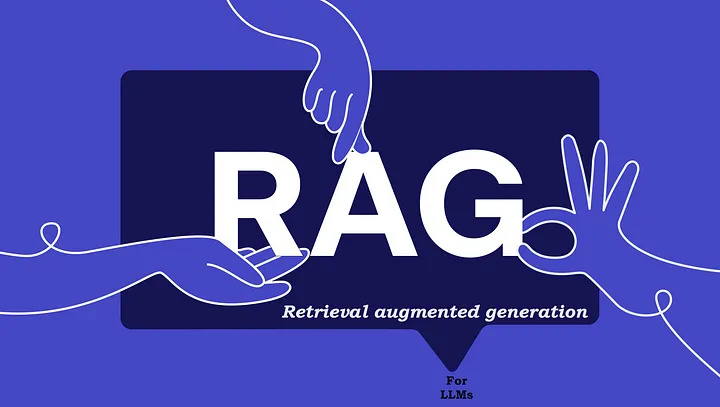
RAG architecture in 2026 showing how retrieval augmented generation works with LLMs and vector databases more accurate enterprise AI with real-time retrieval and contextual generation

RAG in 2026 in Enterprise AI scenario has shifted from experimentation to a production-critical architecture, redefining how organizations deploy retrieval augmented generation in 2026 to ensure accuracy, compliance, and real-time intelligence. Enterprise AI leaders — CTOs, data architects, and data executives — face mounting pressure to deliver AI systems that are not only powerful but deeply trustworthy. As large language model (LLM) adoption accelerates, so does a fundamental limitation: most models operate on static training data, frozen in time. They cannot naturally access the latest regulatory updates, proprietary internal documents, or fast-changing enterprise knowledge bases.

This has created widespread concern around hallucinations, outdated outputs, and the inability to cite authoritative sources — all of which increase risk, reduce trust, and limit enterprise deployment.

This is where RAG in 2026 (Retrieval-Augmented Generation models) become essential.

Instead of relying solely on what an LLM “remembers,” a RAG system retrieves the most relevant, up-to-date documents from trusted data sources — such as enterprise knowledge repositories, vector databases, and regulatory archives — and then uses them to augment the context provided to the generative model.

The result: accurate, contextual, and explainable AI outputs.

Let’s begin.

Strengthen your AI data foundation with our guide on Data Management for Enterprises: Roadmap

TL;DR — Executive Summary

  • RAG in 2026 combine retrieval systems with generative AI to deliver accurate, up-to-date, and source-grounded answers.
  • Enterprises increasingly adopt RAG in 2026 to improve factual reliability, leverage proprietary data, and reduce hallucinations.
  • RAG in 2026 is more scalable and cost-efficient than frequent fine-tuning — especially when knowledge changes regularly.
  • RAG in 2026 blog below delivers a clear, practical, and strategic understanding of RAG architecture, benefits, risks, and enterprise adoption best practices.
  • Techment provides end-to-end RAG in 2026 consulting, implementation, and optimization for data-heavy organizations.

What Is RAG in 2026? Understanding Retrieval-Augmented Generation Models

Retrieval-Augmented Generation (RAG) in 2026 is an AI architecture that enhances large language models by pairing them with an external retrieval system. Instead of generating answers solely from internal parameters, the model actively retrieves relevant supporting documents — such as PDFs, enterprise knowledge bases, or structured data — and uses them to produce grounded, accurate responses.

Simple Definition

A RAG in 2026 model = Retriever + Generator

  • The retriever searches a document database or vector store for the most relevant information.
  • The generator (an LLM) uses that retrieved context to craft an accurate answer.

This enables RAG in 2026 systems to overcome the limitations of traditional LLMs trained on static datasets. RAG ensures outputs stay grounded in verifiable information while significantly reducing hallucination rates.

Why RAG in 2026 Is Critical for Enterprise AI Strategy

Limitations of Traditional LLMs

  • Cannot access real-time or proprietary data
  • Tend to hallucinate facts, especially in niche domains
  • Are expensive to retrain whenever data changes

How RAG in 2026 Solves These Issues

  • Uses dynamic retrieval, enabling instant knowledge updates
  • Enables domain-specific reasoning from internal data
  • Reduces hallucinations through factual grounding
  • Avoids costly retraining cycles

Sources consistently highlight that RAG aligns perfectly with 2026 enterprise priorities: accuracy, explainability, compliance, and cost efficiency.y with 2026 enterprise priorities: accuracy, explainability, compliance, and cost efficiency. 

Strategic Insight for Data Leaders For RAG in 2026

RAG is not just an AI technique — it is a systems architecture choice that reshapes how enterprises operationalize knowledge. For CTOs and data architects, the shift from model-centric to data-centric AI is one of the defining transformations of the decade.

Read more on why enterprises must adopt a 2025 AI Data Quality Framework spanning acquisition, preprocessing, feature engineering, governance, and continuous monitoring.

How RAG Works in 2026: Architecture, Pipeline, and LLM Integration

For data leaders asking how does RAG work in LLMs, the answer lies in a tightly coupled retrieval-generation pipeline that connects large language models with enterprise knowledge sources in real time

How RAG in 2026 Works: Architecture & Pipeline in 2026  

RModern RAG systems consist of four tightly integrated components working together to deliver accurate, context-aware outputs.

Indexing & Embeddings in RAG 2026: Preparing Enterprise Knowledge Bases

In modern RAG models, vector databases are the backbone that enables scalable semantic search and precise retrieval across enterprise datasets. The first step is creating embeddings — numerical vector representations of text — using models such as BERT, OpenAI embeddings, or domain-specific embedding models. These vectors are stored in a vector database (e.g., Pinecone, Milvus, Weaviate) optimized for high-speed similarity search.

This step:

  • Transforms raw documents into searchable vectors
  • Enables deep semantic search
  • Scales retrieval across millions of documents

Retrieval Layer in RAG 2026: Semantic, Keyword, and Hybrid Search

When a user submits a query, the system retrieves relevant documents using:

  • Semantic search (embedding similarity)
  • Keyword search (BM25, Elasticsearch)
  • Hybrid search (widely adopted in 2025–26)

Advanced retrieval stacks now include cross-encoders, multi-stage retrieval, and contextual filtering for higher precision.

Context Augmentation in RAG 2026: Grounding LLM Responses

Selected documents are appended to the prompt as grounding context, providing the LLM with a factual basis for generation.

Generation in RAG 2026: How LLMs Produce Source-Grounded Outputs

The LLM synthesizes:

  • Retrieved documents
  • Its internal knowledge
  • The user query

The result is transparent, source-backed responses, a core requirement for enterprise trust.

Explore next steps with How to Assess Data Quality Maturity: Your Enterprise Roadmap   

RAG in 2026 vs Fine-Tuning vs Prompt Engineering: What Scales for Enterprises

Technique When It Works Best Limitations 
RAG Dynamic knowledge, proprietary data, accuracy-critical tasks Requires quality retrieval; infrastructure-heavy 
Fine-Tuning Stable, domain-specific tasks where knowledge doesn’t change often Expensive, static, time-consuming 
Prompt Engineering Light use cases, small prototypes, creative tasks Limited depth, lacks factual grounding 

Sources like Microsoft Learn reinforce that RAG is more flexible, scalable, and cost-efficient than constant fine-tuning — especially in rapidly changing domains. 

Explore scalable architectures in AI-Powered Automation: The Competitive Edge in Data Quality Management   

Key Benefits of RAG in 2026 for Enterprise AI Systems

Improved Accuracy & Reduced Hallucinations

  • Source-backed outputs
  • Higher reliability for regulated industries
  • Audit-ready traceability

Always Up-to-Date Knowledge

  • Update documents → update AI knowledge
  • No retraining
  • No downtime

Proprietary & Domain-Specific Intelligence

  • Internal documents
  • SOPs and policies
  • Compliance archives
  • Customer interactions

Cost & Scalability Advantages

  • Lower GPU costs
  • Faster deployment
  • Easier maintenance

Read more on how Microsoft Fabric AI solutions fundamentally transform how enterprises unify data, automate intelligence, and deploy AI at scale in our blog.      

High-Impact Use Cases of RAG in 2026 Across Enterprises

RAG models excel in high-value enterprise scenarios that require accuracy, context, and up-to-date knowledge. 

Below are the most impactful use cases for data leaders and AI architects. 

Enterprise Knowledge Management & Internal Search 

RAG empowers employees to query vast troves of internal documents and receive precise, reference-backed answers. 

Applications: 

  • QA systems for internal SOPs 
  • Search across Confluence, SharePoint, Jira 
  • Knowledge bots for engineering & support 
  • Onboarding assistants 
  • Contextual search for data catalogs 

Studies note that knowledge-intensive industries have seen the fastest adoption. 

Customer Support & Virtual Assistants 

RAG-powered assistants improve resolution accuracy by retrieving the latest product manuals, ticket histories, and troubleshooting guides. 

Benefits: 

  • Faster customer response 
  • Reduced agent burden 
  • Consistent answers 
  • Integration into CRM workflows 

Research reports identify customer support as one of the top ROI-driving RAG use cases. 

Legal, Compliance & Regulatory Intelligence 

RAG enables precise retrieval across thousands of pages of regulatory text, ensuring outputs cite the correct clauses and versions. 

Use cases: 

  • Compliance QA 
  • Regulation comparison 
  • Policy summarization 
  • Contract analysis 

Business Intelligence & Analytics 

RAG can turn structured and semi-structured data into narrative insights. 

Examples: 

  • Executive reports 
  • KPI explanations 
  • Trend analysis 
  • Analytical summaries 

The New Data Analyst: Transforming BI in the Age of AI” highlights how analysts shift from generic prompting to embedding models within BI pipelines, emphasizing data + context + generative output 

Research, Summarization & Content Generation 

RAG improves content accuracy by grounding outputs in real, recent documents. 

Applications: 

  • Research assistance 
  • Summaries of long documents 
  • Technical documentation 
  • Product requirement drafts 

Sources emphasize that RAG is essential for high-stakes research workflows. 

Unpack the massive shift organizations are experiencing as AI moves from experimentation to everyday operation in our latest whitepaper.

Challenges and Risks of Implementing RAG in 2026

While RAG is powerful, it is not a silver bullet. CTOs and data architects must be aware of its challenges to ensure secure, trusted, and effective deployment. 

RAG Reduces but Does Not Eliminate Hallucinations 

While retrieved documents provide factual grounding, LLMs may still: 

  • Misinterpret context 
  • Miscombine facts 
  • Over-generalize conclusions 

As experts note, fact quality still depends heavily on retrieval quality and prompt structuring. 

Retrieval Quality Determines Output Quality 

Your RAG system is only as good as what it can retrieve. 

Challenges include: 

  • Poorly structured document pools 
  • Outdated content 
  • Noisy or redundant data 
  • Incorrect embeddings 
  • Vector drift over time 

Sources stress the importance of high-quality indexing and constant dataset hygiene. 

Data Governance, Privacy & Compliance Risks 

Enterprises must ensure safeguards around: 

  • PII redaction 
  • Access controls 
  • Secure vector databases 
  • SOC2/ISO-compliant retrieval systems 
  • Permissioned retrieval by user role 

Implementation Complexity 

Building RAG at enterprise scale requires: 

  • Embedding pipelines 
  • Vector database orchestration 
  • Re-ranking models 
  • Chunking & document splitting strategies 
  • Evaluation pipelines 

Without expertise, performance can degrade quickly. 

Trade-Offs vs Fine-Tuning & Other Methods 

Not all tasks need RAG; in some cases, fine-tuning or prompt engineering may be better. 

Examples: 

  • Tasks requiring stylistic consistency 
  • Static knowledge use cases 
  • Highly structured classification tasks 

Explore how RAG models and augmented analytics work together in enterprise Augmented Analytics: Using AI to Automate Insights in Dashboards 

What’s New in RAG in 2026: Trends, Innovations, and Future Directions

RAG has evolved dramatically between 2024 and 2026. What once began as a relatively simple retriever–generator pipeline has now matured into a sophisticated enterprise intelligence architecture with multimodal capabilities, hybrid retrieval engines, and advanced filtering layers. 

Here are the most influential trends shaping RAG in 2025–26. 

Hybrid Retrieval: The New Enterprise Standard 

Traditional semantic search alone is no longer enough. Leading research and enterprise implementations now use hybrid retrieval — combining: 

  • BM25 keyword matching 
  • Dense semantic vector search 
  • Metadata filtering 
  • Context-aware re-ranking 

As highlighted in Medium and Signity Solutions, hybrid retrieval consistently outperforms single-method pipelines for accuracy, especially in noisy enterprise datasets. 

Why it matters: 

  • Improves precision for niche queries 
  • Reduces irrelevant document retrieval 
  • Handles both structured and semi-structured data 
  • Enables better traceability for regulated industries 

Multimodal RAG: Beyond Text 

In 2026, enterprises increasingly store knowledge in formats beyond plain text: 

  • PDFs with images 
  • Scanned documents 
  • Product diagrams 
  • Dashboards and BI visualizations 
  • Multimedia logs 
  • Videos of expert demonstrations 

Multimodal RAG integrates image, audio, tabular, and video embeddings to create more holistic reasoning. 

For example: 
A maintenance engineer could ask, “Show me the failure pattern for turbine blade anomalies over the past year and explain the root cause.” 
The system retrieves: 

  • Sensor logs 
  • Images 
  • Technical documents 
  • Past troubleshooting videos 

This evolution is backed by advances referenced in Medium and Signity Solutions

Smarter Retrievers & Reranking Models 

Retrievers now incorporate transformer-based cross-encoders, late interaction models, and deep fusion methods. These enhancements significantly improve precision, as noted by Orq.ai

Capabilities include: 

  • Context-aware ranking 
  • Query reformulation 
  • Adaptive chunking 
  • Continuous index refresh 
  • Entity-aware retrieval for domain-specific queries 

Enterprise-Grade RAG Platforms 

Major leaps in enterprise infrastructure — highlighted by Microsoft Learn — include: 

  • Role-based access-controlled retrieval 
  • Integrated vector DBs + enterprise search 
  • Audit logs for every retrieval event 
  • Built-in PII masking 
  • SOC2, HIPAA, and GDPR-compliant RAG pipelines 
  • Air-gapped RAG deployments for sensitive data 

RAG has officially moved from experimentation to production-grade enterprise architecture. 

Growing Cross-Industry Adoption 

Industries driving RAG adoption in 2026 include: 

  • Healthcare (clinical QA, regulatory compliance) 
  • Finance (policy search, risk modeling, regulatory analysis) 
  • Legal (case law retrieval, contract analysis) 
  • Manufacturing (maintenance intelligence, SOP generation) 
  • Insurance (claims analysis, fraud detection) 
  • Analytics-first enterprises 

Emerging Best Practices To Follow In RAG

By 2026, practitioners converge on best practices such as: 

  • Retrieval evaluation as a first-class metric 
  • Chunking based on semantic boundaries, not fixed sizes 
  • Hybrid search + cross-encoder reranking 
  • Frequent index refresh cycles 
  • Human-in-the-loop oversight for high-risk outputs 
  • Pre-filtering documents based on metadata and access rights 

These practices come heavily discussed by experts and retrieval engineering communities. 

Learn how our Microsoft Fabric Readiness Assessment explores your full data lifecycle across five critical dimensions.       

How to Get Started with RAG in 2026: A Practical Enterprise Guide

This section provides a concrete implementation roadmap for CTOs and data architects ready to integrate RAG into their enterprise AI strategy. 

Step 1 — Assess Whether RAG Fits Your Use Case 

RAG is ideal for use cases where: 

  • Knowledge changes frequently 
  • Proprietary data is core to outputs 
  • Factual accuracy is essential 
  • Outputs require source-backed citations 
  • Compliance or auditability is a requirement 
  • LLMs must access domain-specific or sensitive data 

If your organization fits these criteria, RAG is a strong candidate. 

Step 2 — Prepare the Document Corpus 

Success begins with data preparation. 
Key best practices: 

  • Clean and standardize documents 
  • Remove redundant or outdated content 
  • Apply consistent metadata tagging 
  • Split documents into semantic chunks 
  • Convert binary documents (PDFs, images) into text and embeddings 

Pro tip: Maintain a single source of truth for all RAG-ready content. 

Step 3 — Embed & Index Your Data 

Use high-precision embeddings tailored for enterprise data — such as domain-tuned embedding models. 
Index embeddings in a vector DB such as: 

  • Pinecone 
  • Milvus 
  • Weaviate 
  • Elasticsearch/OpenSearch (hybrid) 

Vector DB choice should consider: 

  • Latency 
  • Scalability 
  • Cost 
  • On-premise vs cloud requirements 
  • Privacy restrictions 

Step 4 — Choose the Retrieval Method 

Options include: 

  • Semantic search for conceptual queries 
  • Keyword search for precision-based retrieval 
  • Hybrid search for high accuracy 
  • Metadata filters for permissioned queries 
  • Query expansion for domain-specific terminology 

Hybrid retrieval is the default recommended choice in 2026. 

Step 5 — Integrate Retrieval with LLM Prompting 

Approaches include: 

  • Simple RAG (direct augmentation) 
  • Advanced RAG (reranking + summarization of retrieved context) 
  • Retrieval-augmented chain-of-thought 
  • Adaptive RAG (dynamic retrieval based on query complexity) 

Your prompt template must include: 

  • User query 
  • Retrieved context 
  • Instructions for grounding outputs 
  • Citation requirements 
  • Style and role guidelines 

Step 6 — Establish Monitoring & Governance 

Track the following KPIs: 

  • Retrieval precision/recall 
  • Context relevance score 
  • Output hallucination rate 
  • Citation accuracy 
  • Index freshness 
  • Latency per query 
  • User satisfaction metrics 

Implement governance through: 

  • Human-in-the-loop review 
  • Feedback loops 
  • Automated document quality scoring 
  • Versioning and audit logs 

Step 7 — Deploy & Iterate 

Start with: 

  • One high-value use case 
  • One department 
  • One data domain 

Then scale across other workflows based on impact. 

 Build clean, reliable data foundations, enhance your analytics outcomes and turn fragmented data with our data engineering solutions and MS Fabric capabilities.     

RAG in 2026 for Enterprises: What Business and Technology Leaders Must Know

RAG enterprise adoption in 2026 is accelerating as organizations prioritize explainability, auditability, and governed access to proprietary knowledge. RAG in 2026 is more than an architecture — it is a strategic enterprise asset. Below are insights tailored for data executives, CTOs, and enterprise architects. 

RAG as a Business Capability, Not a Technical Feature 

RAG directly strengthens: 

  • Decision intelligence 
  • Operational efficiency 
  • Regulatory compliance 
  • Customer experience 
  • Risk mitigation 
  • Speed of knowledge access 

It centralizes enterprise intelligence by making knowledge searchable, systems-aware, and reusable. 

Strategic Value Proposition 

RAG accelerates: 

  • Product development 
  • Policy interpretation 
  • Data analysis 
  • Incident response 
  • Compliance workflows 
  • Documentation & training creation 

Enterprises report a 30–70% efficiency gain in knowledge-heavy workflows after RAG deployment. 

Risks to Mitigate 

  • Data privacy breaches 
  • Poor retrieval quality 
  • Misalignment between data owners & AI teams 
  • Insufficient monitoring 
  • Weak governance frameworks 
  • Overconfidence in AI outputs 

Enterprise-grade RAG must include: 

  • Access controls 
  • Compliance-aligned retrieval 
  • Human oversight 
  • Continuous data quality checks 

ROI Considerations 

RAG reduces: 

  • Model retraining costs 
  • Cloud GPU usage 
  • Engineering maintenance 
  • Time-to-value for AI initiatives 

ROI comes through: 

  • Fewer hallucinations 
  • Faster information access 
  • Scalable knowledge automation 
  • Workforce augmentation 

See how your enterprise can develop self-service capabilities and integrate augmented analytics/AI modules in our solution offerings.      

Why 2026 Is the Breakout Year for RAG Adoption in Enterprises

The convergence of AI maturity, enterprise data growth, and regulatory pressure makes 2026 the tipping point for enterprise RAG adoption. 

Explosion of Enterprise Data 

Organizations grapple with: 

  • Document sprawl 
  • Compliance updates 
  • Policy revisions 
  • Complex operational data 

RAG turns this complexity into strategic advantage. 

LLM Maturity + Stronger Retrieval Infrastructure 

Modern RAG tech stack includes: 

  • High-quality embeddings 
  • Vector DBs optimized for enterprise scale 
  • Multimodal indexing 
  • Hybrid search 
  • Re-ranking transformers 

These enable stable, production-grade deployments. 

Higher Expectations for Accuracy and Transparency 

Boards, regulators, and customers expect: 

  • Factual accuracy 
  • Auditability 
  • Source citations 
  • Transparent reasoning 

RAG satisfies all four far better than traditional LLMs. 

Sector-Wide AI Momentum 

2026 is witnessing massive RAG adoption across: 

  • Healthcare (clinical intelligence) 
  • Finance (policy QA) 
  • Compliance & legal (risk analysis) 
  • Insurance (claims insights) 
  • Public sector (policy summarization) 

 Learn how reliable data fuels transformation in AI-Powered Automation: The Competitive Edge in Data Quality Management   

Implementing RAG in 2026: Why Enterprises Partner with Techment

Enterprises adopting RAG need a partner with both deep data engineering expertise and LLM/RAG architecture mastery. This is where Techment stands apart. 

Strategic AI & Data Expertise 

Techment provides: 

  • AI/ML consulting 
  • RAG architecture design 
  • Vector database setup 
  • Embedding pipeline development 
  • Retrieval optimization 
  • Governance frameworks 
  • Full lifecycle deployment 

We tailor RAG pipelines to match domain-specific requirements, data complexity, and operational constraints. 

Retrieval Strategy Optimization 

Techment helps clients choose: 

  • Semantic vs keyword vs hybrid 
  • Chunking strategies 
  • Metadata-driven retrieval 
  • Reranking methods 
  • Context window optimization 

This ensures each RAG system is precision-tuned and enterprise-grade. 

Security, Compliance & Data Governance 

We build RAG systems with: 

  • Role-based access control 
  • PII redaction 
  • Encryption at rest & in transit 
  • Air-gapped deployment options 
  • SOC2/HIPAA/GDPR compliance alignment 

End-to-End Delivery & Continuous Optimization 

Techment supports: 

  • Data preparation 
  • RAG implementation 
  • Testing & governance 
  • Deployment 
  • Iterative refinement 
  • Long-term maintenance 

We ensure your RAG model evolves with your business needs. 

Industry Experience You Can Trust 

From healthcare to financial services to manufacturing, Techment has delivered data and AI systems across high-stakes environments. 

Explore How to Assess Data Quality Maturity: Your Enterprise Roadmap to take the next step

RAG in 2026: Key Takeaways for Enterprise AI Leaders

RAG models represent a foundational leap forward in enterprise AI — offering accuracy, transparency, and real-time knowledge access at scale. By combining retrieval and generation, RAG delivers fact-grounded, domain-adapted, and source-cited intelligence, solving the biggest limitations of static LLMs. 

2026 is the perfect moment for adoption, as enterprises confront unprecedented data growth, rising regulatory scrutiny, and an urgent need for more trustworthy AI systems. 

Key takeaways: 

  • RAG = the new enterprise standard for accurate, up-to-date, contextual AI. 
  • It reduces hallucinations, improves compliance, and delivers faster insights. 
  • RAG is more cost-efficient and scalable than frequent model fine-tuning. 
  • New advances (hybrid retrieval, multimodal RAG, rerankers) make deployment easier than ever. 
  • Techment provides the expertise to design, build, deploy, and scale RAG solutions tailored to your enterprise data ecosystem. 

Ready to build AI-first intelligence?  Schedule your Microsoft Fabric AI Consultation.   

FAQs On RAG Adoption In 2026 

1. How does RAG work in LLMs?

RAG works by retrieving relevant documents from vector databases or enterprise knowledge sources and injecting them into the LLM’s prompt, enabling grounded, up-to-date, and explainable responses — a core requirement for RAG systems in 2026.

2. What kinds of data sources work best for RAG? 

Any text-rich or semi-structured content works well: PDFs, policies, SOPs, manuals, wikis, tickets, logs, and regulatory documents. With multimodal RAG, images, videos, and tables are increasingly supported. 

3. Does RAG eliminate hallucinations completely? 

No. RAG significantly reduces hallucinations by grounding outputs in retrieved context, but errors can still occur if retrieval or indexing is poor. 

4. How often should I update my RAG document index? 

For most enterprises: 

  • Weekly for low-change domains 
  • Daily for medium-change domains 
  • Real-time ingestion for high-change environments (e.g., compliance updates) 

5. When is fine-tuning better than RAG? 

Fine-tuning is ideal when: 

  • Knowledge changes slowly 
  • Style consistency is important 
  • Tasks require structured outputs 
  • There is ample high-quality training data 

6. What are the compliance or security considerations? 

RAG requires strict controls around: 

  • Access levels 
  • PII redaction 
  • Audit logs 
  • Document-level permissions 
  • Encryption 
  • On-premises vector storage (for sensitive domains) 

Related Reads  

To deepen your knowledge and accelerate your AI transformation journey: 

Social Share or Summarize with AI

RAG in 2026: How Retrieval-Augmented Generation Works for Enterprise AI