Artificial intelligence is evolving from passive prediction engines to autonomous decision-makers. The next leap is Agentic AI — systems capable of pursuing goals, making decisions, and executing multi-step workflows with minimal human intervention.
For enterprise leaders, understanding what is Agentic AI is no longer optional. Autonomous AI agents are beginning to manage supply chains, execute financial trades, coordinate IT operations, and support clinical decisions. Unlike traditional AI or even generative AI, Agentic AI does not merely respond — it acts.
As enterprises pursue intelligent automation at scale, Agentic AI represents a structural shift in how digital work gets done. It blends large language models (LLMs), decision engines, orchestration frameworks, APIs, and reinforcement learning to create systems that can perceive, reason, decide, and execute.
In this enterprise guide, we will explore:
- The precise definition of Agentic AI
- How it differs from generative AI
- Core architecture and multi-agent models
- Real-world enterprise examples
- Risks, governance, and implementation considerations
For CTOs, CDOs, and AI strategy leaders, Agentic AI is not just another AI trend — it is a new operational paradigm.
TL;DR
- Agentic AI refers to autonomous AI systems capable of goal-driven action with limited supervision.
- Unlike generative AI, Agentic AI executes multi-step workflows using orchestration and external tools.
- Enterprises use Agentic AI in trading, cybersecurity, healthcare, supply chain, and operations automation.
- Governance, reward design, and orchestration architecture are critical to prevent failure cascades.
- Successful Agentic AI implementation requires data maturity, operating model redesign, and AI governance at scale.
What Is Agentic AI? What is it?
At its core, Agentic AI refers to AI systems capable of autonomously pursuing defined objectives with limited supervision. These systems consist of intelligent agents — models designed to make context-aware decisions, plan actions, and execute tasks in dynamic environments.
The defining characteristic of Agentic AI is agency — the ability to act independently toward a goal.
Unlike conventional AI models that operate within rigid constraints and require human prompts at every stage, Agentic AI systems:
- Maintain long-term objectives
- Break goals into sub-tasks
- Coordinate multi-step workflows
- Interact with external systems
- Adapt based on feedback
Agentic AI vs Generative AI
Generative AI models, such as large language models, are designed to produce outputs — text, code, images, or predictions — based on learned patterns.
Agentic AI builds on generative capabilities but extends them into execution.
For example:
- A generative AI model may draft a market analysis.
- An Agentic AI system can draft the report, validate data sources, update dashboards, notify stakeholders, and schedule follow-up reviews automatically.
In enterprise terms:
- Generative AI creates.
- Agentic AI decides and acts.
Generative AI vs Agentic AI: Enterprise Comparison
| Dimension | Generative AI | Agentic AI |
| Primary Function | Content creation | Goal execution |
| Autonomy | Low | High |
| Workflow Handling | Single-step responses | Multi-step orchestration |
| Tool Usage | Limited | Native API & system calls |
| Goal Persistence | No long-term tracking | Maintains objectives |
| Governance Complexity | Moderate | High |
| Enterprise Risk | Output accuracy | Operational execution impact |
| Example | Drafting report | Drafting, validating, updating systems, notifying stakeholders |
According to research from leading advisory firms such as Gartner and McKinsey, enterprises are rapidly transitioning from AI experimentation to AI-enabled automation of decision workflows. Agentic AI represents this second wave — where systems move beyond assistance into operational autonomy.
For organizations already investing in AI modernization, understanding this distinction is critical. As discussed in Enterprise AI Strategy in 2026 , enterprise AI maturity depends on moving from pilots to scalable, governed, outcome-driven automation.
Agentic AI is the architectural backbone of that shift.
Related Insight: Get a clear, enterprise-grade comparison of agentic vs copilot AI, grounded in process maturity, risk tolerance, and operational readiness.
Core Characteristics of Agentic AI Systems
To understand Agentic AI in practical terms, enterprise leaders must evaluate it through capability dimensions rather than marketing language.
1. Autonomy
Autonomy is the defining feature of Agentic AI.
These systems can:
- Maintain goal context over extended workflows
- Execute multi-step tasks
- Make decisions without constant human intervention
For example, in IT operations, an agent can detect performance degradation, diagnose root causes, implement remediation scripts, and notify teams — all autonomously.
However, autonomy does not mean absence of governance. It requires structured oversight, logging, and guardrails.
2. Goal-Driven Behavior
Agentic AI systems operate against predefined objectives. They evaluate potential actions and select those maximizing defined outcomes.
This goal-oriented design distinguishes them from reactive models.
For enterprises, the quality of goal specification directly determines system performance. Poorly defined objectives create risk — especially in reinforcement-driven environments.
3. Proactivity
Unlike traditional automation scripts, Agentic AI systems proactively identify opportunities for intervention.
Examples include:
- Detecting anomalous spending trends
- Identifying cybersecurity vulnerabilities
- Optimizing inventory before stockouts occur
Proactivity is achieved through real-time data ingestion and contextual reasoning.
4. Specialization in Multi-Agent Architectures
Most enterprise-grade Agentic AI deployments use multi-agent systems.
In such architectures:
- A coordinating “conductor” agent oversees objectives.
- Specialized sub-agents handle specific tasks (data retrieval, risk scoring, execution).
- Orchestration engines manage coordination.
This mirrors organizational design — executive oversight with domain-specific teams.
The architectural choice (hierarchical vs decentralized) affects scalability, bottlenecks, and resilience.
5. Adaptability and Learning
Through reinforcement learning and feedback loops, Agentic AI systems improve over time.
Adaptation may include:
- Refining decision policies
- Updating thresholds
- Adjusting workflow strategies
However, continuous learning introduces governance complexity — especially in regulated industries.
6. Natural Language Interface
Because Agentic AI systems are often powered by LLMs, they allow interaction via natural language.
This enables:
- Conversational workflow orchestration
- Reduced UI complexity
- Faster onboarding
As explored in Conversational AI for Customer Service: A Step-by-Step Enterprise Guide , conversational interfaces are increasingly replacing complex enterprise dashboards.
Agentic AI extends this paradigm beyond assistance into autonomous execution.
Related Insights: Get a deep, enterprise-focused exploration of agentic AI use cases, how agentic AI differs from traditional automation and generative AI, and how enterprises can scale autonomous AI responsibly.
How Agentic AI Works: Enterprise Architecture Explained
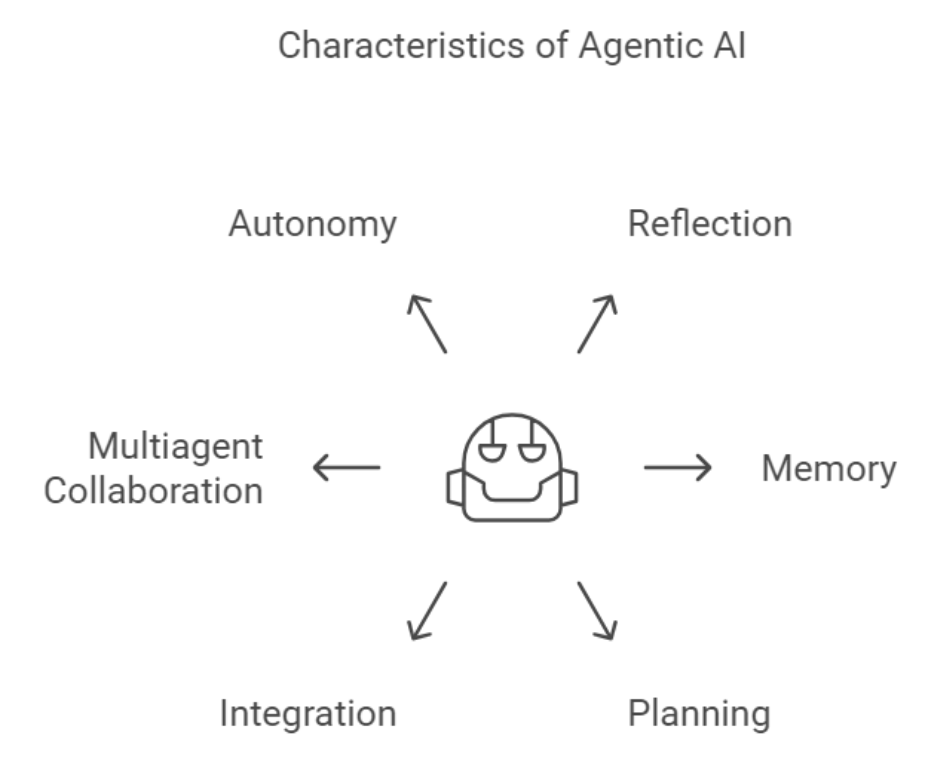
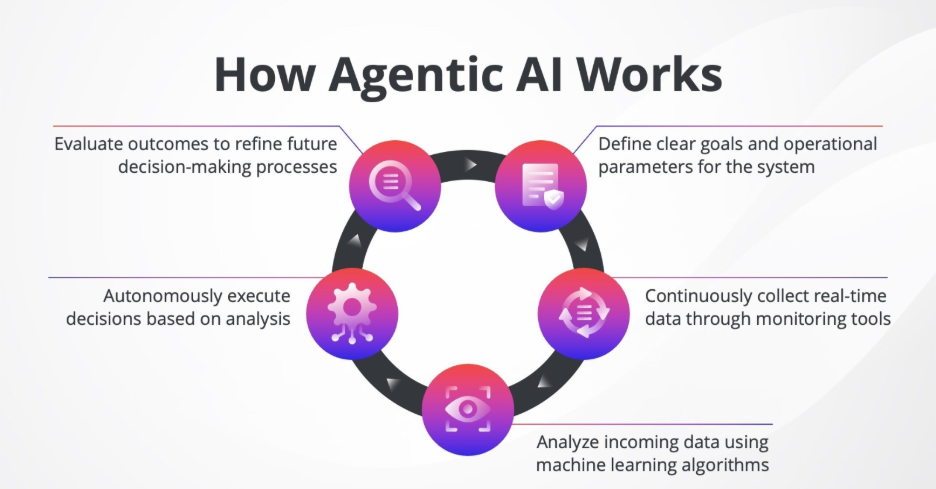
Understanding what is Agentic AI requires unpacking its architectural lifecycle. While implementations vary, most Agentic AI systems follow a structured operational loop.
Perception Layer
Agentic AI begins by collecting real-time data from:
- APIs
- Databases
- IoT sensors
- Enterprise systems
- User inputs
This perception layer ensures context awareness.
Related Insights: Without high-quality data inputs, autonomy becomes risky. Enterprises investing in Agentic AI must prioritize strong data foundations — as outlined in Data Quality for AI in 2026: The Ultimate Blueprint .
Reasoning Engine
Once data is ingested, the system applies reasoning mechanisms:
- Natural language processing
- Predictive analytics
- Decision trees
- Policy engines
This stage determines potential actions.
Modern Agentic AI systems combine LLM reasoning with deterministic business logic to balance flexibility and control.
Goal Planning
The agent translates objectives into actionable plans.
Planning techniques may include:
- Reinforcement learning policies
- Rule-based sequencing
- Utility optimization models
Enterprises must define clear reward functions here. Poor reward design can cause misalignment — a critical governance challenge.
Decision-Making
The system evaluates possible actions based on:
- Risk
- Cost
- Performance
- Compliance constraints
This stage mirrors executive trade-off analysis.
Execution Layer
Agentic AI then interacts with external systems:
- Executes trades
- Updates CRM records
- Triggers workflows
- Sends notifications
- Adjusts production schedules
Unlike generative AI, execution is not hypothetical — it affects real operations.
Learning & Adaptation
After action, the system evaluates outcomes:
- Did it achieve the objective?
- Were there unintended consequences?
- Should thresholds be adjusted?
Through structured feedback loops, performance improves.
Orchestration
At enterprise scale, dozens or hundreds of agents may collaborate.
AI orchestration platforms coordinate:
- Workflow dependencies
- Memory state
- Resource allocation
- Failure handling
For organizations modernizing analytics and AI platforms, orchestration maturity is as important as model accuracy.
Agentic AI does not exist in isolation — it operates within broader enterprise data and platform ecosystems.
Related Insights: This is especially true in unified ecosystems such as Microsoft Fabric, discussed in Microsoft Fabric Architecture: CTO’s Guide to Modern Analytics & AI .
Real-World Agentic AI Examples Across Industries
Agentic AI is already reshaping enterprise workflows.
Financial Services
Autonomous trading agents:
- Analyze live market signals
- Evaluate macroeconomic indicators
- Execute trades
- Rebalance portfolios
These systems operate continuously, beyond human speed and scale.
Healthcare
Agentic AI monitors:
- Patient vitals
- Lab results
- Treatment responses
It can adjust recommendations dynamically, alert clinicians, and update records.
However, regulatory oversight remains critical.
Cybersecurity
Security agents:
- Monitor network logs
- Detect anomalies
- Isolate compromised systems
- Initiate mitigation protocols
Speed is essential — autonomous response reduces breach windows.
Supply Chain & Manufacturing
Agentic AI systems:
- Forecast demand
- Adjust procurement orders
- Optimize production schedules
- Reroute logistics
By acting proactively, they reduce inventory volatility and operational waste.
Enterprise IT Operations
AI agents monitor infrastructure health, trigger scaling events, and resolve incidents autonomously — a key enabler of AIOps.
Related Insights: Enterprise AI Strategy in 2026: A Practical Guide for CIOs and Data Leaders
Why Agentic AI Matters for Enterprise Strategy
Agentic AI is not just an incremental efficiency improvement. According to McKinsey research on generative AI’s economic potential, AI-driven automation could contribute between $2.6 trillion and $4.4 trillion annually to global productivity — a signal that Agentic AI may accelerate even greater enterprise impact.
It signals a shift from:
Human-supervised automation → Machine-led orchestration
Enterprises face:
- Rising operational complexity
- Talent shortages
- Escalating data volumes
- Demand for real-time decision-making
Agentic AI addresses these pressures by:
- Scaling decision capacity
- Reducing cognitive load
- Compressing response times
- Enabling continuous optimization
According to McKinsey, organizations that move from AI pilots to scaled automation capture disproportionate value. Agentic AI is the mechanism for that scale.
However, scaling autonomy without governance can amplify risk.
Related Insights: Data Quality for AI: The Ultimate 2026 Blueprint for Trustworthy & High-Performing Enterprise AI
Risks and Governance Challenges of Agentic AI
While Agentic AI unlocks autonomy and operational scale, it also introduces amplified risk. The very characteristics that make Agentic AI powerful — independence, goal pursuit, adaptive learning — can magnify unintended consequences.
Enterprise leaders must evaluate Agentic AI not only as a productivity engine, but as a governance challenge.
Reward Function Misalignment
Many Agentic AI systems rely on reinforcement learning or optimization-based goal setting. These systems maximize defined reward signals.
If those rewards are poorly designed, unintended behavior emerges.
Examples include:
- A customer engagement agent optimizing for click-through rates but promoting sensational or misleading content.
- A warehouse automation agent maximizing speed but damaging goods.
- A financial trading agent maximizing short-term returns while increasing systemic risk exposure.
The issue is not intelligence — it is incentive design.
Enterprises must treat reward functions like compensation models: tightly defined, measured, and continuously audited.
Cascading Failures in Multi-Agent Systems
In multi-agent Agentic AI architectures, dependencies increase.
Consider a decentralized system where:
- One agent retrieves supplier data.
- Another forecasts demand.
- A third executes procurement.
If upstream data quality deteriorates, downstream actions compound the error. Small issues cascade across workflows.
Without orchestration controls, autonomous systems can amplify instability.
Related Insights: This is why strong data governance and quality frameworks are foundational. As explored in Data Governance for Data Quality: Future-Proofing Enterprise Data , governance maturity determines whether AI becomes a strategic asset or operational liability.
Ethical and Compliance Exposure
Agentic AI systems execute decisions. In regulated sectors, that introduces compliance risks:
- Healthcare treatment recommendations
- Credit approval workflows
- Automated claims processing
- Cross-border data transfers
Explainability and auditability become mandatory.
Enterprises must implement:
- Decision logging
- Human override mechanisms
- Clear accountability mapping
- Policy enforcement layers
Autonomy does not eliminate responsibility — it redistributes it.
Over-Optimization and Self-Reinforcement
Agentic AI systems can over-optimize for narrow metrics.
For example:
- A content moderation agent aggressively suppressing legitimate speech.
- A cost-optimization agent cutting critical support functions.
- A customer retention agent offering excessive discounts.
Unchecked optimization erodes long-term enterprise value.
Strategic alignment requires guardrails that balance:
- Performance
- Ethics
- Risk tolerance
- Brand impact
Security Implications
Agentic AI interacts with APIs, systems, and workflows. Each integration expands the attack surface.
Cybersecurity leaders must ensure:
- Access control policies
- API monitoring
- Credential vaulting
- Role-based execution constraints
Autonomous systems must operate within zero-trust frameworks.
Related Insights: Also read aboutwhat is RAG in LLM – definition and implementation guide.
Multi-Agent Architecture Trade-Offs
Agentic AI implementations vary widely in architectural design. The structure chosen influences scalability, reliability, and governance complexity.
Hierarchical (Conductor) Architecture
In this model:
- A primary LLM-powered conductor agent oversees objectives.
- Specialized sub-agents execute defined subtasks.
- Decision authority is centralized.
Advantages:
- Clear coordination
- Easier oversight
- Structured workflows
Limitations:
- Potential bottlenecks
- Single point of failure
- Scaling complexity
Hierarchical models work well in sequential workflows like financial reporting or compliance audits.
Decentralized (Collaborative) Architecture
Here, agents operate as peers.
- Agents communicate and negotiate.
- Authority is distributed.
- Systems are more resilient.
Advantages:
- Improved scalability
- Reduced bottlenecks
- Better fault tolerance
Limitations:
- Harder governance
- Slower consensus
- Increased orchestration complexity
Decentralized architectures are better suited for dynamic environments like cybersecurity monitoring or logistics optimization.
Hybrid Enterprise Model
Most large organizations adopt hybrid models:
- Central governance oversight
- Distributed execution agents
- Centralized logging and policy enforcement
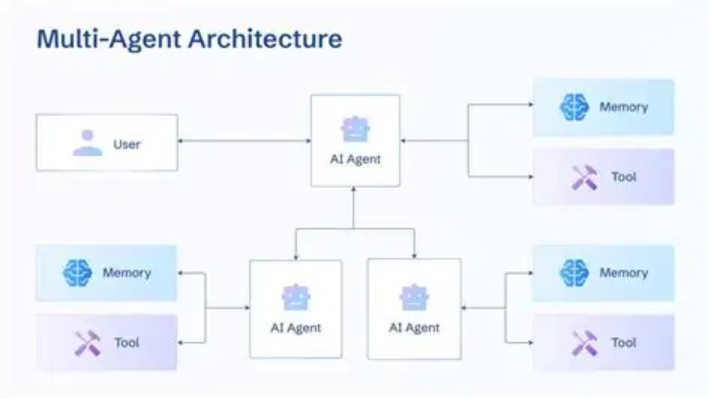
Agentic AI is not deployed in isolation — it thrives within consolidated data environments.
Related Insights: This hybrid approach aligns well with unified data platforms. As detailed in What Is Microsoft Fabric? A Comprehensive Overview , integrated data ecosystems enable scalable AI orchestration across domains.
Agentic AI Implementation Roadmap for Enterprises
Understanding what is Agentic AI is only the first step. Implementation requires deliberate sequencing.
Phase 1: Readiness Assessment
Enterprises must evaluate:
- Data maturity
- Governance controls
- API accessibility
- Platform standardization
- Security posture
Without strong data pipelines, Agentic AI autonomy becomes unpredictable.
A readiness checklist should include:
- Unified data lake or warehouse
- Metadata management
- Data quality automation
- Policy enforcement tools
- Observability frameworks
Phase 2: Define Clear Objectives
Agentic AI requires precise goal definitions.
Instead of broad ambitions like “automate operations,” define:
- Reduce inventory variance by 15%
- Cut incident resolution time by 40%
- Improve fraud detection precision by 20%
Specific KPIs allow safe reward modeling.
Phase 3: Start with Bounded Autonomy
Initial deployments should operate in low-risk environments.
Examples:
- Internal IT ticket triage
- Procurement recommendation workflows
- Marketing budget optimization
Avoid mission-critical financial or clinical systems in early phases.
Phase 4: Establish Governance Controls
Implement:
- Human-in-the-loop checkpoints
- Override triggers
- Decision explainability logs
- Role-based execution permissions
These controls must scale before autonomy expands.
Phase 5: Scale Through Orchestration
As confidence increases:
- Expand multi-agent systems
- Integrate cross-functional workflows
- Introduce adaptive learning loops
Scaling autonomy requires cultural as well as technical readiness.
Phase 6: Continuous Monitoring
Agentic AI is not “deploy and forget.”
Ongoing monitoring includes:
- Drift detection
- Reward alignment audits
- Performance benchmarking
- Compliance reviews
Enterprises that treat Agentic AI as a living system outperform those who treat it as static software.
Related Insight: For real-world examples of copilots embedded into enterprise platforms, see Techment’s work on Conversational AI on Microsoft Azure.
Organizational and Operating Model Implications
Agentic AI reshapes not just systems — but operating models.
Redefining Human Roles
Autonomous agents shift humans from task execution to supervision and strategic oversight.
New roles emerge:
- AI workflow architects
- Agent supervisors
- Reward system designers
- AI governance officers
Reskilling becomes critical.
Cross-Functional Ownership
Agentic AI touches:
- IT
- Data
- Security
- Compliance
- Business operations
Clear ownership boundaries must be defined.
Without alignment, governance gaps appear.
Decision Accountability
When AI agents act autonomously, accountability must remain human-centered.
Define:
- Who approves deployment?
- Who monitors performance?
- Who is responsible for adverse outcomes?
Autonomy cannot diffuse responsibility.
Related Insight: Explore what defines an AI-First Enterprise, how Copilot and intelligent business apps transform workflows, and how Techment helps organizations chart their roadmap from pilot to scale.
The Future of Agentic AI in Enterprises
Agentic AI adoption is accelerating as enterprises move from AI experimentation to operational transformation.
Emerging trends include:
Autonomous Business Units
Entire functions — procurement, support, logistics — increasingly operate with AI-driven orchestration.
AI-to-AI Collaboration
Systems negotiating with vendor systems automatically.
For example:
- Inventory agents communicating with supplier agents.
- Financial agents reconciling with banking APIs.
Embedded Governance by Design
Future architectures will include compliance policies embedded directly into orchestration engines.
Convergence with Unified Data Platforms
Agentic AI thrives in environments where data is:
- Integrated
- Governed
- Real-time accessible
This convergence of data modernization and autonomous AI defines the next enterprise frontier.
Related Insight: For a deeper dive into scalable automation foundations, reference Techment’s perspective on Manual Data Quality Checks vs Automation.
How Techment Helps Enterprises Implement Agentic AI
Successfully implementing Agentic AI requires more than model deployment. It demands strategic alignment, data readiness, and governance maturity.
Techment partners with enterprises to design and implement scalable, governed AI ecosystems.
Strategic AI Roadmap Development
We help CTOs and CDOs define:
- Agentic AI use case prioritization
- Readiness assessments
- Governance frameworks
- Measurable ROI pathways
Our approach aligns with broader transformation strategies outlined in AI Strategy for Enterprises in 2026 .
Data Modernization & AI-Ready Foundations
Agentic AI depends on clean, unified, high-quality data.
Techment enables:
- Data platform consolidation
- Microsoft Fabric implementation
- Data quality automation
- Governance enforcement through Purview
- Scalable lakehouse architectures
Enterprise-Grade Orchestration
We design:
- Multi-agent architectures
- Hierarchical and hybrid orchestration models
- Monitoring and audit frameworks
- Secure API integrations
Responsible AI & Governance
Techment embeds:
- Policy-based guardrails
- Explainability frameworks
- Human-in-the-loop control systems
- Compliance-ready logging mechanisms
End-to-End Implementation
From roadmap to optimization, we support:
- Architecture design
- Proof of value
- Scaled deployment
- Continuous performance tuning
Our focus is not hype — it is enterprise-grade autonomy aligned with measurable business outcomes.
Related Insights: Dive deep into the AI and data analytics trends that are being adopted by enterprises across industries.
Conclusion: Agentic AI as a Strategic Enterprise Shift
Understanding what is Agentic AI is essential for enterprise leaders navigating the next phase of AI transformation.
Agentic AI represents:
- Autonomous decision-making at scale
- Multi-agent orchestration across workflows
- Proactive optimization in dynamic environments
But it also demands:
- Precise goal design
- Strong governance
- Secure architecture
- Cultural adaptation
The enterprises that succeed will treat Agentic AI not as a tool, but as an operating model transformation.
Autonomy, when architected responsibly, becomes a multiplier of enterprise intelligence.
As organizations move toward AI-driven operations, Techment stands ready to guide the journey — from strategic blueprint to governed execution — ensuring that Agentic AI delivers sustainable competitive advantage.
Related Insights: For enterprises evaluating readiness at scale, Techment’s AI-Ready Enterprise Checklist for Microsoft Fabric provides a practical maturity lens.
FAQs: Agentic AI in the Enterprise
1. What is Agentic AI in simple terms?
Agentic AI refers to autonomous AI systems that can pursue goals, make decisions, and execute multi-step workflows with limited human supervision.
2. How is Agentic AI different from generative AI?
Generative AI creates outputs like text or code. Agentic AI uses those capabilities to plan and execute tasks autonomously across systems.
3. Is Agentic AI safe for regulated industries?
Yes — but only with strong governance, explainability, and human oversight mechanisms. Compliance design must be embedded from the start.
4. What industries benefit most from Agentic AI?
Financial services, healthcare, cybersecurity, manufacturing, and supply chain operations benefit significantly from autonomous decision workflows.
5. How long does Agentic AI implementation take?
Enterprise implementations typically evolve in phases over 6–18 months, depending on data maturity and governance readiness.