Introduction to Conversational AI on Microsoft Azure
The evolution of enterprise customer experience has entered a new era — one defined by Conversational AI. As customers demand 24/7 availability, personalized engagement, and seamless omnichannel interactions, enterprises can no longer rely on rule-based bots or static chat interfaces. They need intelligent assistants capable of understanding context, intent, and emotion — and delivering human-like, real-time responses.
Microsoft Azure stands at the forefront of this transformation, offering a robust platform for developing, deploying, and scaling conversational solutions. From the Azure Bot Service to AI Language and Speech services, Azure provides the tools for businesses to move from reactive chatbots to proactive, intelligent digital assistants.
In this thought-leadership guide on Conversational AI on Microsoft Azure: Building Intelligent Enterprise Assistants, we’ll explore the architecture, evolution, and best practices of building enterprise-grade conversational AI on Azure — and how Techment helps organizations harness these capabilities for measurable business impact.
Read more about our partnership and how your enterprise can get business-friendly data structures that improve accessibility.
TL;DR (Summary)
- Conversational AI on Microsoft Azure is redefining enterprise engagement — shifting from basic automation to intelligent, multi-channel assistants.
- Conversational AI on Microsoft Azure provides a unified ecosystem with Bot Service, Language, Speech, and Cognitive capabilities to accelerate deployment.
- Learn frameworks for architecture, implementation, and scaling conversational AI securely and efficiently.
- Explore best practices, success metrics, and how Techment helps enterprises operationalize AI-led transformation.
Learn how we can help with intelligent automation, human-like interactions, and scalable business intelligence though our AI-powered solutions.
What is Conversational AI on Microsoft Azure & Why It Matters
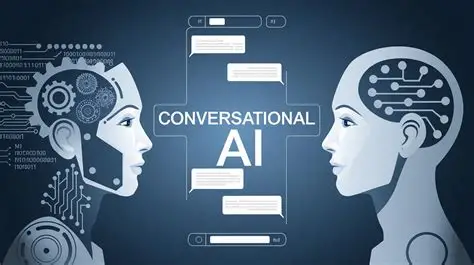
Conversational AI refers to the suite of technologies that enable machines to understand, process, and respond to human language through text or speech. Unlike rule-based chatbots that follow pre-defined scripts, conversational AI systems leverage Natural Language Processing (NLP), machine learning, and contextual reasoning to simulate meaningful dialogue.
From Chatbots to Intelligent Interactions
Traditional chatbots operate on pattern-matching — capable of handling FAQs or simple transactional queries. In contrast, AI-powered assistants on Azure can:
- Interpret natural language inputs via Azure AI Language (CLU).
- Extract intents and entities for precise responses.
- Maintain context across multi-turn conversations.
- Connect to enterprise backends for real-time information delivery.
Rule-Based Chatbots vs Conversational AI
| Capability | Rule-Based Chatbots | Conversational AI |
|---|---|---|
| Language understanding | Keyword matching | NLP + LLM understanding |
| Conversation flow | Predefined scripts | Dynamic multi-turn dialogue |
| Learning capability | None | Continuous learning |
| Channels | Web chat only | Voice, chat, messaging |
| Personalization | Limited | Context-aware |
The Business Case
Enterprises adopting conversational AI realize benefits beyond cost savings:
- Customer experience enhancement: Real-time, personalized support improves satisfaction.
- Operational efficiency: Automating repetitive interactions reduces human workload.
- New engagement channels: Assistants operate across web, mobile, and voice ecosystems.
- Data insights: Every interaction generates learnings for product, marketing, and service teams.
Table: Drivers of Conversational AI Adoption
| Driver | Impact |
|---|---|
| 24/7 customer support demand | Reduces support costs |
| Omnichannel customer engagement | Improves CX consistency |
| AI-driven automation | Reduces manual operations |
| Data-driven personalization | Improves conversion rates |
Gartner projects that by 2026, Conversational AI on Microsoft Azure will be embedded in a significant portion of enterprise applications, with task-specific AI agents driving automation and interaction across platforms.
Read how we help you leverage Gen AI capabilities though RAG and AI agents to unlock maximum business value.
The Azure Conversational AI Landscape
Azure’s conversational ecosystem is a comprehensive framework — spanning tools for natural language understanding, speech recognition, multi-channel integration, and orchestration.
Azure Services for Conversational AI
| Service | Purpose | Enterprise Use |
|---|---|---|
| Azure Bot Service | Bot development & orchestration | Multi-channel assistants |
| Azure AI Language (CLU) | Intent recognition | NLP understanding |
| Azure Speech Service | Voice interaction | Voice bots & IVR |
| Azure OpenAI | Generative AI responses | Intelligent assistants |
| Azure Cognitive Search | Knowledge retrieval | FAQ automation |
| Azure Monitor | Analytics | Performance monitoring |
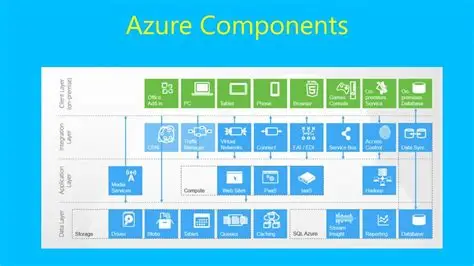
Core Azure Components
- Azure Bot Service + Bot Framework SDK
- Streamlines bot creation, testing, and deployment.
- Supports channels like Teams, Slack, Web Chat, and custom apps.
- Integrates with Azure Cognitive Services for advanced intelligence.
- Azure AI Language (CLU)
- Performs intent recognition, entity extraction, and conversation orchestration.
- Uses Conversational Language Understanding (CLU) to fine-tune domain-specific models.
- Provides sentiment analysis, summarization, and translation through integrated services.
- Azure Speech Service
- Enables voice-first experiences with speech-to-text and text-to-speech.
- Powers real-time transcription and voice synthesis for multilingual interactions.
- Azure AI Foundry and Agent Services (next-gen feature)
- Allows developers to build autonomous assistants that can use tools, APIs, and reasoning chains.
- Designed for integration with Azure OpenAI and multi-agent orchestration frameworks.
Enterprise Advantage
Azure’s strengths lie in its security, scalability, and compliance posture — supporting GDPR, ISO 27001, and SOC 2 certifications. Its modular structure enables enterprises to start small (a single chatbot) and expand to global, multi-channel intelligent assistants.
For more detailed understanding on how Microsoft differs from other platforms, read our latest blog on Microsoft Fabric vs Power BI: A Strategic, Future-Ready Analytics Comparison.
From Chatbots to Intelligent Assistants – The Evolution
Chatbots once represented innovation; today, they mark the starting line. The evolution toward intelligent assistants signifies a leap from scripted automation to adaptive intelligence.
| Feature | Chatbot | Intelligent Assistant |
| Understanding | Keyword or rule-based | Contextual and semantic understanding |
| Conversation | Single-turn | Multi-turn with memory |
| Proactivity | Reactive | Predictive and proactive |
| Channels | Text-only | Text, voice, and multimodal |
| Learning | Static | Continuous improvement via AI |
Azure’s Enabling Stack
- Bot Service: Foundations for dialogue management and multi-channel connectivity.
- Language Service (CLU): Enables deep understanding and contextual handling.
- Speech Services: Adds natural, voice-first capabilities.
- AI Foundry / Agents: Empowers assistants to perform actions, automate workflows, and integrate reasoning.
For instance, a retail chatbot can evolve into a virtual shopping assistant that remembers customer preferences, processes voice commands, and recommends products based on purchase history — all orchestrated through Azure’s services.
Find our actionable guidance for leaders to migrate their data estate in our latest blog.
Architecture & Implementation Considerations
Building Conversational AI on Microsoft Azure requires strategic architecture — balancing functionality, scalability, and governance.
Table: Conversational AI Architecture Layers
| Layer | Azure Technology |
|---|---|
| User Interface | Teams, Web, Mobile |
| Conversational Engine | Azure Bot Service |
| NLP Engine | Azure AI Language |
| AI Layer | Azure OpenAI |
| Integration Layer | APIs / Logic Apps |
| Data Layer | Azure SQL / Cosmos DB |
| Analytics | Power BI / Application Insights |
Reference Architecture
- Frontend channels: Teams, Web Chat, WhatsApp, IVR systems.
- Azure Bot Service: Central orchestrator handling conversation flow.
- Azure AI Language (CLU): Intent detection, entity recognition, and language understanding.
- Azure Speech Service: Optional layer for voice recognition and synthesis.
- Backend systems: Integration with CRMs, databases, and APIs for action fulfillment.
- Analytics layer: Azure Monitor, Application Insights, and Power BI for conversational analytics.
Azure vs Other Conversational AI Platforms
Table: Azure vs Google Dialogflow vs AWS Lex
| Feature | Azure Conversational AI | Google Dialogflow | AWS Lex |
|---|---|---|---|
| Enterprise Integration | Excellent | Moderate | Moderate |
| Generative AI | Azure OpenAI | Gemini integration | Limited |
| Security & Compliance | Strong | Strong | Moderate |
| Microsoft Ecosystem | Deep integration | Limited | None |
| Hybrid deployment | Supported | Limited | Limited |
Best Practices For Building Conversational AI on Microsoft Azure
- Scope clarity: Start with one high-impact use-case before scaling.
- Human hand-off: Ensure seamless transition between bot and human agent.
- Continuous learning: Train CLU models regularly for domain accuracy.
- Security: Use Azure AD for authentication and RBAC for access control.
- Monitoring: Track engagement metrics to refine dialogues and reduce drop-offs.
Avoiding Common Pitfalls In Conversational AI on Microsoft Azure
- Overloading bots with too many intents.
- Neglecting multi-turn flow design.
- Ignoring multilingual support early in architecture.
When executed right approach in context of Conversational AI on Microsoft Azure, this architecture becomes a self-learning, adaptive engagement ecosystem that scales globally.
Read how Techment integrated Azure services for efficient data ingestion, transformation, and reporting, ensuring scalability and reliability in our latest case study.
Real-World Use Cases by Industry
Conversational AI on Microsoft Azure has moved from pilot projects to enterprise-critical deployments across industries. By leveraging Azure’s modular ecosystem — Bot Service, Cognitive Services, Language Understanding (CLU), and Speech — organizations are reimagining how humans and systems interact.
1. Customer Support and Service
Challenge: Traditional call centers face high volumes, long wait times, and inconsistent resolutions.
Solution: Deploying virtual customer assistants built on Azure Bot Service and AI Language enables 24/7 support, multilingual assistance, and seamless escalation to human agents.
Impact: A leading telecom provider reduced average handling time by 30% and improved CSAT scores by 18% through intelligent automation.
2. Healthcare and Life Sciences
Challenge: Patients seek faster responses, appointment scheduling, and care information without human bottlenecks.
Solution: Azure-powered assistants integrate Speech Service for voice scheduling and CLU for medical term recognition, ensuring HIPAA-compliant interactions.
Impact: A health network achieved 40% faster triage response using conversational AI on Microsoft Azure.
3. HR and Employee Experience
Internal helpdesk bots built with Azure Bot Framework Composer simplify routine requests like payroll queries, policy information, or IT troubleshooting. These assistants connect securely to Microsoft Teams and company CRMs — reducing HR service workloads by 35%.
4. Retail and E-commerce
Personalized shopping assistants combine Azure Cognitive Search with Language and Speech Services to create immersive conversational shopping experiences. From product recommendations to voice-enabled payments, retailers are using Azure to deliver frictionless experiences that drive loyalty.
5. Manufacturing & Field Operations
Voice-activated field support assistants leverage Azure Speech-to-Text and IoT Hub integration, allowing technicians to retrieve manuals or log maintenance tasks hands-free — improving productivity by 25%.
Explore how Techment enables cross-domain automation in Autonomous Anomaly Detection and Automation in Multi-Cloud Micro-Services environment
8. Measuring Success & ROI
Quantifying success in Conversational AI on Microsoft Azure involves combining operational KPIs with strategic outcomes.
Quantitative Metrics
- Deflection rate: % of queries resolved without human intervention.
- Customer Satisfaction (CSAT): Measured via post-conversation surveys.
- Resolution time: Average duration per interaction.
- Adoption rate: Usage growth across channels.
Qualitative Metrics
- Experience quality: Conversational flow, tone, empathy.
- Brand perception: Improved digital-first reputation.
- Employee engagement: Reduction in repetitive tasks.
Conversational AI on Microsoft Azure simplifies ROI tracking through Application Insights, Azure Monitor, and integration with Power BI dashboards. Enterprises can visualize conversation journeys, drop-off points, and model performance in real-time.
Business Case Development
Start with one high-impact use-case (e.g., customer support or lead qualification). Measure immediate KPIs, refine intents and flows, and expand to adjacent domains like HR, sales, or field support.
Breaks down Fabric’s architecture, workload experiences, modernization strategies, and competitive advantages in our latest blog.
Emerging Trends & What’s Next
Conversational AI on Microsoft Azure is entering its “assistant intelligence” phase, blending automation with reasoning and personalization. Microsoft Azure’s ecosystem is evolving rapidly to power this future.
1. Agentic AI & Autonomous Assistants
Azure’s new AI Foundry Agents allow systems to autonomously perform actions, retrieve data, and reason across multiple APIs — shifting from reactive to goal-driven intelligence.
2. Multimodal Interactions
Future assistants will merge voice, chat, and visual cues, leveraging Azure Cognitive Services Vision APIs for context-aware dialogues.
3. Generative AI Integration
Azure OpenAI Service enables assistants to generate contextual responses using large language models (LLMs). This unlocks adaptive conversation generation, allowing enterprises to handle nuanced queries.
4. Ethical and Responsible AI when deploying Conversational AI on Microsoft Azure
Azure’s Responsible AI Standard emphasizes fairness, transparency, and accountability — key for regulated industries like finance and healthcare.
5. Continuous Learning Ecosystems in Conversational AI on Microsoft Azure
As assistants capture conversational data, enterprises can retrain models to refine accuracy and empathy — a closed feedback loop Azure simplifies through Machine Learning Pipelines and AI Studio.
Explore future-ready insights in AI, data analytics trends in 2026.
How Techment Can Be Your Partner in Building Conversational AI on Microsoft Azure
Building Conversational AI on Microsoft Azure is not just a technical challenge — it’s a strategic transformation. Success depends on uniting AI capabilities with domain expertise, data governance, and scalable architectures. That’s where Techment delivers value.
Techment’s Conversational AI on Microsoft Azure Expertise
- Advisory & Assessment: Identify the right conversational use-cases aligned with enterprise strategy.
- Architecture & Implementation: Build assistants leveraging Azure Bot Service, AI Language, Speech, and AI Foundry.
- Integration: Connect assistants seamlessly with CRM, ERP, and data lakes.
- Monitoring & Optimization: Deploy dashboards powered by Power BI and Azure Monitor for performance tracking.
- Governance & Adoption: Establish security frameworks, user training, and continuous improvement programs.
Techment partners with enterprises to move from experimentation to production — creating conversational ecosystems that enhance customer experience, improve agility, and drive measurable ROI.
Learn how Techment powers AI-led transformation with AI-Powered Automation: The Competitive Edge in Data Quality Management
Conclusion
The journey from chatbots to intelligent assistants reflects a broader paradigm shift — from automation to augmentation. Conversational AI on Microsoft Azure provides enterprises a secure, scalable, and intelligent foundation to deliver meaningful human-AI interaction across every business function.
Azure’s integrated ecosystem — combining Bot Service, AI Language, Speech, and OpenAI capabilities — enables rapid innovation while maintaining governance and trust.
As this landscape evolves, Techment stands ready to help enterprises design, build, and scale intelligent assistants that deliver real business outcomes.
Read more about data transformation excellence in Securing Data Pipelines: From Encryption to Compliance
FAQs
1. What is the ROI of implementing Conversational AI on Microsoft Azure?
ROI depends on use-case maturity. Enterprises typically see 20–40% reduction in support costs, 25% faster resolution times, and increased customer satisfaction due to round-the-clock availability.
2. How can enterprises measure success effectively?
By combining quantitative KPIs (deflection rate, CSAT, handling time) with qualitative insights like engagement sentiment and repeat usage. Azure’s telemetry tools simplify tracking.
3. What tools enable scalability in Azure-based assistants?
Azure Bot Service, Language Understanding (CLU), Speech-to-Text, and AI Foundry Agents — all integrated through Azure Cognitive Services and orchestrated for enterprise scale.
4. How does conversational AI integrate with existing enterprise data ecosystems?
Via secure APIs and connectors that link Azure assistants to CRMs, ERPs, and data warehouses, ensuring continuity and context-rich responses.
5. What governance and compliance challenges arise?
Data privacy and responsible AI remain priorities. Azure’s built-in compliance (GDPR, HIPAA, ISO) and Techment’s governance frameworks ensure ethical, transparent deployments.