Case Study
Transforming Property Tax Appeals with AI: Building an Intelligent Appeals Platform on Microsoft Fabric
Discover how we modernized county property tax appeals using Arist Appeals AI on Microsoft Fabric — automating classification, extraction, forecasting, and reporting for a client
The Challenge
County governments managing property-tax appeals faced slow, manual, and siloed processes: large volumes of mixed structured and unstructured records (PDFs, scans, SQL data), inconsistent data quality, and limited visibility into appeal trends. These constraints produced long case cycle times, high administrative overhead, and difficulty detecting patterns or systemic issues. Our client needed a scalable, multi-tenant solution that could securely ingest on-prem and cloud sources, normalize and classify diverse documents, extract key values reliably, and deliver predictive insights and real-time dashboards — all while preserving strict data isolation for each county tenant and meeting compliance and performance requirements.
The Solution
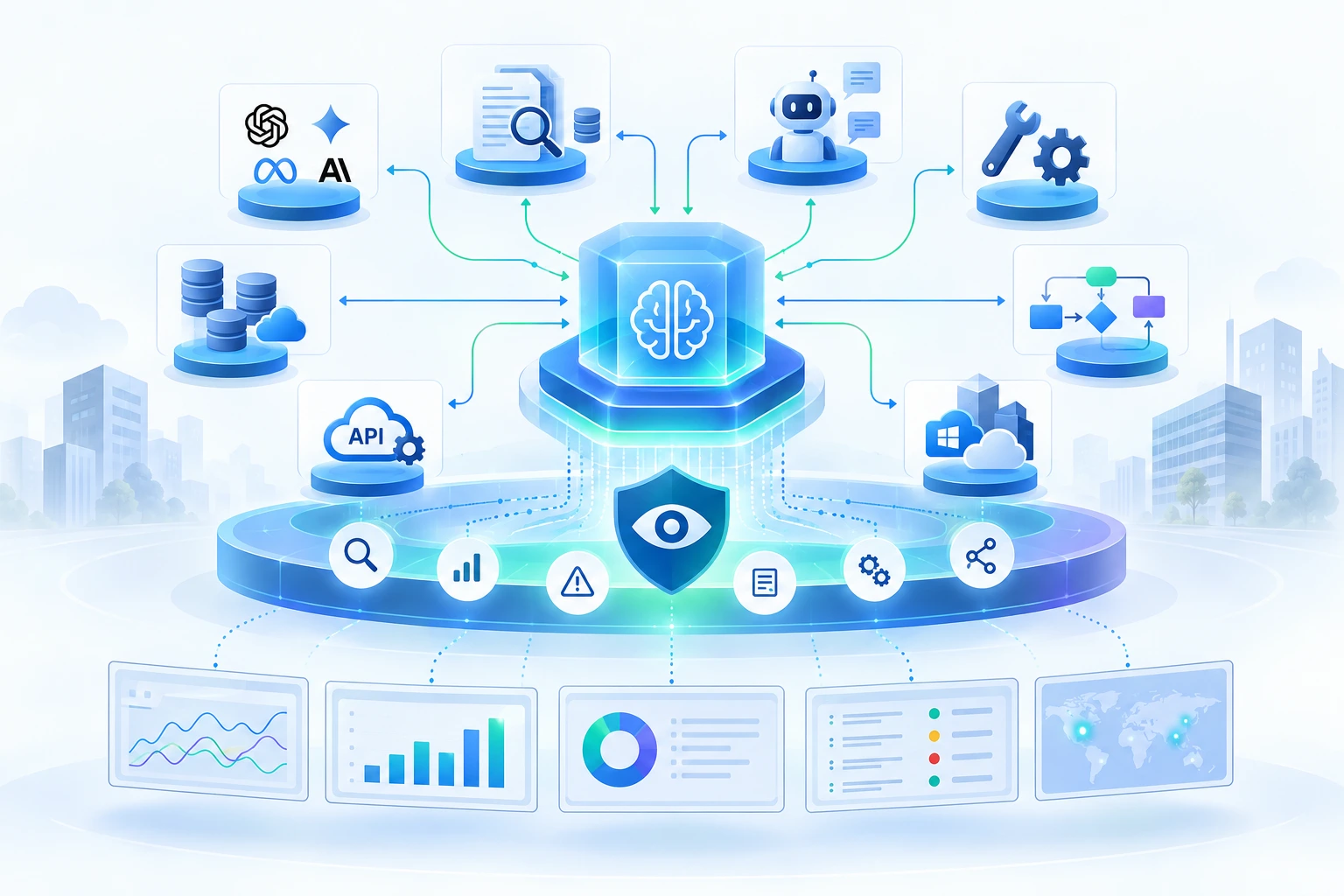
Techment partnered with our client to build Arist Appeals AI on Microsoft Fabric using a workspace-based multi-tenant Lakehouse. The implementation ingested on-prem and cloud sources with Fabric Data Factory, stored raw files in OneLake (Medallion Bronze→Silver→Gold), and applied Azure AI Document Intelligence for document classification and key-value extraction. AutoML and SynapseML produced forecasting and classification models; results and scored datasets were published to Power BI via a secure service layer. Role-based access, private endpoints, and data masking ensure tenant isolation and compliance. Modular, metadata-driven pipelines allow rapid onboarding of additional counties.
Results
We delivered measurable operational improvements within the pilot counties:
- Case processing time reduced significantly through automated classification and extraction.
- Faster, data-driven decision making via Power BI dashboards and predictive forecasts.
- Easier tenant management and transparent cost attribution with workspace-level metrics.
- Improved data quality and auditability using Medallion layering and governance.
Reduced manual review workload.
Predictive insight into appeal volumes and categories.
Streamlined ingestion of mixed data sources.
Stronger security posture and tenant isolation.
Customer Satisfaction: significantly
Scalability: Instant
Visual Metrics (Impact at a Glance)
Processing time
Significant reduction in manual document processing (automation).
Accuracy
Noticeable improvement in key-value extraction and classification precision.
Throughput
Boost in appeals processed per day.
Time to insight
Dashboards refresh daily with near real-time predictions.
Cost transparency
Per-tenant CU tracking enabling billed usage visibility.
How We Did It?
We followed a repeatable, modular blueprint: first, perform a one-time full data load (historical baseline) then enable incremental ingestion using Fabric Data Factory with on-prem gateway and cloud connectors. Raw artifacts land in OneLake (Bronze); structured cleaning and validation occur in Silver via Data Wrangler and Fabric Notebooks; enriched, scored datasets reside in Gold for analytics. Azure AI Document Intelligence handles unstructured document classification and extraction; AutoML/SynapseML drives forecasting and model lifecycle management (tracked with MLflow/auto-logging). A serverless service layer exposes curated data to Power BI for secure, tenant-specific dashboards. Governance, monitoring, and fine-grained access controls (RLS, DDM, CMK options, private endpoints) were embedded throughout to meet compliance and multi-tenant isolation goals.
Tech Stack
Stay Ahead with Insights
Comprehensive solutions to accelerate your digital transformation journey
Blogs
Top 10 RAG Tools Compared -Features, Pricing & Enterprise Use Cases
Introduction Enterprise AI adoption is accelerating, but one fundamental challenge persists: large language models lack reliable access to enterprise data. This gap leads to hallucinations, outdated responses, and compliance risks—issues that no CTO or data leader can ignore. This is where RAG tools (Retrieval-Augmented Generation tools) have become mission-critical. Instead of relying solely on pre-trained […]
Webinar
The Future of Decision Intelligence: AI Copilots for Business Leaders
Whitepaper