1. Introduction — Why Manual Data Quality Can’t Scale
Enterprises have entered a decade defined by exponential data growth, real-time decision velocity, and increasing dependence on automated insights. But the cracks are showing: up to 40% of business initiatives fail due to poor data quality, and even data-mature organizations spend 60–80% of their time cleaning or validating data rather than analyzing it. Manual processes — once acceptable — are no longer compatible with the scale, speed, and complexity of enterprise data.
As cloud systems, streaming architectures, and AI-driven applications expand, so does the risk surface of data. From schema drift to silent pipeline failures, data leaders are confronted with challenges that manual checks simply can’t match. In this environment, data quality automation becomes not a luxury but an operational imperative.
Modern platforms use rules engines, ML-driven anomaly detection, continuous monitoring, and automated observability to keep data reliable without human intervention. Instead of reactive fire drills, enterprises can move toward proactive, predictable, and scalable data reliability — the foundation for AI, analytics, automation, and digital transformation.
This blog explores the automation imperative, the architecture of modern data quality systems, leading tools, AI capabilities, and how enterprises can implement end-to-end automation to escape the manual quality trap.
Strengthen your fundamentals with Data Integrity: The Backbone of Business Success
TL;DR
- Manual data quality processes can’t keep pace with modern data scale, velocity, and complexity—leading to delays, high error rates, and costly rework.
- Data quality automation combines rule-based validation, continuous monitoring, and AI-driven anomaly detection to deliver real-time, scalable, and proactive reliability across cloud and hybrid data ecosystems.
- Modern platforms such as Monte Carlo, Atlan, Great Expectations, Bigeye, and Databricks DLT streamline quality checks, reduce incidents, and cut root-cause analysis time by more than 80%.
- AI enhances data quality through intelligent anomaly detection, drift monitoring, and auto-suggested rules, ensuring that pipelines stay healthy even as data changes.
- Enterprises adopting automated data quality frameworks gain 30%+ operational cost savings, faster insights, stronger governance, and reduced regulatory risk.
- For data leaders, embracing automation is no longer optional—it is the foundation of trustworthy analytics, resilient pipelines, and enterprise AI readiness.
Read our blog on Data Management for Enterprises: Roadmap
2. What Is Data Quality Automation?
Data quality automation refers to technology-driven processes that monitor, validate, and assure the trustworthiness of data with minimal human intervention. Traditional quality workflows depend heavily on manual rule writing, ad hoc checks, scattered spreadsheets, and reactive inspection. Automated data quality, by contrast, offers:
1. Automated Rules & Policy Enforcement
Platforms allow data teams to configure scalable rules for:
- null checks
- format validation
- schema consistency
- referential integrity
- domain constraints
These rules run automatically across datasets as frequently as required — hourly, daily, or continuously.
2. Continuous Monitoring
Instead of batch inspections, automation ensures ongoing freshness, volume, completeness, and distribution monitoring. This is critical in streaming architectures, event-driven systems, and real-time operations.
3. AI-Driven Anomaly Detection
Advanced platforms use machine learning to detect:
- unexpected trends
- unusual spikes in metrics
- data drift
- statistical outliers
- distributional changes
These AI-driven checks reduce false positives and uncover issues that static rules miss.
As enterprises scale, the volume of data pipelines, ingestion endpoints, and transformations increases exponentially. Manual quality checks break under this pressure. Automation becomes the only sustainable solution.
Explore next steps with How to Assess Data Quality Maturity: Your Enterprise Roadmap
3. Manual Data Quality: The Hidden Enterprise Drain
While most data leaders acknowledge the inefficiency of manual quality management, few quantify the true cost. The hidden drain is massive, spanning finances, operations, compliance, and customer experience.
1. Slow, Error-Prone Workflows
Manual reviews, spreadsheet-based checks, or data stewards validating outputs at the end of pipelines create bottlenecks. Delays cascade into:
- stale dashboards
- missed KPIs
- slower releases
- increased operational downtime
McKinsey reports that manual data quality tasks can slow analytic teams by more than 30%.
2. High Error Rates
Human inspection cannot keep up with thousands of tables, millions of rows, and complex transformations. Issues such as silent data failures, schema mismatches, or missing partitions often go unnoticed until business users complain.
3. Cost of Rework
Gartner estimates that poor data quality costs enterprises $12.9 million annually on average — including wasted labor, incorrect decisions, and regulatory risks.
4. Inconsistent Enforcement
Manual processes rely on individual interpretations, leading to inconsistent governance and quality standards.
Combined, these limitations create a “manual data quality trap”—a cycle of constant firefighting, inconsistent standards, and mounting operational risk.
Learn how Techment aligns data teams with How Techment Transforms Insights into Actionable Decisions Through Data Visualization?
4. Key Capabilities of Modern Automated Data Quality Platforms
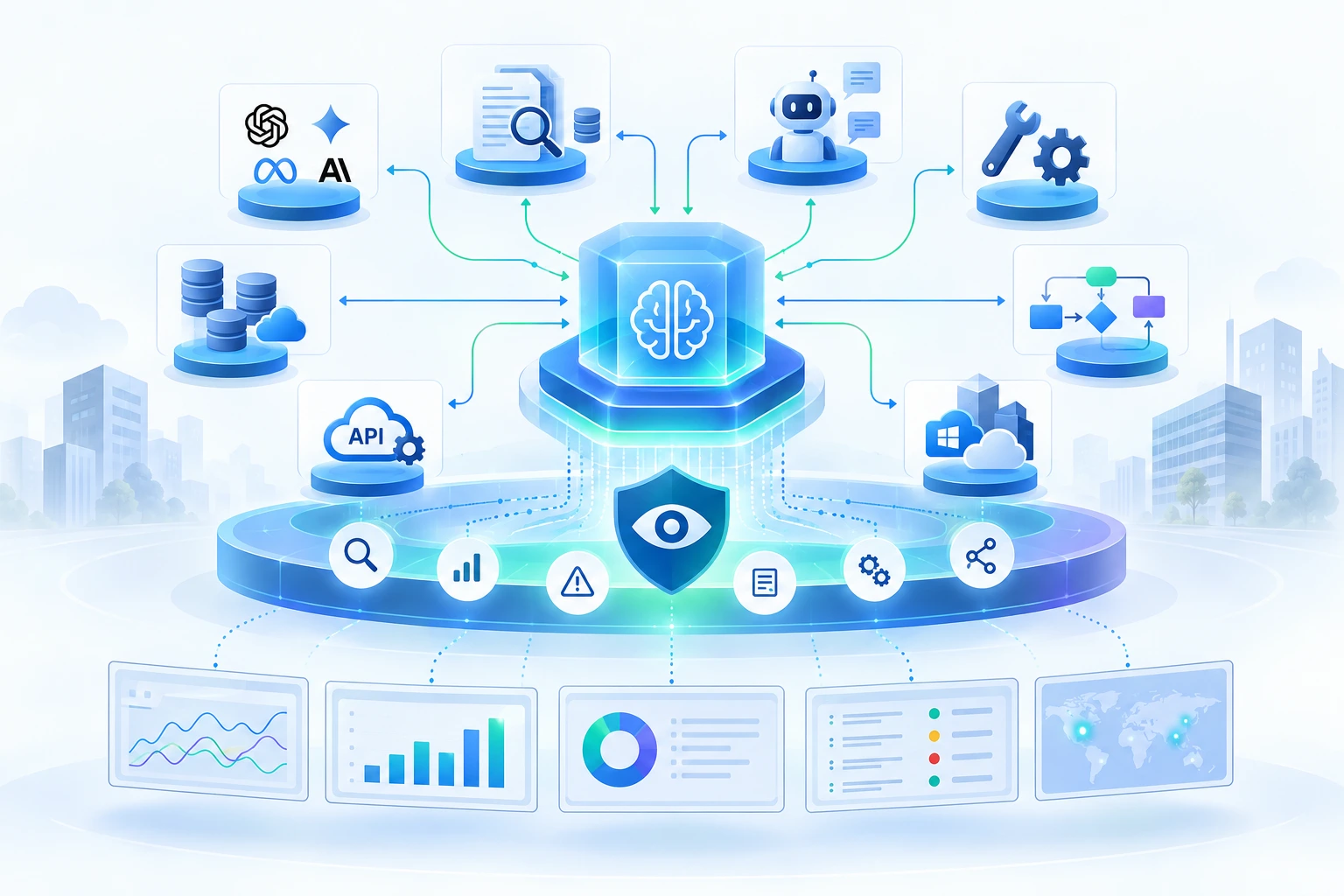
A modern data quality automation platform provides capabilities far beyond rule enforcement. It acts as a command center for reliability, integrating quality checks into the entire data lifecycle.
1. Rule-Based Validation
Allows scalable creation of custom or prepackaged rules that run automatically.
2. Schema Monitoring
Tracks schema drift across ingestion sources, transformations, and data stores.
3. Freshness & Completeness Checks
Ensures data arrives on time and includes the full expected volume — crucial for real-time analytics.
4. Distributional Checks
Monitors changes in distributions, patterns, and trends.
5. Automated Alerts
Integrates with Slack, PagerDuty, or Teams to reduce mean time to detection (MTTD) and mean time to resolution (MTTR).
6. Observability Dashboards
Offers lineage visualization, quality scoring, and incident correlation across pipelines.
These capabilities fundamentally shift organizations from reactive inspection to proactive reliability engineering.
Stay ahead with AI-Powered Data Engineering: The Next Frontier for Enterprise Growth
5. AI in Data Quality Automation
AI and machine learning bring intelligence, adaptability, and advanced detection to data quality workflows.
1. Intelligent Anomaly Detection
AI models learn the normal behavior of datasets and automatically identify anomalies:
- pattern deviations
- seasonality shifts
- abnormal spikes in volume
- changes in business metrics
This eliminates the need for exhaustive rule-writing.
2. Auto-Suggested Quality Rules
Some platforms analyze data profiles to propose:
- missing rule coverage
- recommended constraints
- potential integrity checks
This accelerates onboarding of new datasets dramatically.
3. Drift Detection
Monitors model inputs, data distributions, and feature importance to prevent AI degradation.
4. Adaptive Learning Loops
Systems refine detection algorithms based on feedback — continuously improving accuracy.
With AI, data quality finally becomes predictive rather than reactive.
Explore successful implementations in Unleashing the Power of Data: Building a winning data strategy
6. Architecture of an Automated Data Quality Pipeline
A well-designed data quality automation architecture integrates directly into the data platform and CI/CD pipeline, ensuring frictionless reliability.
1. Ingestion Layer
Data enters from APIs, streams, sources, files, or events. The platform performs:
- initial validations
- metadata checks
- schema verifications
2. Quality Layer
Core automated checks occur here, including:
- rule execution
- AI anomaly detection
- completeness and freshness checks
- profiling and metadata validation
3. Alerts & Incident Management
Failures trigger automatic routing to:
- Slack channels
- PagerDuty alerts
- incident tracking dashboards
4. Observability & Lineage Visualization
Data teams gain full visibility into pipeline health, dependencies, and historical quality patterns.
This architecture ensures data quality automation becomes a built-in system, not a bolt-on activity.
Leverage AI-First data practices and deep expertise as enlisted in our latest whitepaper.
7. Tools & Platforms for Data Quality Automation
The ecosystem of automated data quality platforms is rapidly maturing. Leading solutions include:
1. Monte Carlo Data
A leader in data observability, providing end-to-end lineage, anomaly detection, and incident correlation.
2. Atlan
A collaborative metadata platform with quality automation and governance integration.
3. Databricks Delta Live Tables (DLT)
Schema enforcement, pipeline reliability, and continuous quality monitoring embedded in the Lakehouse architecture.
4. Bigeye
A data reliability engine focused on continuous monitoring at scale.
5. Great Expectations (GX)
An open-source framework enabling programmable automated quality checks and documentation.
Each tool contributes differently, but all support automation as the driving force behind modern data reliability.
Review Techment’s own reliability case insights in Optimizing Payment Gateway Testing for Smooth Medically Tailored Meals Orders Transactions!
8. How Automated Data Quality Reduces Data Incidents
Data incidents — from missing batches to incorrect transformations — can cripple operations. Automated data quality significantly reduces both frequency and business impact.
1. Faster Detection (MTTD)
Continuous monitoring detects issues in minutes, not days.
2. Near Real-Time Root Cause Analysis
Platforms correlate failures across lineage to isolate source issues.
3. Reduced Manual Escalations
Self-resolving alerts and standardized workflows minimize human intervention.
4. Fewer Downstream Impacted Systems
Observability ensures failures in upstream systems are quarantined before damaging dashboards or ML models.
Learn how issues are prevented through Autonomous Anomaly Detection and Automation in Multi-Cloud Micro-Services environment
9. Case Scenario —
How a Retailer Reduced Data Issues with Automated DQ Checks
A large omnichannel retailer faced recurring data failures affecting inventory visibility, pricing accuracy, and forecasting. Their manual approach created bottlenecks, delayed analytics, and frequent customer-impacting errors.
Challenges Before Automation:
- 40% of pipelines lacked monitoring
- Inventory dashboards updated 12–18 hours late
- Incorrect pricing passed downstream to POS
- Engineers spent 70% of time debugging data issues
What Changed with Data Quality Automation:
- Implemented AI-driven anomaly detection
- Introduced automated rule-based checks
- Created standardized freshness and completeness SLAs
- Streamlined alerting and incident response
Outcomes:
- 60% reduction in data incidents
- 80% reduction in time spent on root-cause analysis
- Real-time pricing synchronization across platforms
- Improved accuracy in demand forecasting models
This case demonstrates how automation unlocks scalable reliability and operational excellence.
Dive deeper into healthcare transformation with The Anatomy of a Modern Data Quality Framework: Pillars, Roles & Tools Driving Reliable Enterprise Data – Techment
10. Governance & Automation Together
Governance without automation is idealistic; automation without governance is chaotic. Together, they define enterprise-grade reliability.
1. Policy Enforcement
Automated checks ensure governance standards are enforced uniformly.
2. Standardized Checklists
Organizations create reusable, scalable definitions for:
- PII handling
- data retention
- lineage visibility
- model input controls
3. Role-Based Access
Improves compliance with regulations like GDPR and HIPAA.
Strengthen governance using Data Validation in Pipelines: Ensuring Clean Data Flow for Strategic Impac
11. ROI of Data Quality Automation
Automated data quality isn’t just operationally beneficial — it has tangible financial impact.
1. Cost Savings
Gartner estimates that organizations save up to 30% in operational costs through automation and reduced rework.
2. Faster Time to Insights
Real-time quality checks accelerate decision-making by 20–40%.
3. Reduced Compliance Risk
Automation minimizes exposure to regulatory failure penalties.
4. Improved Customer Experience
Reliable data ensures accurate personalization, billing, pricing, and service.
Future-proof your architecture with Essential Design Patterns in Modern Data Pipelines
12. Implementation Roadmap: Assess → Prioritize → Automate → Monitor
A structured approach ensures successful implementation.
1. Assess
Perform a maturity assessment of current data quality capabilities.
Read How to Assess Data Quality Maturity: Your Enterprise Roadmap
2. Prioritize
Identify mission-critical pipelines with high business impact.
3. Automate
Deploy rule-based and AI-driven quality checks using selected platforms.
4. Monitor
Build observability dashboards, alerts, SLAs, and continuous improvement loops.
Automation becomes a culture — not a one-time project.
Strengthen operational quality with How to Assess Data Quality Maturity: Your Enterprise Roadmap
13. Conclusion—The Automation Imperative for Data Leaders
Data quality automation has become the foundation of reliable analytics, AI, and digital transformation. For data leaders, the mandate is clear: embrace automated, AI-driven quality assurance or risk falling into the manual-reliability trap that impedes innovation and operational agility.
Modern platforms enable proactive governance, scalable checks, real-time observability, and end-to-end data reliability—unlocking enterprise value at every level.
Enable automated data quality with Techment’s Data Engineering experts
Explore how we help enterprises implement automated validation, observability, and AI-driven reliability systems.
Frequently Asked Questions (FAQ)
1. What is data quality automation?
It is the automated process of validating, monitoring, and ensuring data reliability using rule-based and AI/ML-driven quality checks.
2. Which tools automate data quality?
Popular tools include Monte Carlo, Atlan, Databricks DLT, Bigeye, and Great Expectations.
3. How does AI help in data quality?
AI detects anomalies, drift, unusual patterns, and distributional changes automatically.
4. What is automated data observability?
It provides real-time visibility into data pipelines using lineage, metrics, alerts, and incident correlation.
5. What is the ROI of data quality automation?
Enterprises can save 30%+ in operational costs and accelerate insights by up to 40%.