Generative AI in Data-Driven Decision Making: A Key Trend in the 2026 Business Trends Report
If 2025 was the year of Generative AI experimentation, 2026 is the year of enterprise-level transformation and Generative AI in data-driven decision making.
According to IDC, global data creation is expected to reach 181 zettabytes, growing at a 23% CAGR, while McKinsey’s Global Survey on AI reports that 65% of organizations are already using Generative AI in data-driven decision making regularly, with nearly 75% expecting it to fundamentally transform their industries.
Yet data alone does not drive value.
For years, organizations invested heavily in dashboards, reports, and historical analytics — only to find that decision-making remained slow, reactive, and siloed. Traditional analytics answered what happened, but struggled to explain why, what will happen next, or what action should be taken now.
Generative AI in data-driven decision making changes that equation.
By combining advanced large language models (LLMs), multimodal intelligence, real-time analytics, and enterprise data platforms, Generative AI in data-driven decision making enables organizations to analyze, reason, simulate, and decide at unprecedented speed and scale.
In this blog, we explore how Generative AI is transforming data-driven decision making in 2026, why it matters for enterprise leaders, and how organizations can adopt it responsibly to gain sustainable competitive advantage.
Learn how we help organizations build conversational and generative AI capabilities for boosting Generative AI in data-driven decision making through our Gen AI services.
TL;DR (Summary Box)
-
-
2026 will mark the shift from Gen AI experimentation to measurable business impact in Generative AI in data-driven decision making.
-
Generative AI in data-driven decision making is reshaping analytics, forecasting, automation, and personalization across enterprises.
-
Leaders are using Generative AI in data-driven decision making to move from descriptive dashboards to predictive and prescriptive decisions.
-
While the benefits are significant, ethical AI, governance, data quality, and human oversight remain critical.
-
Techment helps organizations operationalize Generative AI in data-driven decision making responsibly and at scale.
-
Read how we help you leverage Generative AI in data-driven decision making for modern enterprises though RAG and AI agents to unlock maximum business value.
What Is Generative AI–Driven Decision Making?
From Analytics to Decision Intelligence
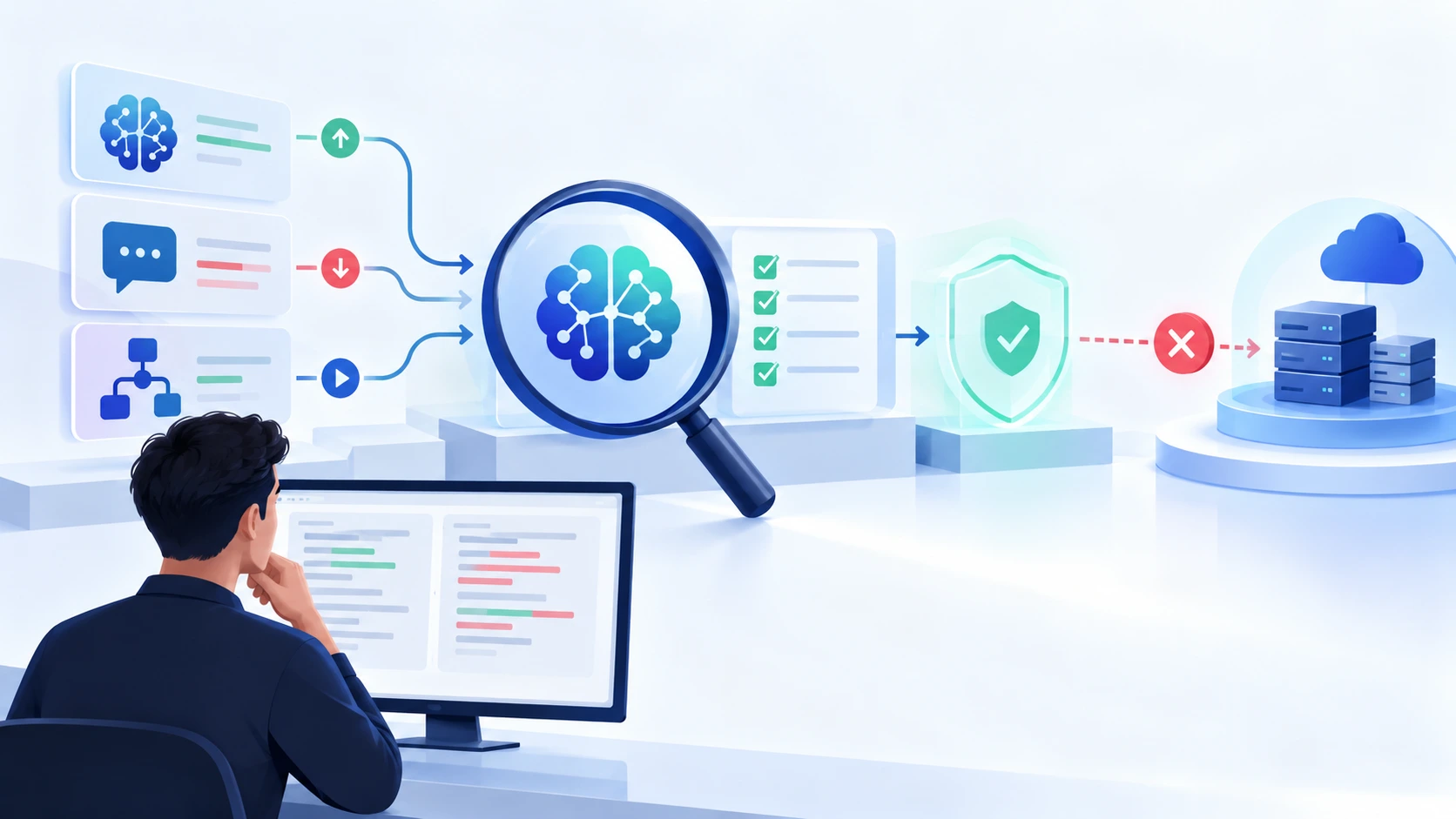
Generative AI–driven decision making refers to the use of advanced AI models—particularly LLMs and multimodal systems—to analyze enterprise data, generate contextual insights, simulate scenarios, and recommend or automate decisions.
Unlike traditional BI tools, Generative AI for data-driven decision making does not rely solely on predefined queries or static metrics. Instead, it dynamically reasons across structured and unstructured data, adapts to changing contexts, and interacts with users in natural language.
This shift transforms analytics from a reporting function into decision intelligence—where insights are continuously generated, validated, and operationalized.
Key Capabilities That Define Generative AI Decisions
Natural Language Reasoning
Executives and analysts can query enterprise data conversationally, eliminating dependency on SQL, dashboards, or technical intermediaries.
Context-Aware Insights
Generative AI understands business context—KPIs, constraints, policies, and historical patterns—before producing recommendations.
Scenario Simulation and Forecasting
AI models evaluate multiple decision paths, stress-test assumptions, and forecast outcomes under different conditions.
Action-Oriented Outputs
Instead of charts alone, Generative AI proposes actions—pricing adjustments, inventory rebalancing, risk mitigation steps—embedded directly into workflows.
Why This Matters in 2026
In 2026, decision velocity is a competitive differentiator. Markets move faster than quarterly reviews. Customer expectations change in real time. Regulatory pressures intensify without warning.
Generative AI for data-driven decision making enables enterprises to sense, reason, and act continuously, rather than react retrospectively.
For leaders, this means fewer blind spots, faster response times, and decisions grounded in enterprise-wide intelligence rather than intuition. With AI adoption rising 250% from 2017 to 2022, its clear that enterprises are relying heavily on it to make critical decisions.
See how Techment can help define your AI vision, prioritize high-value use-cases, and build a practical, ROI-driven roadmap with its AI strategy solution offerings.
Why Traditional Analytics Fail Enterprise Decision-Making
The Limits of Dashboards and Reports
For over a decade, enterprises invested heavily in data warehouses, BI tools, and visualization platforms. While these investments improved transparency, they did not fundamentally improve decision quality.
Traditional analytics struggles because it is:
-
Descriptive, not prescriptive
-
Historical, not forward-looking
-
Centralized, not embedded in workflows
Executives still wait days—or weeks—for insights, only to receive static reports that require manual interpretation.
Siloed Insights and Fragmented Decisions
Most enterprises operate with fragmented data estates—ERP systems, CRM platforms, operational databases, and external data sources rarely speak the same language.
As a result, decisions are often made with partial visibility. Finance optimizes for cost, supply chain optimizes for efficiency, and marketing optimizes for growth—without a shared decision context.
Generative AI for data-driven decision making addresses this by reasoning across silos, aligning insights to enterprise objectives rather than departmental metrics.
Human Bottlenecks in Analysis
Even with advanced analytics platforms, decision making remains constrained by human bandwidth. Analysts spend disproportionate time preparing data, building dashboards, and answering ad-hoc questions.
Generative AI reduces this friction by automating exploratory analysis and insight generation—freeing experts to focus on judgment, strategy, and oversight.
This evolution does not eliminate analysts; it elevates their role from report builders to decision advisors.
How Generative AI Analyzes Business Data and Generates Insights
Enterprise Data as the Foundation
Generative AI for data-driven decision making is only as effective as the data it consumes. In 2026, leading enterprises treat data platforms as decision infrastructure, not just storage layers.
Key characteristics include:
-
Unified access to structured and unstructured data
-
Real-time ingestion and processing
-
Strong metadata, lineage, and governance controls
Without these foundations, AI-generated insights risk being fast—but wrong.
Reasoning Across Data Modalities
Modern Generative AI models process:
-
Transactional data
-
Operational metrics
-
Documents, emails, and policies
-
Images, audio, and logs
This multimodal reasoning allows AI systems to connect signals humans often miss—linking operational anomalies with policy changes, customer sentiment, or external events.
For example, a supply chain decision engine can correlate supplier delays, weather forecasts, contractual terms, and demand signals to recommend proactive actions.
How AI Expands Enterprise Data-Driven Capabilities in 2026 – From Insight to Recommendation
Unlike traditional analytics, Generative AI does not stop at insight generation.
It evaluates trade-offs, constraints, and objectives before producing decision-ready outputs:
-
Ranked recommendations
-
Confidence scores and assumptions
-
Scenario comparisons
For executives, this means fewer meetings spent debating data accuracy—and more time discussing strategic direction.
What Should a Business Analyst Expect When Using Generative AI on a Dataset?
When a business analyst inputs a dataset into a generative AI platform, the AI does not generate random opinions or simply export raw data. Instead, it delivers insights derived from patterns in the data, such as trends, anomalies, correlations, and summarized takeaways — often explained in natural language
Enterprise Use Cases of Generative AI for Decision Making
Finance and Risk Management
Finance teams use Generative AI for data-driven decision making to:
-
Forecast revenue and cash flow dynamically
-
Simulate macroeconomic scenarios
-
Detect anomalies and potential fraud
AI-driven decision intelligence reduces reaction time to market volatility while improving risk transparency.
Supply Chain and Operations
In operations, Generative AI optimizes:
-
Demand forecasting
-
Inventory balancing
-
Supplier risk mitigation
By continuously learning from real-time data, AI systems recommend actions before disruptions escalate into losses.
Customer and Commercial Decisions
Marketing and sales leaders leverage Generative AI to:
-
Personalize offers in real time
-
Optimize pricing strategies
-
Predict churn and lifetime value
Decisions become adaptive rather than campaign-based—driven by continuous intelligence rather than quarterly planning cycles.
Human Resources and Workforce Planning
In HR, Generative AI supports:
-
Workforce demand forecasting
-
Skills gap analysis
-
Policy interpretation and advisory
However, people-related decisions demand stricter governance, transparency, and human oversight—topics we explore later in this guide.
Advantages of Generative AI for Modern Enterprises
Speed and Decision Velocity
Generative AI compresses the time between signal detection and action—from weeks to minutes.
This acceleration is critical in environments where delays translate directly into lost revenue, compliance risk, or customer dissatisfaction.
Consistency and Scalability
AI-driven decisions apply consistent logic across the enterprise, reducing variability caused by subjective interpretation or local optimization.
As organizations scale, this consistency becomes a strategic asset.
Democratization of Decision Intelligence
Conversational AI interfaces allow non-technical leaders to interact with data directly, reducing dependency on centralized analytics teams.
Decision intelligence becomes accessible—not exclusive.
Strategic Focus for Leaders
By automating routine, data-intensive decisions, Generative AI frees executives to focus on strategic, high-impact choices that require human judgment.
When Generative AI Is — and Isn’t — the Right Fit for Decisions
Advantages of Generative AI for Enterprise Decision Making
Generative AI for data-driven decision making delivers the greatest value in environments defined by complexity, scale, and speed. These are scenarios where traditional rule-based analytics or human-only decision models struggle to keep pace.
Generative AI is particularly effective when:
Decisions require synthesis across multiple data sources
Enterprises often operate across fragmented systems—ERP, CRM, operational platforms, documents, and external data feeds. Generative AI can reason across these silos simultaneously, identifying patterns and relationships that are impractical for manual analysis.
Decision cycles must be compressed
In supply chains, cybersecurity, financial markets, and customer experience management, delays directly translate into risk or revenue loss. Generative AI for data-driven decision making enables near-real-time analysis and recommendations, dramatically reducing time-to-action.
Unstructured data plays a critical role
Emails, contracts, support tickets, policies, and knowledge bases contain high-value signals that traditional analytics ignore. Generative AI can extract meaning, context, and intent from this data, enriching decision intelligence.
Decisions benefit from scenario exploration
Strategic planning, forecasting, and risk management all benefit from simulating multiple futures. Generative AI models evaluate alternative paths, quantify trade-offs, and surface second-order impacts before leaders commit.
In these contexts, Generative AI acts as a decision amplifier, extending human cognitive capacity rather than replacing it with below capabilities:
-
Faster insight generation
-
Improved decision accuracy
-
Automation of routine decisions
-
Better scenario planning
-
Scalable decision intelligence
Where Generative AI Should Be Used with Caution
Despite its power, Generative AI for data-driven decision making is not universally appropriate.
It is not well-suited when:
Decisions are purely deterministic and rules-based
If outcomes are governed by fixed logic with minimal variability—such as simple compliance checks—traditional automation is often more reliable and cost-effective.
Data quality is poor or inconsistent
Generative AI does not fix broken data. When source systems lack accuracy, lineage, or governance, AI-generated insights can be confidently wrong—creating false certainty at scale.
Decisions involve irreversible human impact without oversight
Hiring, promotions, credit approvals, and legal judgments require explainability, fairness, and accountability. In these cases, Generative AI should support human decision-makers—not operate autonomously.
For enterprise leaders, the question is not whether to use Generative AI, but where, how, and under what controls it should be applied.
Human Oversight, Ethics, and AI Governance in Decision Making
Why Governance Becomes More Critical in 2026
As Generative AI for data-driven decision making moves from pilots into production, governance shifts from a compliance concern to a strategic risk management function.
In 2026, regulators, customers, and boards increasingly expect enterprises to demonstrate:
-
Transparency in AI-driven decisions
-
Accountability for outcomes
-
Controls to prevent bias, drift, and misuse
Without governance, AI-driven decision intelligence can erode trust faster than it creates value.
Key Governance Pillars for AI-Driven Decisions
Human-in-the-Loop Oversight
High-impact decisions should always include human validation. AI proposes; humans approve, override, or contextualize. This preserves accountability while maintaining speed.
Explainability and Auditability
Executives must understand why a recommendation was made—not just what the recommendation is. Explainable AI techniques, decision logs, and traceable data lineage are non-negotiable.
Bias Detection and Continuous Monitoring
Generative AI models learn from historical data, which often reflects historical bias. Enterprises must implement continuous evaluation to detect skewed outcomes and retrain models responsibly.
Clear Decision Boundaries
Not all decisions should be automated. Mature organizations define explicit thresholds—what AI can decide independently, what requires escalation, and what must remain human-only.
Ethical AI as a Competitive Advantage
Enterprises that embed ethics into Generative AI for data-driven decision making do more than mitigate risk—they differentiate themselves.
Trust becomes a strategic asset. Customers, partners, and regulators increasingly favor organizations that demonstrate responsible AI practices over those that pursue speed without safeguards. So the question asked often by leaders – Is Generative AI a Good Fit for Hiring and People Decisions?
Generative AI can support hiring decisions by analyzing resumes, summarizing candidate data, and identifying skill patterns. However, final hiring decisions require human judgment, fairness checks, and ethical oversight.
Challenges and Ethical Considerations in Generative AI in data-driven decision making
While AI-driven decision-making offers transformative benefits, organizations must address several challenges and ethical considerations to ensure responsible implementation:
- Data Privacy Concerns – AI systems require vast amounts of data, often including sensitive information. Ensuring data is collected, stored, and processed securely is critical to maintain compliance with regulations like GDPR and CCPA and protect user trust. For example – In healthcare, AI must handle patient data with strict privacy safeguards to prevent misuse or unauthorized access.
- Bias in AI-Generated Insights – AI models can inadvertently inherit biases from training data, leading to skewed or unfair recommendations. Regular audits and diverse datasets are essential to minimize these risks. For instance, a recruitment AI tool trained on biased historical data might favor certain demographics, necessitating corrective measures.
- Need for Human Oversight- Over-reliance on AI in decision-making can lead to errors or missed nuances that require human judgment. Maintaining a balance between AI automation and human involvement is vital. Financial institutions use AI for fraud detection but rely on human analysts to review flagged cases and ensure accuracy.
- Transparency and Explainability- AI systems often operate as “black boxes,” making it challenging to understand how decisions are made. Ensuring models are explainable builds user trust and facilitates accountability
- Ethical and Legal Implications- Organizations must navigate the ethical implications of AI decisions, particularly in sensitive areas like healthcare or criminal justice, where outcomes directly impact lives.
- Data quality and integration – While AI systems are becoming more sophisticated, the quality of input data remains crucial. Sometimes even the highly sophisticated AI algorithms can deliver flawed results when the inout data is of poor quality.
- Skills Gap- The demand for AI expertise continues to outpace supply, with 80% of employers of AWS survey reporting lack of understanding on how to implement an AI training program. The World Economic Forum estimates that up to 40% of the workforce will need to reskill due to AI implementation over the next three years
By proactively addressing these challenges and embedding ethical principles into AI strategies, organizations can harness the power of AI-driven decision-making responsibly and sustainably.
Discover more about how best practices for Generative AI in data-driven decision making in business can pave the way for your enterprise success in our blog on AI-Powered Data Engineering: The Next Frontier for Enterprise Growth
How Enterprises Can Prepare for AI-Driven Decisions in 2026
Step 1: Strengthen Data Foundations
Generative AI decision intelligence depends on high-quality, well-governed data. Enterprises must modernize data platforms to support:
-
Unified access across domains
-
Real-time ingestion and processing
-
Strong metadata, lineage, and quality controls
This is why data quality and governance are now board-level priorities—not IT hygiene tasks.
Step 2: Align AI Initiatives with Business Decisions
Successful organizations do not deploy Generative AI generically. They anchor initiatives to specific decision outcomes, such as:
-
Reducing forecast error
-
Improving working capital
-
Accelerating incident resolution
-
Enhancing customer retention
This decision-first framing ensures ROI and executive sponsorship.
Step 3: Design for Operating Model Change
Generative AI for data-driven decision making reshapes roles, workflows, and accountability.
Enterprises must redefine:
-
Analyst and data science roles
-
Decision ownership and escalation paths
-
KPIs that measure decision quality—not just system performance
Without operating model alignment, AI adoption stalls despite technical success.
Step 4: Build AI Literacy Across Leadership
Executives do not need to become data scientists—but they must understand AI capabilities, limitations, and risks.
Organizations investing in AI literacy for leaders make faster, better-informed strategic decisions about where and how to deploy Generative AI.
How Techment Helps Enterprises Scale AI-Driven Decision Intelligence
Techment partners with enterprises to operationalize Generative AI for data-driven decision making across the full lifecycle—from strategy to execution to optimization.
Our enterprise approach includes:
AI Strategy and Decision Prioritization
We help leaders identify high-impact decisions where Generative AI delivers measurable business value, aligned to enterprise strategy.
Data Readiness and AI-Ready Architectures
Techment modernizes data platforms to ensure reliability, governance, and scalability—creating a trusted foundation for AI-driven decisions.
Responsible AI and Governance Frameworks
We design governance models that embed ethics, explainability, and compliance directly into AI workflows—without slowing innovation.
Enterprise-Scale Implementation
From retrieval-augmented generation (RAG) to AI agents embedded in workflows, Techment delivers production-grade solutions—not experiments—backed by proven delivery frameworks .
Our focus is not on AI for its own sake, but on decision outcomes that move the business forward.
Conclusion
Generative AI for data-driven decision making represents one of the most profound shifts in enterprise operations since the rise of digital analytics. In 2026, competitive advantage will belong to organizations that move beyond dashboards and embrace decision intelligence at scale.
The winners will not be those who deploy the most AI—but those who deploy it responsibly, strategically, and in service of better decisions.
By investing in strong data foundations, ethical governance, and operating model alignment, enterprises can transform Generative AI from an experimental technology into a core driver of speed, resilience, and growth.
Techment stands as a trusted partner for organizations ready to make that transition—helping leaders turn intelligence into action, and data into decisive advantage.
Frequently Asked Questions (FAQs): Generative AI & Data-Driven Decision Making
What should a business analyst expect from generative AI when analyzing a dataset?
Generative AI accelerates exploratory analysis by automatically identifying patterns, anomalies, and drivers across datasets. Analysts shift from manual querying to validating insights, testing scenarios, and advising decision-makers.
Is generative AI suitable for hiring or people-related decisions?
Generative AI can support people-related decisions by analyzing skills gaps or workforce trends, but it should not operate autonomously. Human oversight, transparency, and bias controls are essential.
What are the advantages of generative AI for enterprise decision making?
Key advantages include faster decision cycles, consistent logic at scale, improved forecasting, scenario simulation, and democratized access to insights across the organization.
How accurate are AI-generated insights compared to traditional analytics?
When trained on high-quality, governed data, AI-generated insights often outperform traditional analytics in speed and breadth. Accuracy depends on data quality, model governance, and continuous monitoring.
Does generative AI replace human decision-makers?
No. Generative AI augments human judgment. The most effective enterprises combine AI-driven recommendations with human expertise, accountability, and strategic context.